



The worst time to yank on your lower back is the minute after heavy rows, pull-ups, or deadlifts, when everything feels hot, tight, and a little irritated. Good back stretches after a back workout do the opposite: they calm the area down, ease some of that post-lift stiffness, and help you leave the gym moving like a human instead of a folding chair.
A hard pull day loads more than your lats. Your erector spinae, teres major, rear delts, lower traps, rhomboids, and even your hip muscles can all get involved, especially if your session included barbell work or long sets of chest-supported rows. That is why one random toe-touch usually misses the mark. The spots that feel “tight” are often not the spots that need the stretch most.
Warm muscle gives you a window.
You do not need a circus-level cooldown, either. Five to ten minutes is enough if you pick the right positions, breathe on purpose, and stop chasing pain as if pain were progress. A good post-workout stretch should feel like pressure and release, not pinching, tingling, or sharp pulling. That distinction matters more than people think.
How to make back stretches work after heavy rows and deadlifts
Start smaller than your ego wants to. After a back session, your tissues are warm, but they are also a bit tired and guarded. If you dive straight into a deep spinal twist or force a hamstring stretch with locked knees, your body usually answers by tightening more. The better move is a short walk, a few slow breaths, then gentle holds that target the lats, thoracic spine, and low back without cranking on them.
ACSM flexibility guidance has long placed many static stretches in the 10-to-30-second range, often repeated 2 to 4 times. For post-workout work, I like 20 to 30 seconds per side for most people, or about 5 slow breaths if you do better with breathing than with counting. If one side feels glued down, give it an extra round instead of turning every stretch into a one-minute endurance test.
The pressure scale that keeps you out of trouble
Use a quick scale from 0 to 10.
- 0 to 2: you barely feel anything
- 3 to 5: the sweet spot for most post-workout stretching
- 6 to 7: usually too aggressive after lifting
- 8+: wrong direction, back off
A few other rules help more than fancy programming ever will.
- Keep your rib cage down when you reach overhead, or the stretch turns into low-back arching.
- Unlock your knees in any forward fold so your lower back does not take the whole load.
- Exhale longer than you inhale. Think 4 seconds in, 6 seconds out.
- Do the painful side more gently, not more forcefully.
- Skip ballistic bouncing after heavy training. Your back does not need surprises.
If you only remember one thing, remember this: post-workout stretching is for restoring range, not proving toughness.
1. Child’s Pose Back Stretch
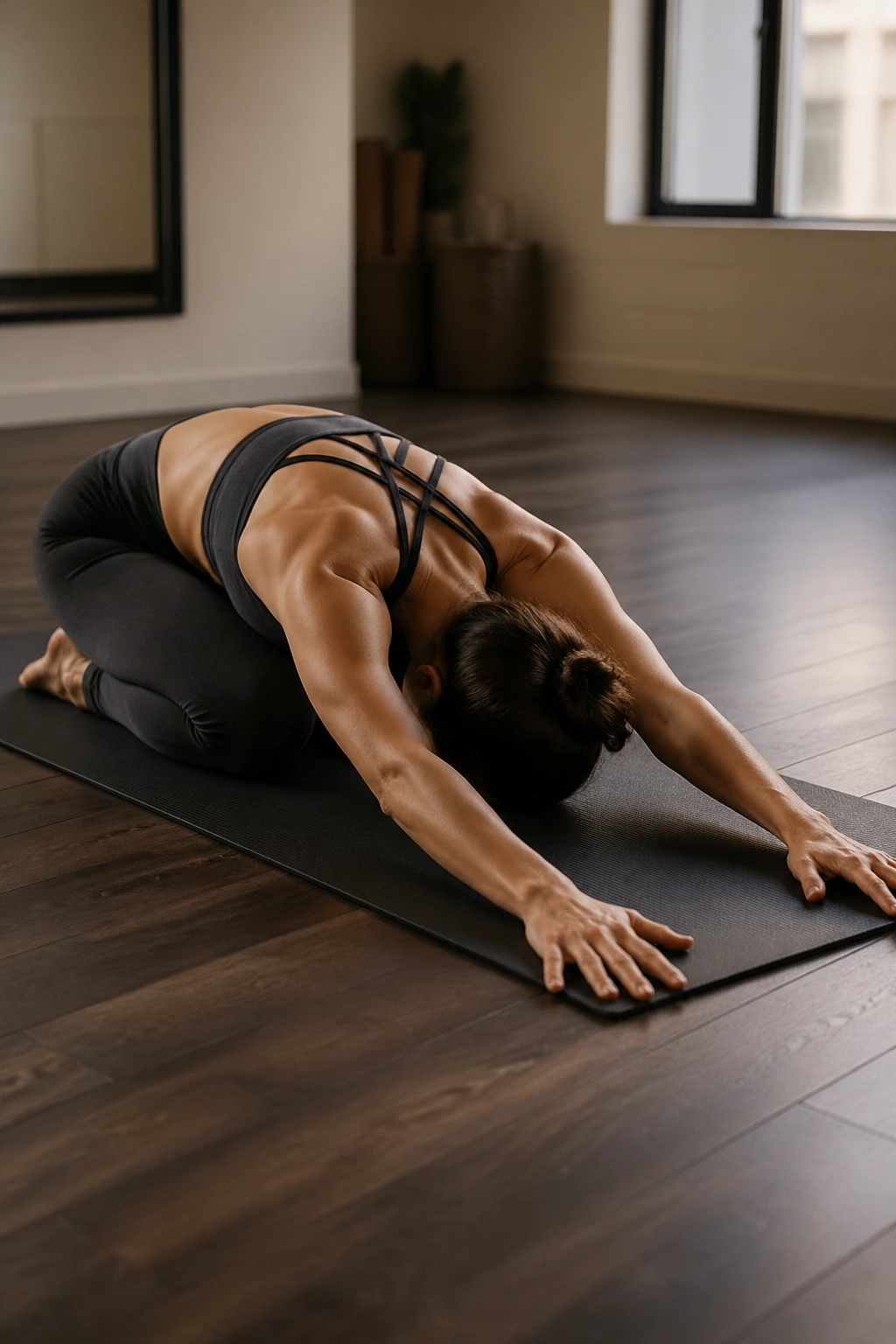
Why does this one stay in almost every cooldown I write? Because it covers a lot of ground with very little risk. A solid child’s pose back stretch gives your low back some relief, opens the lats, and settles your breathing at the same time. After pull-downs or pull-ups, it tends to hit that broad, tight area running from your armpit down toward your ribs.
Set up on the floor with your knees slightly apart and your big toes touching, or keep the knees wider if your hips prefer it. Sit your hips back toward your heels and reach your hands forward until you feel a gentle line of tension through your mid-back. Then reach both hands a few inches to the right and hold. Come back to center, then over to the left.
Where you should feel it
You are looking for a stretch through the lats, the sides of the torso, and the muscles that run along the spine. If all you feel is pressure in your knees or ankles, adjust the setup. A folded towel behind the knees or under the ankles fixes that more often than people expect.
Quick setup cues
- Reach long through your fingertips, but do not shrug your shoulders into your ears.
- Let your chest sink toward the floor on each exhale.
- Hold 20 to 30 seconds in the center, then 20 seconds each side.
- If your forehead does not reach the floor, rest it on a yoga block, pad, or stacked fists.
Best after: pull-ups, lat pull-downs, straight-arm pull-downs, cable rows.
One small fix: if your low back feels compressed instead of relieved, widen your knees another 2 to 4 inches and shorten the reach.
2. Kneeling Bench Lat Stretch
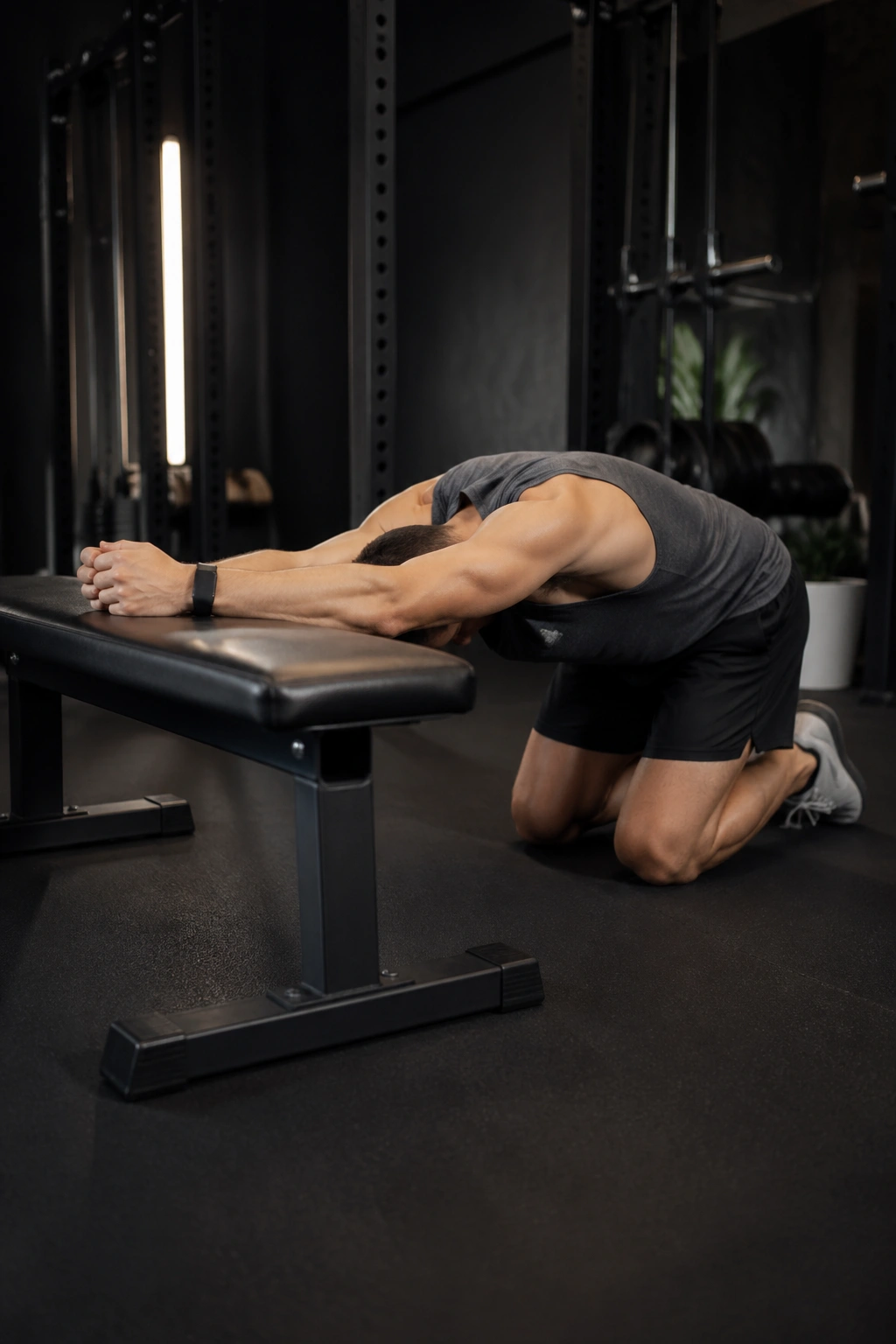
This is the stretch I reach for after a lat-heavy session more than any other. It is sharper than child’s pose, easier to load one side at a time, and it lets you keep the spine long instead of curled up. If you finish a workout with machine pullovers, heavy pull-downs, or a lot of volume on assisted pull-ups, this one usually lands right where you need it.
Kneel in front of a bench, box, or even a chair seat that sits around hip height. Put both elbows on the bench, bring your hands together in a prayer position, and let your chest drop between your arms. Keep your ribs tucked instead of flaring them out. That rib position is the whole trick. Lose it, and the stretch slips into your low back.
You should feel a long pull from the back of the armpit down along the side of the torso. Some people also feel the long head of the triceps light up, which is fine. If your shoulders are cranky, separate the hands and keep the elbows a bit wider.
I like 2 rounds of 20 to 30 seconds here. After the first round, switch to one arm at a time by sliding one elbow off the bench and reaching that hand toward the ceiling while the other elbow stays planted. That tiny change can expose a left-right gap fast, especially if one side always dominates your rows.
The common mistake is easy to spot: your chest drops, your ribs pop, and the stretch turns into a backbend. Pull the front ribs down, squeeze your abs lightly, then sink again. Much better.
3. Dead Hang From a Pull-Up Bar
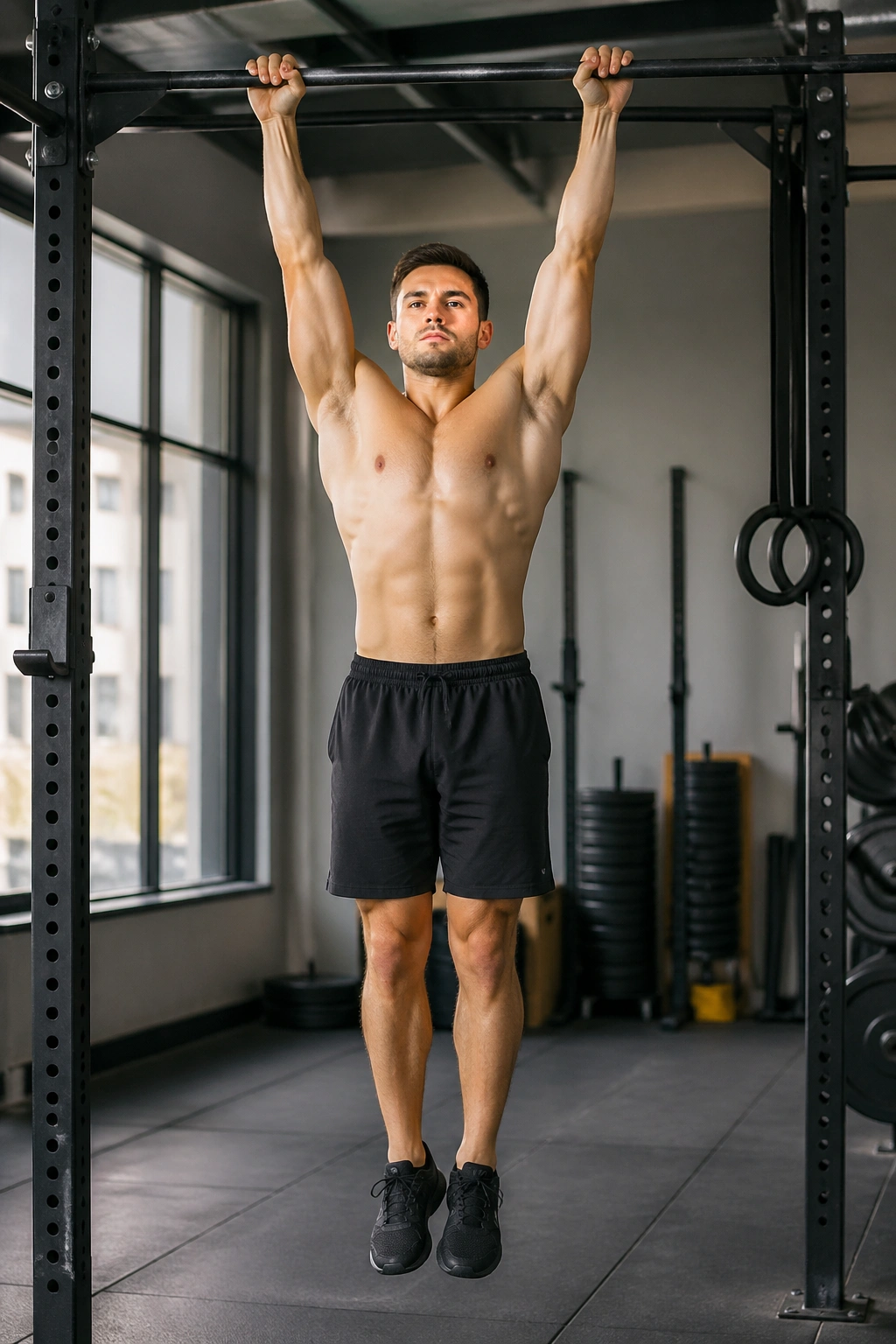
A bar hang is not a magic fix for every stiff back. It is, though, one of the cleanest ways to give your lats and shoulders some room after a tough pulling day—if your shoulders tolerate hanging well and your grip is not wrecked.
Grab a pull-up bar with a shoulder-width overhand grip and let your body sink. You do not need to go limp. Think of it as a controlled hang, with your ribs gently tucked and your feet either off the floor or lightly touching a box for support. Start with 10 to 20 seconds. That is enough for a first round.
How to use it without annoying your shoulders
Full bodyweight hangs can feel rough after high-volume pull-ups, especially if your shoulders already tend to click, pinch, or slide forward. Use an assisted version instead. Put one or both feet on a bench, box, or the floor so you can unload part of your weight and control the depth.
That supported version is not a downgrade. For plenty of lifters, it is the better choice.
What to watch for
- A stretch through the lats, side ribs, and shoulders is fine.
- Sharp pain in the top front of the shoulder is not.
- Numbness, tingling, or a “dead arm” feeling means stop.
- If your lower back arches hard, tuck the ribs and bend the knees.
Some days this stretch feels incredible. Some days it feels like a fight. If you are the second person, skip the heroics and use the kneeling bench lat stretch instead. Same target, less drama.
4. Thread-the-Needle Thoracic Rotation
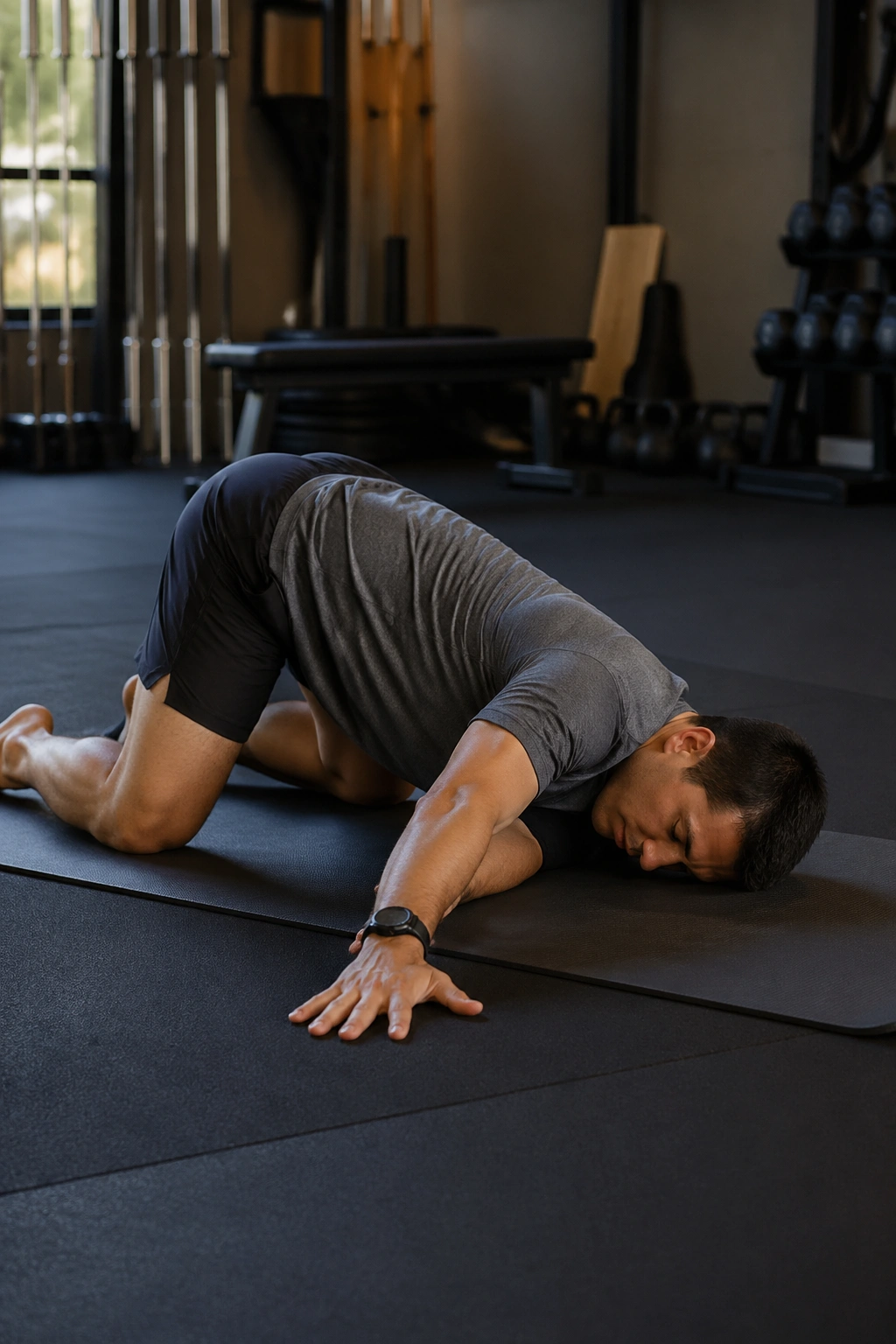
Picture the end of a row session: your upper back feels packed tight, your rear shoulder is stiff, and turning to grab your gym bag feels awkward. That is a good time for thread-the-needle. It is one of the cleanest ways to get thoracic rotation—mid-back turning—without wrenching the lower spine.
Start on all fours. Slide your right arm under your left arm, palm up, and lower your right shoulder and the side of your head toward the floor. Keep your hips stacked over your knees. That part matters. If the hips drift back, the stretch changes and the rotation fades.
You can leave the top hand on the floor for support, or “walk” it forward a few inches to deepen the line through the upper back and rear shoulder. Hold 20 to 30 seconds, then switch sides.
A lot of lifters move poorly through the thoracic spine and then ask the lower back to rotate more than it should. That is one reason this stretch earns a spot after heavy pulling. It gives the upper back a job it should already be doing.
- Feel it in: rear shoulder, rhomboids, mid-back
- Keep stable: hips, knees, low back
- Good pairing: after chest-supported rows, seated cable rows, face pulls
- One useful cue: exhale as you rotate under, then soften deeper on the next breath
If you feel a pinching sensation in the front of the shoulder, do not shove farther. Raise your torso slightly and shorten the range. A little less depth often gives you more of the right stretch.
5. Open Book Thoracic Stretch
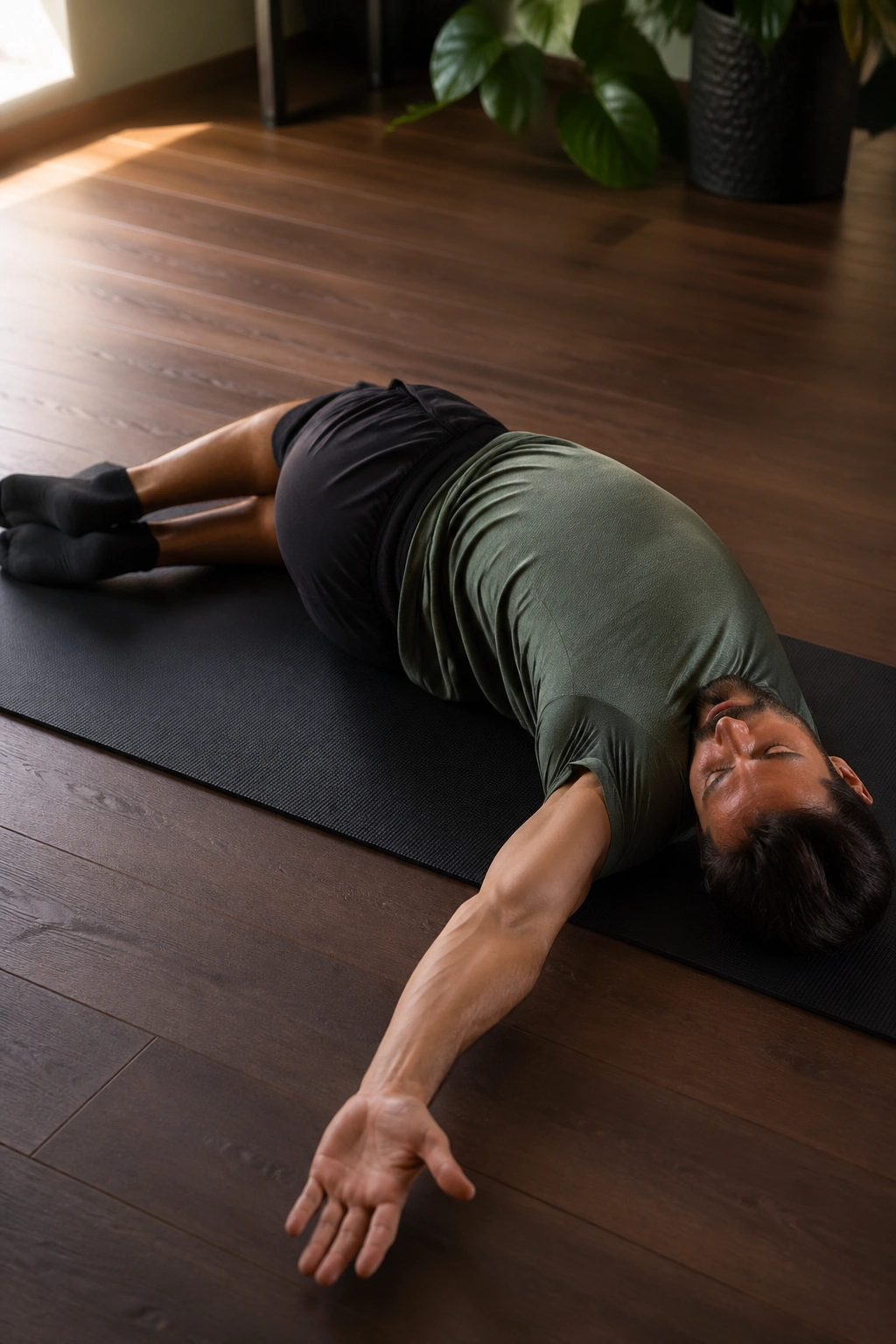
Some stretches are better because they force you to slow down. Open book is one of them. Done well, it feels less like “stretching” and more like untwisting a stiff section of your back that forgot how to move after rows, shrugs, and long hours at a desk.
Lie on your side with your hips and knees bent to about 90 degrees. Stack your arms straight out in front of you, palms together. Keep the knees pinned together—use a foam roller, yoga block, or folded towel between them if you need a reminder—then open the top arm across your body until your chest rotates toward the floor behind you. Your gaze follows your hand.
You are aiming for motion through the thoracic spine, not a dramatic lower-back twist. That is why the knees stay glued together. If they peel apart, the stretch leaks into the hips and low back. Not useless, but not the point.
Hold the end position for 3 slow breaths, come back in, and repeat 5 reps per side, or hold one longer rep for 20 to 30 seconds. I prefer the breathing version after lifting. It feels less forced.
You may notice one side opens with almost no effort while the other side stops halfway and feels blocked near the shoulder blade. That asymmetry is common, especially if you always carry a bag on one side, drive a lot, or tend to rotate more one way during cable work. No need to “fix” it in one session. Chip away at it and move on.
6. Cat-Cow Spinal Mobility Stretch
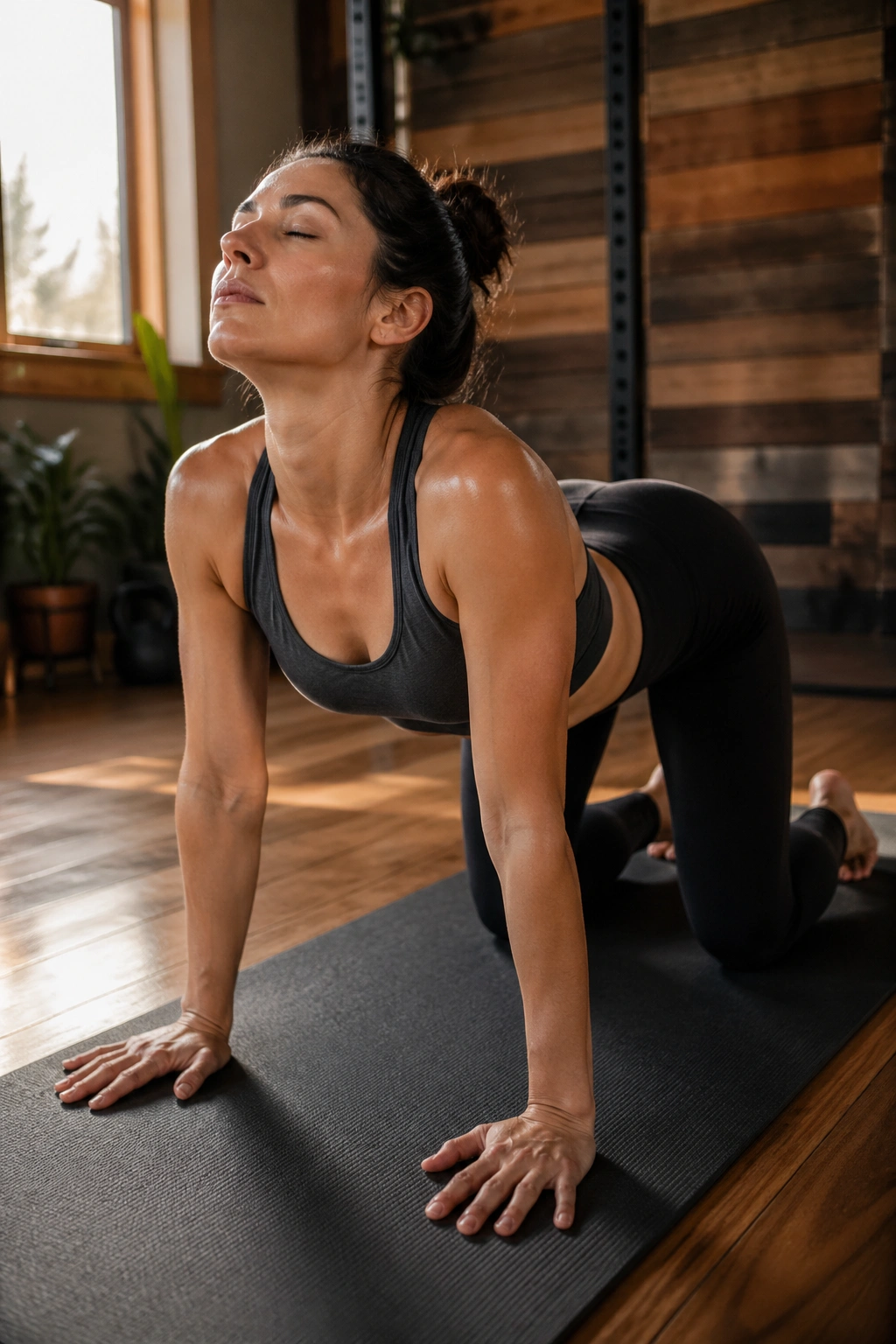
Unlike a long static hold, cat-cow gives you a gentle way to move the spine through flexion and extension when your back feels stiff in a broad, hard-to-locate way. It works well after lighter back sessions, machine-based pulling, or days when your low back feels pumped but not angry. After heavy deadlifts, keep the range small. Smaller than you think.
Start on hands and knees with your wrists under shoulders and knees under hips. On the exhale, round your spine toward the ceiling and let the shoulder blades spread apart. On the inhale, reverse the motion and let the chest come forward while the tailbone tips up a little. Move one segment at a time if you can. That slower pace is where the value is.
This is not a race. Eight slow reps beat twenty rushed ones every time.
A cue I like: imagine starting the motion from the middle of your back, then letting the neck and pelvis follow. Many people throw the head up and down and call it cat-cow. That turns it into neck flapping with a little spinal motion attached. Not useless, but not good enough.
Try 6 to 10 reps, each one taking about one full breath cycle. If your wrists complain, make fists, use push-up handles, or do the same motion with your forearms on a bench.
And if rounding your low back after deadlifts feels wrong, trust that feeling. Use child’s pose or knees-to-chest that day and leave cat-cow for another session.
7. Sphinx Pose or Gentle Press-Up
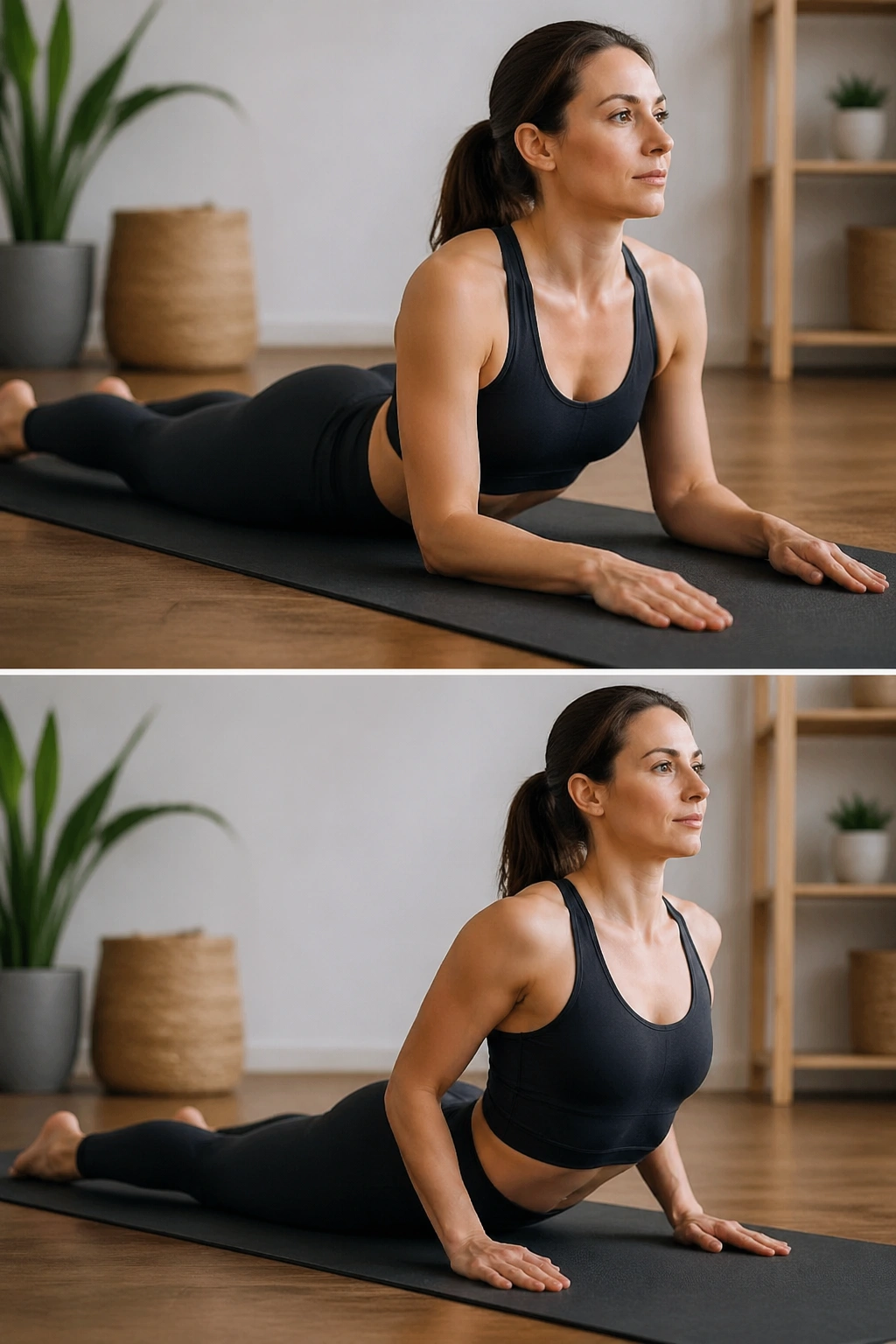
Back training tends to leave the whole back side feeling shortened—lats, spinal erectors, rear delts, all of it. A mild extension stretch can be a smart counterbalance, especially if your workout was row-heavy and your upper body spent most of the session slightly flexed over benches, bars, or machines.
Lie face down and prop yourself onto your forearms for sphinx pose. Elbows go under the shoulders, forearms parallel, chest softly lifted. Keep your glutes relaxed and your lower ribs heavy. Stay there for 20 to 30 seconds and breathe.
If that feels good, press a little higher into a gentle press-up with the hands under the shoulders. The word gentle is doing a lot of work here. Your hips stay down, your chest rises, and you stop the second the stretch moves from relief into pinching.
Who usually likes this stretch
- Lifters who feel stiff through the front of the torso after lots of rowing
- People who sit for long blocks before training
- Anyone whose low back feels better with light extension than with deep forward bending
Who should skip it
Skip it if back extension gives you sharp pain, catches in the low back, or sends symptoms into the glutes or legs. That is not a stretch you push through.
I would also keep this one modest after heavy rack pulls or deadlifts. Think mobility, not maximum range. Ten controlled seconds done well beats thirty ugly ones.
8. Knees-to-Chest Lower Back Stretch
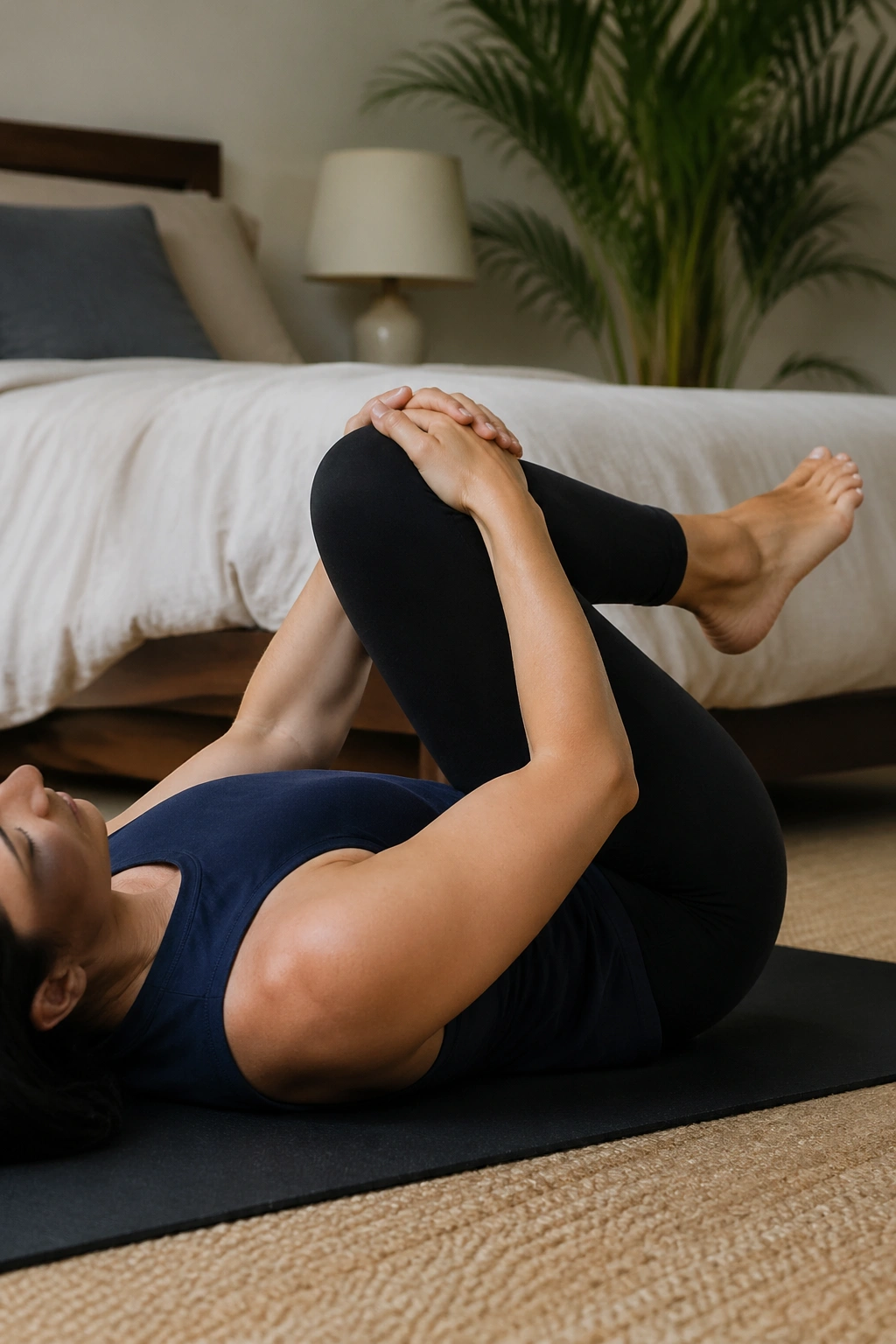
Short, simple, and more useful than it looks. A good lower back stretch does not need to be fancy, and knees-to-chest has a lot going for it after back training: it is easy to control, easy to breathe in, and easy to back off if your low back feels touchy.
Lie on your back with both legs extended. Pull one knee toward your chest first and hold it with both hands around the shin or behind the thigh. After 15 to 20 seconds, switch sides. Then pull both knees in together if that feels comfortable and hold for another 20 to 30 seconds.
Single-leg first is the part many people skip, and I think that is a mistake. It lets you check whether one hip or one side of the low back is much tighter than the other. If one side feels blocked, spend another round there before going double-knee.
Breathe low into your belly and back. On the exhale, let the thigh come a little closer. On the inhale, keep your shoulders and jaw soft. If your tailbone lifts hard off the floor or your neck strains, you are pulling too far.
This stretch pairs well with any workout that included hinging. Deadlifts, RDLs, bent-over rows—those sessions often leave the low back feeling “full,” and knees-to-chest can take the edge off that feeling fast. It will not erase soreness the next morning. Nothing honest promises that. But it often leaves you moving better on the walk out.
9. Reclined Spinal Twist
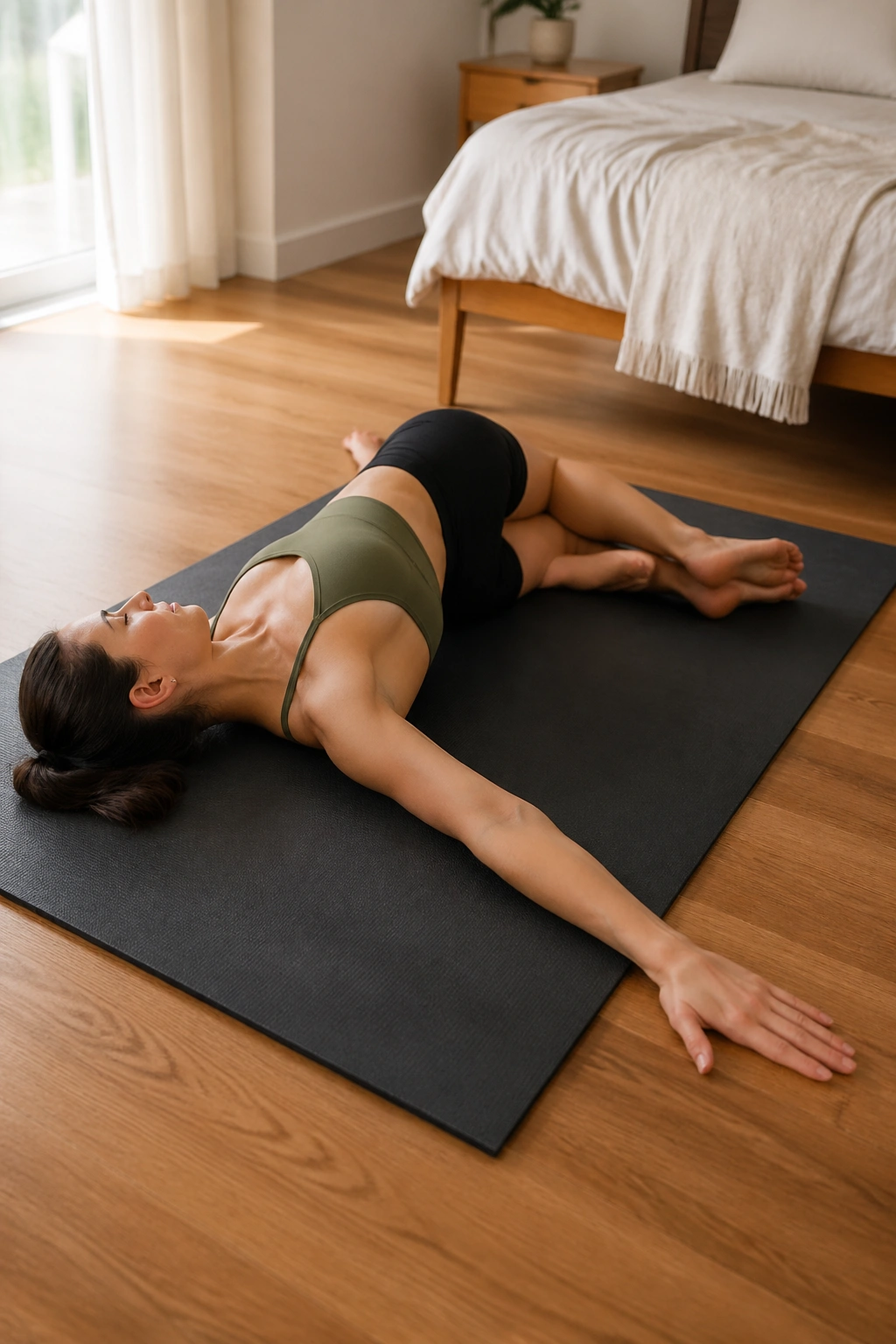
A good reclined twist can feel like wringing out stiffness from the low back and outer hip at the same time. A bad one feels like someone is trying to unscrew your spine with a wrench. The difference comes down to setup.
Lie on your back, bring one knee toward your chest, then guide it across your body while the opposite shoulder stays heavy on the floor. Your arms can go out to the sides in a T, or keep one hand on the knee for control. Bend the bottom leg if that helps you stay stable. Hold 20 to 30 seconds, then switch.
The stretch should spread through the low back, glute, outer hip, and side waist. If you only feel strain in the front of the knee or a jam near the sacrum, change the angle. Bringing the knee a bit higher toward the chest or a bit lower toward the hip can change the whole thing.
I do not like forcing this one after a maximal deadlift day. Light, easy, controlled—that is the lane. If you need to pin the shoulder down with one hand while yanking the knee harder with the other, you are doing too much.
One more thing. Some people chase a big spinal “crack” here. Resist that urge. You are not trying to win a sound effect. You are trying to leave the twist feeling looser than when you went in.
10. Seated Forward Fold With Soft Knees
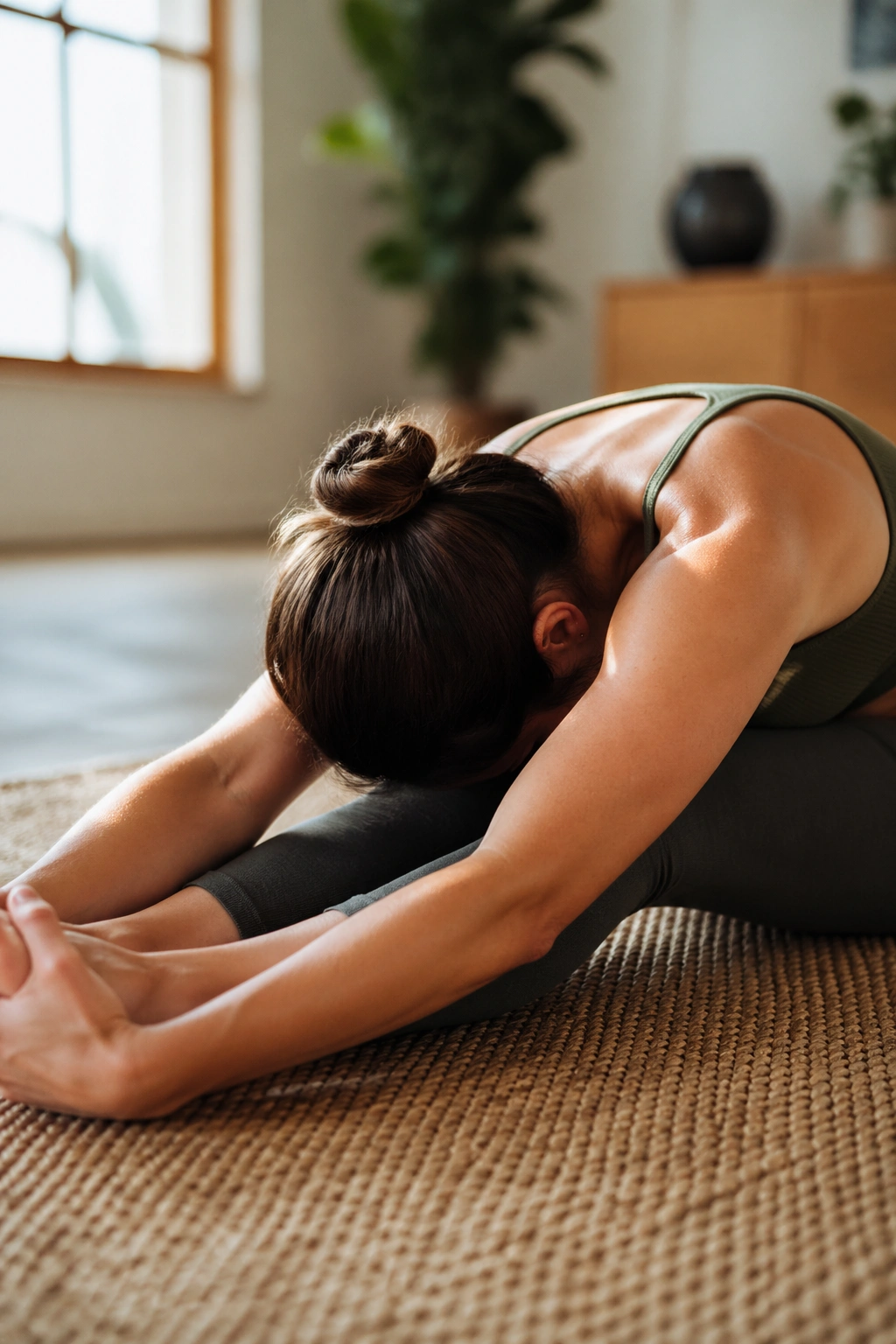
Here is the contrarian take: the classic straight-leg toe touch is often a lousy post-back-workout stretch. It turns into a hamstring tug-of-war, the lower back rounds hard, and lifters call that “deep.” Better option? Sit down, bend the knees a little, and let the back lengthen without fighting your posterior chain.
Sit on the floor with both legs in front of you. Place a folded towel or small pad under your sit bones if your pelvis tends to tuck under. Bend your knees enough that you can tilt the pelvis forward even a little—sometimes that means more bend than your pride likes. Reach toward your shins, ankles, or feet and hold there.
You are not trying to drape your chest to your thighs. You are trying to feel a smooth stretch through the erectors, lats, and back of the hips without the sharp, electric pull that shows up when hamstrings take over.
A cleaner way to do it
- Keep the chest long rather than collapsed.
- Let the elbows soften instead of yanking.
- Hold 20 seconds, come up, reset, then go again.
- If sitting on the floor feels cramped, do the same stretch sitting on the edge of a bench.
This works well after machine rows and pull-downs. After heavy deadlifts, I still prefer gentler options first. Your low back will tell you fast which camp you are in.
11. Standing Doorframe Back Stretch for Tight Lats
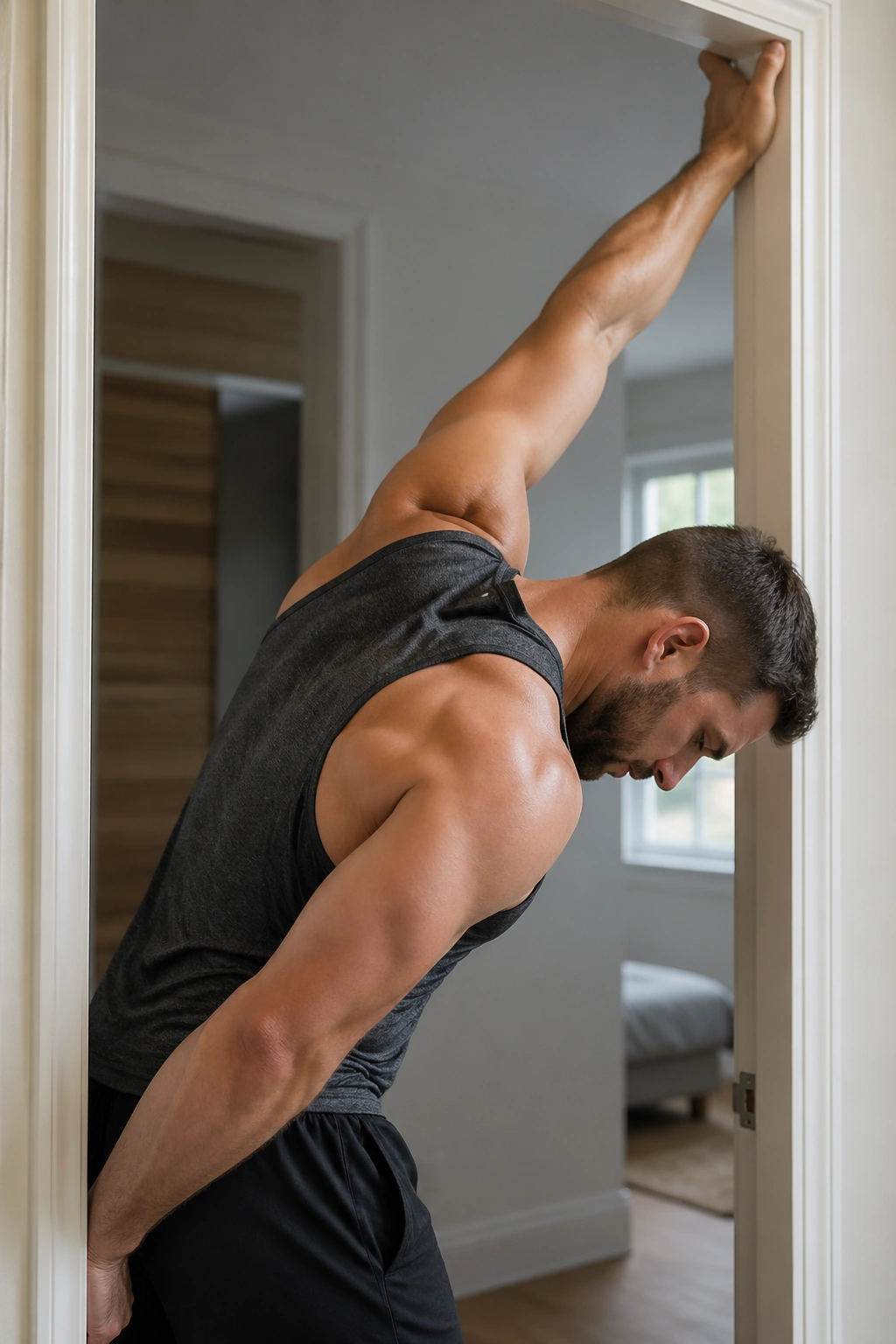
No mat? No floor space? Use a doorway. This back stretch looks small, but it is a sharp way to target one lat at a time, and unilateral work matters because most people have one side that takes over on rows and pull-downs.
Stand facing a sturdy doorframe or upright post. Put your right hand high on the frame, thumb pointing up, then step your right foot slightly behind you. Sit your hips back and lean your torso away from that arm until you feel a stretch from the back of the armpit down toward the ribs. Keep the rib cage stacked over the pelvis instead of flaring open.
That last cue changes everything. If you arch and twist, the stretch gets bigger but sloppier. If you keep your torso braced and let the hips drift back, the line through the lat gets much cleaner.
Hold 20 to 30 seconds per side. Then experiment with hand height. A hand set a few inches higher may hit more upper lat and teres major. A slightly lower hand can feel better on the shoulder and still stretch the side body well.
I like this one after cable work because it is fast and precise. You can also slip it between sets on lighter days, though it shines most after training when you can actually hold the position and breathe instead of rushing off to the next machine.
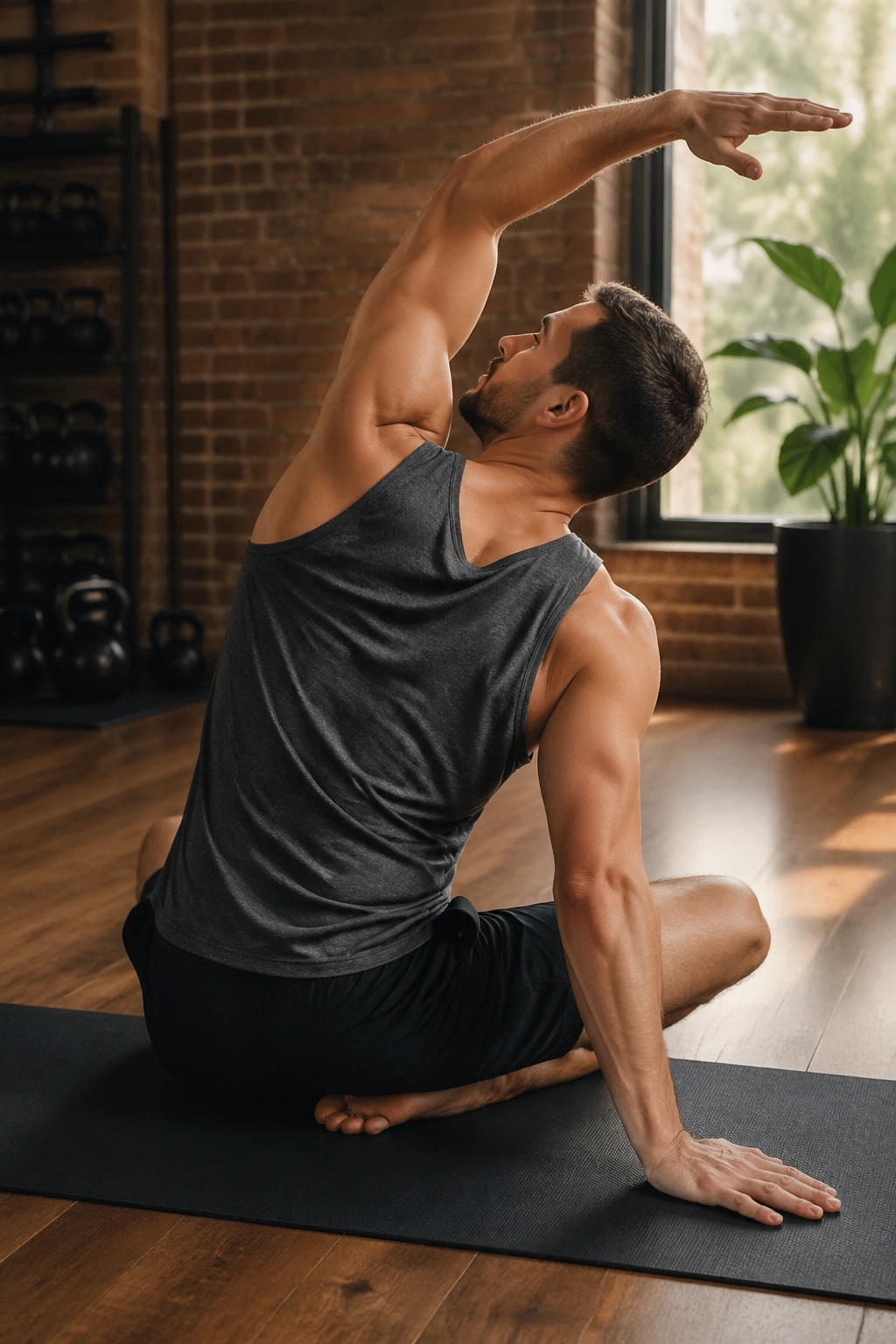
12. Half-Kneeling Side-Bend Stretch for the QL and Lats
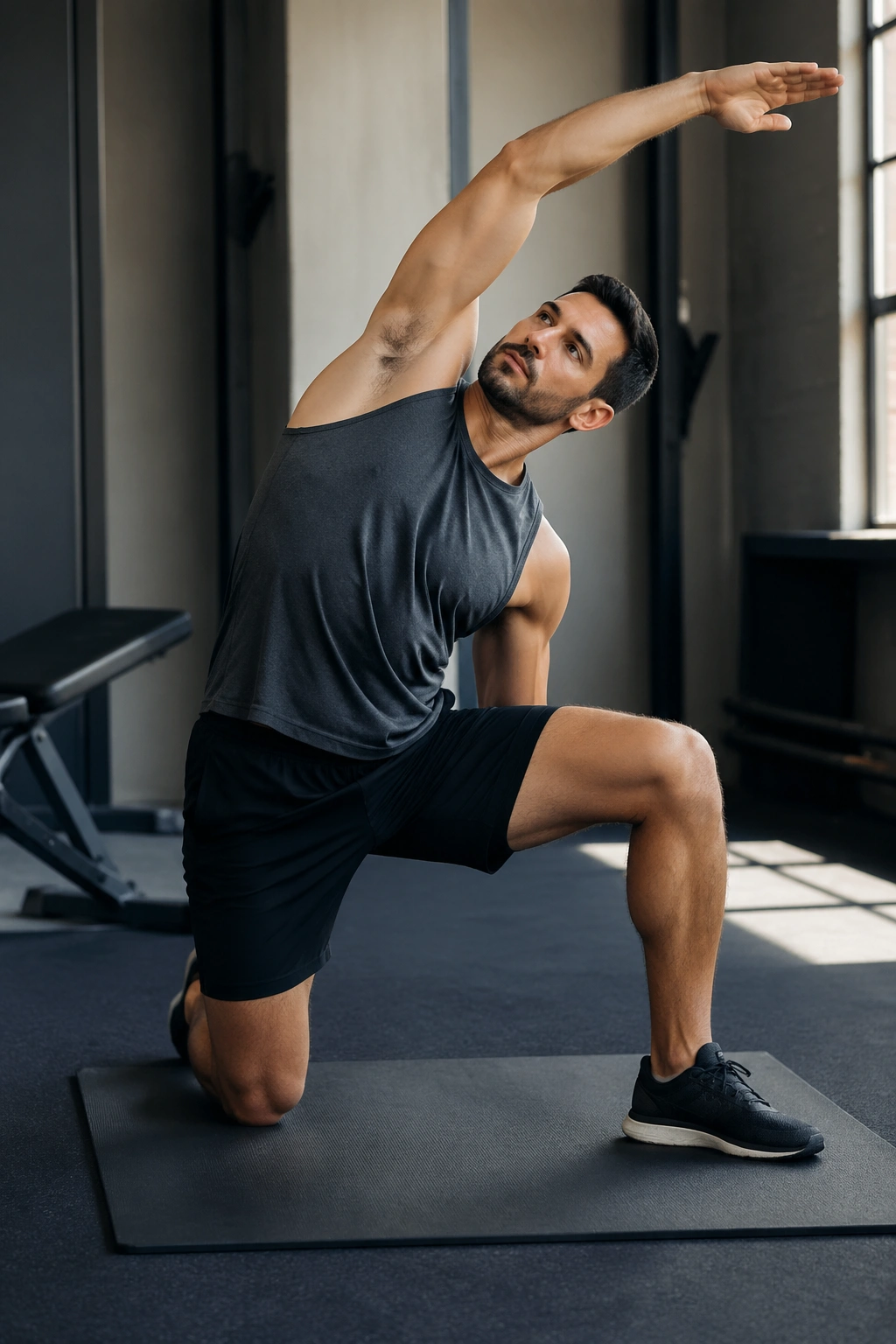
The quadratus lumborum, or QL, sits deep in the side of the low back and gets cranky more often than people realize. If you finish back day with one-sided tightness near the belt line, or a “stuck” feeling when you stand upright after rows, this stretch can be the missing piece.
Set up in a half-kneeling position with your right knee down and left foot forward. Squeeze the glute on the kneeling side. Raise your right arm overhead and reach it slightly across your body to the left while keeping your torso tall. You should feel a long stretch from the outside of the right hip and waist up through the side ribs and into the lat.
A lot of people turn this into a backbend. Do not. Think up first, then over. That upward reach creates space before the side bend.
You can keep the front hand on your front thigh, or place it lightly on a bench for balance. Hold 20 to 30 seconds per side. After one round, try tucking the pelvis a little more under the kneeling side. That often sharpens the stretch near the QL.
This one is gold after single-arm rows, suitcase carries, landmine rows, or any session where one side of your torso feels more worked than the other. It also tells you a lot. If one side side-bends with ease and the other feels glued down, there is your clue about where your cooldown time should go.
When back stretches are the wrong call
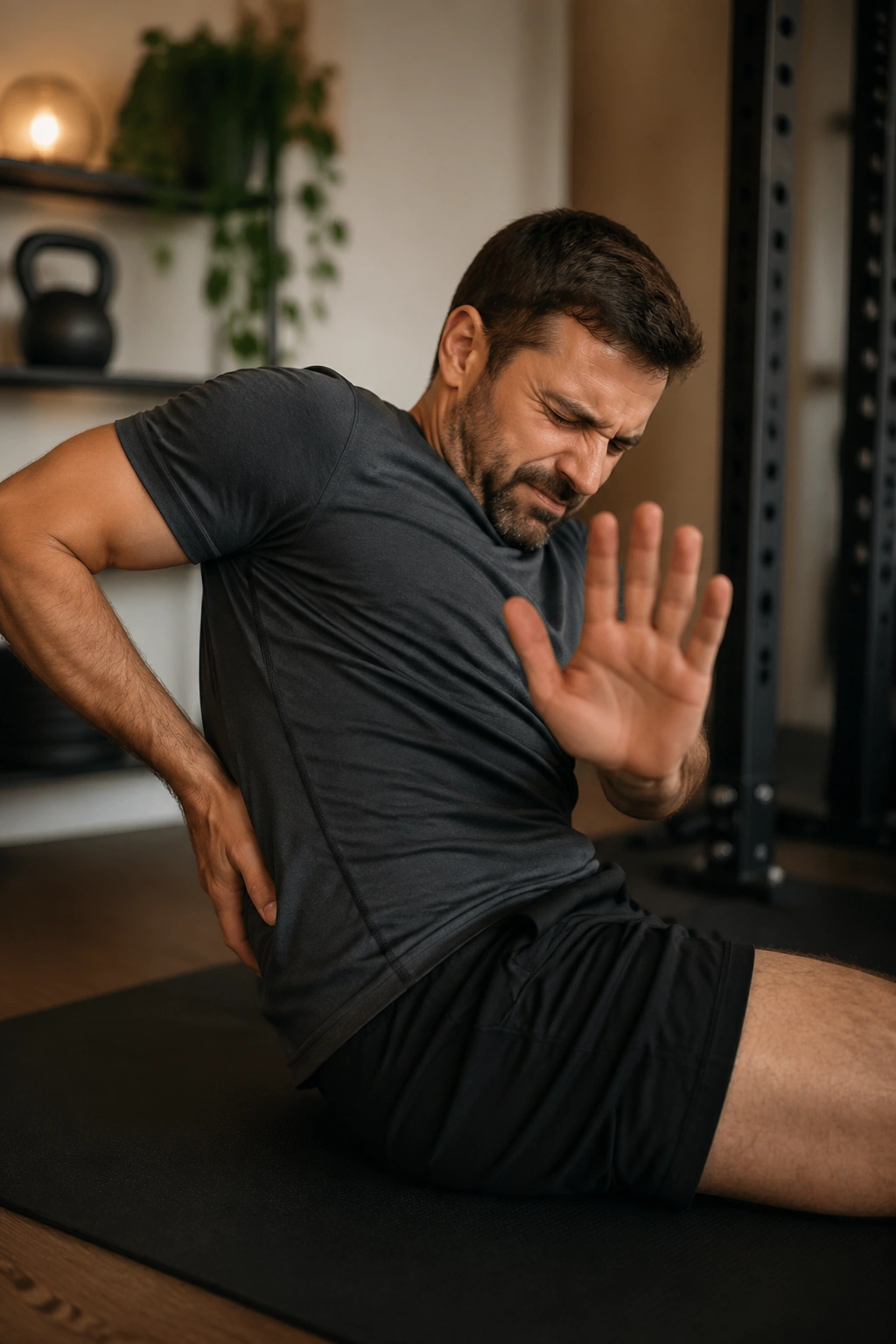
Sharp pain changes the conversation. So does pain that shoots into the glute, leg, arm, or hand, or any numbness and tingling that appears during a stretch. Those are not “good stretch” feelings. They are stop signs.
Muscle soreness is broad, dull, and local. It tends to warm up as you move. Joint irritation and nerve symptoms act differently. They pinch, zap, burn, catch, or travel. If you have that second group, skip the stretch session and get the back checked by a qualified clinician who works with active people.
There is also the simple issue of timing. Right after a brutal hinge session, your back may want walking, breathing, and light decompression more than deep range. That is not a failure. It is a good read. A two-minute walk, one supported hang, and child’s pose may be all you need that day.
And if one stretch always makes you feel worse 10 minutes later, retire it. No loyalty required.
Final Thoughts
The best back stretches after training are not the deepest ones. They are the ones that match what you actually did in the gym. If your session was lat-heavy, open the lats. If your mid-back feels locked up, rotate and extend the thoracic spine. If your low back feels pumped from hinging, choose gentle positions first and keep your pride out of it.
A short cooldown done with control beats a long one done carelessly. Pick 3 to 5 stretches, hold most of them for 20 to 30 seconds, breathe slowly, and notice what changes from side to side. That is enough to build a routine you will keep doing.
Your back usually tells the truth if you listen early.
