



Most pre and post workout stretches for lifters fail for a boring reason: people use the same stretch for two different jobs.
Before you lift, you want your body to move better, wake up, and hit the positions your program asks for. After you lift, you want to get out of the braced, clenched, locked-down shape that heavy training leaves behind. Those are not the same thing. A long, sleepy hamstring hold before heavy squats can make the rest of the session feel flat; a few controlled ankle rocks or hip switches can make the same squat session feel cleaner from rep one.
That split matters more than most people think. Lifters spend hours tightening things up on purpose — grip, lats, abs, glutes — then wonder why hips feel glued, shoulders sit forward, or ankles refuse to bend when the bar gets loaded. The answer usually isn’t some elaborate mobility ritual. It’s a handful of stretches that actually match the lift you’re about to do or the stress you just finished.
I keep coming back to the same kind of work because it’s simple and it works in the real world: hips that open without wobbling, ankles that let the knees travel, t-spines that rotate, pecs and lats that stop yanking the shoulders out of place. Nothing flashy. Just useful.
1. 90/90 Hip Switches for Pre-Workout Hip Prep
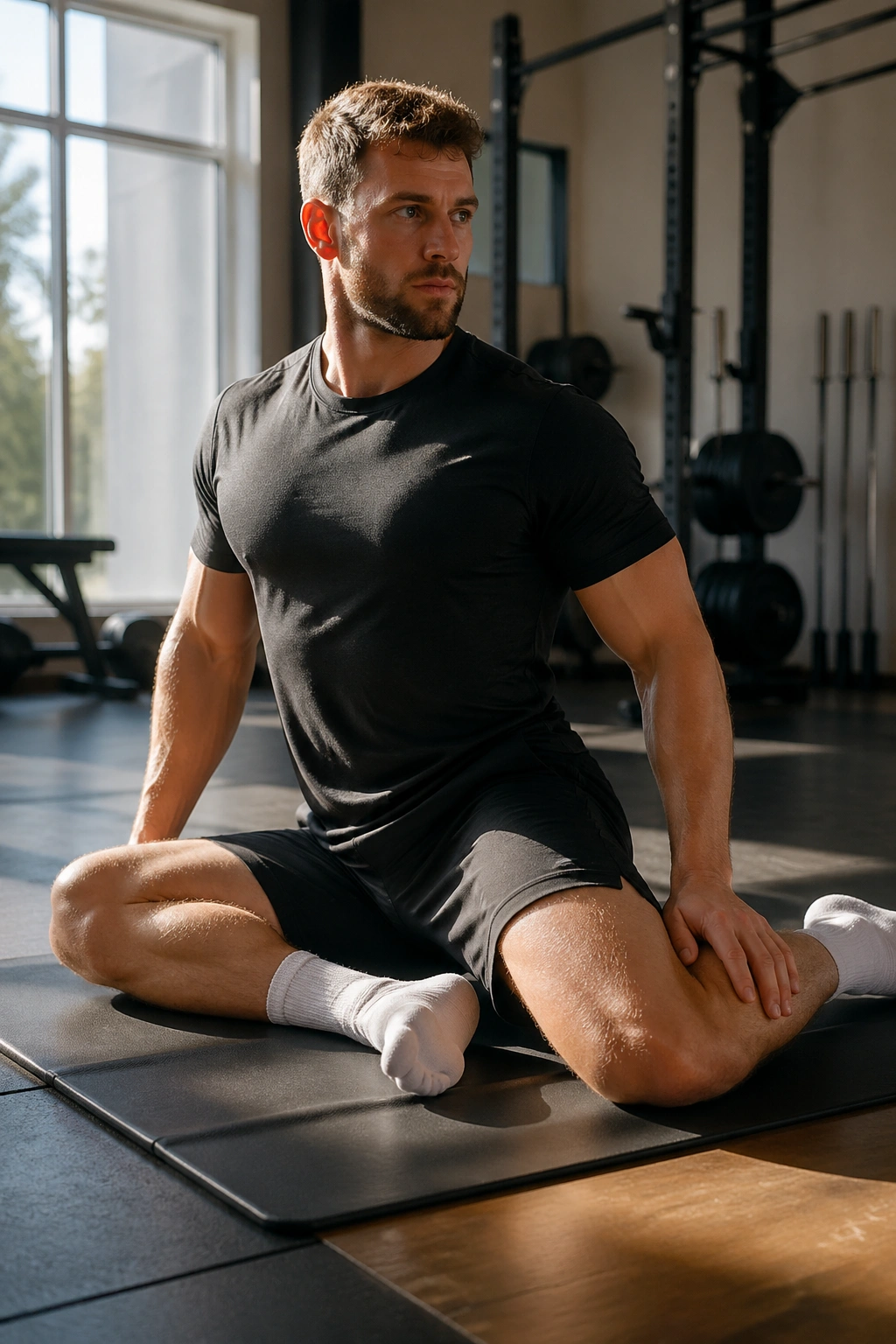
A lot of lifters think tight hips mean they need a brutal stretch. Usually, they need control first. The 90/90 hip switch is one of those drills that looks almost too easy, then suddenly you realize your hips have been ignoring half their range.
Sit on the floor with both knees bent at 90 degrees, one leg in front and one to the side. Let both knees drop as far as they’ll go without forcing anything, then rotate them through to the other side. Keep your chest tall and move with control. Five slow switches per side is enough to start waking the hips up before squats, deadlifts, or any day with deep knee bend.
Why Lifters Keep It in the Warm-Up
The real value here is not the stretch itself. It’s the way the drill asks the hips to rotate without the lower back cheating. If you sit a lot, brace hard under a bar, or live in straight lines all day, this pattern gets rusty fast. Rusty hips show up as ugly squat depth, weird pelvic tilt, and that annoying feeling that one side always moves easier than the other.
Quick Form Cues
- Keep your ribs stacked over your pelvis.
- Pause for one second at each end range.
- Don’t flop from side to side like a sack of laundry.
- Breathe out softly as you switch.
Skip the chase for depth. Chase smooth reps. That’s the whole point. If your knees only move a little at first, fine. The movement usually improves after one or two rounds, and that’s a better sign than forcing your way into a range you can’t control.
2. Ankle Rocks Against the Wall
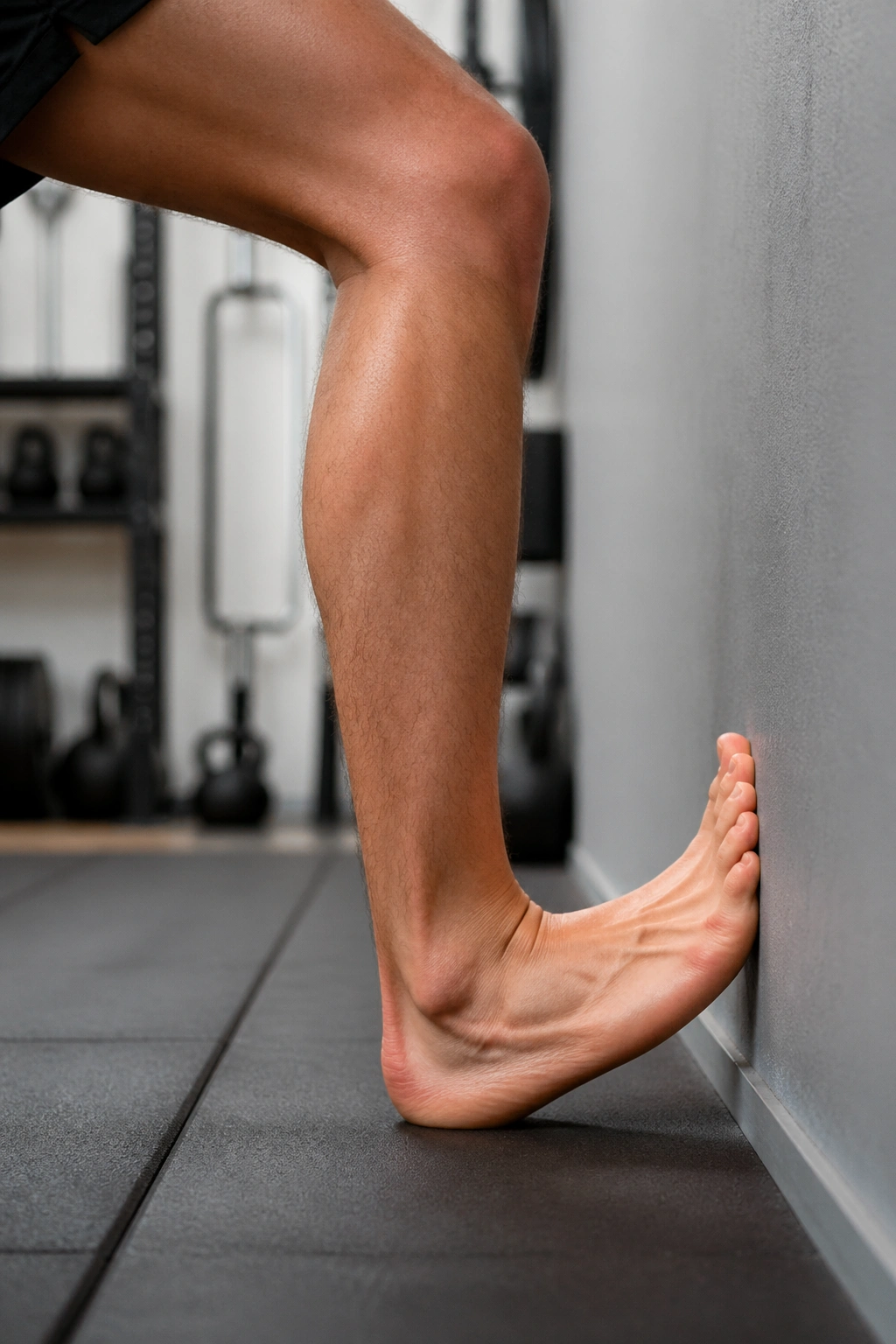
If your heels pop up in squats, your ankles deserve a look before your knees do. Stiff ankles are one of the fastest ways to make a good squat feel awkward, and the fix is usually more basic than people want to admit.
Face a wall, place one foot a few inches away, and drive the knee forward until it touches or nearly touches the wall without the heel lifting. Rock in and out of that end range for 10 to 15 reps per side. Keep the pressure even through the whole foot. The arch should stay alive, not collapse.
This is a pre-workout stretch in the real sense: it sets position. You are not trying to pry the calf apart for 90 seconds. You’re teaching the ankle to bend when the knee travels over the toes, which matters in squats, split squats, lunges, and even how stable you feel pulling from the floor.
A lot of people turn this into a toe-wiggle mess. Don’t. Keep the toes pointed straight ahead, let the knee track over the second or third toe, and stop before the heel starts cheating. If one side is tighter, give it an extra set. No drama. No elaborate routine. Just enough motion to make the squat rack feel less hostile.
3. Scapular Wall Slides for Shoulder Position
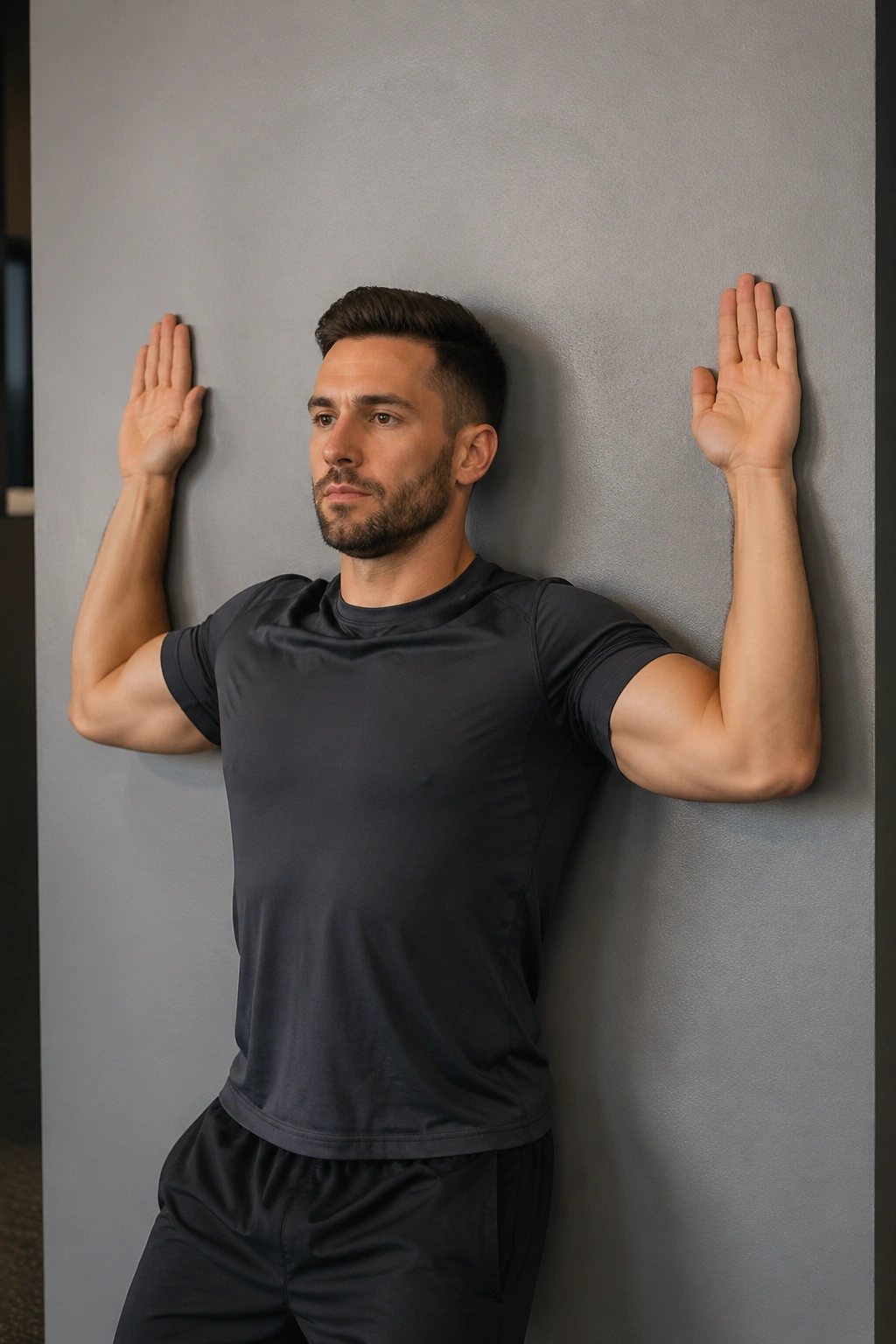
Why do shoulders feel pinchy during pressing when the weight is still light? Usually because the shoulder blades are stuck living in one bad position, and the torso is helping them stay there.
Stand with your back against a wall, feet a few inches forward, ribs down, and lower back gently touching the wall without over-arching. Put your forearms against the wall in a goalpost shape, then slide them upward while keeping the wrists and elbows as close to the wall as you can manage. Come back down slowly. Six to ten smooth reps is enough before bench, overhead press, or pull work.
How to Keep the Ribs from Flaring
The trap is obvious: the arms go up, the ribs pop out, and the lower back takes over. That’s not shoulder mobility. That’s a compensation pattern wearing a mobility costume. Keep your exhale soft but real, and think about the front of the ribs staying heavy.
This one is better than endless shoulder circles when your pressing groove feels messy. It gives you a clean look at upward rotation, thoracic posture, and whether your shoulders can reach without the neck jumping in to help. If you press a lot, this is one of those boring little drills that quietly pays rent.
4. World’s Greatest Stretch for Full-Body Prep
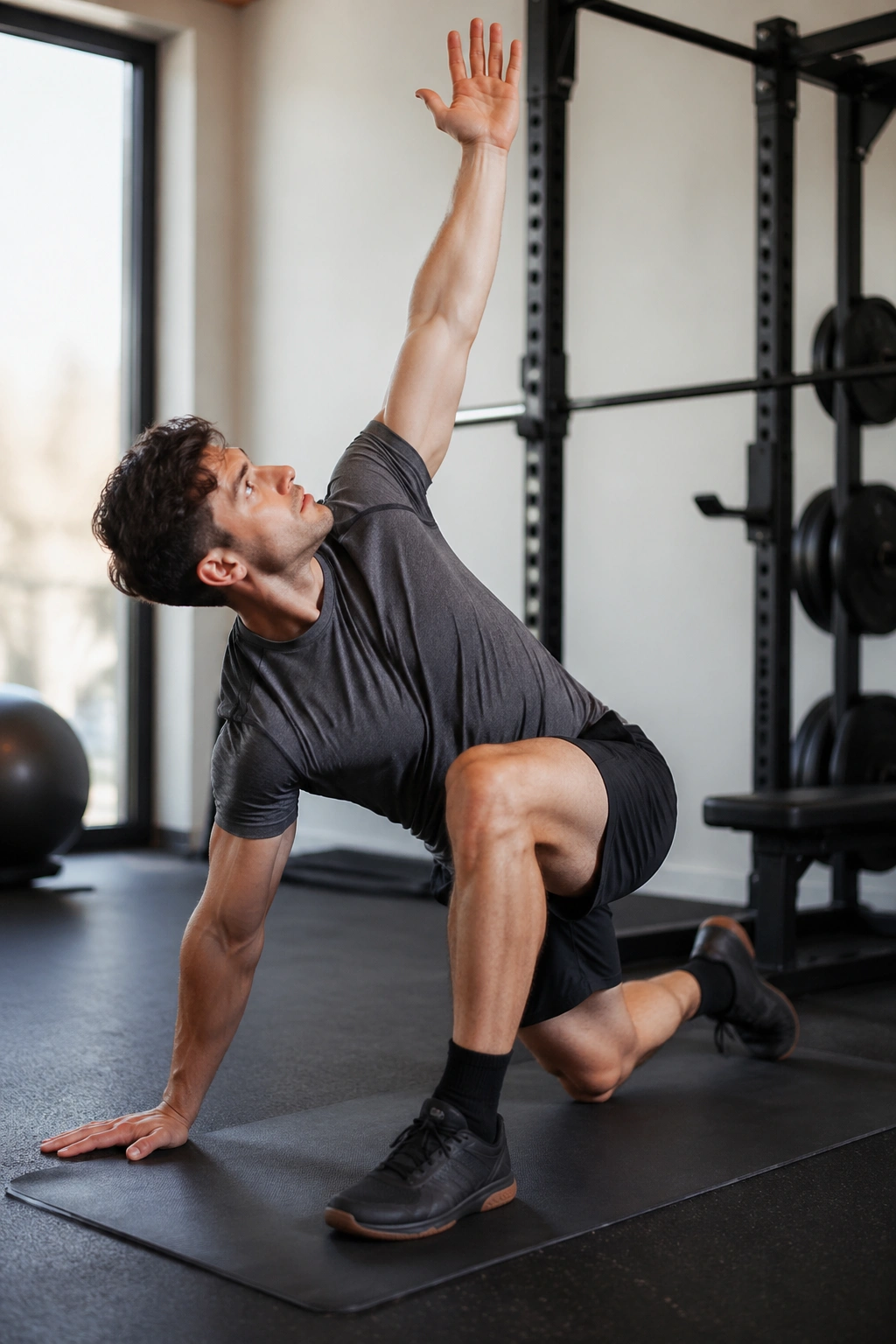
A deep lunge, a long exhale, and a rotation through the upper back can fix a surprising amount of pre-lift stiffness. That’s why the world’s greatest stretch keeps showing up in warm-ups that don’t waste time.
Step into a lunge, drop the back knee if needed, and place the hand on the floor inside the front foot. Sink the hips slightly, then reach the free arm up and turn the chest toward the ceiling. Move back and forth between the lunge and the rotation for 3 to 5 reps per side, or hold the rotated position for two calm breaths if the day feels especially stiff.
The key is not speed. It’s shape. The front heel stays down, the front knee tracks over the toes, and the back leg stays long enough to open the hip flexor without turning the lower back into a hinge. If you rush through it, the stretch becomes a blur. If you slow it down, you feel the whole chain wake up.
This is one of the few pre-workout moves that covers a lot of ground without feeling lazy. Hips, adductors, thoracic spine, even the front foot gets a bit of work. It suits squat days, deadlift days, and any session where your body feels like it spent the last 12 hours folded in half.
5. Band Pull-Aparts for the Upper Back
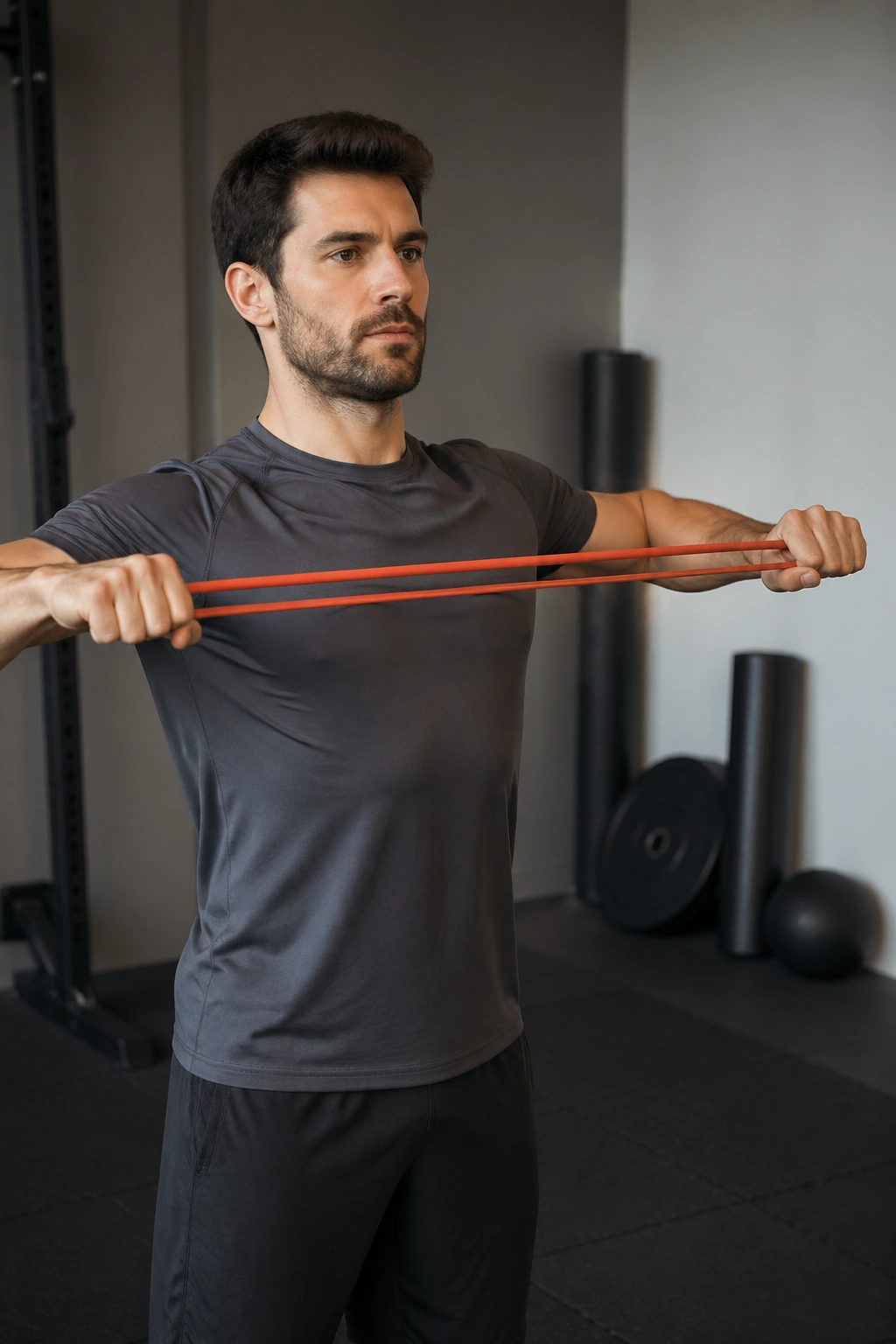
A light band can do more for a lifter’s shoulder day than a pile of fancy gadgets. Band pull-aparts are plain, cheap, and annoyingly effective when your upper back feels sleepy.
Hold a light resistance band at chest height, arms straight but not locked, and pull it apart until the band touches your chest or gets close. Return with control. Fifteen to twenty-five reps works well as part of a pre-workout ramp-up, especially before bench press, rows, or overhead work.
What Makes It Worth Doing
The movement wakes up the rear delts, mid-back, and the small stabilizers that keep your shoulder blade from drifting all over the place when the bar gets heavy. It also reminds you not to shrug every rep into your ears. That’s useful. More useful than people like to admit.
A Few Details That Matter
- Use a band that feels easy for the first 10 reps.
- Keep your neck relaxed.
- Pull from the shoulder blades, not the hands.
- Stop if the lower back starts arching to help.
A light band is enough. If the band fights back so hard that your shoulders creep forward and your ribs flare, it’s too much. The point is wake-up work, not a test of pride.
6. Deep Squat Pry for Hips and Ankles
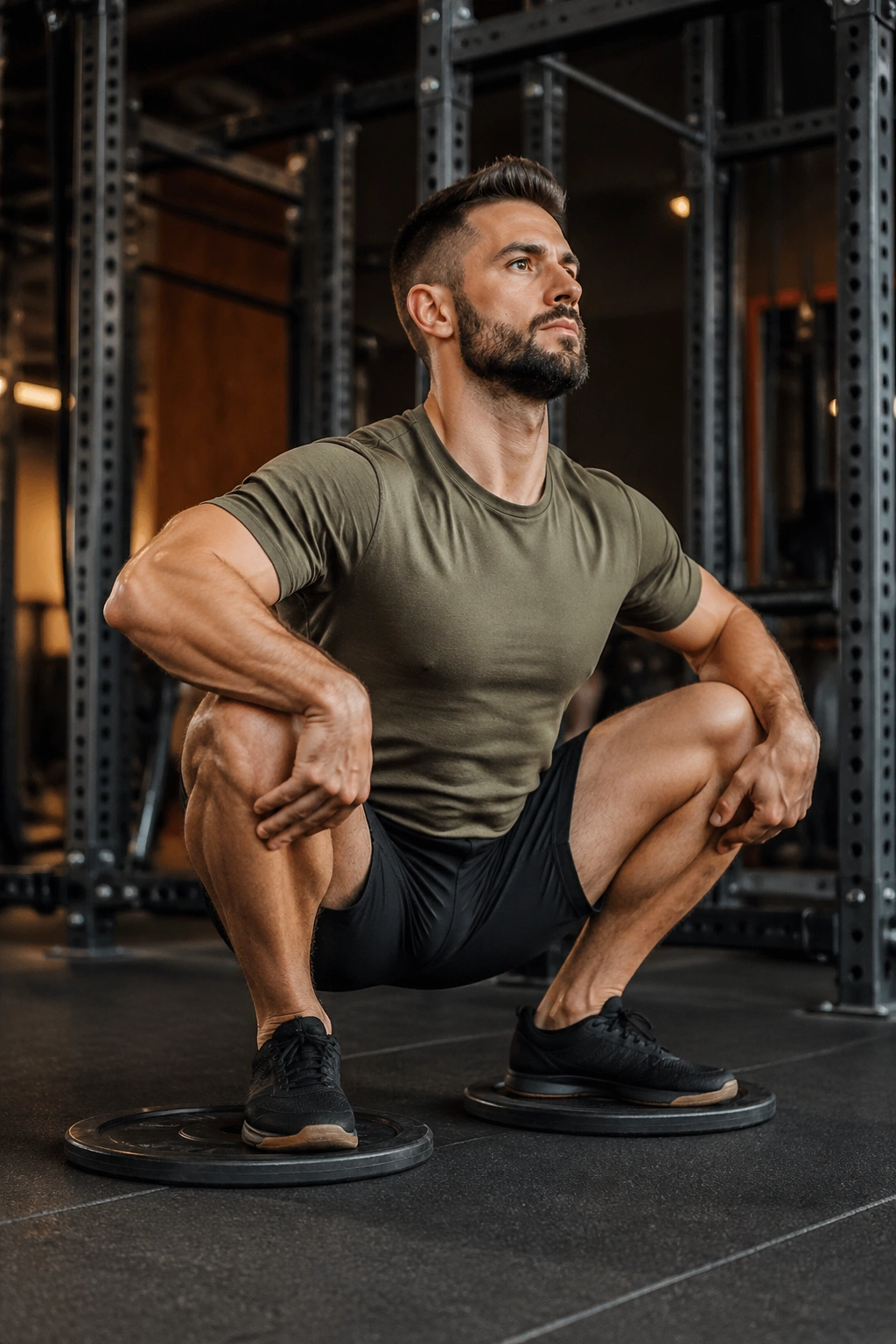
Unlike a long couch stretch, the deep squat pry gives you a full lower-body reset in one position. It’s part ankle opener, part hip opener, part “please let me get into a clean bottom position.”
Sink into a deep squat with your heels down if you can. Hold onto a rig, rack post, or kettlebell for balance if needed. Then gently shift side to side, use your elbows to press the knees outward, and let the hips settle a little deeper with each breath. Stay for 20 to 40 seconds, stand up, and repeat once or twice.
This works especially well after a general warm-up because the position becomes easier when the tissues are already warm. Cold and stiff, it can feel like a fight. Warm, it starts teaching the hips, ankles, and adductors to share the load instead of making the lower back do all the work.
Why It Feels Different From Other Stretches
A deep squat pry doesn’t isolate one line of tissue. It gives you a live position to hang out in, which matters for lifters who need squat depth, cleaner receiving positions, or simply better balance near the bottom of a movement.
If your heels float, put a small plate under them for a few sessions and work on ankle rocks separately. That’s not cheating. It’s smart. The goal is a better squat position, not a grim little fight with the floor.
7. Thoracic Rotation Open Books
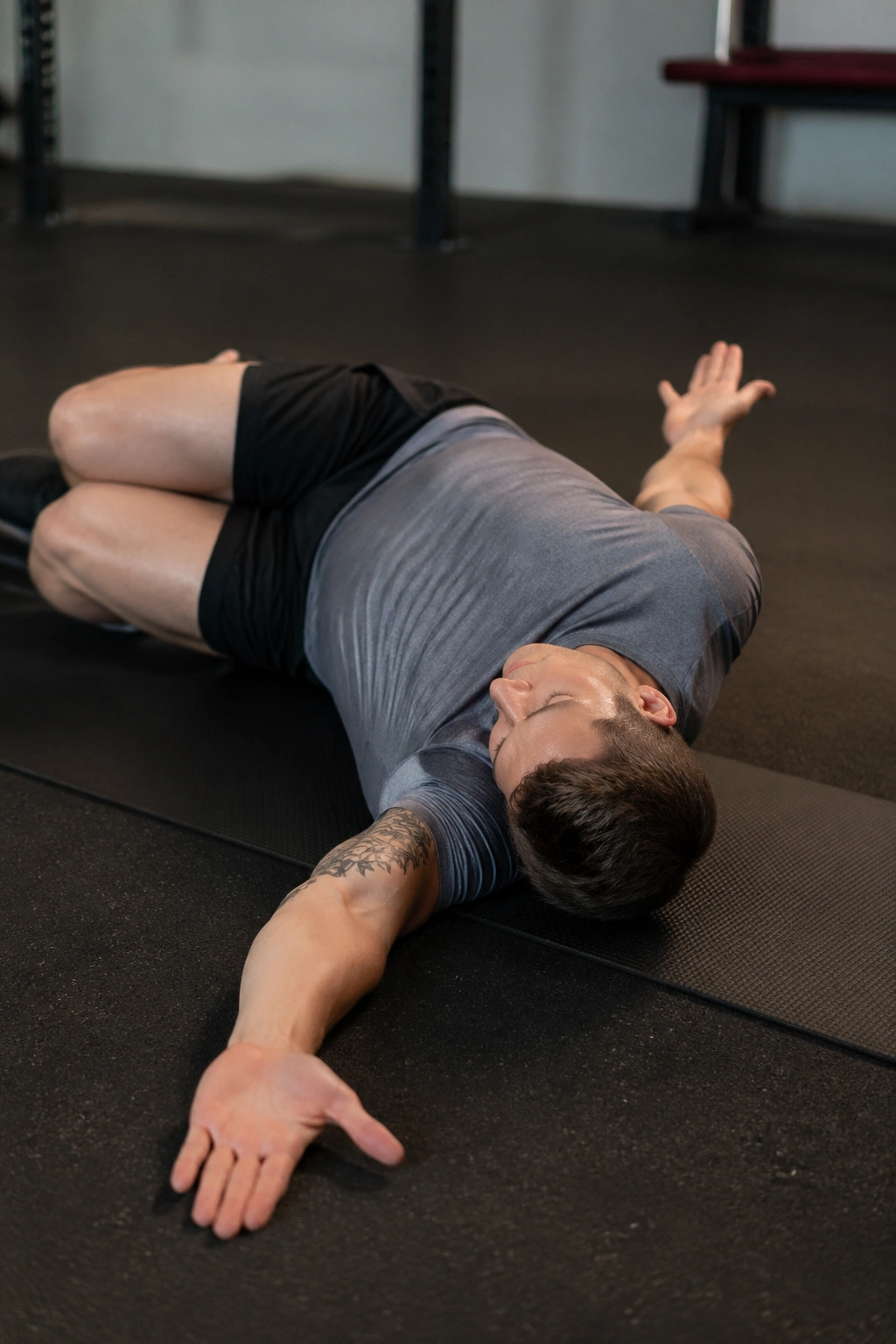
A stiff upper back has a way of pretending it’s a shoulder problem. Open books usually tell the truth fast.
Lie on your side with knees bent and stacked, arms straight out in front of you. Keeping the knees together, rotate the top arm open across the body and let the chest follow until it feels like the upper back wants to twist, not the lower back. Move slowly. Six to eight reps per side is enough before pressing, rowing, or deadlifting if your torso feels locked.
The floor gives you feedback here, which is the nice part. If the knees peel apart, the pelvis is cheating. If the lower back twists hard, the movement has drifted. Keep the movement in the rib cage and shoulder blade area. That’s where most lifters need the help anyway.
This is a quiet drill, but it does a lot. Bench press setup often feels cleaner after it. So does a deadlift where the chest needs to stay proud without a full-body arch. And if your overhead work gets jammed because your upper back refuses to rotate, this is a good place to start.
8. Glute Bridge March for Posterior Chain Wake-Up
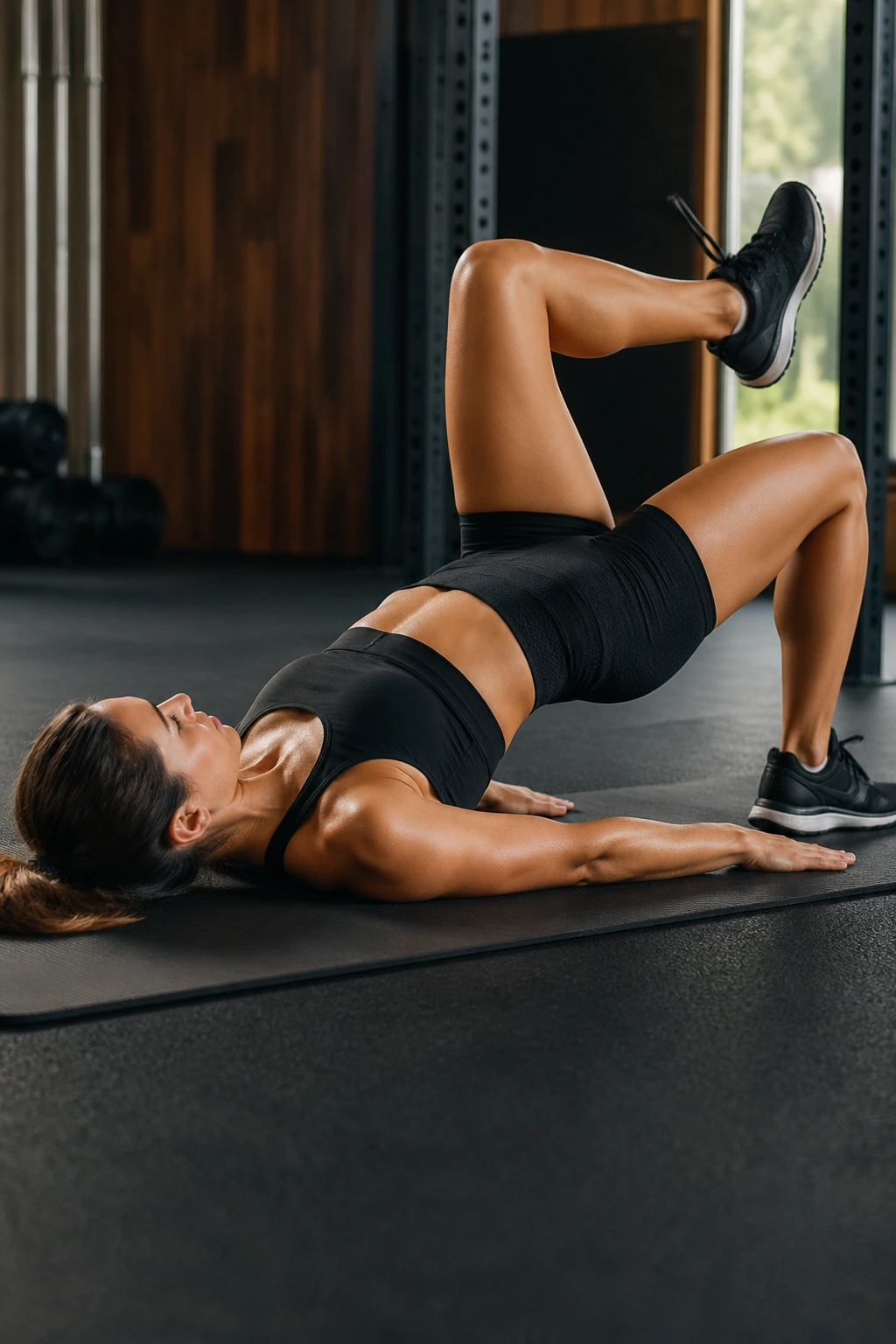
A sleepy glute is often the reason your lower back starts doing free labor. The glute bridge march fixes that better than most people expect, because it asks the hips to stay level while one leg moves at a time.
Lie on your back with knees bent and feet flat. Lift into a bridge by squeezing the glutes, then slowly march one knee up a few inches without dropping the pelvis. Put that foot back down, switch sides, and keep the motion controlled. Eight to ten marches total is plenty before deadlifts, squats, or any session where your hips need to stay honest.
The bridge itself is not the magic part. The magic is the pelvis staying quiet while the limbs move. That gives you a clean read on whether your core and glutes are actually doing their jobs or whether your back is stealing the scene again.
A small cue helps a lot: press through the whole foot, not just the toes. If hamstrings cramp, lower the bridge height a bit and tuck the ribs down. This is not a max-effort exercise. It is a wake-up call, and it works best when you stop short of shaking yourself apart.
9. Couch Stretch for Post-Workout Quad Relief
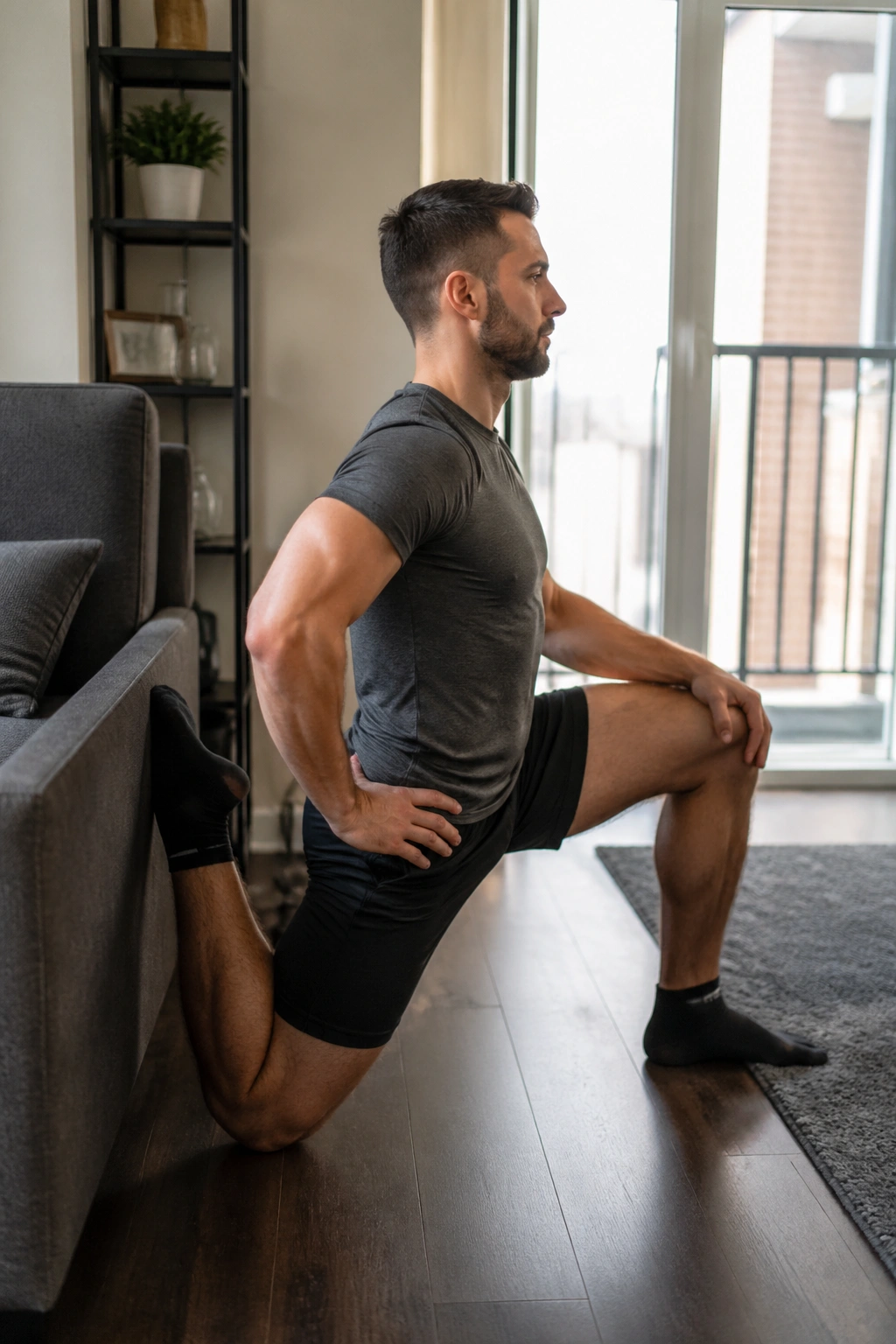
Why does the couch stretch show up after hard leg training so often? Because front-thigh tightness is not subtle after squats, lunges, step-ups, or sled work, and the couch stretch hits the hip flexors and quads in a way most floor stretches miss.
Set one knee on the floor close to a wall or couch, bring the shin up behind you, and place the front foot in a half-kneeling lunge. If this is too much, keep the back knee farther from the wall and build from there. Hold for 30 to 60 seconds per side after training, breathing slowly and keeping the ribs from flaring.
How to Make It Tolerable
The lower back likes to cheat here. Hard. Squeeze the glute on the back leg, tuck the pelvis a little, and keep the torso tall. If you arch your spine to fake depth, you’ll feel more compression than length, and that misses the point.
A folded towel or pad under the knee helps a lot. So does easing into the stretch over two or three breaths instead of dropping into it aggressively. The goal is a strong front-thigh release, not a battle with your own spine.
This one pairs well with heavy squat days because it targets the exact area that tends to stiffen up when the front rack, the bottom position, and the drive out of the hole all get taxed.
10. Half-Kneeling Hip Flexor Stretch
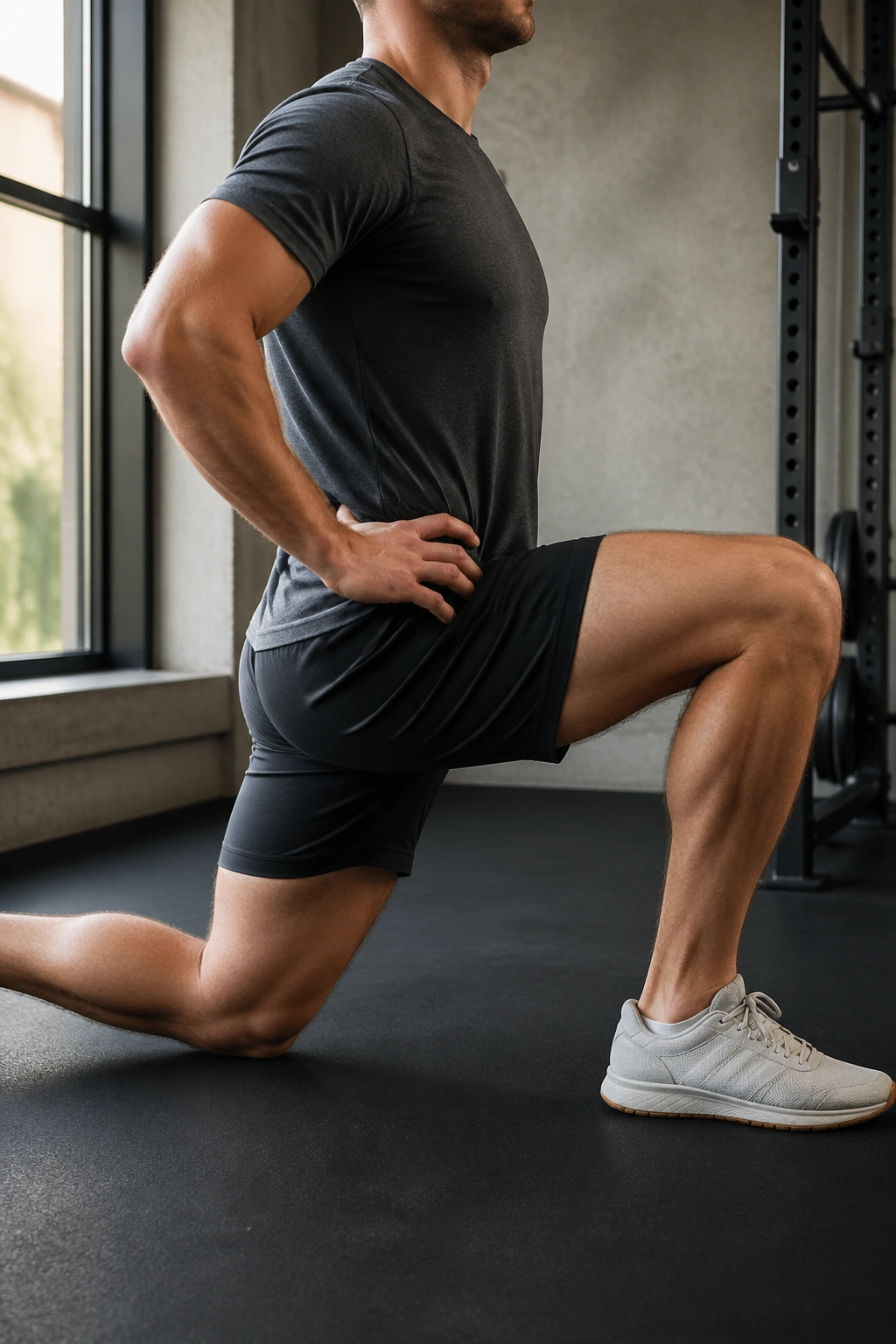
A lot of people do hip flexor stretches wrong by lunging forward and calling it good. That tends to stretch the front of the hip a little, sure, but it often misses the real problem: the pelvis is tipped forward and the glute never got the memo.
Drop into a half-kneeling position with the back knee down, front foot flat, and torso upright. Gently squeeze the glute on the back leg, tuck the pelvis, and shift forward only a few inches until you feel length in the front of the hip. Hold for 20 to 45 seconds, then switch sides. Two rounds is plenty after lifting.
The best cue is small. Tiny, even. If you shove the hips forward too hard, the lower back takes over and the stretch gets sloppy. If you keep the ribs down and the glute on, the front of the hip opens in a way that actually helps your stride, your split stance, and your recovery from a heavy lower-body day.
This stretch is one of my favorites after deadlifts and squats because it’s honest. It does not pretend to solve everything. It just gives the hip flexors a clean, direct lengthening without turning the stretch into a backbend.
11. Doorway Pec Stretch for Pressing Days
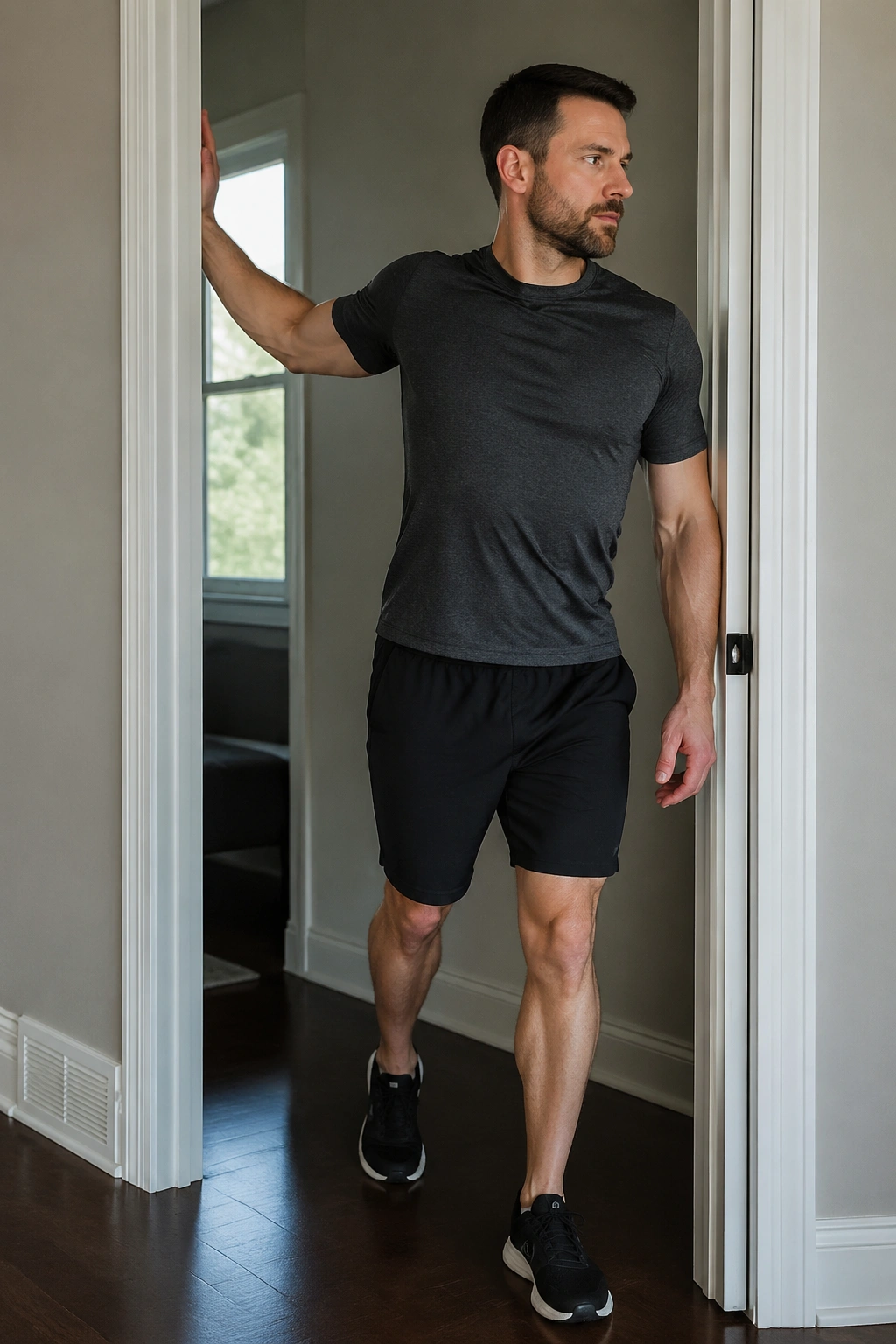
Bench-heavy lifters often chase shoulder mobility when what they really need is a calmer chest. The doorway pec stretch is simple, but it can make pressing positions feel less crowded fast.
Stand in a doorway, place the forearm against the frame with the elbow roughly in line with the shoulder or a little lower, and step through gently until you feel the stretch across the front of the chest. Hold 20 to 30 seconds, then adjust the arm angle slightly higher or lower and repeat if needed.
What to Watch For
- Keep the shoulder blade from shrugging upward.
- Avoid cranking the elbow too high.
- Do not twist the torso hard just to fake a bigger stretch.
- Use a light step, not a lunge into pain.
The pecs can get short and sticky from benching, push-ups, dips, and plain old desk posture. When that happens, the shoulders start living too far forward, and the front of the shoulder takes the brunt of it during pressing. A doorway stretch won’t fix a bad program, but it can make the next press session feel less cramped.
A small side note: one angle is not always enough. A slightly lower arm position tends to hit the lower chest, while a higher one gets closer to the upper fibers. You do not need both every time, but it helps to know why one doorway position feels different from another.
12. Seated Hamstring Stretch With a Flat Back
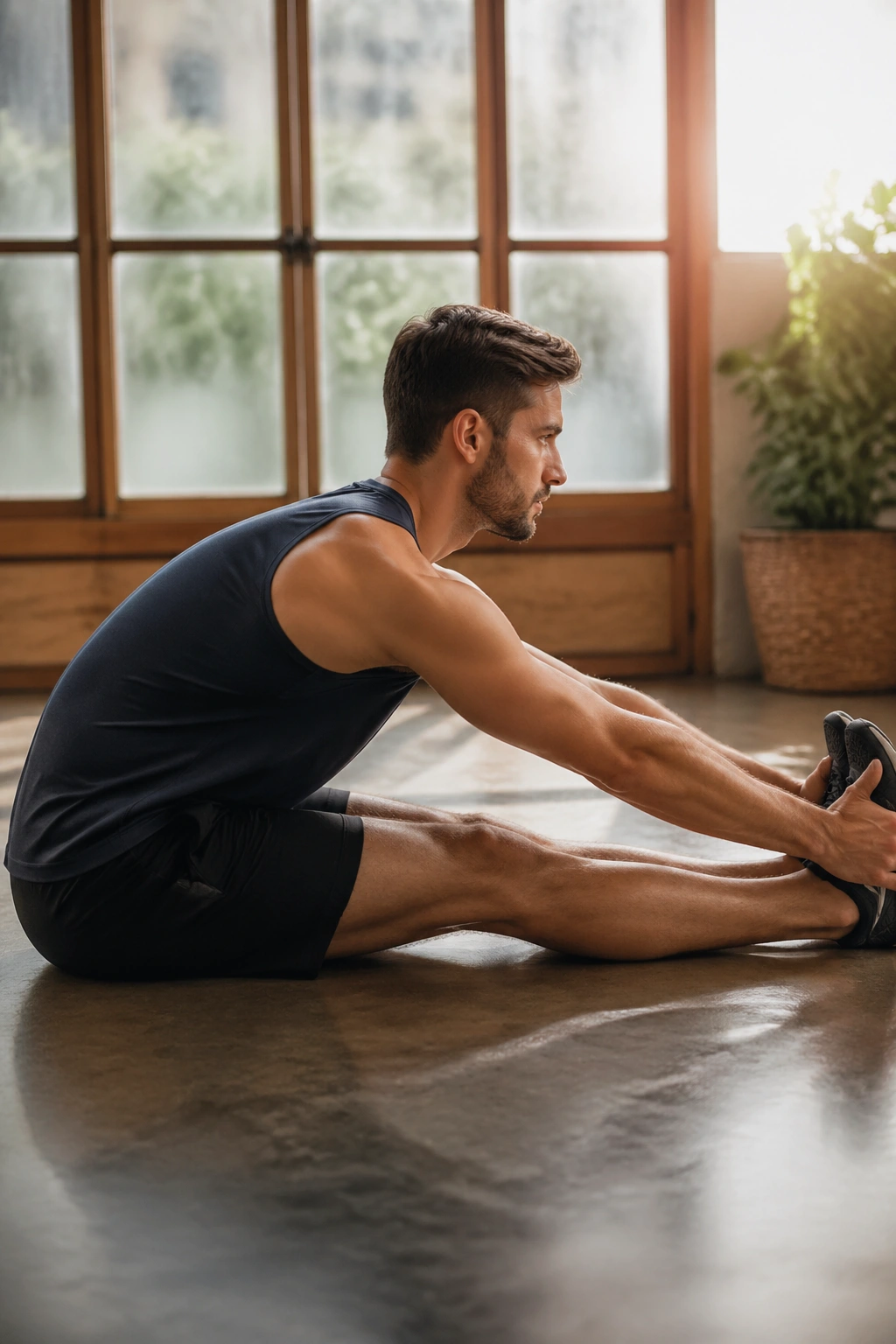
If you toe-touch with a round spine, you’re usually stretching your back more than your hamstrings. That’s fine if you meant to do that. Most lifters don’t.
Sit on the floor with one or both legs straight, hinge forward from the hips, and keep the chest long rather than collapsing into a curve. A small bend in the knee is welcome, especially if the hamstrings are tight or you’re recovering from a big hinge day. Hold for 30 to 45 seconds, breathing into the back of the legs without forcing the chest to the floor.
This stretch works better after lifting than before it. It lets the hamstrings settle after deadlifts, Romanian deadlifts, good mornings, or any session that loaded the posterior chain hard. The flat-back hinge keeps the work where you want it and makes the stretch more useful for actual movement.
You should feel tension behind the thighs, maybe a little behind the knees, but not a sharp tug or nerve-y zing. If you do, back off the range, bend the knees more, and stop treating flexibility like a contest. The point is to leave the room feeling looser, not to win a photo.
13. Lat Prayer Stretch on a Bench
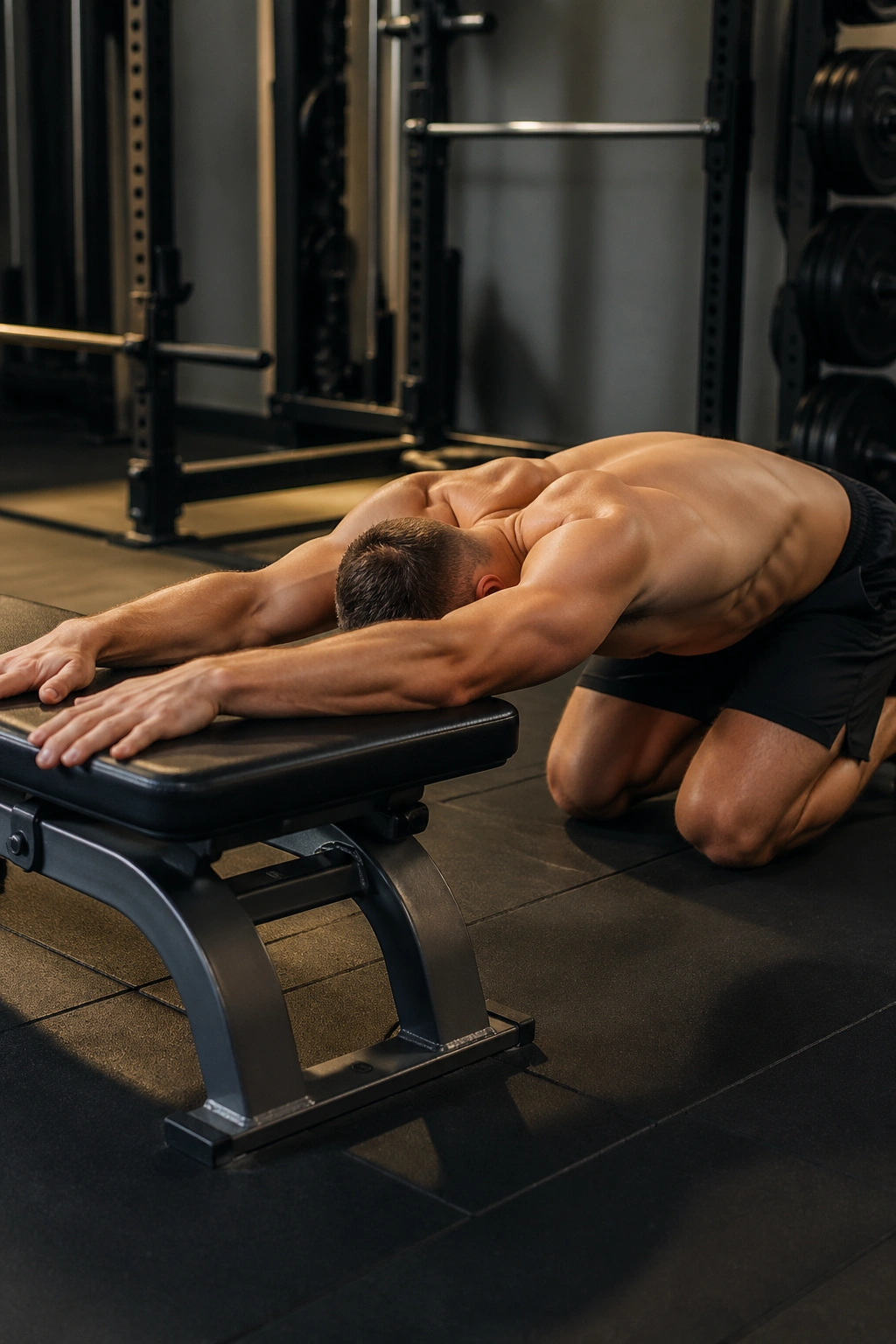
A lifter with tight lats will often blame shoulders, then lower back, then maybe the bar path. The lat prayer stretch is a neat way to see whether the sides of the torso are part of the problem.
Kneel in front of a bench, place the elbows or forearms on the pad, and sit the hips back while keeping the spine long. Let the chest sink slightly between the arms and breathe into the sides of the ribs. Hold for 30 to 45 seconds after pull-ups, rows, deadlifts, or overhead work.
Why It Feels So Specific
The lat does more than pull the arm down. It also affects how the rib cage sits and how easy it is to reach overhead without flaring. When it gets tight, the shoulders can feel jammed and the lower back often overworks to make up for it.
- Use a bench, box, or rack height that lets the elbows rest comfortably.
- Keep the neck relaxed and long.
- Shift the hips back only until the stretch is clear.
- Breathe into the side ribs, not just the belly.
This one is useful after upper-back-heavy sessions because it gives the lats a chance to lengthen without hanging off a bar and yanking on the shoulders. A small amount of pressure goes a long way here. If it feels like a wrestling match, the setup is too aggressive.
14. Figure-Four Glute Stretch for Deep Hip Release
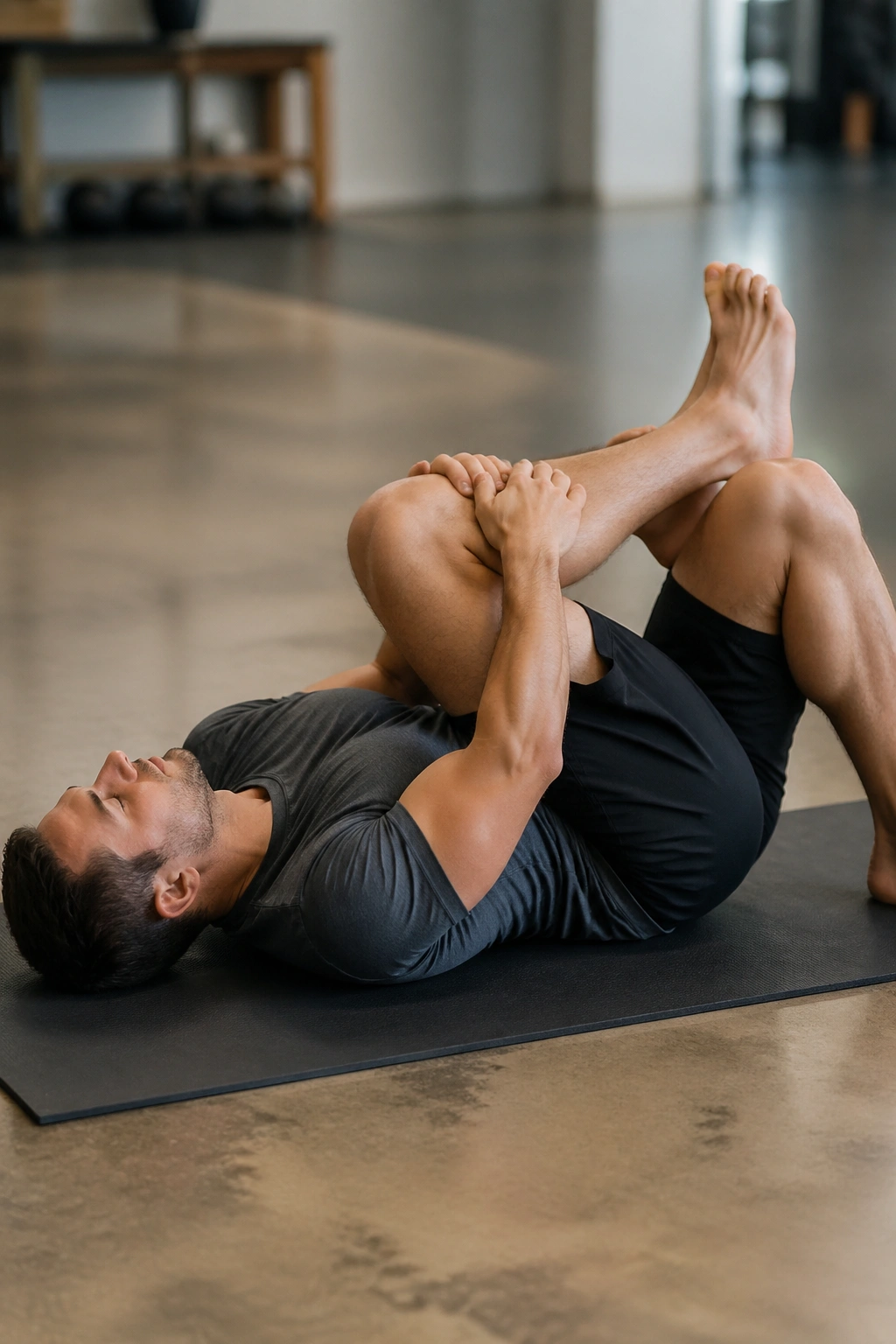
Not every tight glute needs more glute work. Sometimes it needs a better angle and five calm breaths.
Lie on your back with both knees bent. Cross one ankle over the opposite knee, making a figure-four shape, then draw the supporting leg toward your chest until you feel the stretch in the outside of the hip and glute. Hold 30 to 60 seconds per side after squats, deadlifts, lunges, or long sitting days.
The lying version is kinder than the seated one for a lot of people because it lets the back relax and keeps the pelvis from twisting around. You can also press the crossed knee away gently with your hand if you want a slightly stronger stretch, but don’t force it. The stretch should feel broad and steady, not sharp.
This is one of those after-lift moves that helps with the weird, deep ache some lifters get around the outside of the hip. It also pairs well with the hip flexor work above, because front-of-hip tightness and deep glute tightness tend to show up together after heavy lower-body work. Separate them a little, and both usually calm down faster.
15. Calf Wall Stretch for Pre and Post Workout Recovery
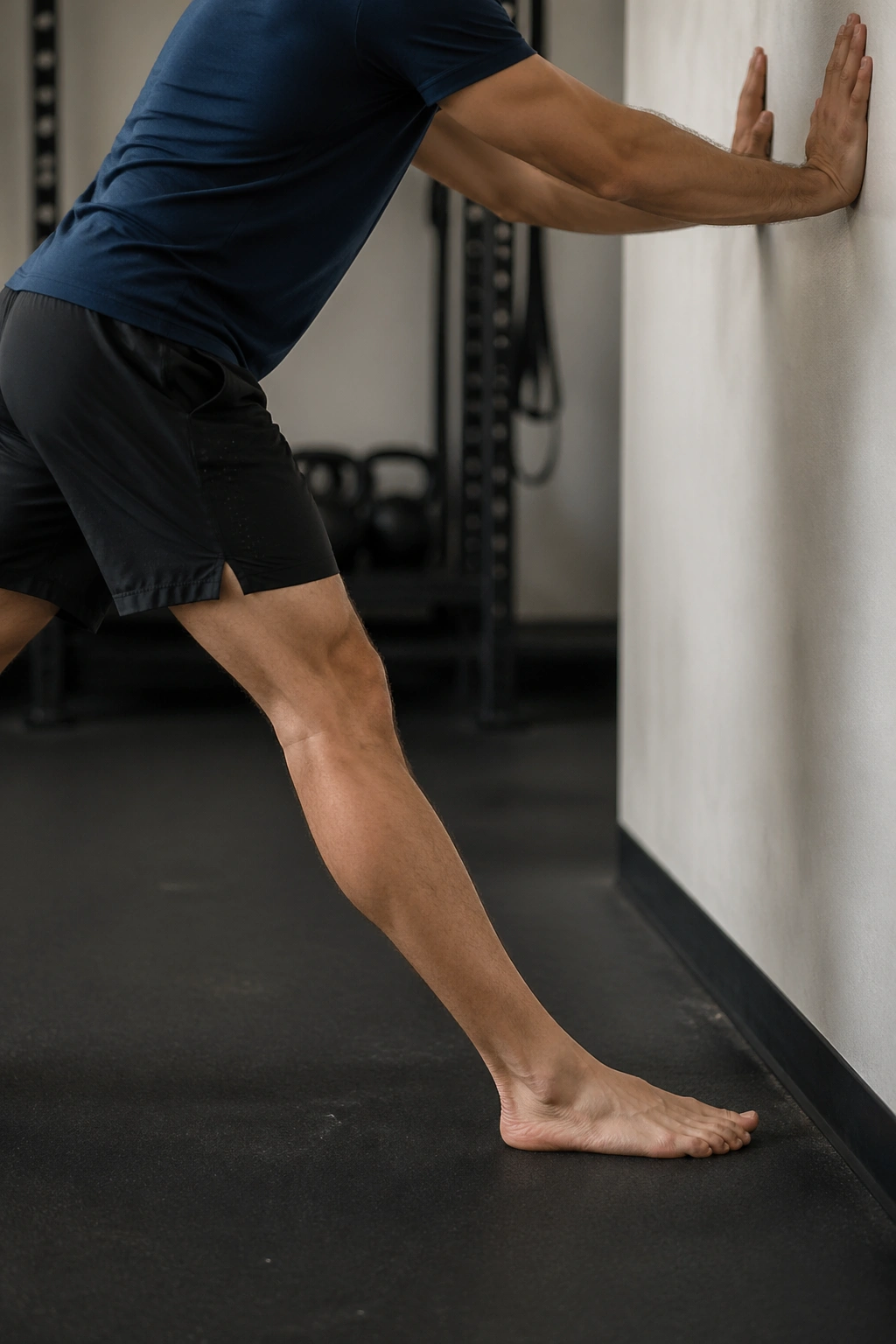
Can a calf stretch matter for barbell training? Absolutely. Stiff calves change squat depth, make ankle rocks feel worse, and can leave your lower legs cooked after pulling or jumping work.
Face a wall, place one foot back, keep the back heel down, and lean forward until you feel the calf lengthen. Hold 20 to 30 seconds with the back knee straight, then repeat with a slight bend in the knee to hit the deeper soleus muscle. That bent-knee version matters more than people think, especially if your ankle feels packed and stubborn.
Two Angles, Two Jobs
Straight knee hits more of the larger calf muscle. Bent knee shifts the stretch lower and deeper. One is not “better” than the other; they just speak to different pieces of the lower leg.
Use the straight-knee version before training if the ankles feel stiff during warm-up. Save the longer holds for after training if the calves feel pumped, tight, or angry from loaded carries, sled pushes, jumping, or heavy pulls. A small stretch done well beats standing there for minutes on end and hoping for magic.
If your squat shoes, wedge, or heel lift are masking calf stiffness, this stretch helps you see the real issue. That alone is useful. Painfully useful, sometimes.
Final Thoughts
The best stretching plan for lifters is usually smaller than people expect. Three or four smart movements before training. Three or four after. Done.
Pre-lift work should help you move better under load. Post-lift work should help the body settle down and stop holding itself like a fist. If you keep that split clear, you’ll pick better stretches and stop wasting time on the wrong ones.
A simple rule helps: choose the stretch that fixes the position you actually struggle with. Tight ankles before squats. Tight pecs after pressing. Tight hips after deadlifts. That’s enough to build a routine that feels practical instead of performative.
