



Belly fat after 50 is stubborn for a reason.
Hormonal shifts, less muscle, more sitting, and a slower recovery loop all team up in the middle. That does not mean your waist is stuck forever. It means the old advice—endless crunches, random cardio, starving yourself—was never a serious plan in the first place.
What works better is annoyingly plain. Walk more. Lift something heavy enough to matter. Use intervals when your body is ready for them. Keep the joints happy. Repeat that long enough for your body to notice.
And yes, you can burn belly fat for women over 50 without turning exercise into a punishment. You just have to stop treating the stomach like the problem and start training the whole system.
1. Brisk Walking After Meals to Burn Belly Fat for Women Over 50
A 10- to 20-minute walk after eating looks almost too easy to matter. It matters. A steady walk after meals helps your body handle fuel better, and it gives you one of the simplest ways to chip away at abdominal fat without beating up your knees.
Why it works
Walking after lunch or dinner nudges blood sugar down, and that matters more than people think. When blood sugar swings all over the place, hunger tends to swing with it, and the waistline often pays the price.
Keep the pace brisk enough that you can talk, but not sing. That little shift in intensity is where the payoff lives.
How to do it
- Walk for 10 to 15 minutes after your biggest meal.
- Aim for a pace that feels like 6 out of 10 effort.
- Use flat ground at first, then add small hills if your joints like them.
- Skip the “all or nothing” mindset. A short walk still counts.
Best tip: do it consistently after the same meal each day. Routine beats drama every time.
2. Dumbbell Strength Training That Keeps Muscle on Your Side
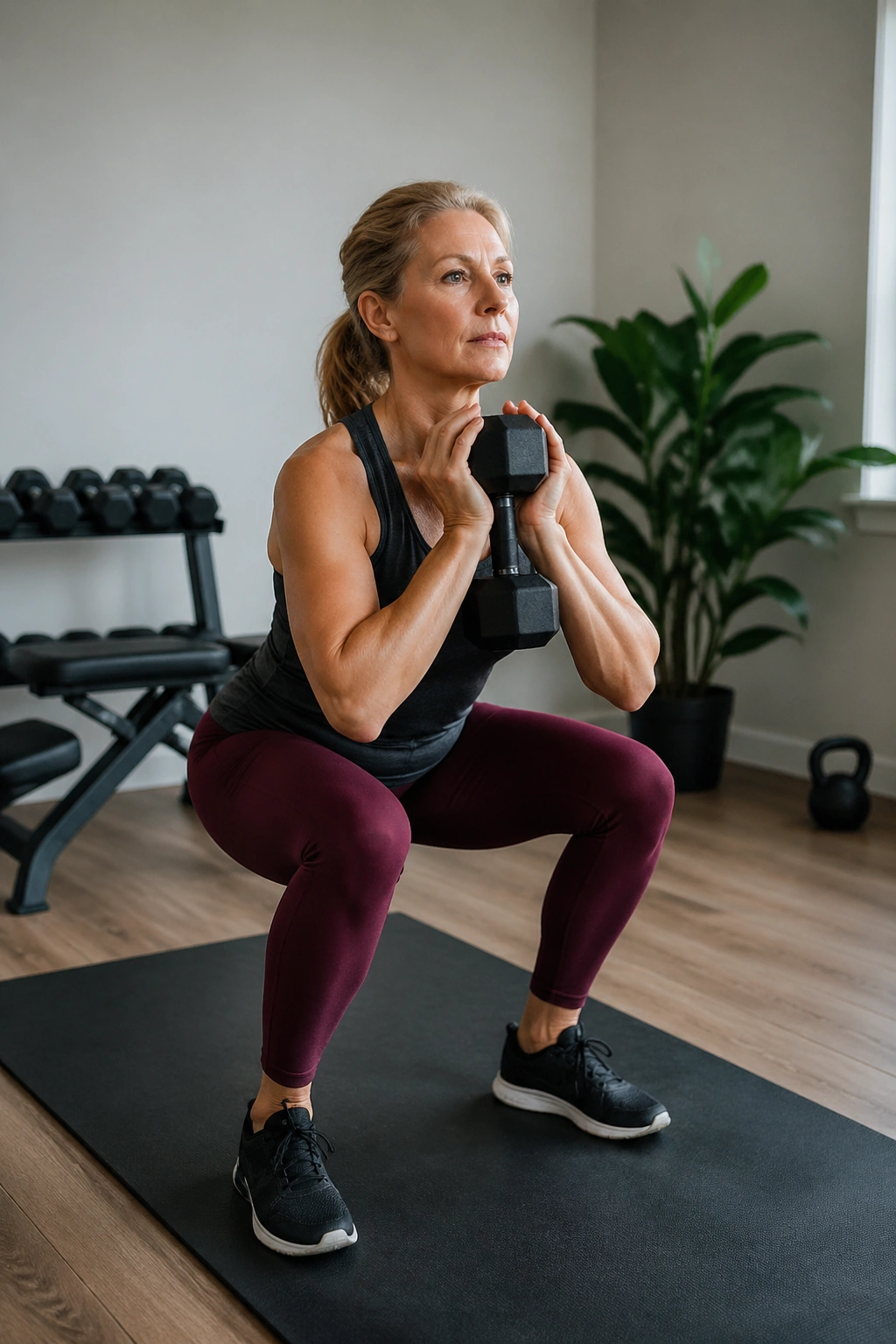
Muscle is your midlife ally. It helps you burn more energy at rest, but it also keeps your body firm instead of softening around the middle. That is why a pair of dumbbells can do more for belly fat than another round of endless ab work.
Use simple moves: squats, rows, presses, deadlifts, and step-ups. You do not need a fancy split or a bodybuilder plan. You need enough load to make the last few reps feel honest.
What to focus on
A good beginner session might look like this:
- Goblet squat: 2 to 3 sets of 8 to 12
- Dumbbell row: 2 to 3 sets of 8 to 12
- Chest press: 2 to 3 sets of 8 to 12
- Romanian deadlift: 2 to 3 sets of 8 to 10
Rest long enough to keep form clean. If your shoulders creep up or your lower back takes over, the weight is too heavy or the setup is off.
3. Sneaky Daily Movement That Adds Up Fast
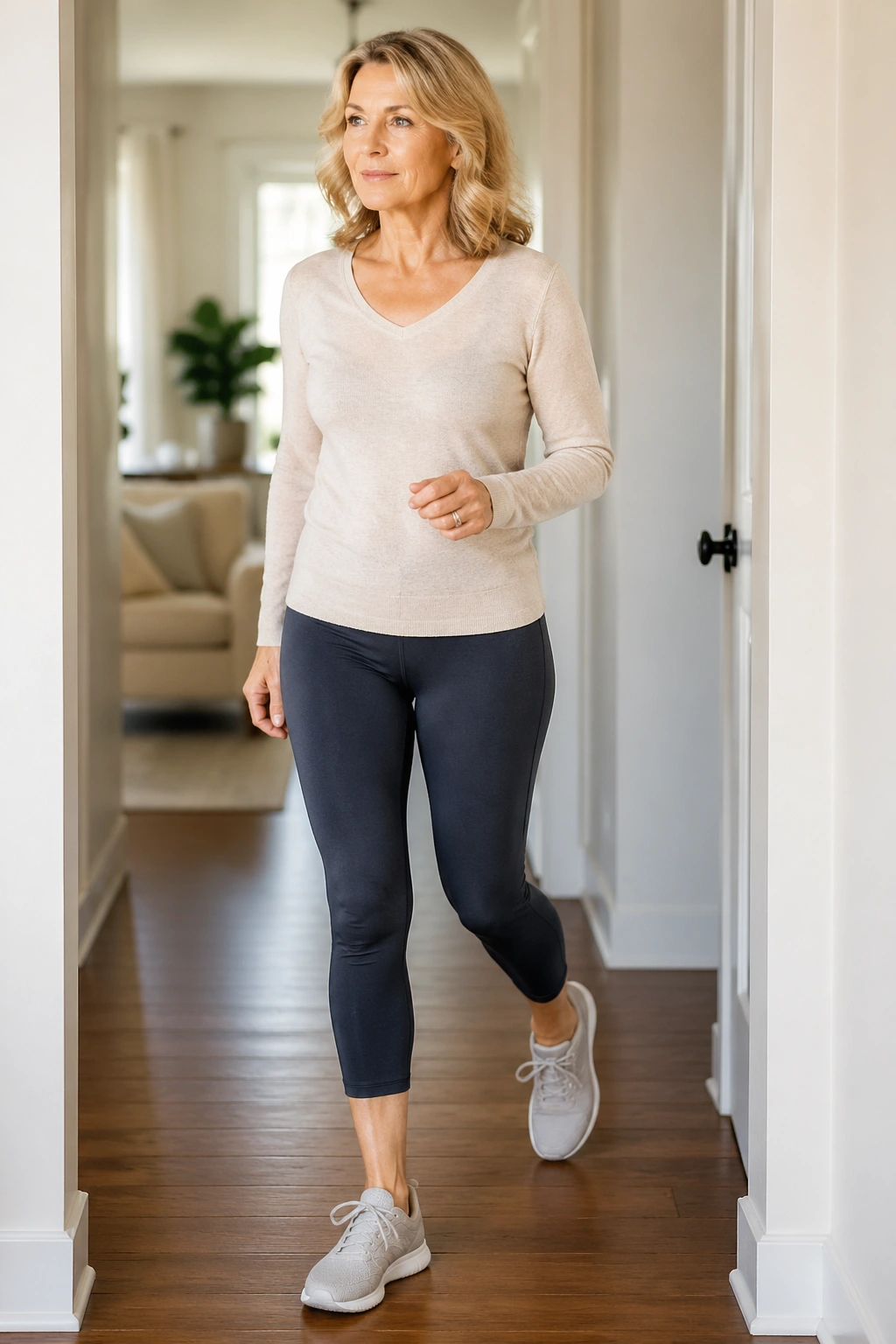
You can spend an hour in the gym and still sit the rest of the day. That is the part most people miss. Daily movement outside formal workouts—what fitness people call NEAT, though I prefer plain English—burns a surprising amount of energy over time.
Think of the small stuff. Parking farther away. Standing during phone calls. Walking to refill your water instead of letting the bottle sit empty for three hours. Boring? Maybe. Effective? Yes.
The real trick is to stop treating movement like a scheduled event.
- Add 500 to 1,000 extra steps before lunch.
- Stand up once every 30 to 45 minutes.
- Carry your own groceries in one or two trips, not six.
- Take the long way inside the house, oddly enough. Yes, that counts too.
A body that moves all day tends to handle fat loss better than one that only wakes up for a workout.
4. Incline Walking on a Treadmill or a Hill
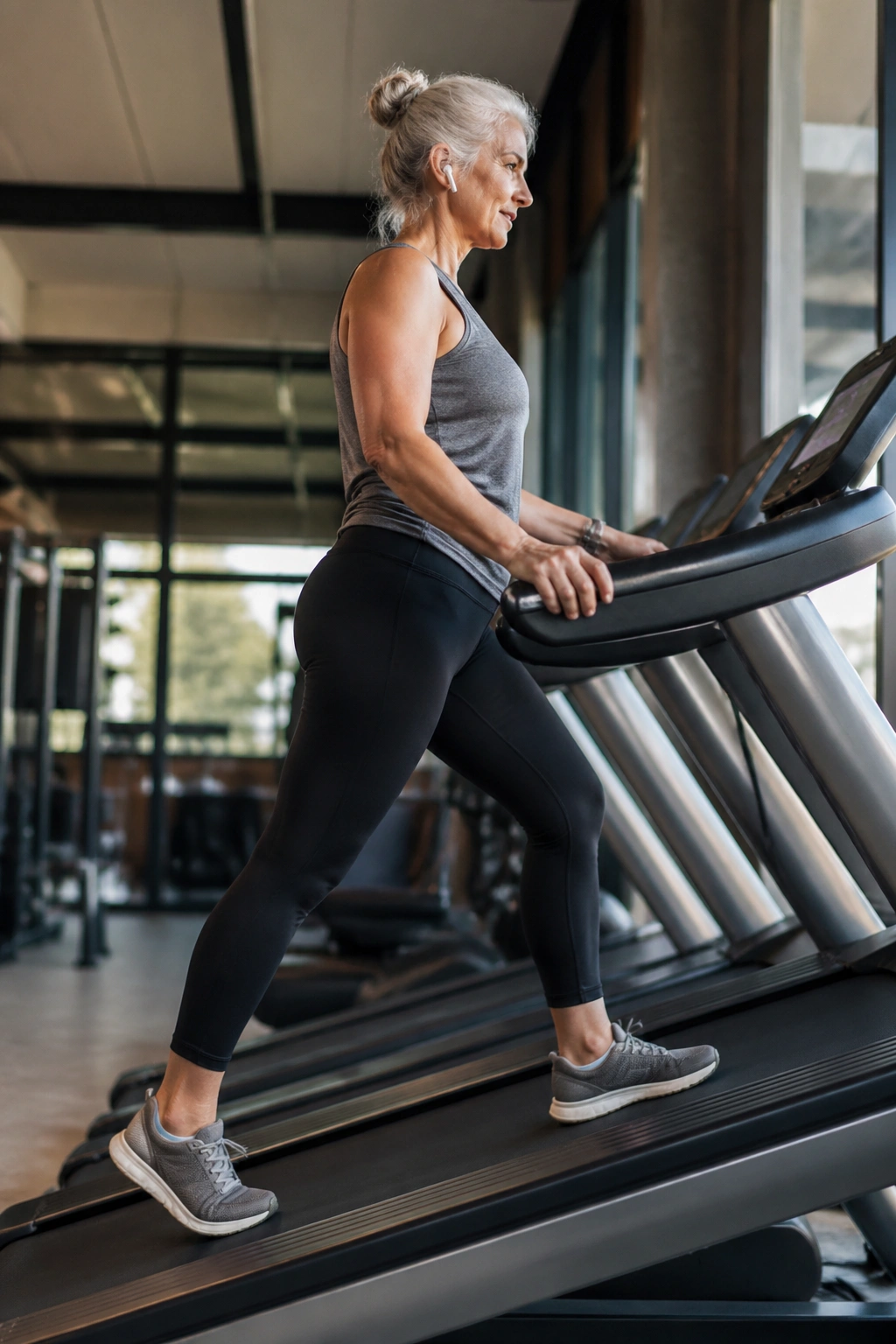
Flat walking is fine. Incline walking is meaner in a good way.
A slight slope turns a simple walk into real work for the glutes, hamstrings, and calves, and those muscles matter if you want a firmer lower body. It also gets your heart rate up without the pounding that comes with running.
A practical setup
Try 2.5 to 3.5 mph with an incline of 3 to 8 percent. If that feels too spicy, start with 2 percent and build slowly. Your breathing should deepen, but you should still be able to speak in short sentences.
Hill walking outdoors gives you the same effect, just with better scenery and less control over the surface. Indoors gives you repeatability. Both work.
One warning: don’t lean on the treadmill rails. If you’re hanging on for dear life, the incline is too steep or the speed is too high. Fix that first.
5. Short Interval Workouts That Don’t Wreck Your Knees
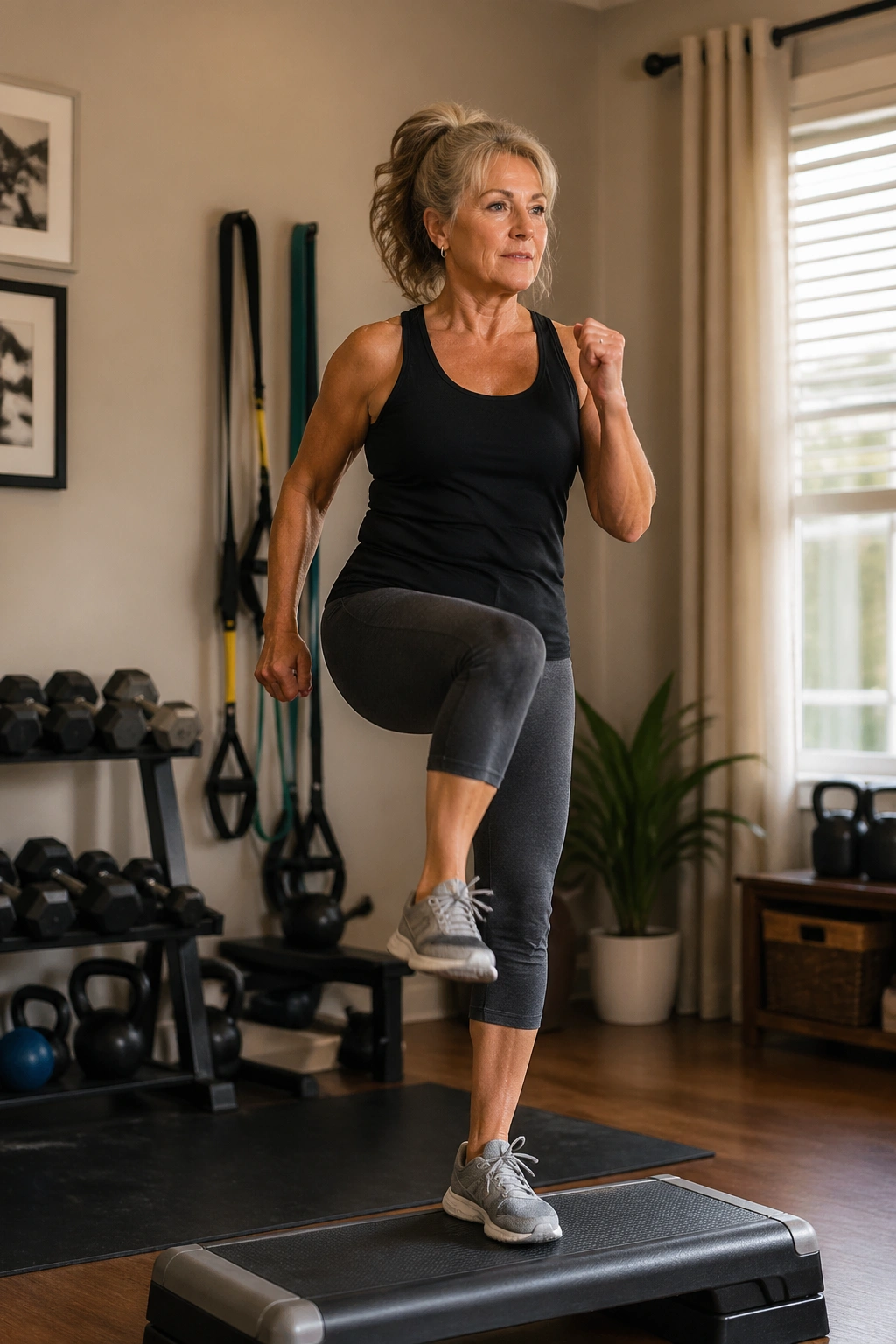
Intervals get a bad reputation because people picture sprints, gasping, and regret. That is not the only version. For women over 50, smart intervals are short bursts of work followed by enough recovery to keep the form crisp.
That can mean marching fast, cycling harder, row machine pushes, or even step touches with a higher pace.
A simple pattern
- Work hard for 30 seconds
- Recover for 60 to 90 seconds
- Repeat for 6 to 10 rounds
How to start
Use a move that feels stable: brisk step-ups, bike pedaling, or fast walking on an incline. The effort should feel challenging, not chaotic.
What to watch for
- Breathless and sloppy? Too hard.
- Joint pain? Wrong exercise.
- Good sweat, steady form, and a quick recovery? That’s the sweet spot.
Intervals help because they push the heart rate up without demanding a long punishment session. Nice exchange.
6. Farmer’s Carries for a Stronger Core and Better Posture
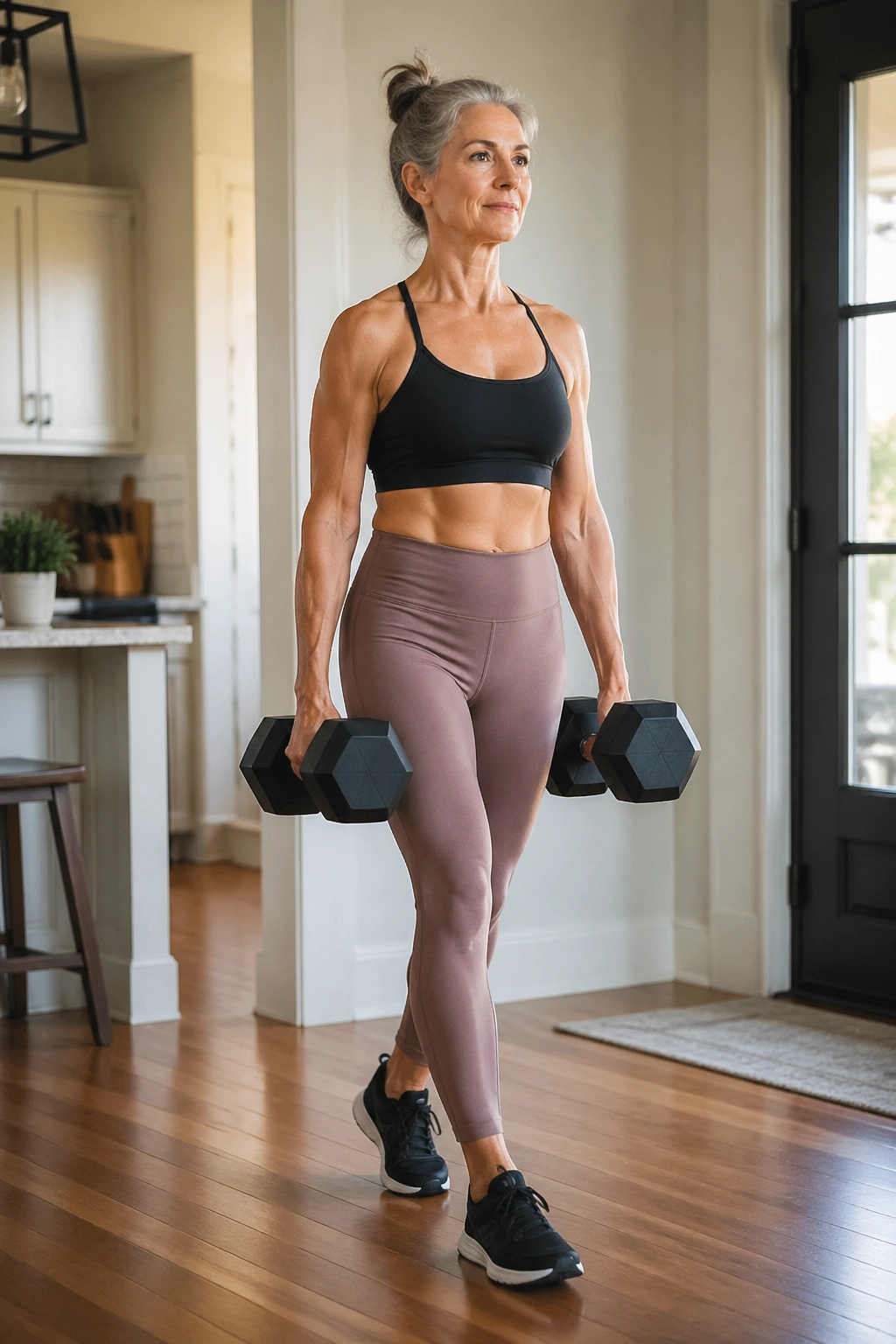
Pick up two heavy dumbbells and walk. That is the whole idea, and it works better than it has any right to.
Farmer’s carries train grip, shoulders, abs, and the deep muscles that keep your torso from wobbling when you move through real life. They also clean up posture in a way that crunches never will.
A kitchen scenario makes this obvious. Carry two full grocery bags from the car to the house with good posture, and you feel your whole trunk light up. Same deal here, only more controlled.
- Hold weights that make you work for 20 to 40 seconds
- Keep your ribs down and your neck long
- Walk slowly and evenly
- Stop before your shoulders hunch
Pro tip: one heavier carry is often better than three sloppy sets with weights that are too light. The point is tension, not decoration.
7. Strength Training to Burn Belly Fat for Women Over 50
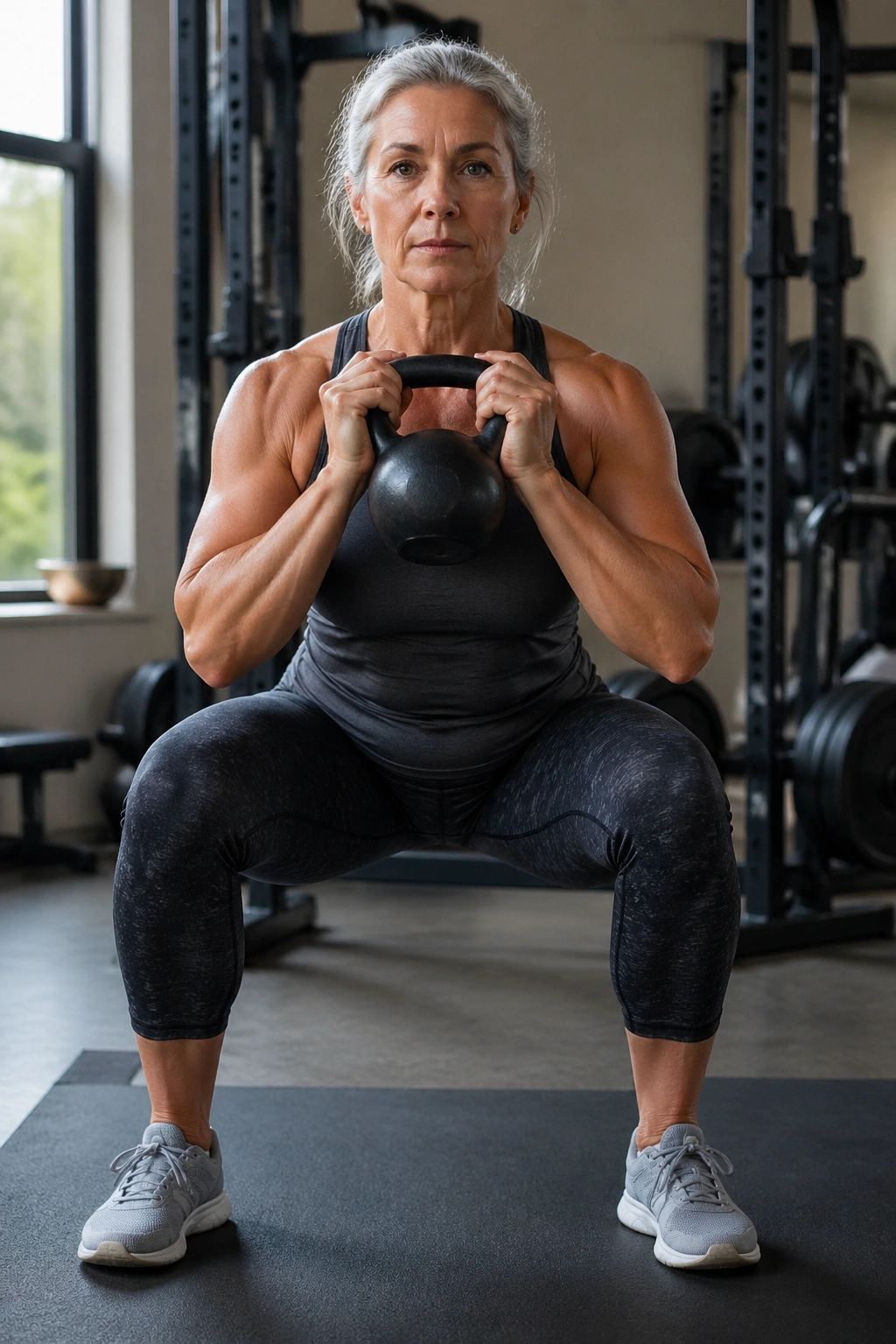
Crunches are not the answer. They never were.
The waist changes most when the rest of the body gets stronger, especially the legs, back, chest, and glutes. That’s where the biggest muscles live, and big muscles burn more fuel than tiny isolated moves that never leave the floor.
Lower-body lifts matter most
Squats, lunges, deadlifts, and step-ups put real demand on the body. That demand is what helps shape the midsection over time, because your trunk has to stabilize while the big muscles work.
Upper-body work keeps the frame upright
Rows, presses, and pulldowns matter too. Better posture changes how your waist looks, and stronger upper back muscles make daily movement easier.
Progression is the point
Add a little weight, one rep, or one set when the current load feels too easy. Stay in the 8 to 12 rep range for most sets and keep the last two reps honest.
Short version: if the workout gets easier and easier forever, the body has no reason to change.
8. Stair Climbing Without Turning It Into a Punishment
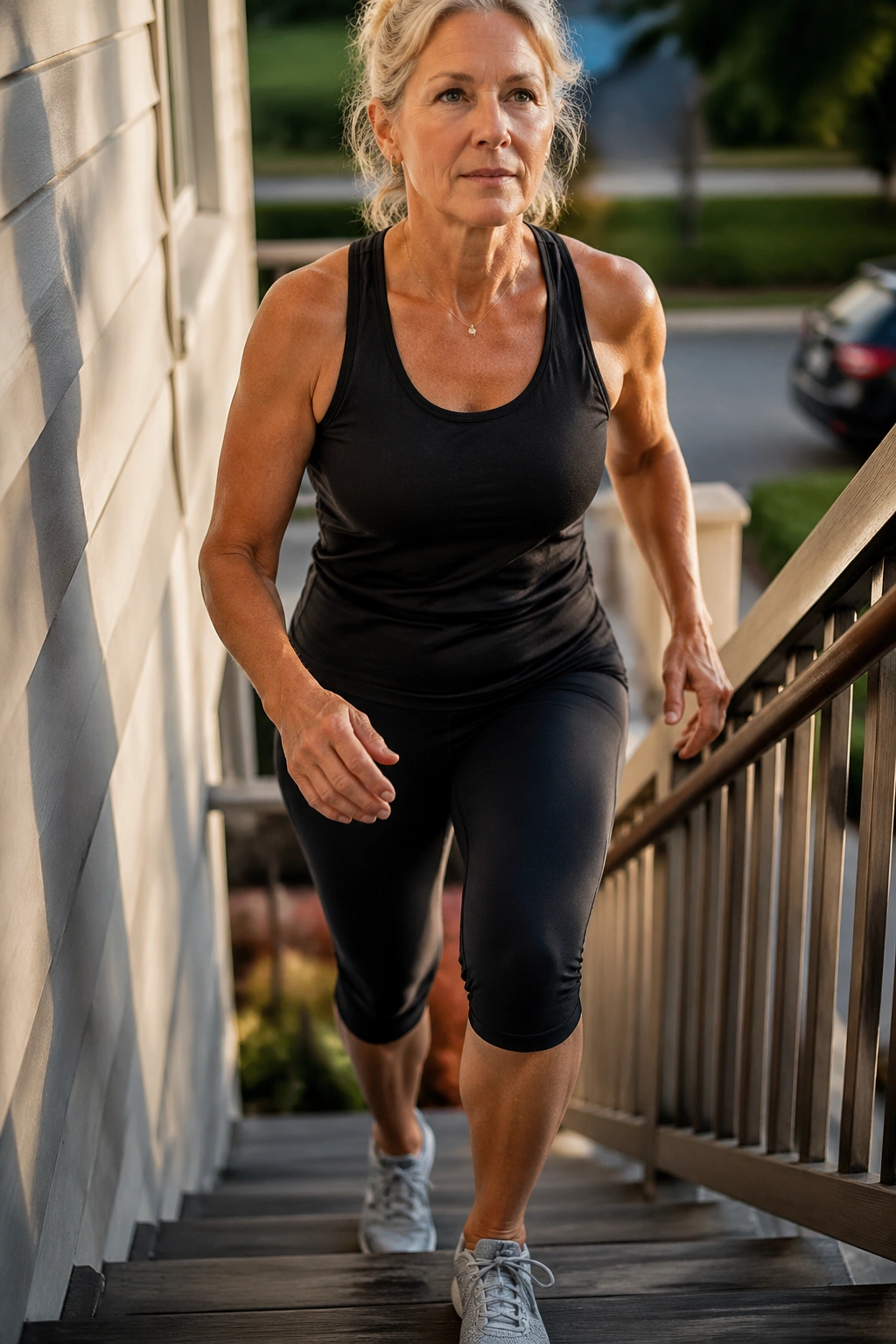
Stairs look simple until your thighs start talking back.
That’s why stair climbing is such a good tool. It raises your heart rate fast, lights up the glutes and quads, and gives you a compact workout that can fit into a day without much planning. It also tends to feel more natural than bouncing through a hard cardio class.
Start with short bursts. One flight up, easy walk down. Repeat for 5 to 10 minutes and see how your knees respond. If your knees ache on the way down, slow the descent and use the handrail.
The best stair work has a controlled rhythm. No stomping. No racing like you missed a train. Just steady, strong steps.
A quiet truth: the workout that looks a little ordinary is often the one you can repeat.
9. Rowing Machine Sessions That Use Your Whole Body
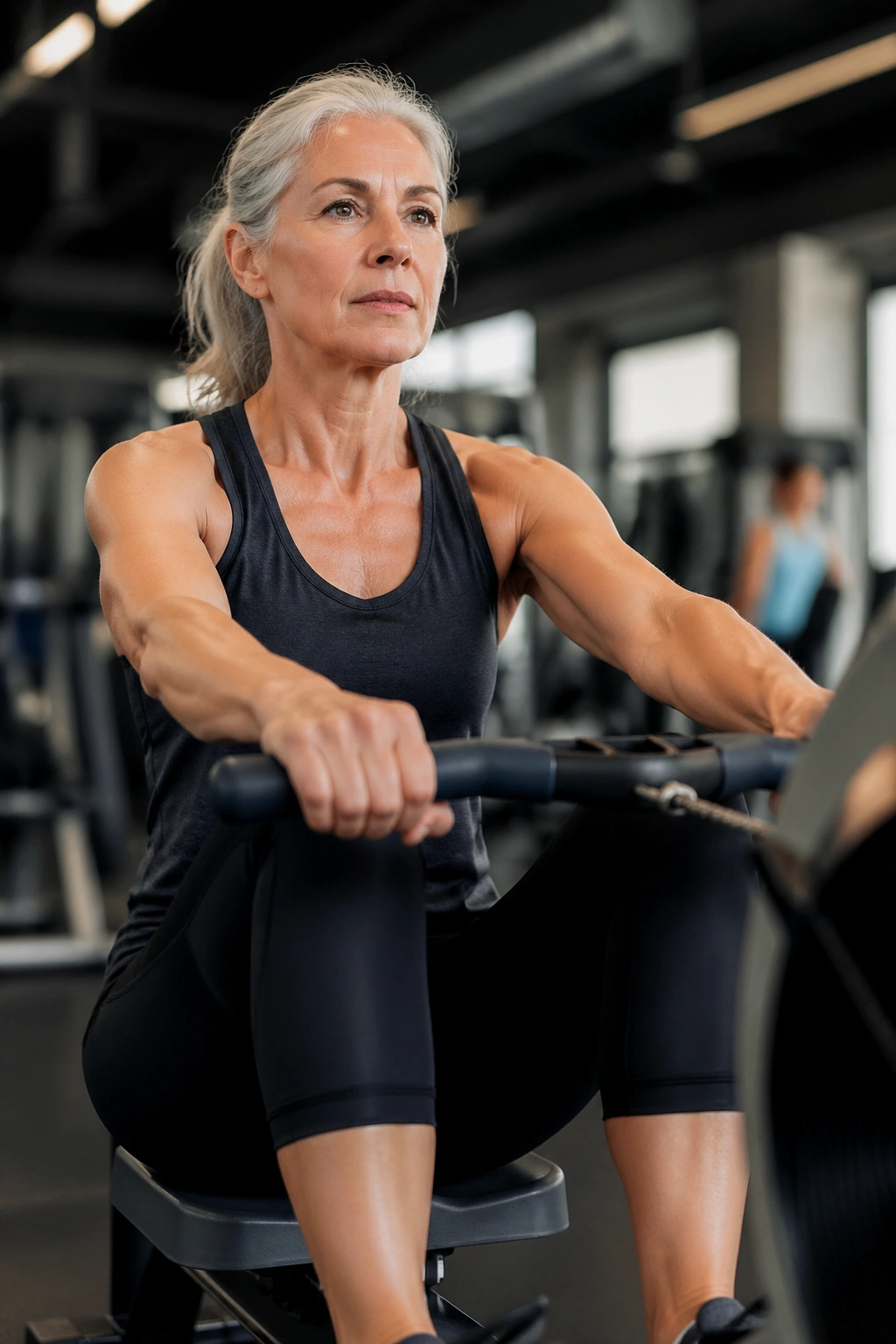
The rowing machine is one of the few cardio tools that makes your upper body earn its share.
You push with the legs, hinge through the hips, and finish with the arms. That sequence matters. It spreads the work across the body instead of dumping everything into the knees or lower back.
What good rowing feels like
The handle should move smoothly, your back should stay long, and your legs should do the heavy lifting first. If you feel all the strain in your shoulders, the stroke is off.
A useful starter session
- Row easy for 3 minutes
- Row hard for 1 minute
- Repeat 5 times
- Finish with 2 minutes easy
The stroke rate can stay moderate. You do not need frantic flailing. You need a clean pull, a strong drive, and a controlled return.
Rowing works well for women over 50 because it gives cardio without pounding. That combination is gold.
10. Cycling for Steady Fat Loss and Joint-Friendly Cardio
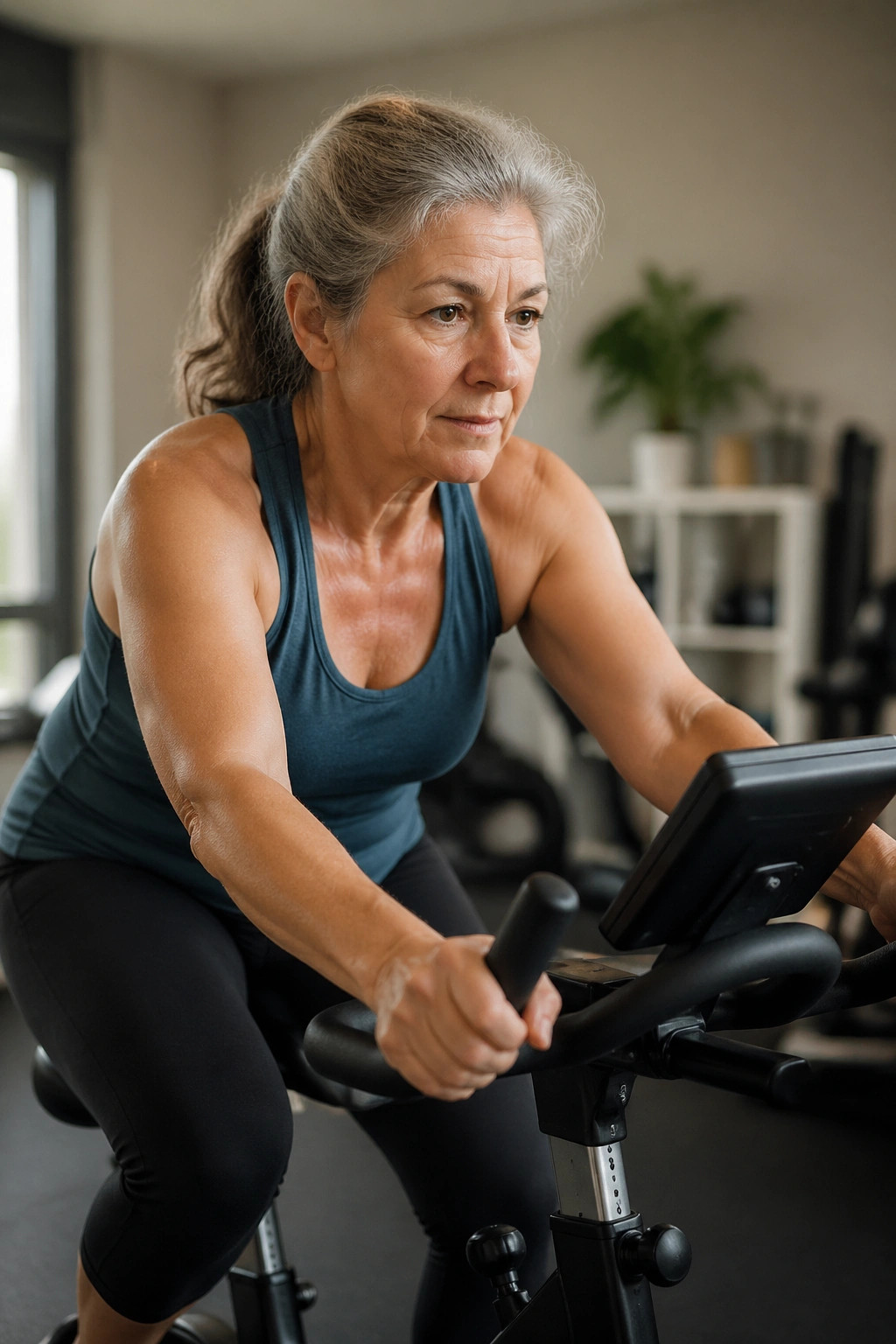
Cycling is not flashy. Good. Flashy is overrated.
Whether you use a stationary bike or ride outdoors, cycling lets you build steady output without hammering your joints. That makes it a smart choice when your knees, hips, or feet are fussy and walking alone feels too limited.
A useful ride can be 20 to 40 minutes at a pace that keeps your breathing up but your form relaxed. If you want more work, add short harder segments: 30 seconds faster, 90 seconds easy.
Seat height matters. Too low and your knees take a beating. Too high and your hips rock around. Set the saddle so your leg stays slightly bent at the bottom of the pedal stroke.
Strong legs, steady heart rate, no drama. There’s a reason people keep coming back to bikes.
11. Swimming and Water Aerobics for Low-Impact Conditioning
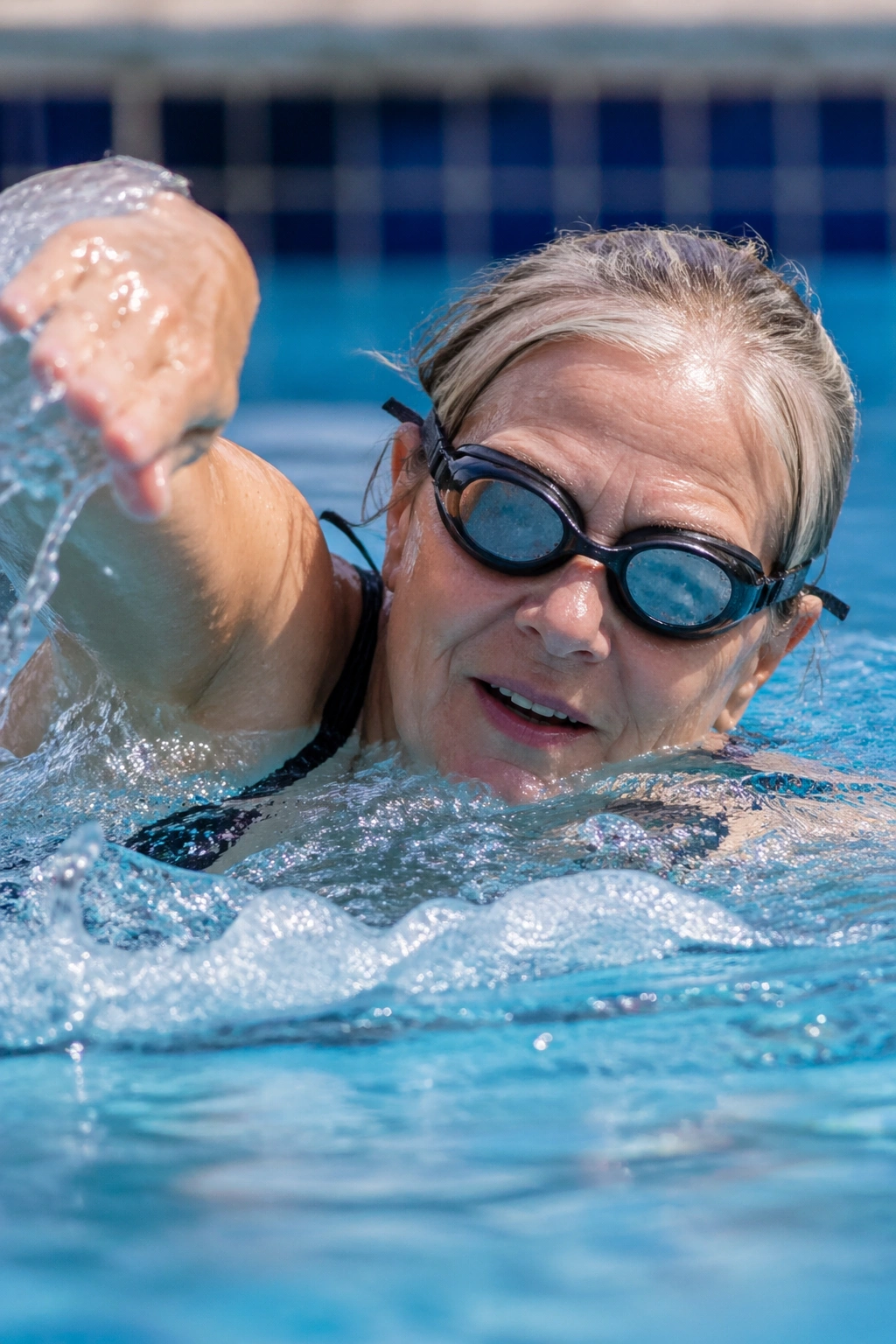
Water changes the whole deal.
Your body gets support, so every step and stroke feels easier on the joints, but the water still pushes back. That resistance makes swimming and water aerobics sneaky-hard in the best way. You can finish a session sweaty without the pounding that often comes with land cardio.
If you haven’t swum in a while, start with 15 to 20 minutes of easy laps, pool walking, or simple water jogging. A class can help if you like structure and music. A quiet lane works if you prefer doing your own thing.
The pool is also a mercy for people who feel stiff when they start moving. Warm water tends to loosen things up before the workout even gets serious.
Not every fat-loss session has to feel like hard labor. Some can feel like relief.
12. Kettlebell Swings for Fast, Hinge-Based Power
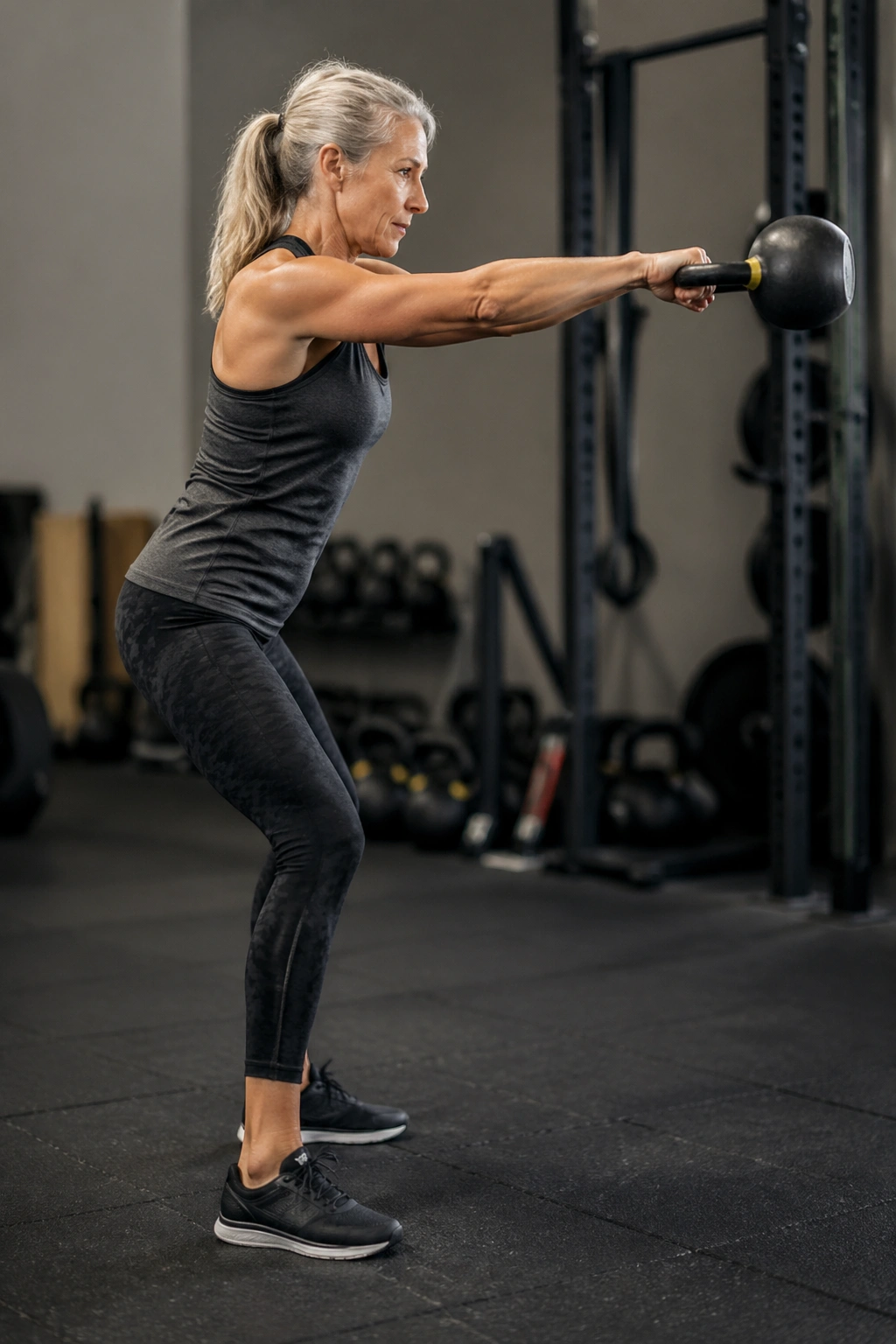
Kettlebell swings look like an arm exercise. They’re not.
The movement comes from the hips. You hinge back, snap the hips forward, and let the bell float. That pattern trains the backside of the body hard, which matters because many women spend too much time sitting and not enough time loading the hips.
The hinge matters
If you squat the swing, the move gets muddy fast. You want a clean hip hinge, a neutral spine, and a bell that doesn’t pull your shoulders forward.
Start here
- Use a light kettlebell first
- Do 10 to 15 swings
- Rest for 30 to 60 seconds
- Repeat for 5 to 8 rounds
If your lower back feels this more than your glutes, stop and fix the technique. Swinging badly is not a badge of honor.
A good swing is crisp. One bad rep can teach the wrong pattern for weeks.
13. Resistance Band Circuits for Home Workouts
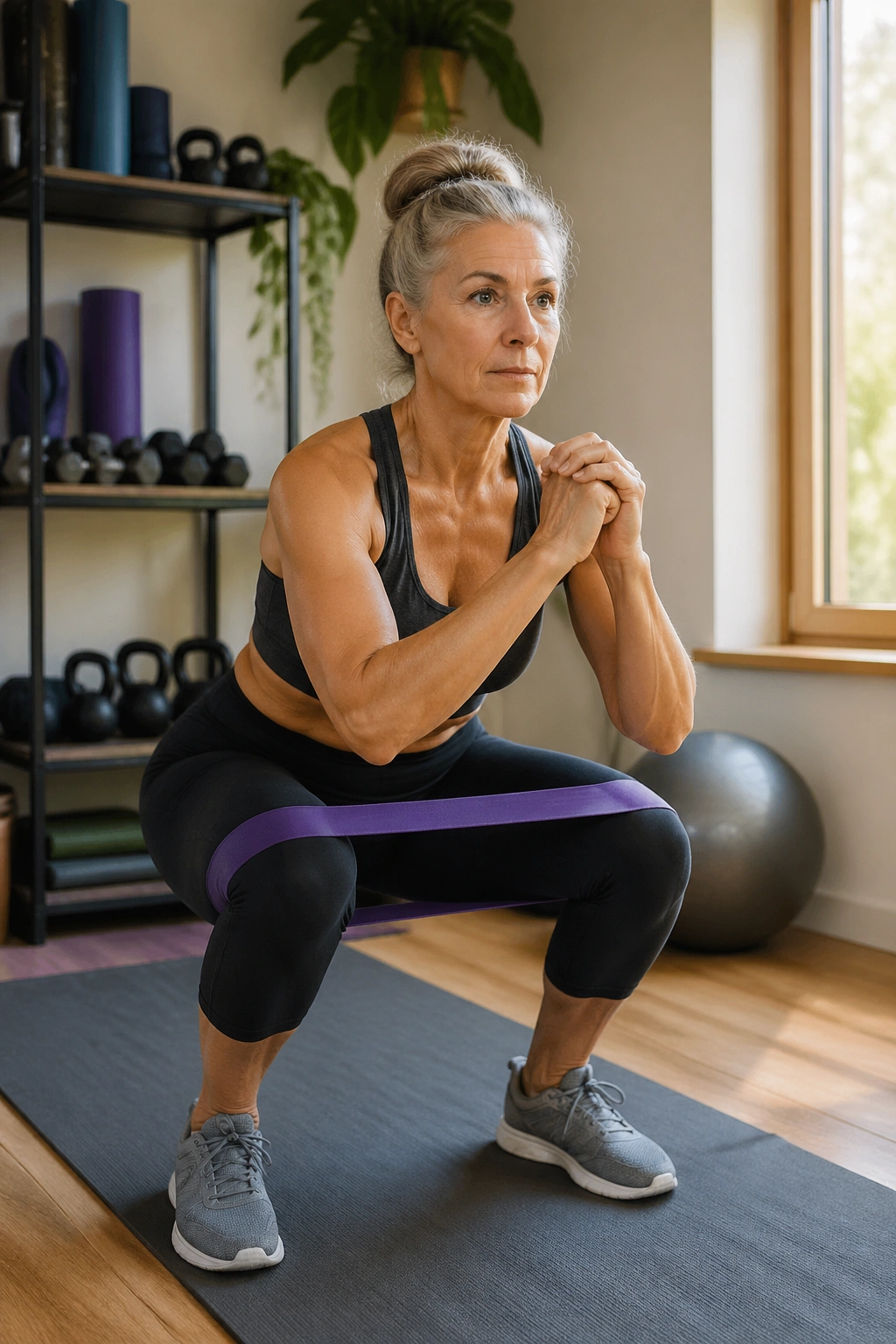
Bands are easy to ignore until you use them for 20 minutes and realize your whole body is shaking.
They’re useful because they give tension without a pile of heavy gear. That makes them a good option for travel days, small spaces, and mornings when the idea of driving to a gym feels annoying. There’s no shame in that. Convenience matters.
Try a circuit like this:
- Band row: 12 reps
- Band squat: 12 reps
- Lateral band walk: 10 steps each way
- Overhead press: 10 reps
- Repeat 3 rounds
Keep the band snug enough that the last few reps slow down. If you’re breezing through them, the band is too light.
Bands also teach control. They don’t let you cheat as easily, which is its own little gift.
14. Pilates Moves That Teach Your Core to Work Smarter
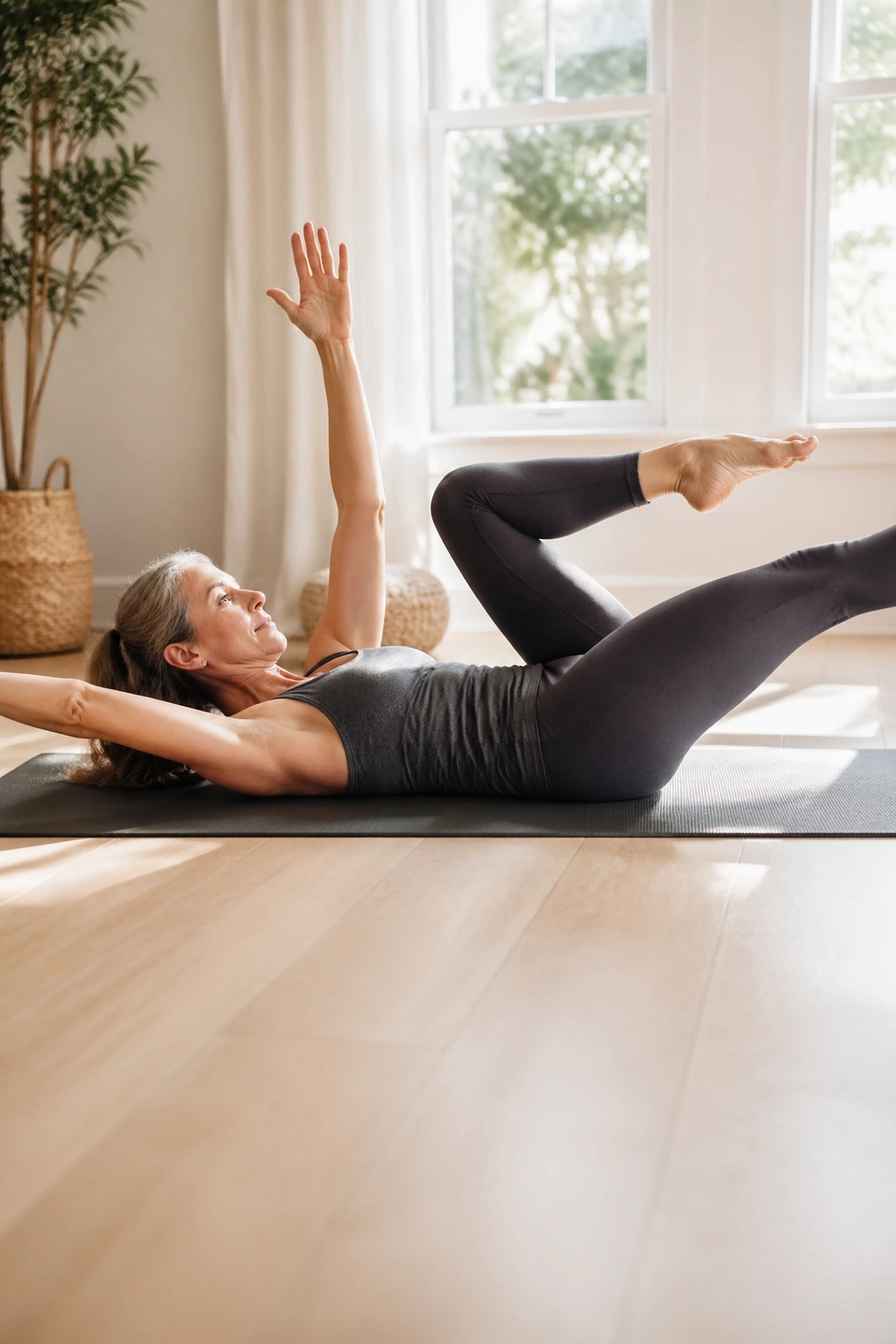
Pilates is not just “small movements.” When done well, it teaches your torso to brace, breathe, and move without flopping around.
That matters for belly fat in an indirect way. A strong, well-organized core helps you lift better, walk taller, and move with less strain. It also makes the midsection look tighter because your posture isn’t collapsing all day long.
Good starter moves
- Dead bug
- Bird dog
- Side plank from the knees
- Glute bridge with slow breathing
The key is control. Go slower than you think you need to. If your lower back arches off the mat, reset. If your neck strains, stop and fix the setup.
Pilates won’t replace strength training, but it fits beside it nicely. Think of it as the quiet work that makes the loud work better.
15. Interval Walking to Burn Belly Fat for Women Over 50
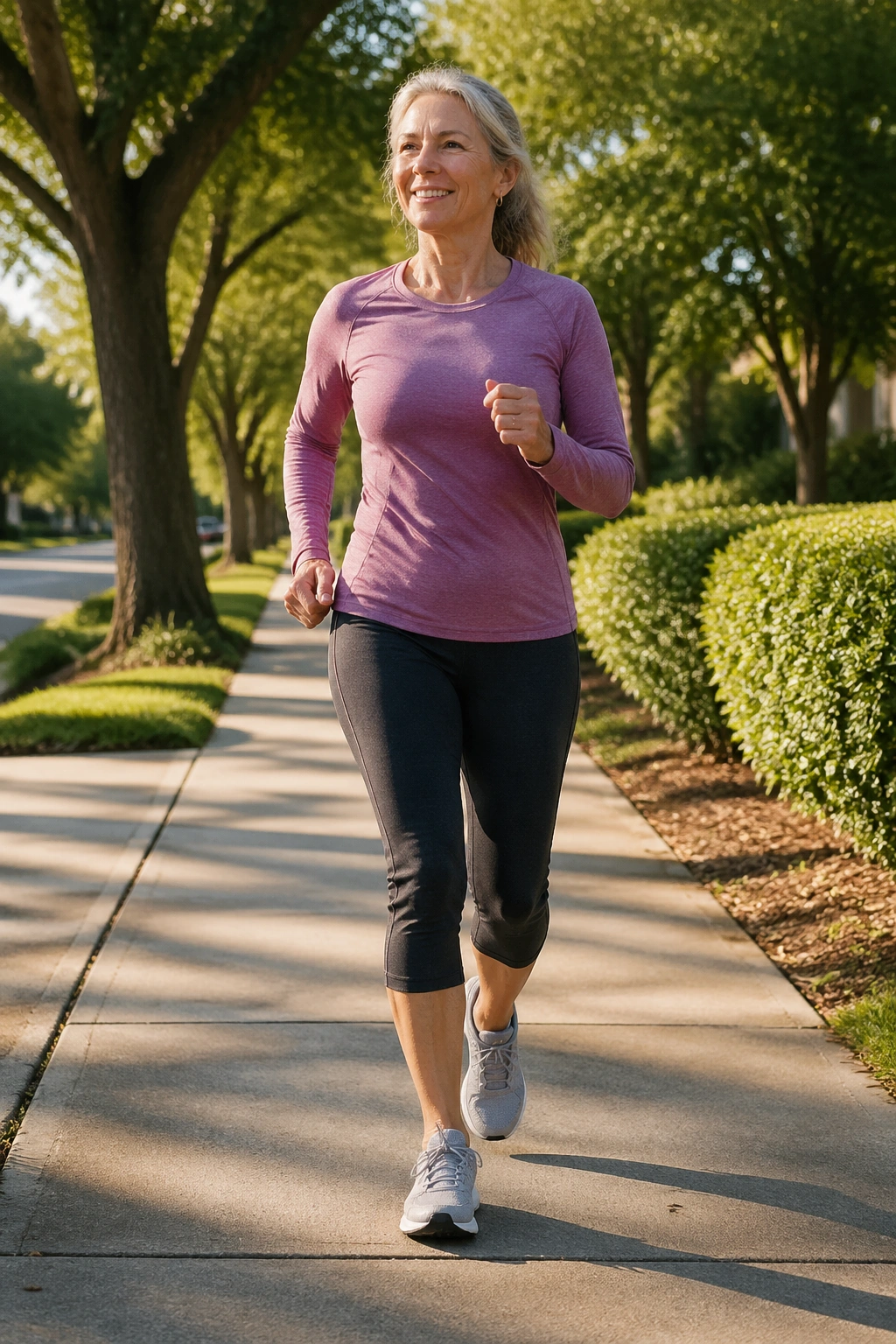
You do not need a gym for intervals. You need a walkway, a timer, and enough patience to keep the pattern honest.
Interval walking mixes easy pace with harder pace, which helps raise calorie burn without asking your joints to survive all-out sprinting. It’s one of the cleanest ways to burn belly fat for women over 50 because it can be scaled up or down without much fuss.
A simple structure
- Walk easy for 2 minutes
- Walk fast for 1 minute
- Repeat for 8 to 10 rounds
If that feels too aggressive, make the hard part 30 seconds and keep the easy part longer. The point is the contrast, not suffering.
On the hard minute, your arms should swing more, your steps should get quicker, and your breathing should deepen. On the easy minute, recover enough to do the next round well. That rhythm keeps the workout honest.
16. Shadow Boxing for Cardio, Coordination, and Stress Release
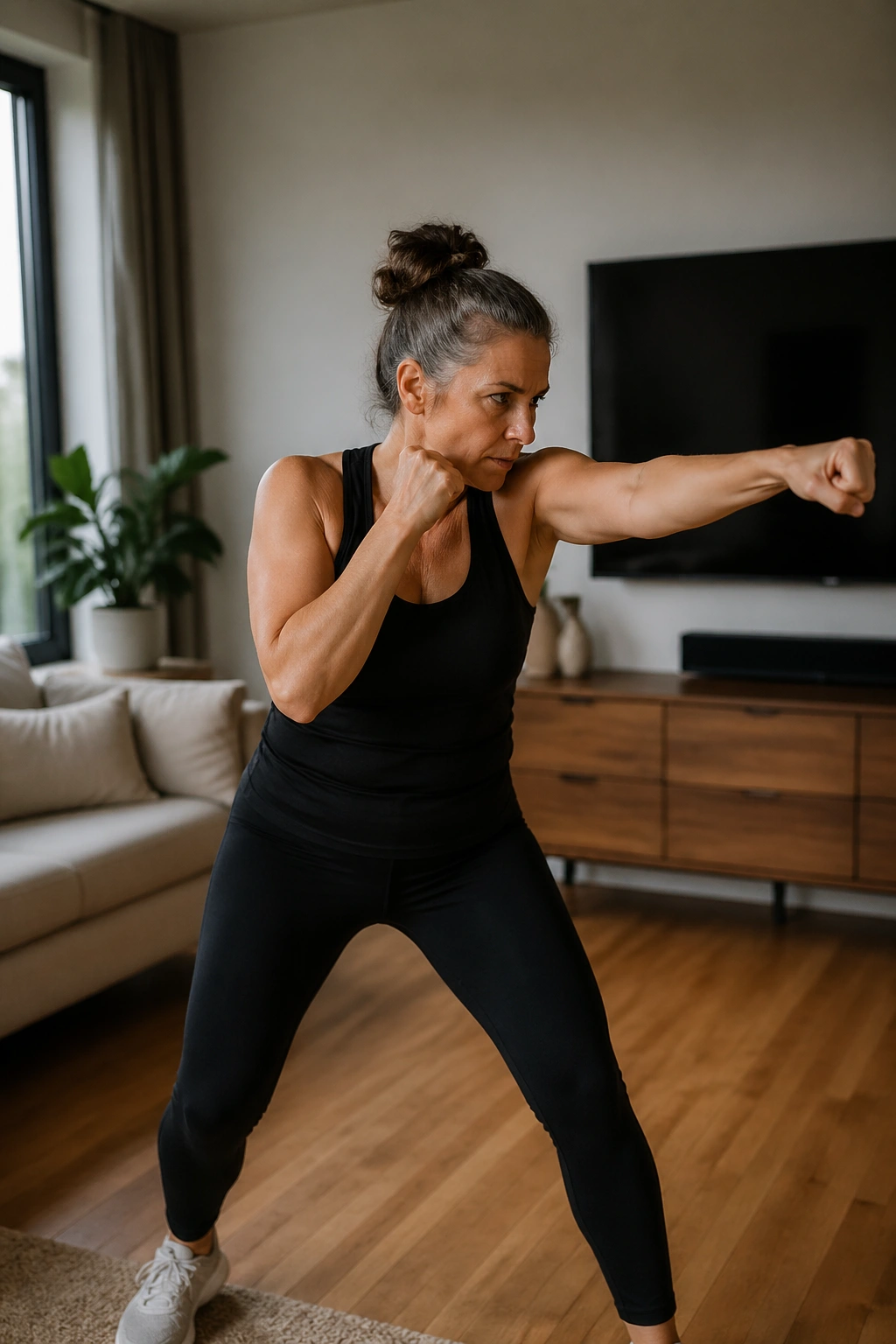
Shadow boxing sounds playful until you do three rounds in a row.
It gives you cardio, footwork, shoulder endurance, and a decent mental reset, which is useful because stress has a funny way of hanging out in the middle section. You do not need to be “good” at boxing to get the benefits. You just need to keep moving with purpose.
A solid beginner round looks like this:
- Jab-cross for 1 minute
- Add hooks for 1 minute
- Move your feet for 1 minute
- Rest for 1 minute
- Repeat 3 to 5 rounds
Keep the punches light and snappy. If your shoulders are burning by round one, relax your grip and shorten the combo.
This one is fun in a way many workouts are not. That matters more than people admit.
17. Dance Workouts That Keep You Moving Longer
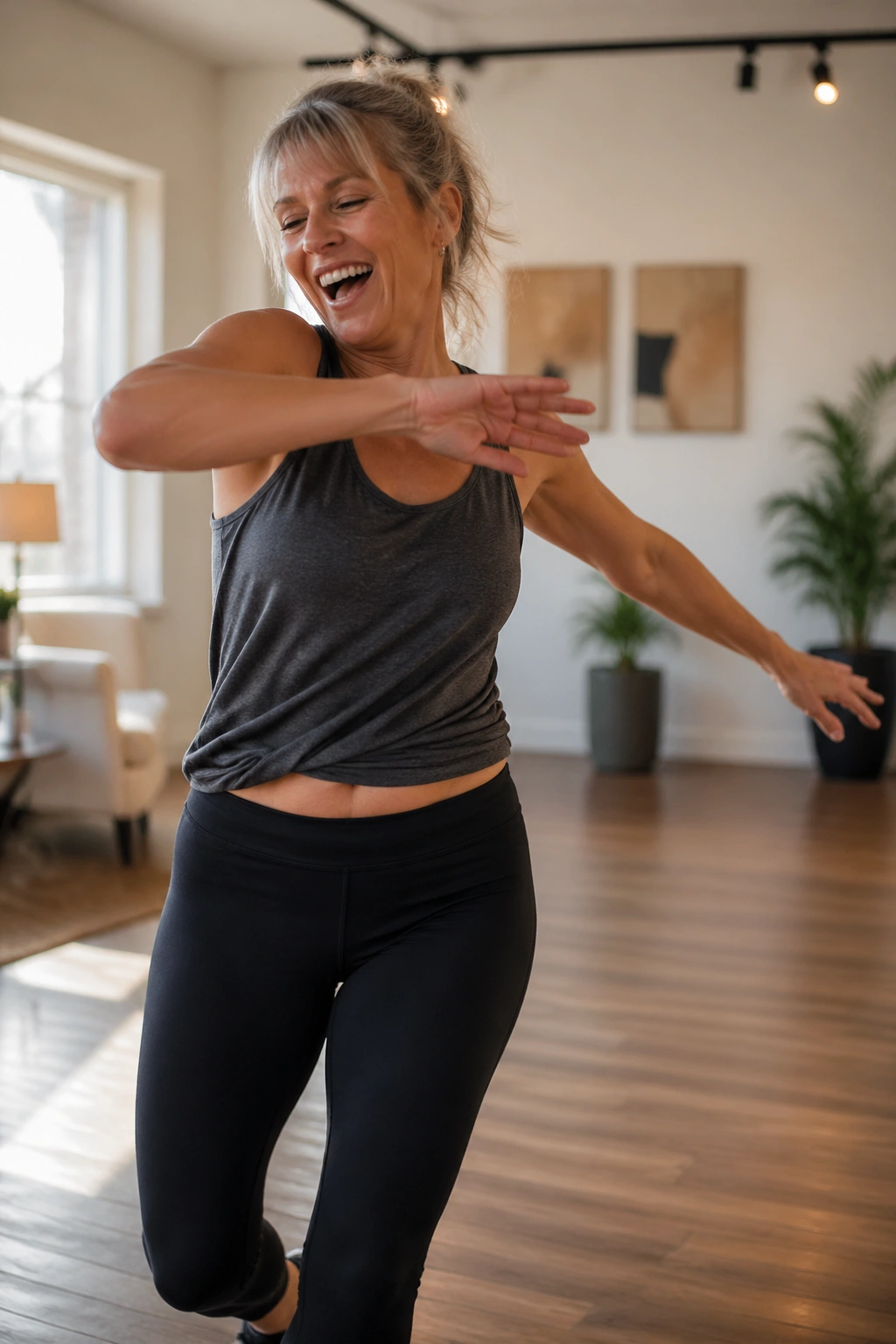
If you hate the feeling of “working out,” dance cardio can sneak around that resistance.
You keep moving, change direction, and stay on your feet long enough to get a real heart-rate bump. The music helps, sure, but the bigger win is duration. When a workout feels less like a chore, you usually stick with it longer.
You can do this at home with follow-along classes or your own playlist. Aim for 20 to 30 minutes and keep the effort steady. Not every song needs to be a sprint. Some can be a recovery track with bigger arm moves and light steps.
A little humility helps here. You do not need perfect rhythm. You need movement.
That’s enough.
18. Hill Hikes That Push Your Heart Rate Up Naturally

A hill changes the whole conversation.
The grade makes your legs work harder, your breathing deepen, and your glutes wake up in a way flat ground can’t quite match. Add fresh air and uneven terrain, and the workout feels more alive than a machine session. Sometimes that matters.
Use a pace that lets you keep good footing. If your balance is shaky, shorten your stride and use trekking poles on steeper parts. Bring water, wear shoes with grip, and choose a route you actually enjoy enough to repeat.
Best pace
- Start with 10 to 15 minutes
- Add short hill climbs inside a longer walk
- Keep the descent controlled and unhurried
The downhill part is where people get careless. Don’t. That’s where sloppy knees and irritated joints show up.
19. Recovery Workouts That Let You Train Again Tomorrow
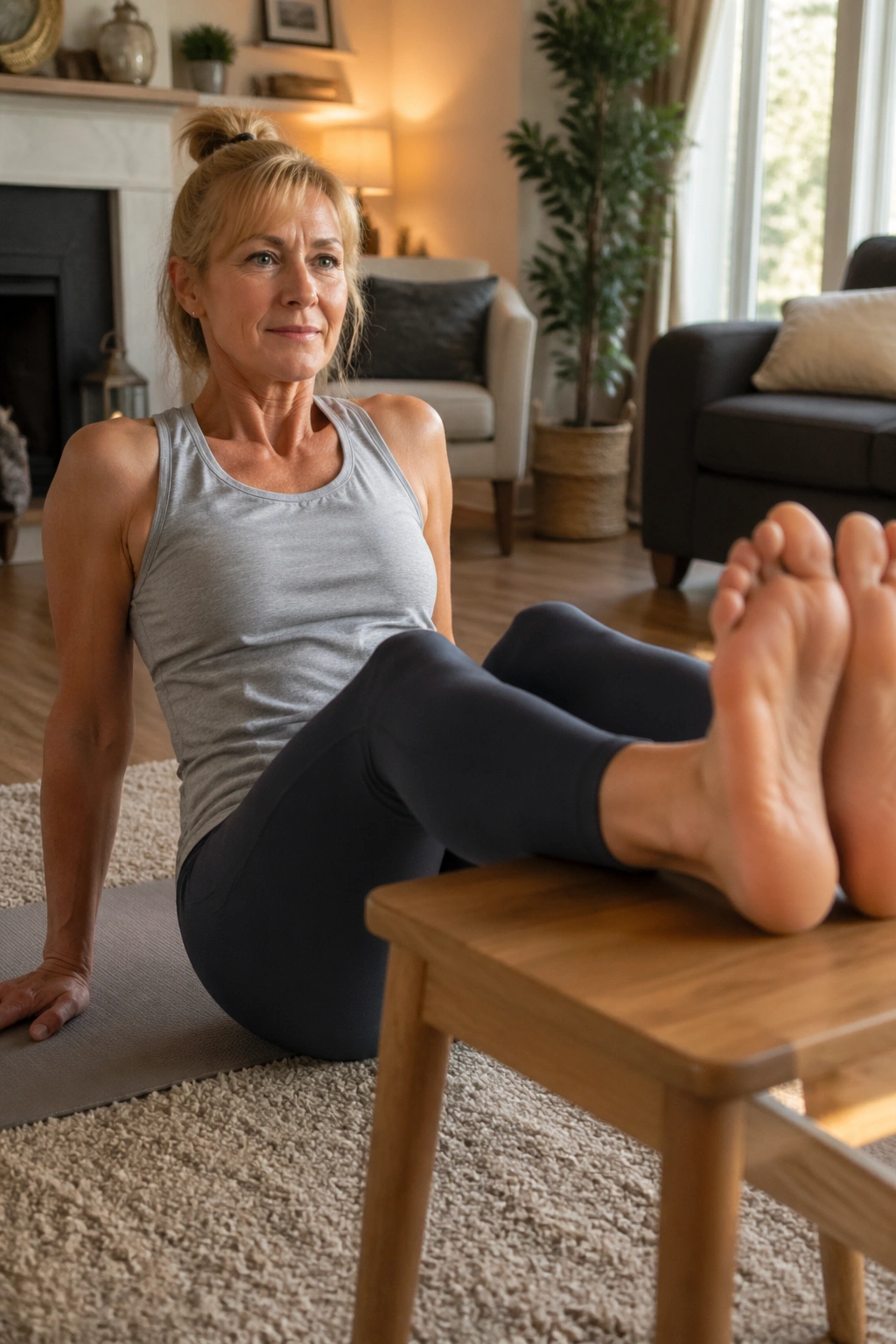
Recovery days are not lazy days.
They’re the reason your other workouts keep happening. A stiff, overworked body tends to skip sessions, and skipped sessions are what slow fat loss in the long run. Gentle movement helps you stay in the game.
A good recovery session might include:
- 15 to 20 minutes of easy walking
- Hip circles and shoulder rolls
- Cat-cow and thoracic rotations
- Slow breathing with your feet up on a chair
None of this should leave you wiped out. If it does, you’ve turned recovery into another competition. That’s not the point.
Women over 50 often do better when hard days and easy days are clearly different. Blurring them usually ends in fatigue and a stubborn calendar.
20. Mixed-Modal Circuits for Busy Days
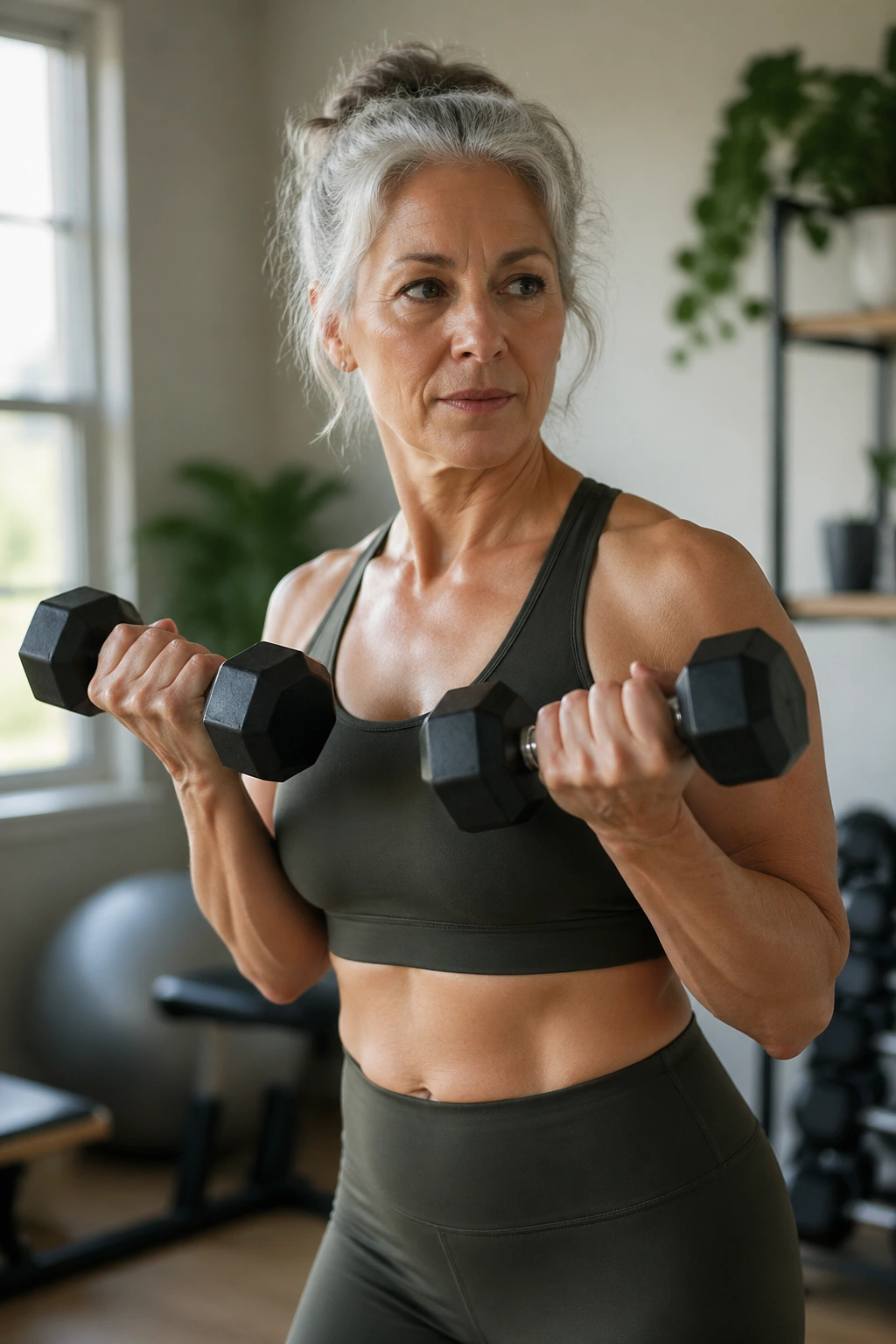
Some days need a workout that doesn’t ask many questions.
A mixed circuit lets you pair strength and cardio without long breaks, which is handy when time is tight and energy is average. You might do a squat, a row, a march in place, and a carry. Simple. Effective. A little sweaty.
A clean 20-minute circuit
- Squat to chair: 10 reps
- Dumbbell row: 10 reps each side
- March in place: 45 seconds
- Farmer’s carry: 30 seconds
- Rest: 45 seconds
- Repeat 4 rounds
The mix matters. Legs, back, core, lungs. That blend gives you more bang than one narrow move repeated to death.
If you like variety, this is the place to use it. If you like structure, keep the same four moves for a month and add a little weight when they stop feeling challenging.
Final Thoughts
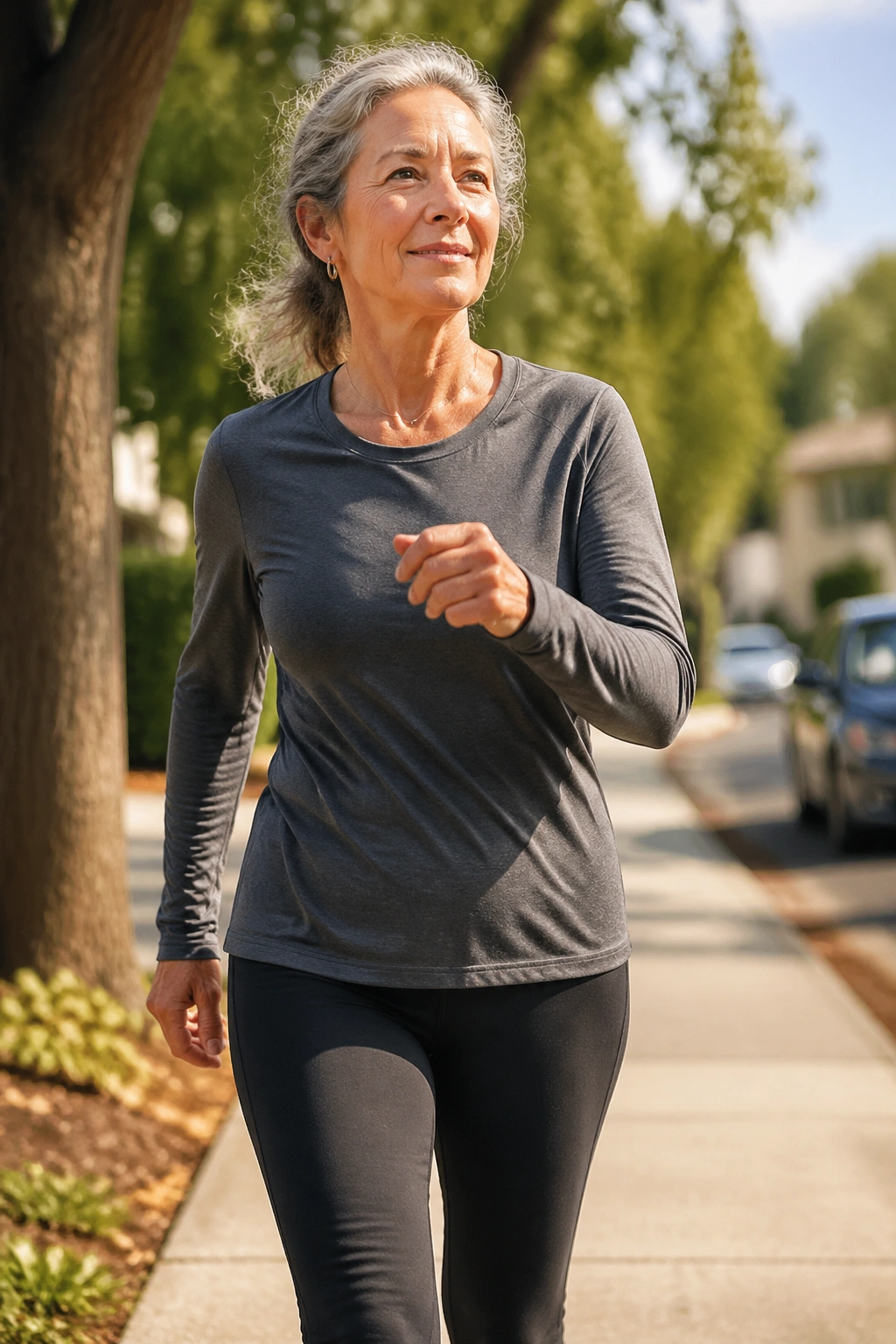
The waistline responds best to a few plain habits done well: more movement, more muscle work, and cardio that respects your joints. Nothing glamorous. Just useful.
The biggest mistake is chasing one magic move. There isn’t one. A woman who walks after meals, lifts twice a week, and keeps her body moving on ordinary days will usually get farther than someone who hunts for the perfect ab exercise and ignores the rest.
Start with the method that feels least annoying. That is usually the one you’ll still be doing next month.
