



Your head does not belong three inches in front of your ribs. Yet that is where it drifts after long stretches at a laptop, on a phone, or hunched over a steering wheel, and the neck starts paying for it fast. The best forward head posture exercises are not flashy. They’re small, specific, and a little boring — which is exactly why they tend to work.
What people call tech neck is usually more than one problem. The front of the neck gets sleepy, the upper back stiffens, the chest shortens, and the shoulder blades stop doing their job. If you only stretch the neck and ignore the ribs, thoracic spine, and scapulae, the relief usually fades the moment you look down again. I’ve watched that loop play out so many times it feels almost predictable.
The fix is not to yank your chin straight back and hope for the best. That often creates jaw tension, weird rib flare, or a cranky feeling under the skull. Better results usually come from a mix of chin control, upper-back mobility, chest opening, and a little strength work that teaches your body what “stacked” feels like.
1. Chin Tucks Against the Wall for Forward Head Posture
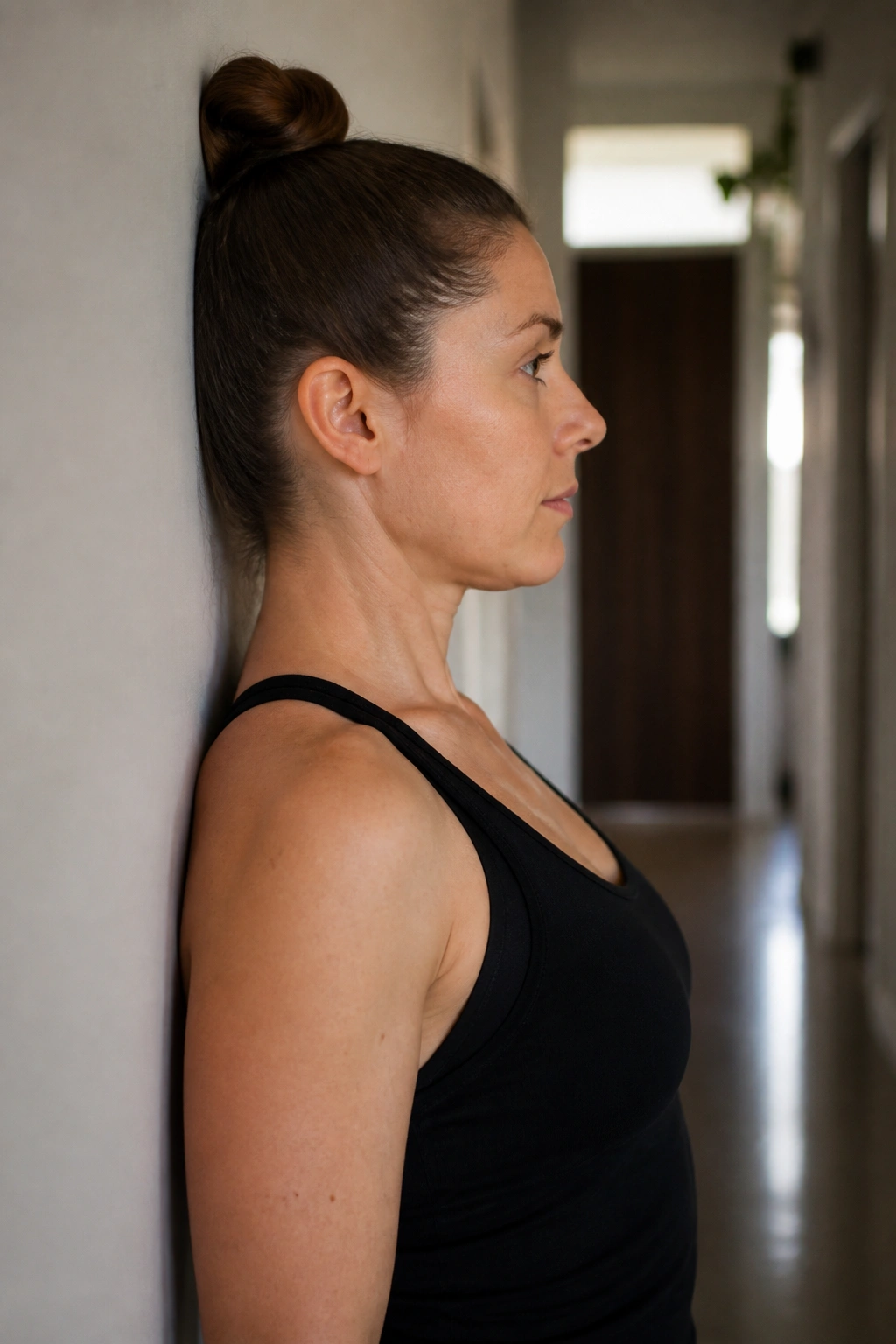
This is the move I start with. A wall gives you feedback, and feedback beats guessing every time.
Stand with your back to a wall, feet about 3 to 6 inches away, and let your butt, upper back, and the back of your head find the surface. Now slide your chin straight back, like you’re making a small double chin, without looking down. Hold for 3 to 5 seconds, then release slowly. Six clean reps are better than twenty sloppy ones.
Why the wall helps
The wall keeps you honest. If you tilt your head down instead of gliding it back, you’ll feel the difference right away. That matters, because the whole point is to wake up the deep neck flexors, not to mash the front of your throat.
- Keep your eyes level with the horizon.
- Think “back,” not “down.”
- Stop if your jaw clenches.
- Do not jam your head hard into the wall.
A good rep feels light. A bad rep feels like a neck workout in the worst way.
2. Supine Chin Nod Holds
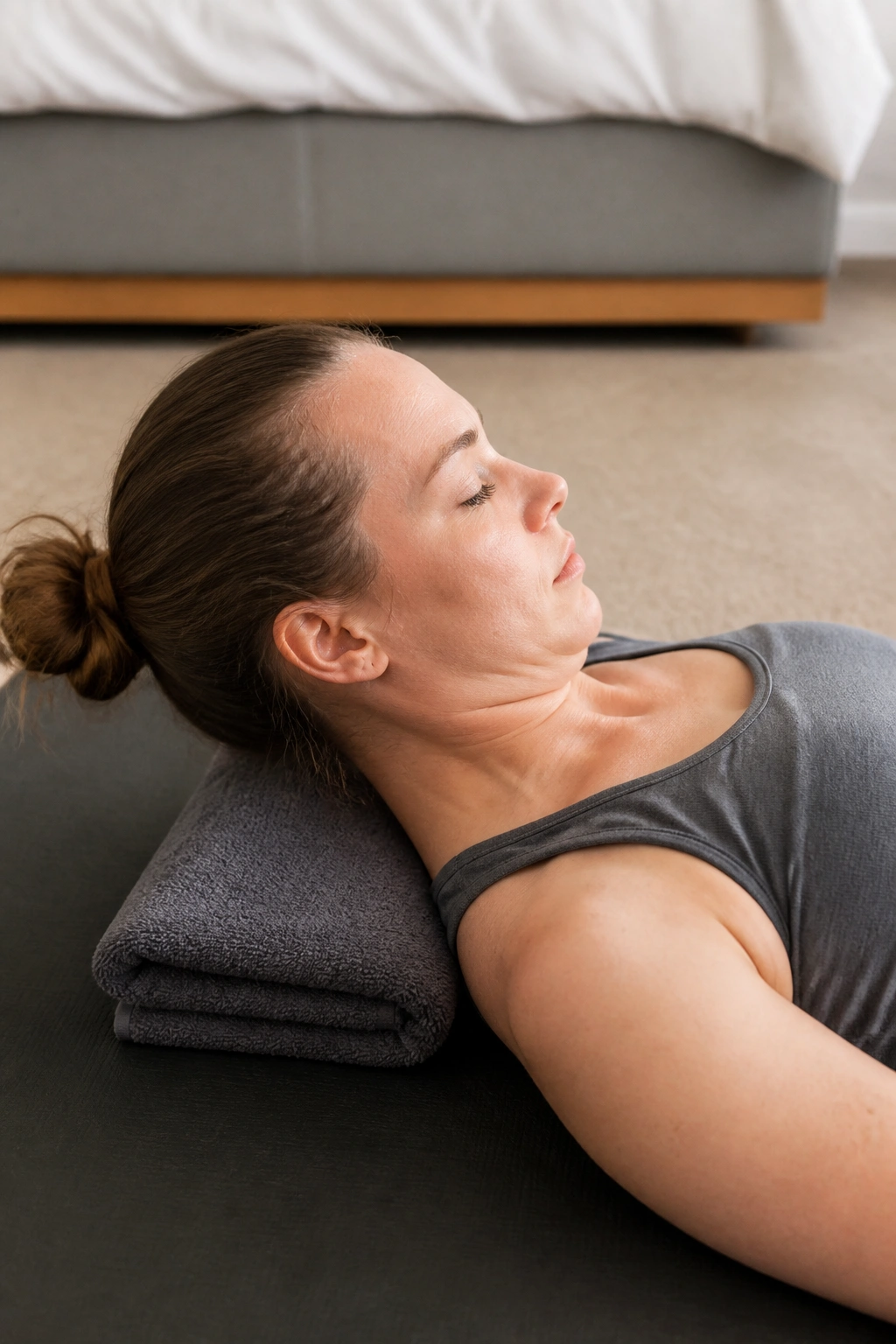
Lying on the floor takes a lot of cheating out of the equation. That’s why this one is so useful when your neck feels loud and irritated.
Lie on your back with your knees bent and a folded towel under your head if needed. Gently nod your chin as if you’re saying a tiny yes, then keep that position while you breathe for 5 seconds. The movement is small. Tiny, even. You should feel the front of the neck working without the muscles on the sides bulging out like ropes.
The best version of this exercise feels calm, not forceful. If the back of your neck presses hard into the floor, you’re probably overdoing it. If your chin juts up, you’ve missed the point. The sweet spot is a quiet hold where the skull feels a little more balanced over the spine.
Try 6 to 8 holds. Rest for a breath between them. This one works well after a long day of screen time, or as a warm-up before you start the upper-back work that follows.
3. Wall Angels With Slow Reach
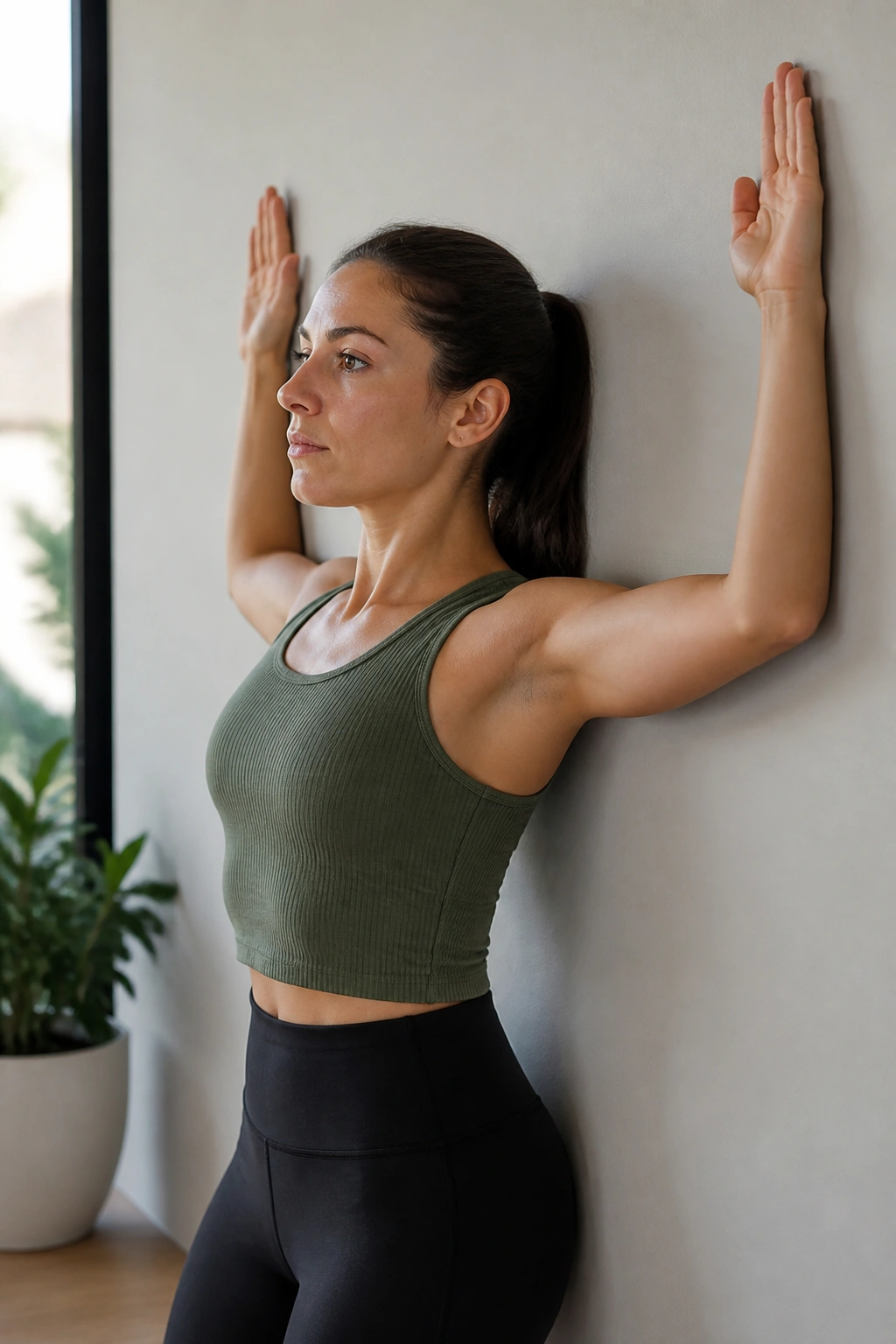
Most people think wall angels are about the arms. They’re not. They’re about getting the ribs, shoulder blades, and neck to stop fighting each other.
Stand with your back against a wall and your feet a few inches forward. Bend your elbows into a goalpost shape, then slide your arms upward as far as you can without your lower ribs popping off the wall. Lower them with control. Four to eight slow reps is plenty.
What to watch for
If your lower back arches hard, shrink the range. If your wrists can’t touch the wall, don’t force them. Smaller, cleaner motion beats bigger motion every time.
- Keep the chin gently tucked.
- Exhale as the arms rise.
- Let the shoulder blades glide, not pinch.
- If you feel pinching in the shoulder, stop short of that range.
A lot of people rush this and turn it into a shrugging contest. Don’t. The neck should stay long.
4. Doorway Pec Stretch at Shoulder Height

A tight chest pulls the shoulders forward, and the head usually follows. That’s the part many people miss.
Stand in a doorway with your forearm on the frame at shoulder height, elbow bent about 90 degrees. Step through until you feel a stretch across the front of the chest and the front of the shoulder. Hold for 20 to 30 seconds, then switch sides. Two rounds on each side is enough for most people.
The trick is staying gentle. If you crank your shoulder forward or let your lower ribs flare, the stretch slides away from the chest and into the joint, which is not what you want. A mild, steady pull across the pec is the goal.
This move pairs well with chin tucks because the chest and neck often need to change together. One without the other tends to feel incomplete. And yes, you can do it between sets or after a workout, especially if pressing movements leave you feeling rounded.
5. Foam Roller Thoracic Extensions
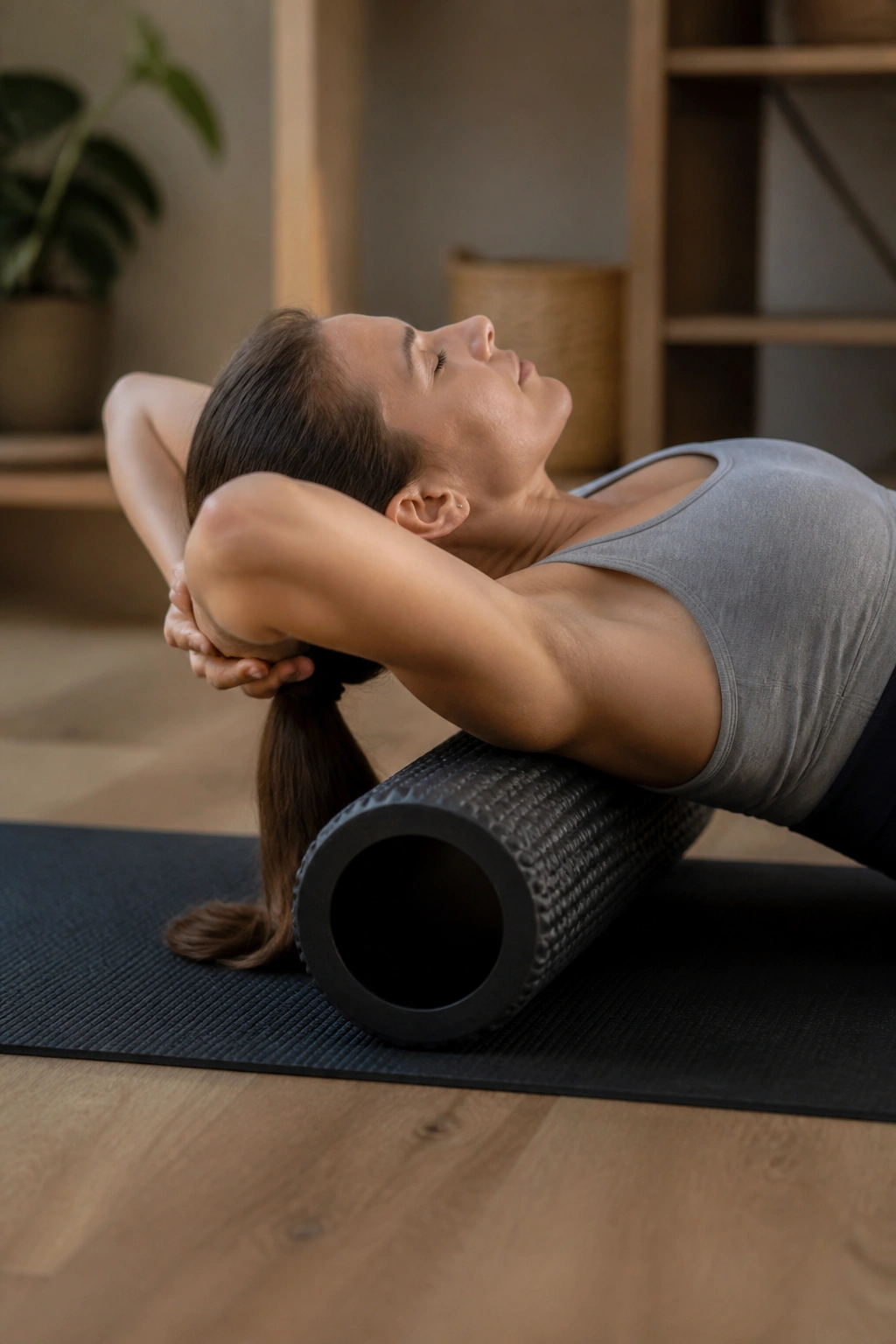
Your upper back is supposed to move. When it does not, the neck often takes over and starts doing the work meant for the thoracic spine.
Place a foam roller across the upper back, supporting your head with your hands. Gently extend over the roller for one breath, then return to neutral. Move the roller up or down an inch and repeat. Five to six slow reps is enough if you’re honest about the range.
The whole point is to open the middle of the back without turning it into a giant low-back arch. Keep the ribs from flaring. Exhale as you extend. If the neck feels jammed, use less range and keep the eyes looking slightly forward rather than flopping the head back.
Some people like a rolled towel instead of a full roller. That works too, and it’s often kinder when the upper back feels stiff but sensitive. The sensation should be a pressure release, not a crunch.
6. Cat-Cow With a Long Neck
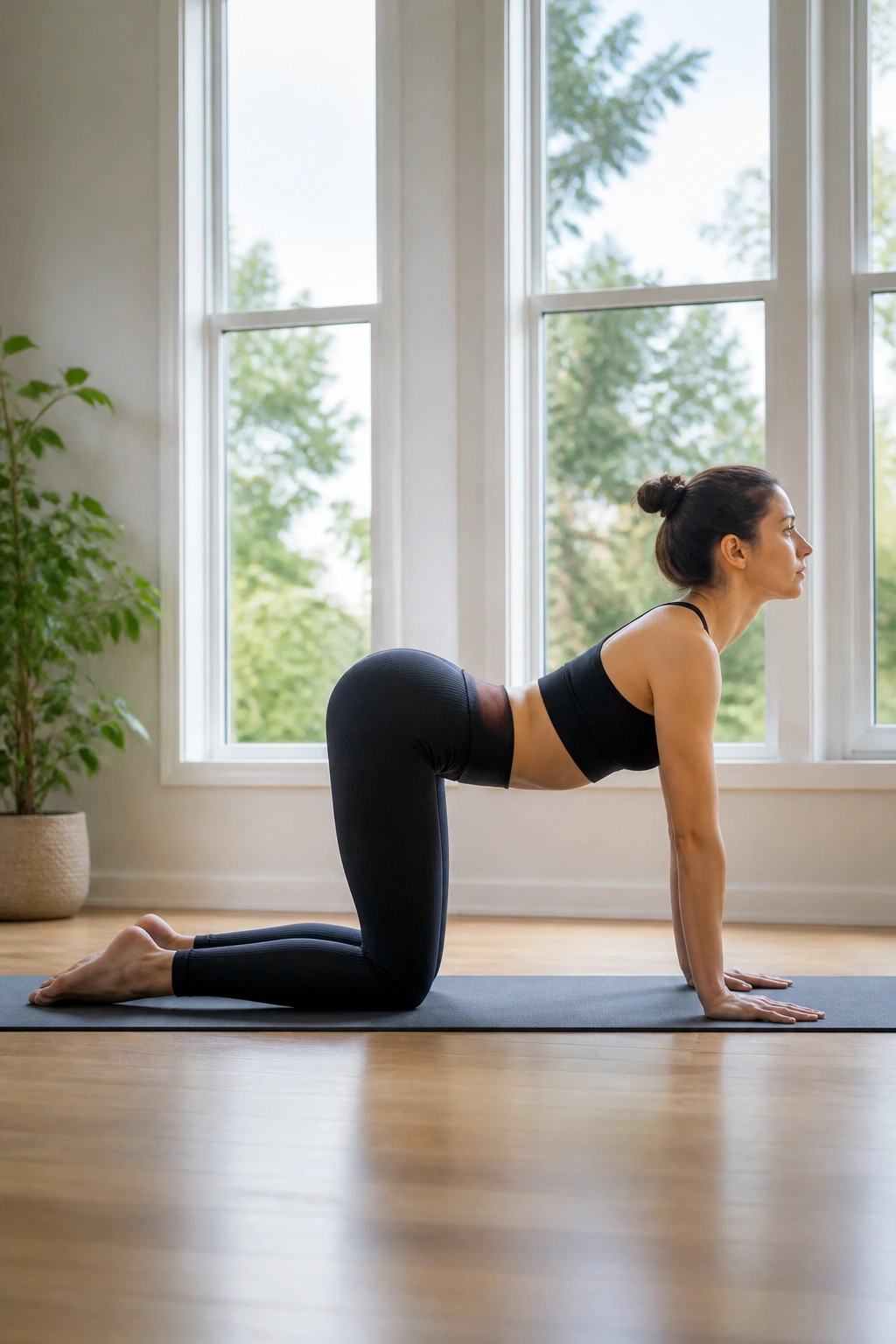
Cat-cow is not just a lower-back drill. When you keep the neck long, it becomes a smooth way to teach the whole spine to move as one piece.
Start on hands and knees. As you round your back, let the chin stay slightly tucked and the eyes stay down. As you arch, keep the head from throwing back. Move with your breath for 6 to 8 slow cycles.
Keep the neck quiet
The common mistake is turning cat-cow into a head-bobbing exercise. That usually makes the neck feel worse, not better. The movement should ripple through the spine while the head stays mostly in line with it.
- Inhale as you arch.
- Exhale as you round.
- Keep the shoulders away from the ears.
- Skip the full head toss if your neck is irritated.
A slow cat-cow before lifting can make your upper back feel less welded shut. It’s simple. Not fancy. Very useful.
7. Open-Book Rotations
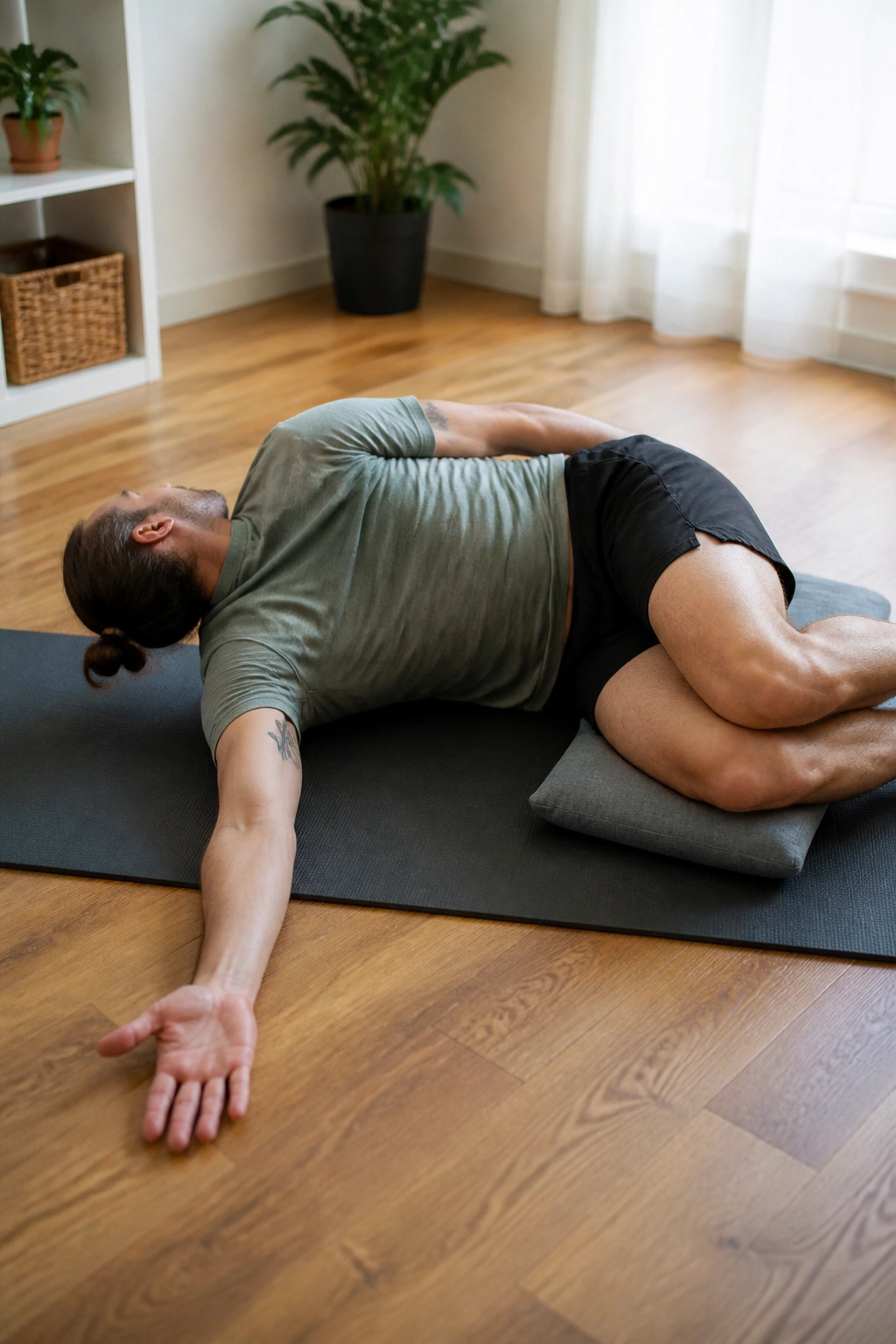
If your upper back is stiff, your neck often cheats. Open-book rotations help give the middle of the spine some breathing room again.
Lie on your side with your hips and knees bent, arms straight out in front of you. Keep the knees stacked as you sweep the top arm open toward the floor behind you, letting your chest rotate. Pause for a breath, then return. Five slow reps per side is a solid dose.
You should feel the movement across the ribs and the upper back, not a yank in the shoulder. If the bottom knee lifts, place a pillow or block between the knees. That little change keeps the low body quieter and lets the rotation come from the thoracic spine instead of the hips.
This one often gives immediate relief after a day of looking down. The neck gets less needy when the upper back can rotate and breathe. Funny how that works.
8. Scapular Retractions Squeezing the Shoulder Blades
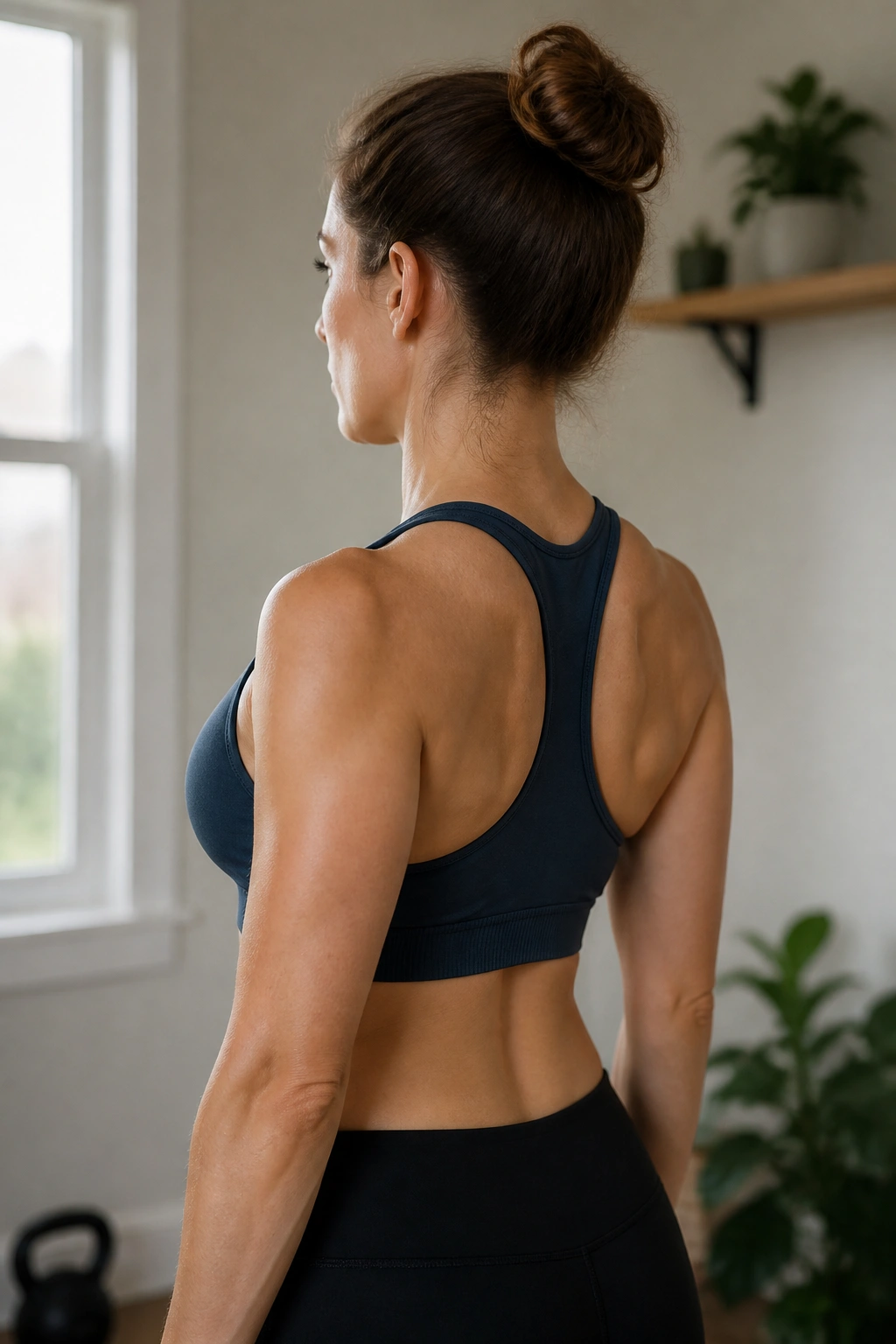
A lot of people think posture is about holding the shoulders back hard. It isn’t. It’s about being able to move the shoulder blades without bracing like a statue.
Sit or stand tall. Draw the shoulder blades gently back and slightly down, as if you’re trying to slide them into the back pockets of a jacket. Hold for 2 seconds, then release fully. Ten to twelve reps is enough.
The release matters. If you never let the shoulder blades move forward again, you end up stuck in a stiff military pose, which can make the neck feel worse. Real posture is not a frozen position. It’s controlled movement.
Keep the ribs stacked and the neck long. If your chest puffs out hard, you’re cheating the drill. A smooth squeeze between the shoulder blades, followed by a clean release, usually does more good than an aggressive pinch.
9. Prone Y-T-W Raises
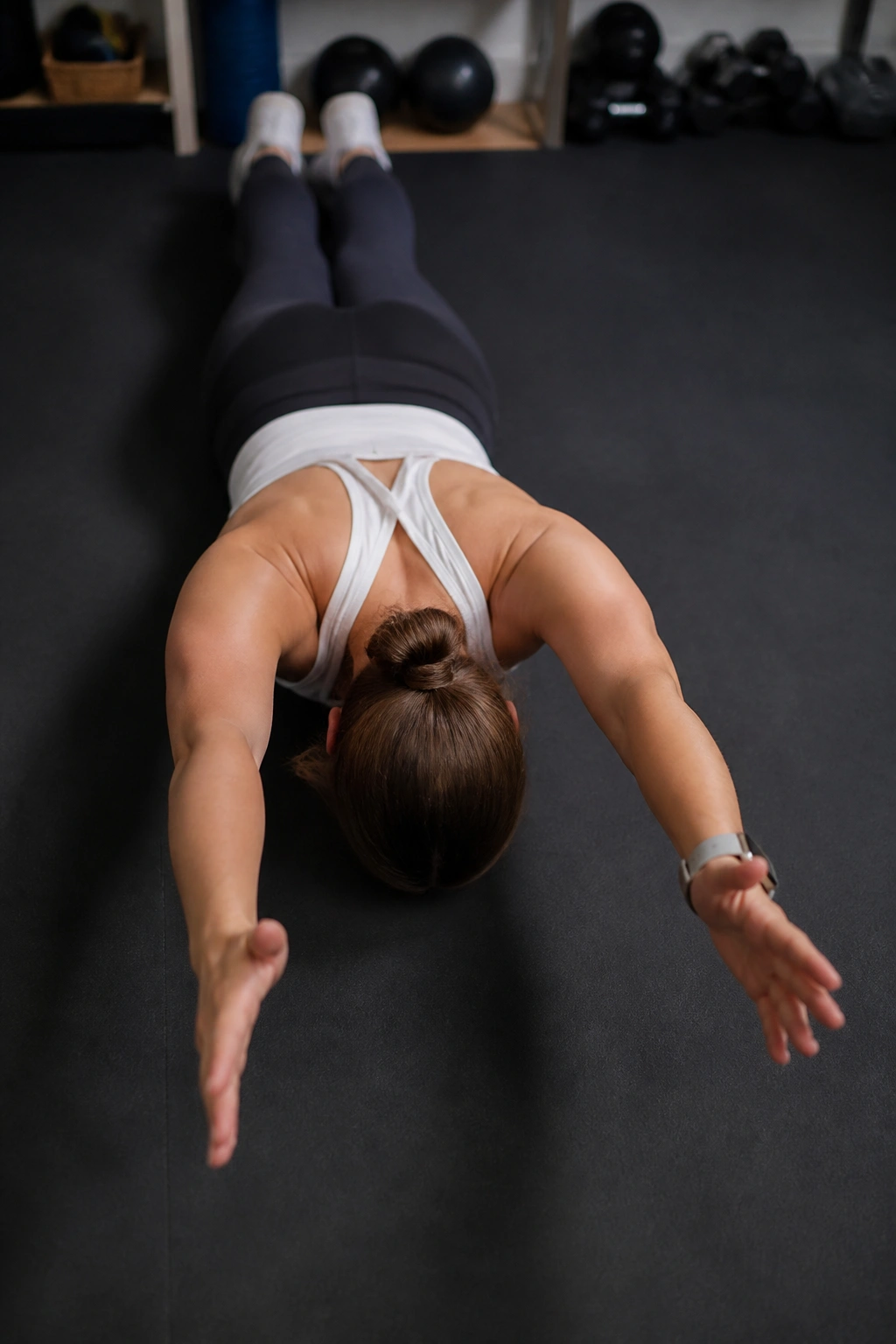
This is one of those exercises that looks almost too plain to matter. Then you do it properly and feel the back of the shoulders and the lower traps light up in a way that tells the truth.
Lie face down on a bench, stability ball, or the floor. Lift your arms into a Y shape, then a T, then a W. You can do 4 to 5 reps of each letter, keeping the movement small and controlled. No heavy weights needed. Tiny dumbbells, or even no load at all, is usually enough.
Why it helps neck posture
The lower traps and mid-back muscles help hold the shoulder girdle in a cleaner position. When they’re weak, the upper traps tend to take over and the neck gets overworked. That’s the ugly little tradeoff people live with for years.
- Keep the forehead lightly supported.
- Reach long through the fingertips.
- Move slowly enough to avoid shrugging.
- If your upper traps cramp, reduce the range immediately.
This is not a burn-for-burn’s-sake exercise. It should feel precise.
10. Resistance Band Rows for Tech Neck
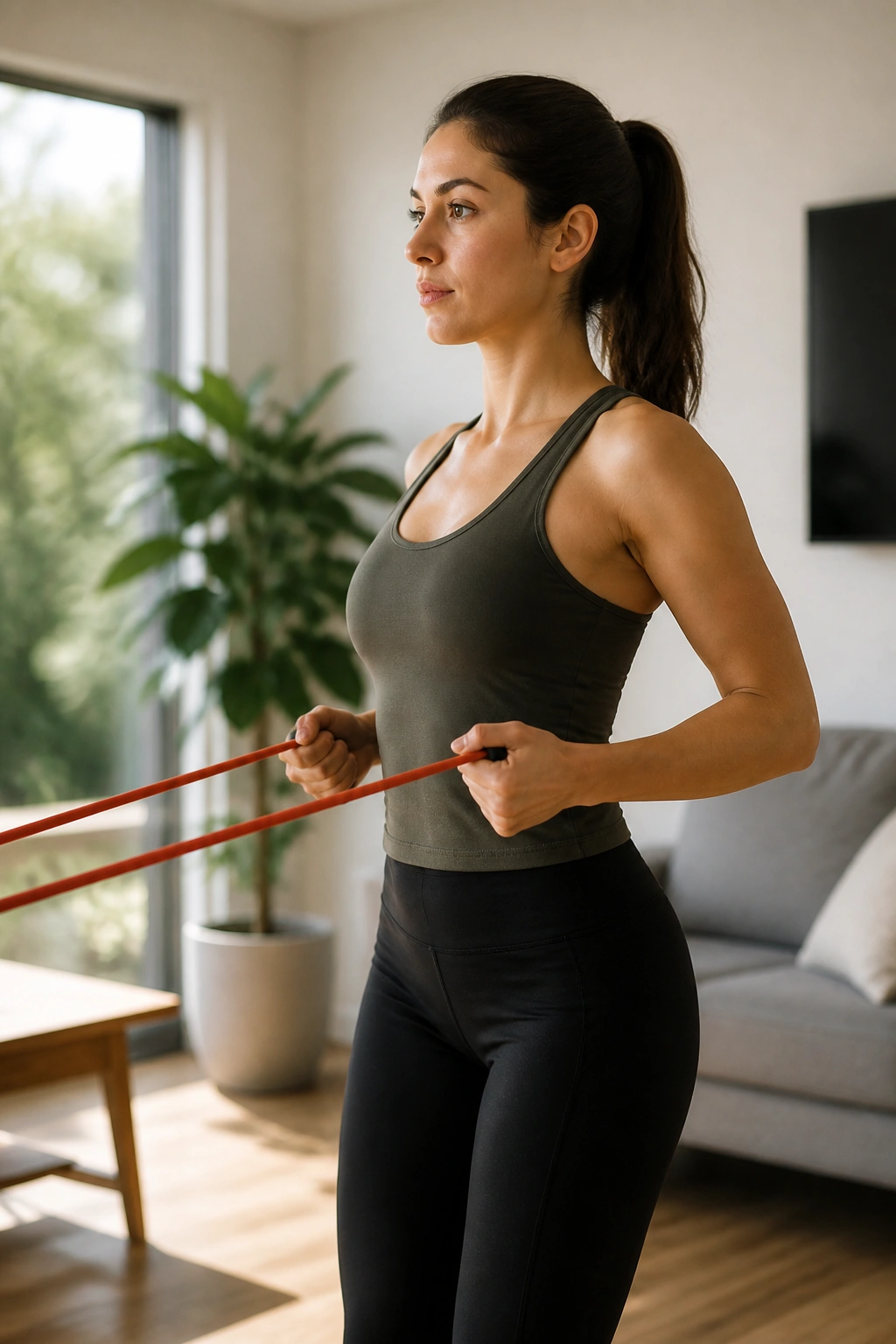
Rows are not just a back-day thing. For tech neck, they’re one of the cleaner ways to teach the shoulder blades to sit where they belong while the head stays stacked.
Anchor a resistance band at chest height. Hold the ends, walk back until there’s light tension, and row toward the lower ribs with elbows about 30 to 45 degrees from your sides. Pause for 1 second, then return under control. Ten to twelve reps works well.
A sloppy row turns into a shrug. A good one keeps the neck long and the ribs quiet while the shoulder blades glide back and down. That difference is huge. If your chin creeps forward on the pull, lighten the band and slow the rep down.
I like this move after a few mobility drills because it teaches the new position under a little load. That matters. Stretching alone rarely sticks unless you give the body a reason to keep the change.
11. Deep Neck Flexor Holds Off the Floor
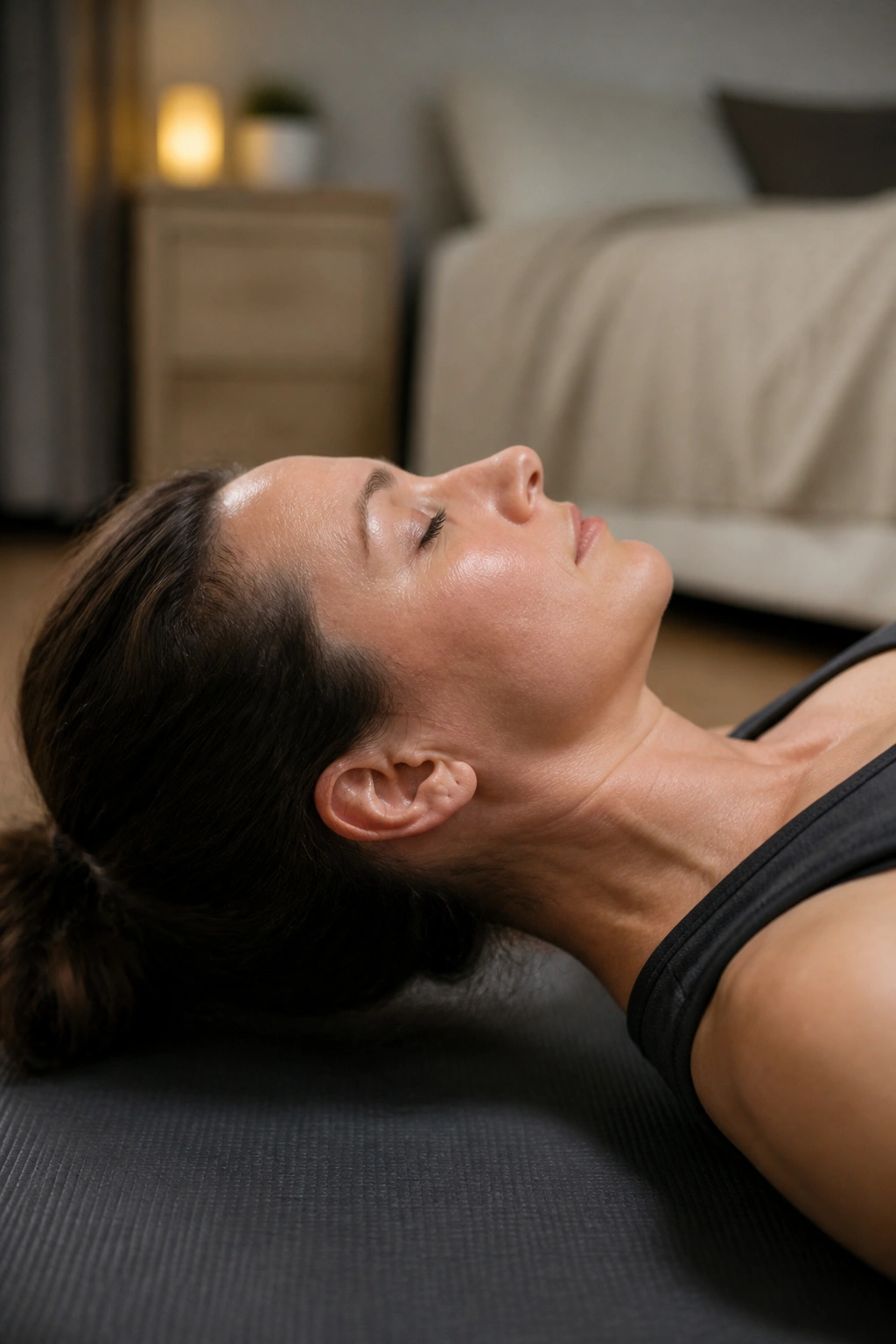
Why does a tiny hold matter more than a hard yank? Because the deep neck flexors are endurance muscles, not show-off muscles.
Lie on your back and perform a small chin nod, then hold that position for 5 to 10 seconds while breathing. Repeat 5 to 8 times. If you can do the first set cleanly, add a second set later in the day rather than making the hold brutal.
You should feel a quiet effort at the front of the neck, just under the jawline, with no big bulging on the sides. If the sternocleidomastoid muscle — the rope-like one on the front/side of the neck — pops out hard, the bigger surface muscles have taken over.
That usually means you’re pushing too hard. Ease off. Smaller is better here.
This exercise pays off because it trains endurance and control, the two things most screen-heavy days seem determined to steal.
12. Levator Scapulae Stretch
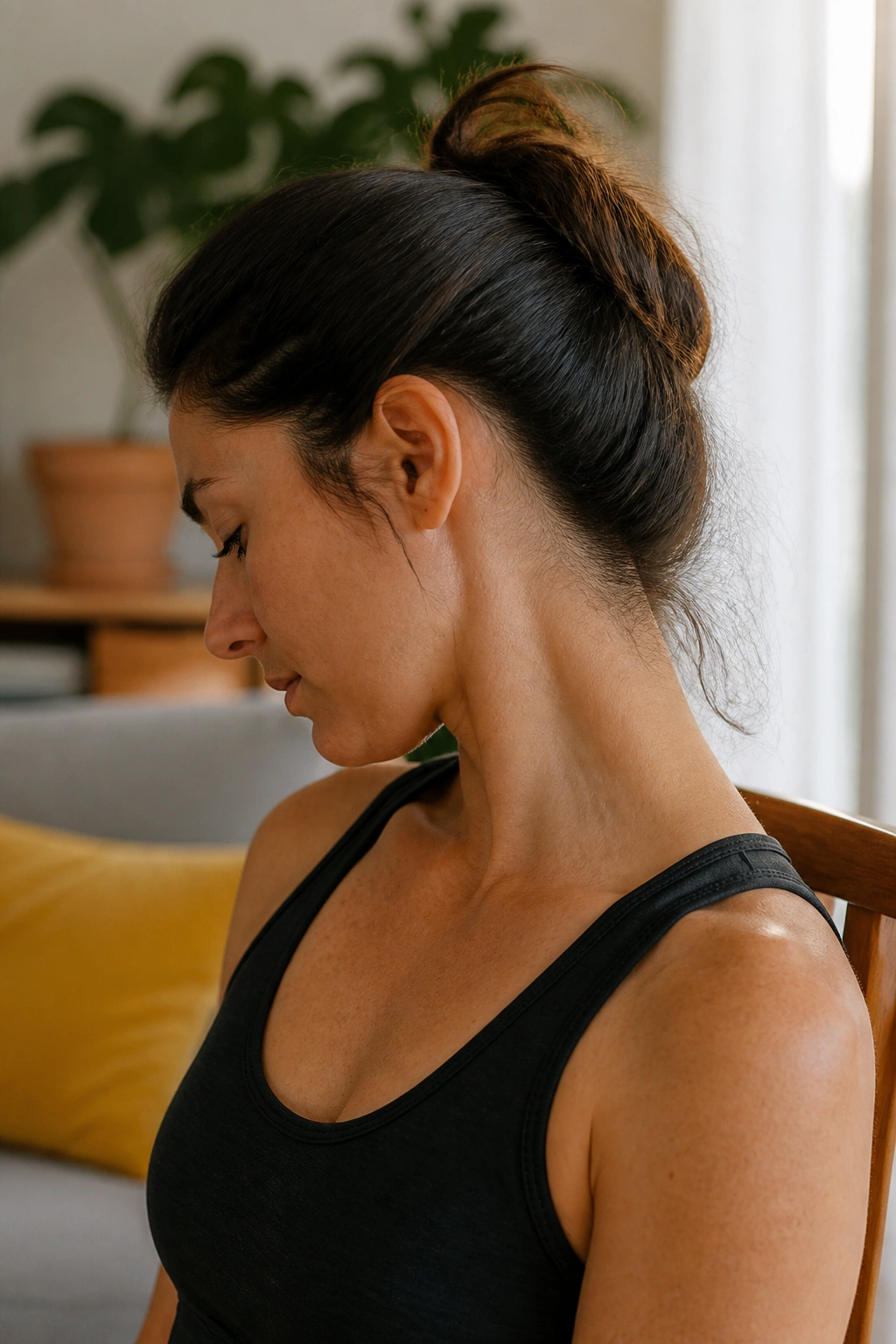
The levator scapulae gets grumpy when you live with your head forward and your shoulders near your ears. You can feel it as that stiff, snaggy line from the upper neck into the top inner corner of the shoulder blade.
Sit tall. Turn your head about 45 degrees toward your armpit, then gently nod down. Use the hand on the same side to add a light stretch if needed. Hold for 20 to 30 seconds. Two rounds on each side is plenty.
What it should feel like
A clean stretch lands high in the neck and upper shoulder, not deep in the joint. If you get a pinch, back off and reduce the angle.
- Keep the opposite shoulder heavy.
- Breathe through the hold.
- Stop before the jaw tightens.
- Never pull hard on your head.
This one pairs well with thoracic mobility because the neck and shoulder blade often act like a single stiff unit. Separate them a bit, and the pressure drops.
13. Upper Trap Side Bend Stretch

The upper trap loves to shoulder the burden when posture is off. It gets tight, then tighter, then everyone blames the neck for being “bad.”
Sit or stand tall and gently tilt one ear toward the same-side shoulder. For a deeper line, reach the opposite arm down toward the floor or behind your back. Hold 20 to 30 seconds, then switch sides.
The mistake is yanking the head sideways with the hand. That tends to create pressure instead of release. Let the head drift, not get dragged. If your shoulder hikes upward, reset before trying again.
A lot of people feel this stretch immediately along the top ridge of the shoulder. Good. That’s the point. If you only feel it behind the ear, adjust the angle slightly until the line of tension spreads into the upper shoulder.
14. Wall Slides With Forearms on the Wall
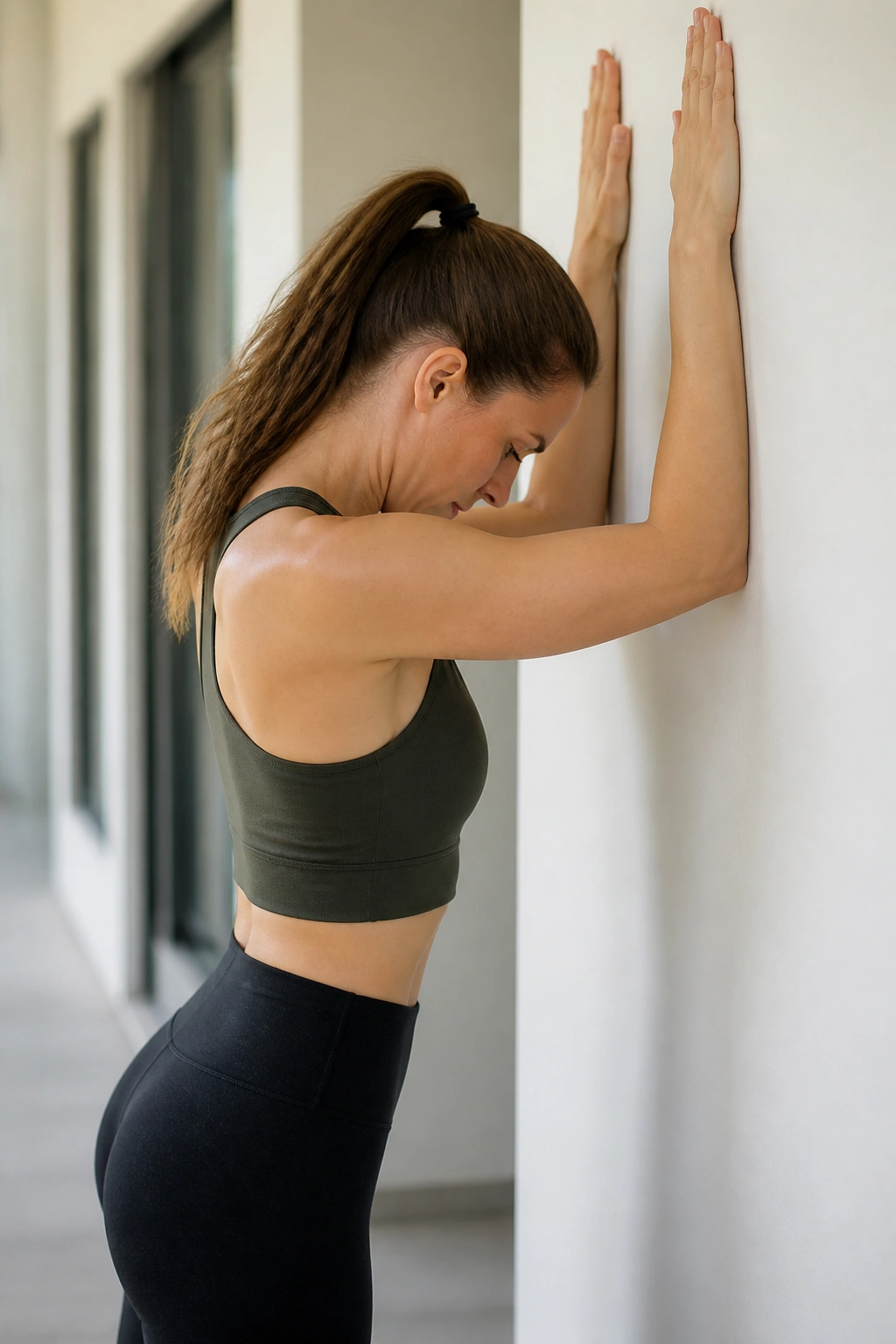
Wall slides look a bit like wall angels, but they bias the shoulder blade and serratus work a little differently. I like them because they’re cleaner than people expect.
Stand with your forearms on the wall, elbows about shoulder height, and a gentle chin tuck. Slide the arms upward while keeping the forearms in contact with the wall as long as you can. Come down slowly. Eight to ten reps is a solid set.
How to keep it honest
The ribs will want to pop forward. They always do. Resist that urge.
- Exhale as the arms rise.
- Keep pressure through the forearms.
- Let the shoulders move up only as far as control lasts.
- Small range with perfect form beats a fake big reach.
This exercise is useful before pressing workouts because it reminds the shoulder blades to upwardly rotate without the neck shrugging along for the ride.
15. Band Pull-Aparts at Chest Height
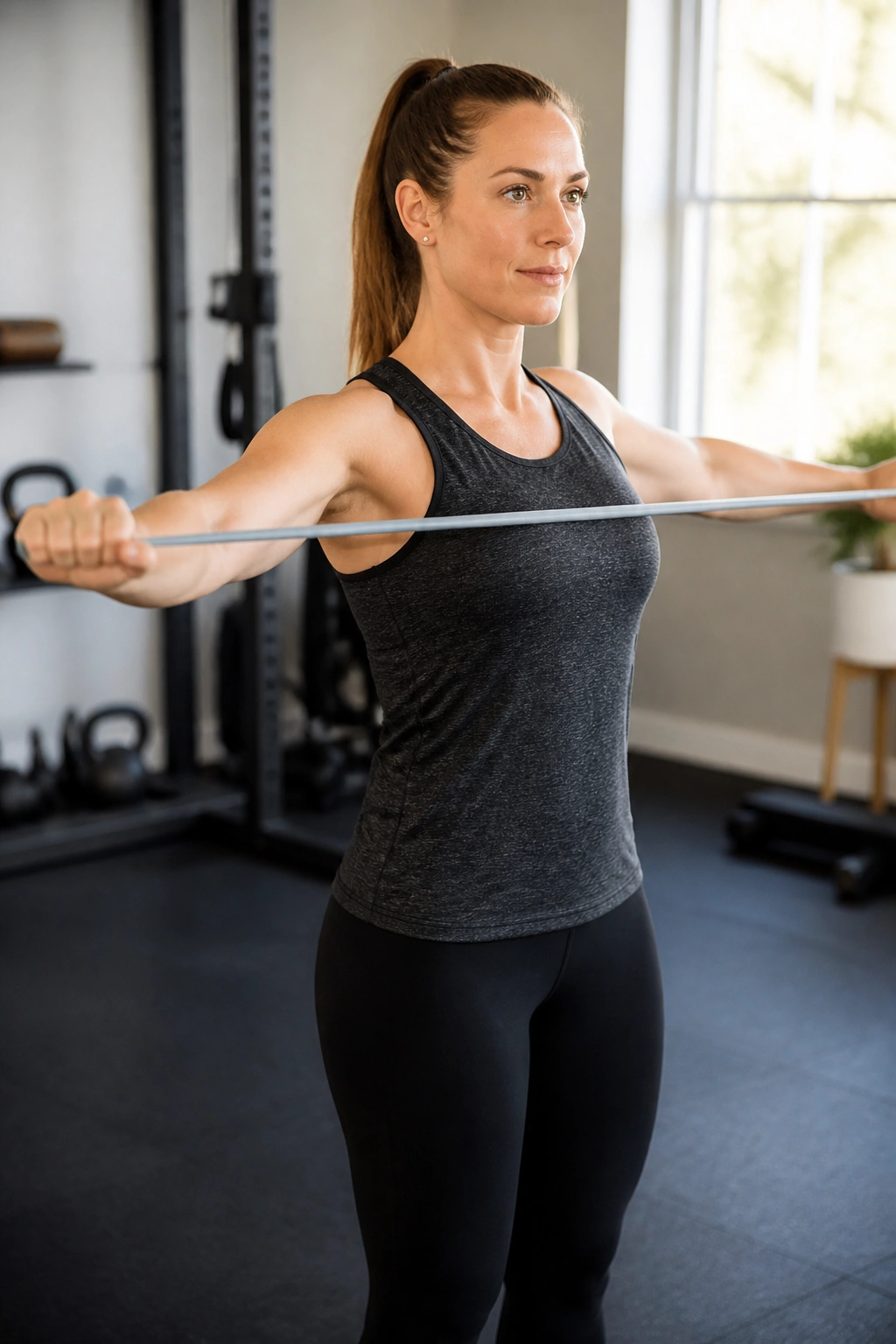
Band pull-aparts look simple, and that is why people rush them. A sloppy rep teaches nothing. A careful rep gives the upper back a small but useful wake-up.
Hold a light resistance band at chest height with straight arms. Pull the band apart until your hands are near your sides, pause for 1 second, then return slowly. Twelve to 15 reps is fine if the band is light enough to keep your neck relaxed.
You want the shoulder blades to move back without the lower back arching or the chin jutting. If the neck tightens, lower the tension. People often use a band that’s too heavy and then turn the movement into a shrug parade.
This one works well between longer desk blocks. It also pairs nicely with chin tucks because the body gets a message from both ends: neck stacked, shoulder blades active. Not glamorous. Useful.
16. Thread-the-Needle Rotations
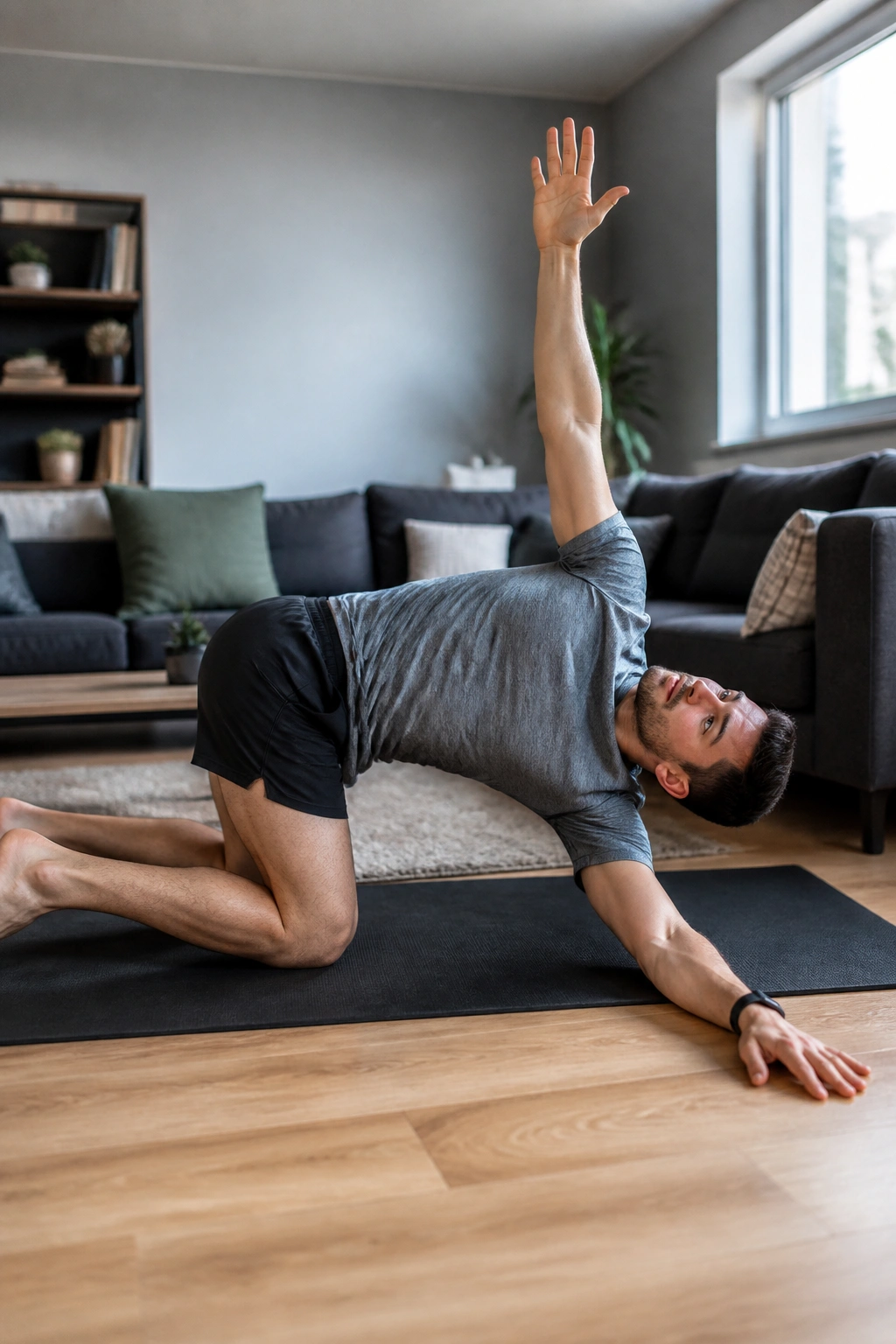
If the upper back will not rotate, the neck gets asked to do twists it was never meant to do all day long.
Start on hands and knees. Reach one arm under the body, lowering the shoulder and side of the head toward the floor, then rotate back open and reach toward the ceiling. Five slow reps per side is enough. Keep the breath smooth.
The twist should feel like it comes from the rib cage. The neck stays quiet. The hips stay steady. If you collapse hard into the bottom shoulder, place a folded towel there or reduce the depth of the reach.
I like this drill when the upper back feels gummy and flat, which is common after a lot of sitting. It gives the spine a clean twist without asking the neck to crank through the whole range alone.
17. Bird Dog With Chin Tuck
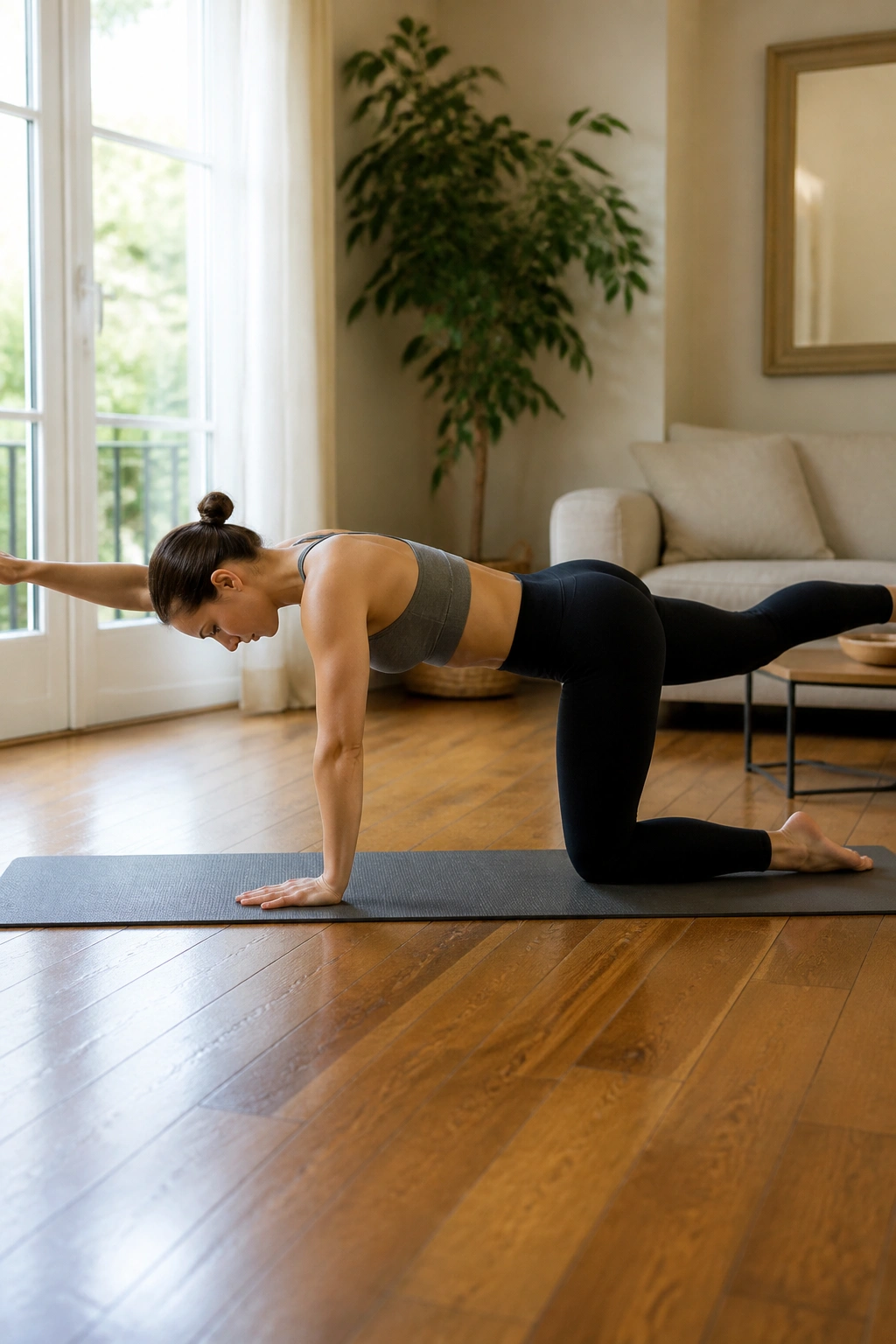
A good posture drill should teach the whole system to stay organized under a little challenge. Bird dog does that better than people give it credit for.
From hands and knees, set a gentle chin tuck, then reach one leg back and the opposite arm forward. Hold for 3 to 5 seconds, return, and switch sides. Five reps each side is plenty if the form stays sharp.
The challenge is keeping the pelvis level and the ribs from opening up. If your lower back arches or your head shoots forward, shorten the reach and slow down. The goal is a long line from crown to heel, not an impressive-looking stretch.
This move bridges the gap between mobility and strength. That bridge matters. You can stretch a forward head all day, but if the trunk falls apart the moment you move, the pattern comes right back.
18. Face Pulls With External Rotation
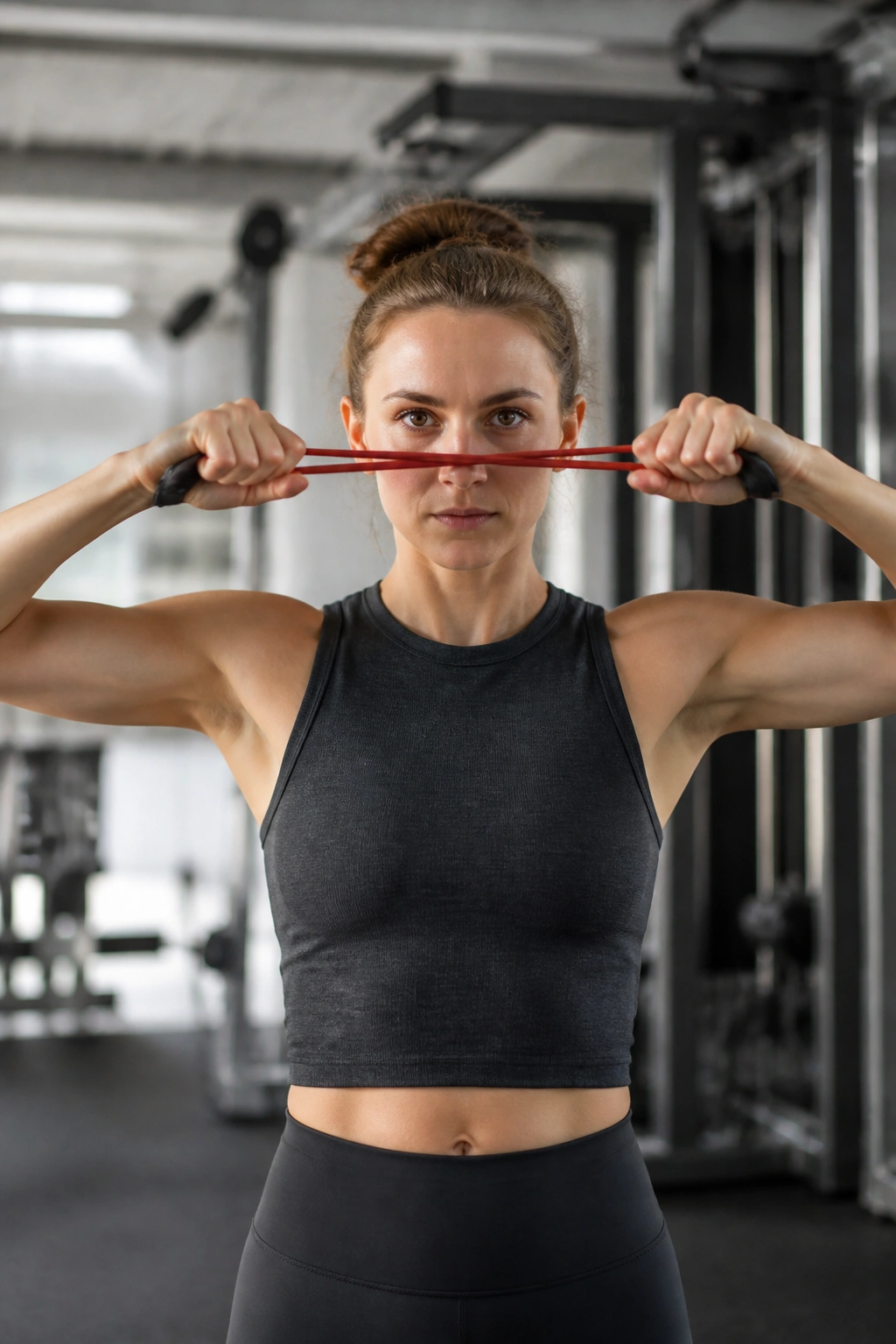
Face pulls are one of the few band exercises I never get tired of seeing done well. They hit the rear delts, mid traps, and rotator cuff, which is a nice combination for people who sit too much.
Set a band or cable at face height. Pull toward the bridge of your nose, then rotate the hands back so the knuckles point behind you. Use 8 to 12 reps with a smooth pause at the end.
The elbows should stay up without the shoulders crawling toward the ears. If you feel the neck taking over, reduce the load and slow the return. The movement should feel strong through the back of the shoulders, not crowded in the top of the neck.
This is one of the better finishing exercises in a posture routine because it teaches the upper back to hold position after all the mobility work. It’s not magic. It is honest.
19. Suitcase Carries With Tall Posture

Carry one heavy weight at your side and walk like your spine has manners. That’s the whole drill, and it’s more useful than it sounds.
Hold a dumbbell or kettlebell in one hand and walk 20 to 40 steps, then switch sides. Stay tall, keep the ribs stacked, and let the free arm swing naturally. The head should sit over the shoulders, not drift toward the loaded side.
What to look for
If you lean, the load is too heavy or you’re rushing. If your shoulder hikes up toward your ear, reset the grip and lighten the carry.
- Walk slowly enough to stay upright.
- Keep the chin level, not jutting.
- Breathe through the nose if you can.
- A crooked carry teaches a crooked pattern.
Carries are great after strength work because they teach posture under load, which is where real life lives anyway. Sitting tall for 30 seconds is one thing. Walking tall with a weight in one hand is a better test.
20. Wall Stand Reset for Tech Neck and Forward Head Posture
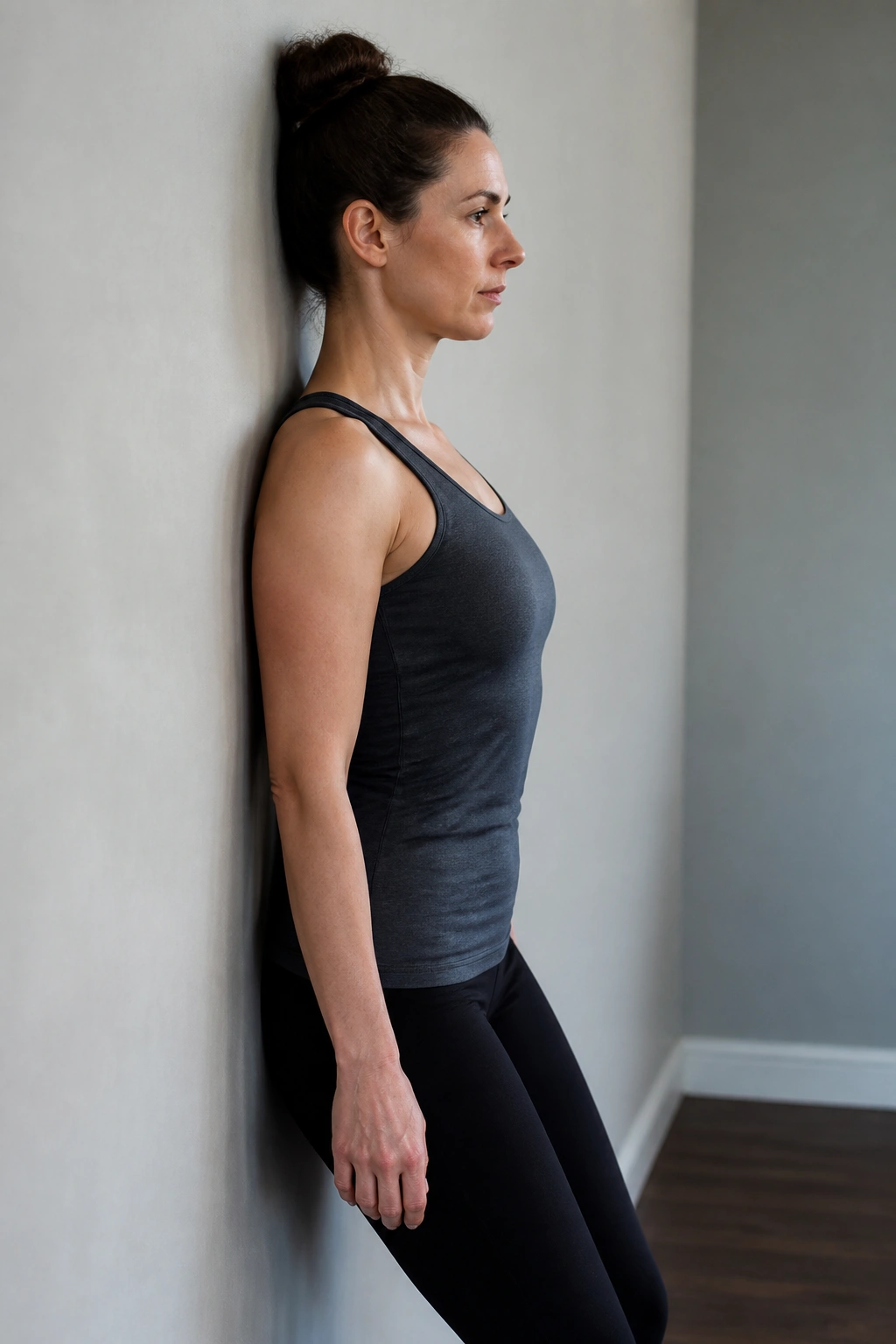
Stand with your back to the wall, feet a few inches out, and let the back of your head, shoulder blades, and pelvis find the surface. Gently tuck the chin, then take 5 slow breaths without losing the stack.
This is the reset I’d use between meetings, between sets, or after a stretch of phone scrolling that left the neck feeling chopped up. It’s not flashy. It is a checkpoint. If the back of the head won’t reach the wall, don’t force it — let the chin move back a little, breathe, and work with the shape you have today.
A small daily hold like this can teach your body what neutral feels like more reliably than one hard session once in a while. That’s the part people miss. Posture is a habit problem as much as a muscle problem.
Use this as the final two minutes of your day, or as the first thing you do after standing up from a long desk stretch. Keep it simple. Keep it clean. And when your neck starts to drift forward again — because it will — bring it back without a fight.
