



Nothing wrecks a morning faster than breakfast that looks harmless and leaves you hunting for snacks by 10:30. Low glycemic breakfast ideas are for the days you want your energy to feel even, not spiky, and you want your brain to stay online after the second cup of coffee.
The pattern is simple. Put a fast-digesting carb on its own, and you often get a quick rise followed by a slump. Put that same carb beside protein, fiber, and a little fat, and the meal behaves differently. That’s why a plain muffin can feel like a trap, while a bowl of oats with nut butter, seeds, and berries can carry you for hours.
A lot of people think “low glycemic” means boring. It doesn’t. It means smart portions, slower carbs, and breakfasts that taste like food you actually want to eat — eggs with vegetables, yogurt with berries, chia pudding, savory bowls, even pancakes when they’re built the right way.
The trick is not to strip breakfast down to nothing. It’s to build it with enough substance that you’re not thinking about the pantry before noon. Keep that in mind while you scan the ideas below; a few are quick, a few need a little prep, and all of them are built to feel steady rather than sugary.
1. Low-Glycemic Eggs, Spinach, and Tomatoes in a Quick Skillet
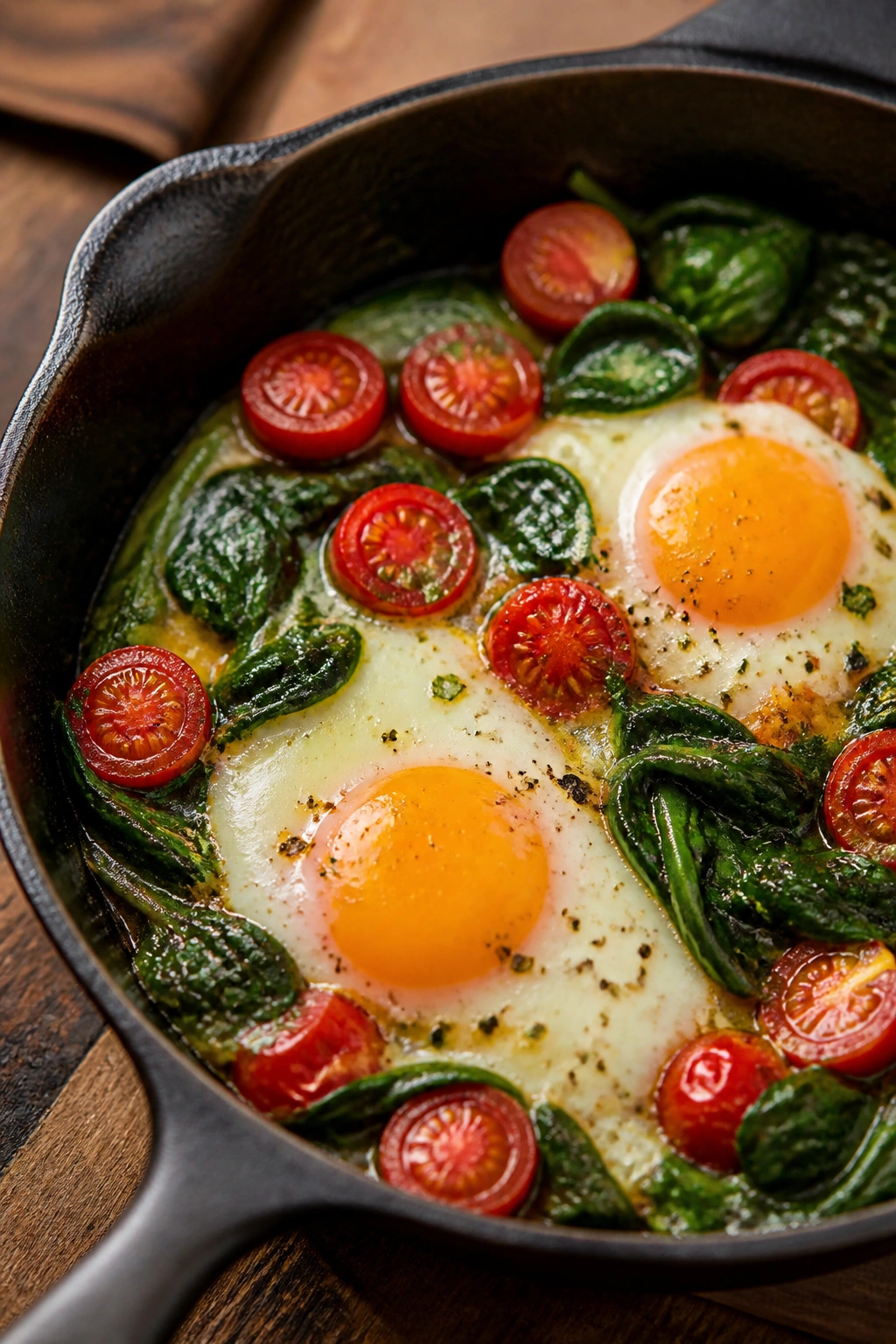
Eggs are the obvious anchor here, and I mean that in the best way. Two eggs cooked in 1 teaspoon olive oil with a handful of spinach and half a cup of cherry tomatoes gives you a breakfast that lands with actual weight, not a sugar rush.
Why It Works
The eggs bring protein and fat, which slow down the meal. Spinach adds volume and a little fiber, while tomatoes bring brightness without much sugar. That combo is why this kind of skillet breakfast feels calm instead of chaotic.
If you want a little more staying power, add 1 slice of seeded rye or dense whole-grain toast. Skip the fluffy white bread. It disappears fast and usually does you no favors.
- 2 large eggs
- 1 teaspoon olive oil or butter
- 1 packed cup baby spinach
- ½ cup cherry tomatoes, halved
- Salt and black pepper
- Optional: 1 tablespoon crumbled feta or goat cheese
- Optional: hot sauce or chopped chives
Tip: Cook the tomatoes until they blister at the skin and start to slump. That little bit of heat pulls out the sweetness without turning them watery.
2. Greek Yogurt, Berries, and Walnuts
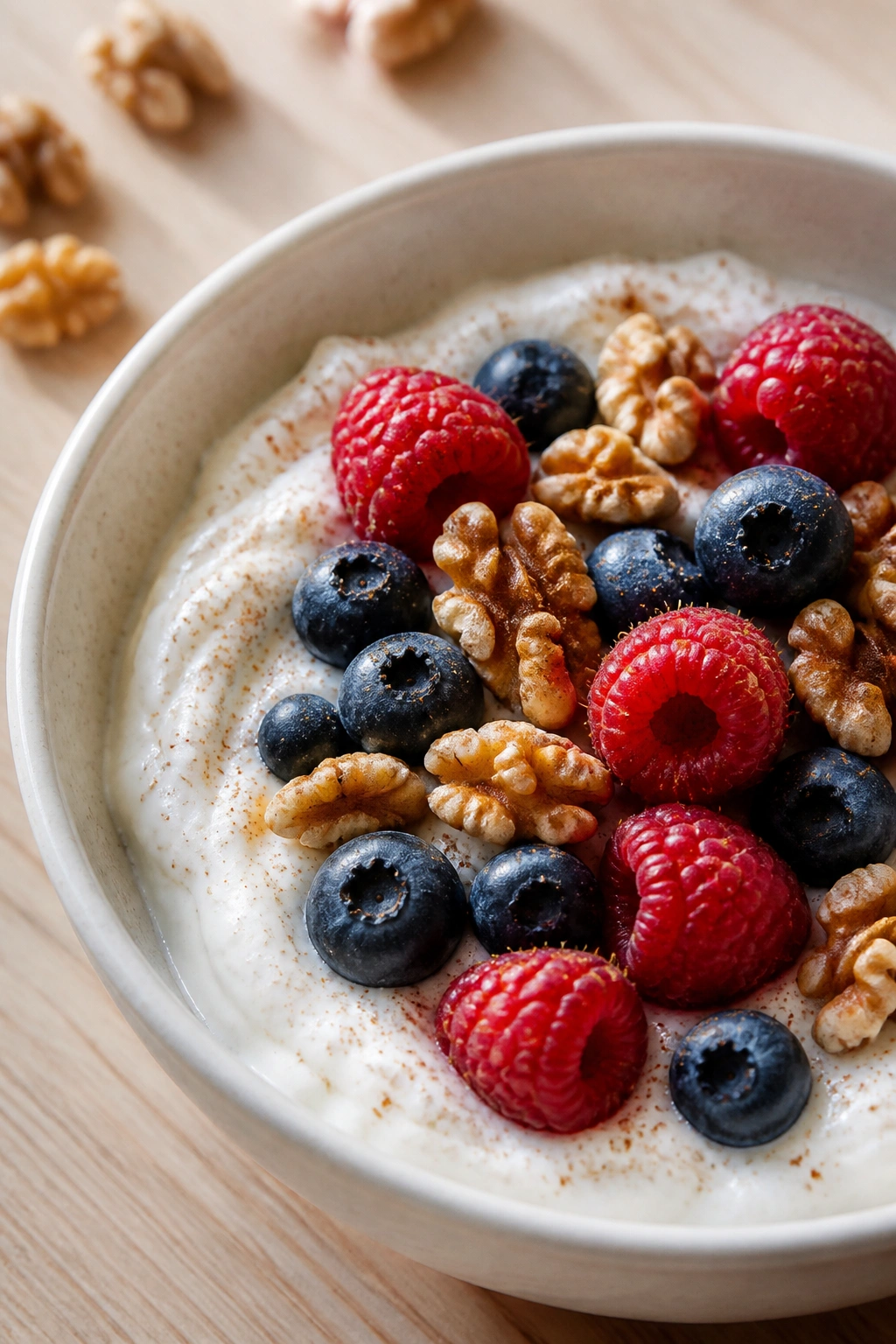
Plain Greek yogurt is one of the easiest steady-energy breakfasts around. The catch is that it has to be plain. The flavored cups are often dessert in disguise, and you can taste it the second the spoon hits the bottom.
Use ¾ to 1 cup plain Greek yogurt, then top it with ½ cup berries, 2 tablespoons walnuts, and 1 tablespoon chia seeds. A pinch of cinnamon helps more than people think; it makes the bowl taste finished without needing honey. If you want it a little softer, stir in a splash of milk and let it sit for two minutes.
What I like here is the balance. The yogurt gives you protein, the walnuts add fat and crunch, and the berries keep the sweetness modest. Blueberries are the classic move, but raspberries and blackberries work even better if you want less sugar per bite.
This is also the breakfast that forgives a rushed morning. Throw it in a bowl, eat it cold, and move on. No pan, no stove, no cleanup drama.
3. Chia Pudding That Sets Overnight
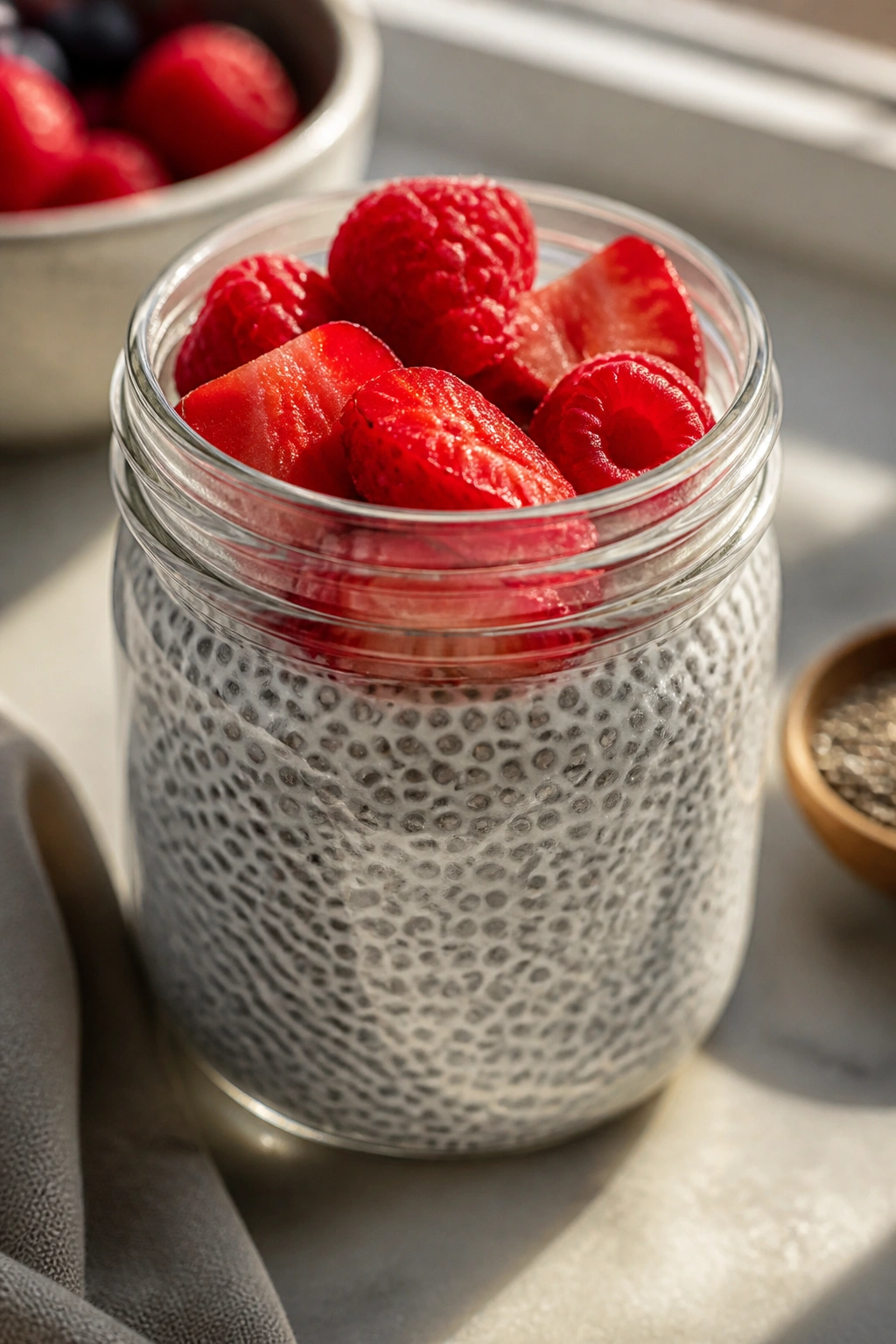
Why does chia pudding work so well for a low-glycemic morning? Because the seeds swell into a gel, and that texture changes the pace of the meal. You’re not drinking sugar; you’re eating something thick, spoonable, and slow.
Stir 3 tablespoons chia seeds into 1 cup unsweetened almond milk, dairy milk, or soy milk, then add a tiny splash of vanilla and a pinch of salt. Whisk hard for 20 seconds, wait 5 minutes, whisk again, and chill it for at least 4 hours. That second whisk matters. Skip it and you can end up with a few clumps sitting in a thin puddle.
How to Make It Taste Good
Top the pudding with raspberries, sliced strawberries, or a tablespoon of pumpkin seeds. If you want more body, add 1 tablespoon almond butter right before eating. That makes the bowl richer and helps it feel like breakfast instead of a snack.
- 3 tablespoons chia seeds
- 1 cup unsweetened milk of choice
- ½ teaspoon vanilla extract
- Pinch of salt
- ½ cup berries for topping
- 1 tablespoon nuts or seeds for crunch
A lot of people quit on chia pudding after one bland attempt. Fair enough. Bland chia pudding is a crime. Add salt, use enough vanilla, and make sure the topping has texture.
4. Steel-Cut Oats with Cinnamon and Nut Butter
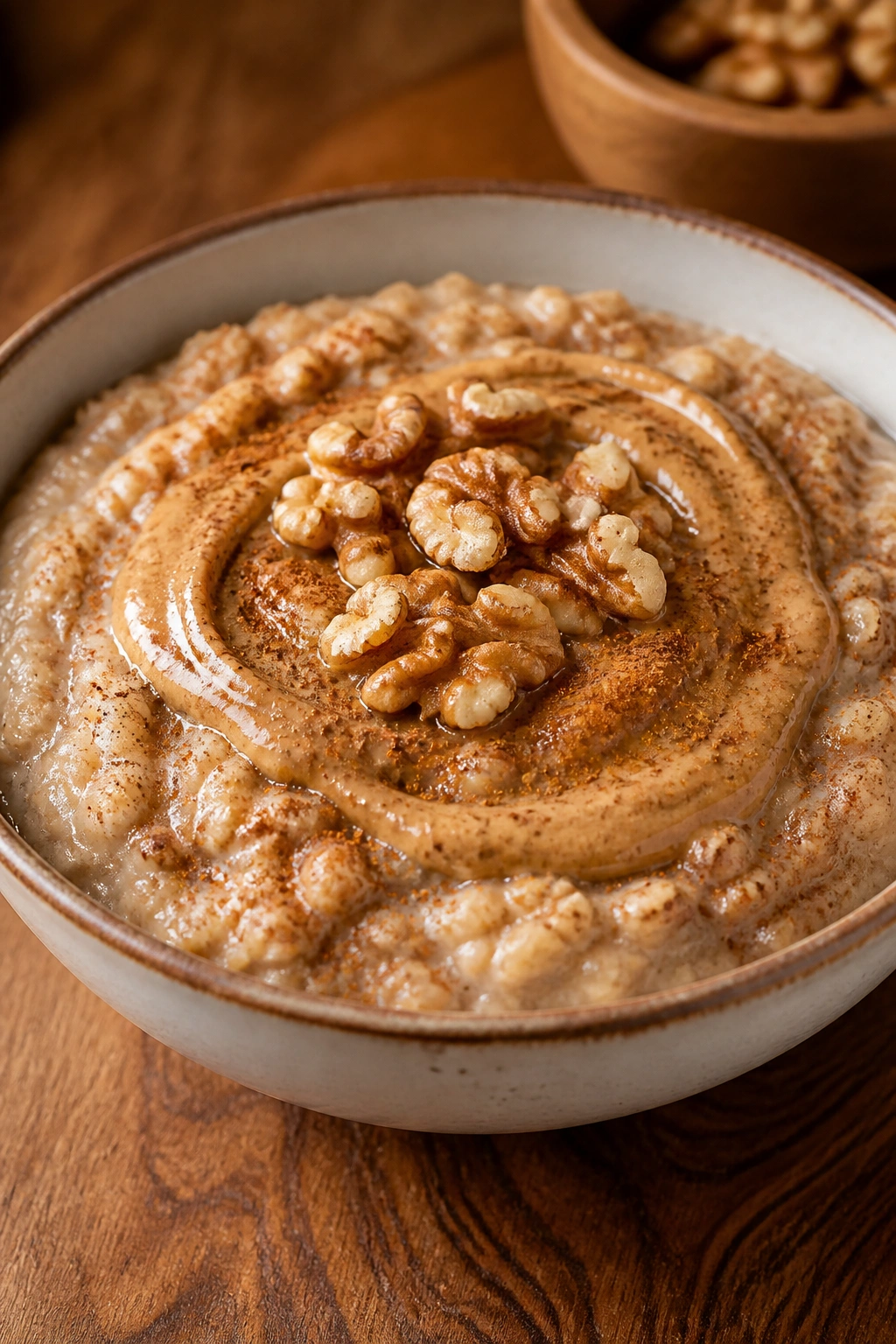
Picture the difference between a bowl that feels like warm glue and a bowl that has a little chew. Steel-cut oats are the second one. They take longer to cook than rolled oats, but they hold up better and tend to sit more steadily in the stomach.
Cook ¼ cup steel-cut oats in 1 cup water or milk with a pinch of salt for about 20 to 25 minutes, stirring now and then, until the oats are tender but still a little nutty. Stir in 1 tablespoon peanut butter, almond butter, or tahini once they’re off the heat. Then add cinnamon, not a dusting so faint you can’t taste it — use enough to notice.
The trick with oats is simple: don’t leave them naked. Plain oats can be fine, but the moment you add nut butter, seeds, or a side of eggs, the meal behaves much better. If mornings are busy, cook a small batch and reheat it with a splash of milk.
Best move: top the bowl with 1 tablespoon ground flaxseed and a few walnuts. That gives you more fiber and a bit of crunch, which is half the reason the bowl feels satisfying.
5. Cottage Cheese with Cucumber, Dill, and Olive Oil
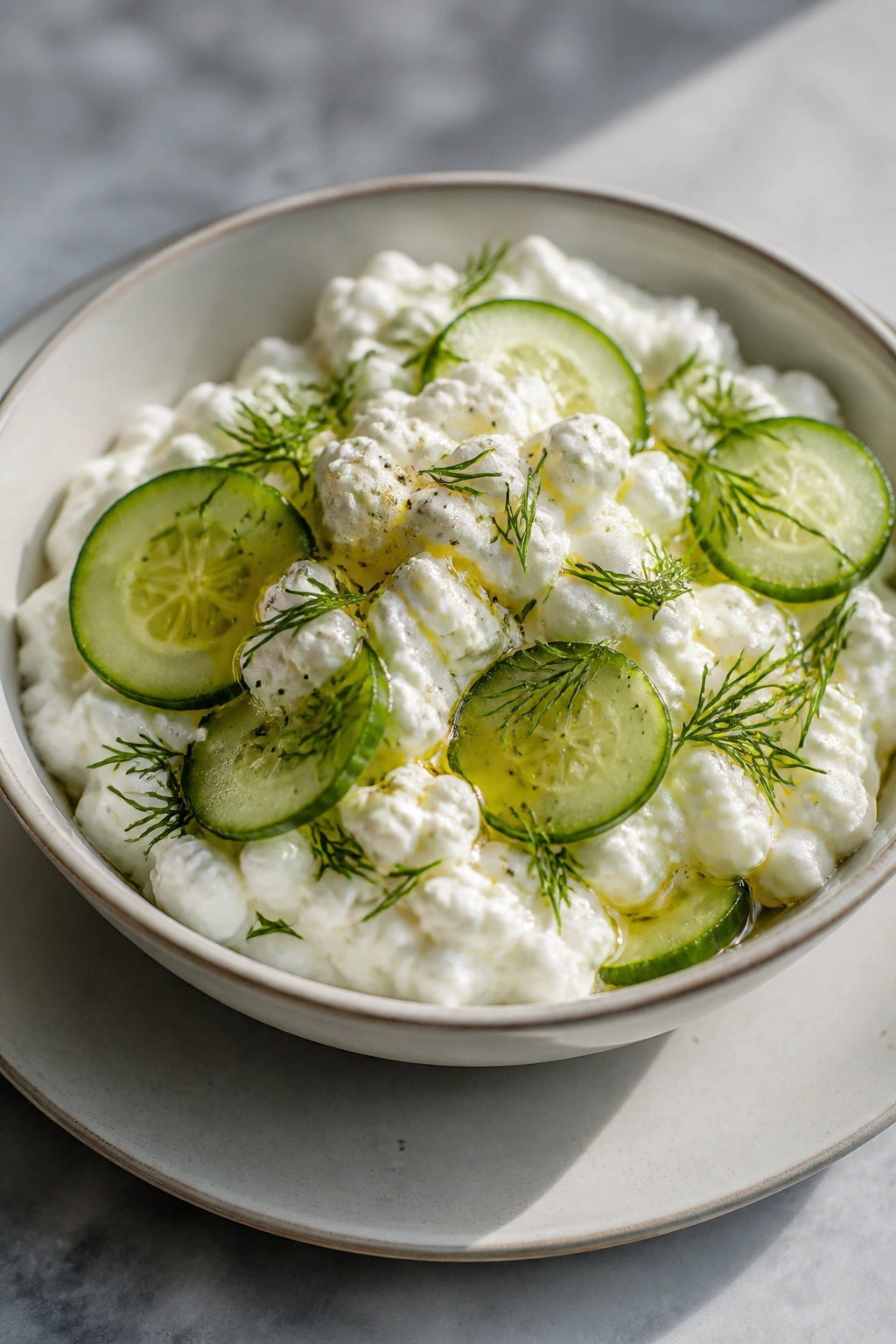
Cottage cheese gets treated like a sad diet food, which is a shame. Eat it savory, and it suddenly makes sense. One cup of cottage cheese with cucumber, tomato, dill, pepper, and a drizzle of olive oil is cool, salty, and far more filling than people expect.
The flavor is quiet but not boring. The cucumber brings crunch, the tomato adds juiciness, and the dill gives it a fresh, almost briny edge. A little olive oil rounds out the bowl and keeps it from tasting like it came from a hospital tray.
I like this one on days when you want breakfast to be cold and fast. You can pile it into a bowl in two minutes, or spread it over one or two rye crispbreads if you want something you can hold in your hand. That’s the sort of breakfast that works when your brain isn’t interested in cooking.
A sprinkle of everything bagel seasoning can be useful here, though I’d keep the hand light. Too much and you lose the clean, fresh flavor that makes the bowl feel so good.
6. Avocado Toast on Dense Whole-Grain Bread
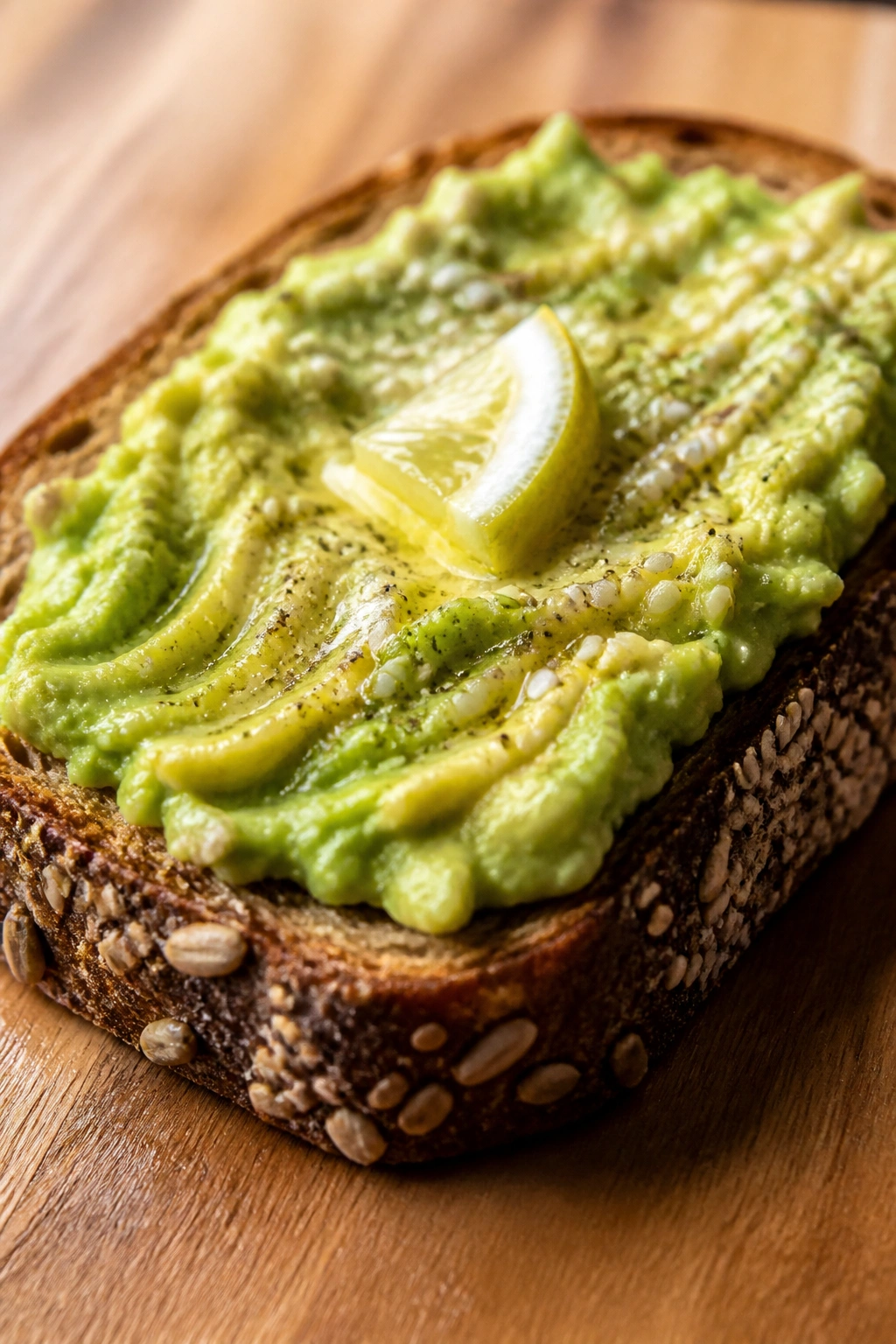
Avocado toast is only as good as the bread under it. That’s the whole argument. Put mashed avocado on a thin slice of airy white toast and the meal disappears fast. Put it on a dense, seeded slice and you’ve got something with actual staying power.
Use 1 slice of true whole-grain or seeded rye bread, toast it lightly, then mash on ½ an avocado with lemon juice, salt, and pepper. Add 1 soft-boiled egg or a few slices of smoked salmon if you want more protein. Sesame seeds, chili flakes, or sliced radish work well too.
What Makes It Different
The bread choice matters more than most people admit. Dense rye, pumpernickel, or a seeded whole-grain loaf tends to digest more slowly than the fluffy sandwich stuff, and you can feel the difference by midmorning. The avocado brings fat and fiber, which helps the toast stop acting like a quick carb hit.
This is the breakfast for people who want something familiar and still want better energy. It’s fast, it tastes like breakfast, and it doesn’t ask for a long ingredient list.
7. Low-Glycemic Quinoa Breakfast Bowl with Almonds and Blueberries
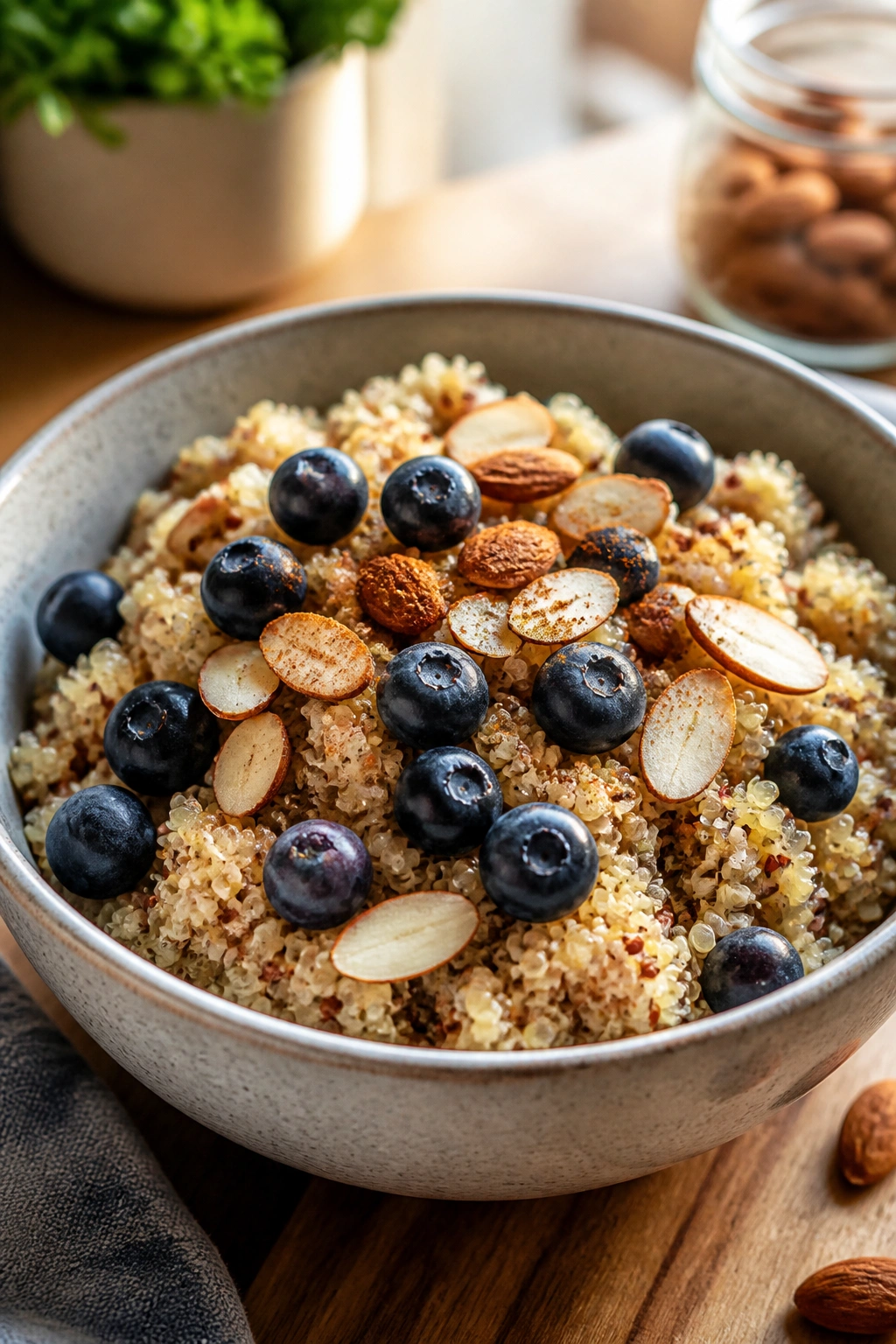
Quinoa for breakfast sounds slightly odd until you actually eat it. Then it makes sense. The grain has a mild, nutty flavor and a texture that sits somewhere between fluffy and chewy, which makes it a nice base for a low-glycemic breakfast bowl.
A Better Use for Leftover Quinoa
If you cooked quinoa for dinner, this is where the leftovers shine. Warm ½ cup cooked quinoa with a splash of unsweetened almond milk, then top it with ¼ cup blueberries, 1 tablespoon sliced almonds, and a pinch of cinnamon. A little vanilla helps, but keep it subtle.
- ½ cup cooked quinoa
- 2 to 3 tablespoons unsweetened almond milk
- ¼ cup blueberries
- 1 tablespoon sliced almonds
- 1 teaspoon chia seeds or hemp seeds
- Cinnamon and vanilla, to taste
Cooked quinoa keeps well in the fridge for several days, so this breakfast is much easier than it looks. You can eat it warm or cold. Cold is fine, but warm feels more like porridge and tends to be more filling.
One smart move: make a larger batch of quinoa once, then portion it into small containers. That way the whole breakfast takes about 3 minutes.
8. Smoked Salmon and Soft-Boiled Eggs
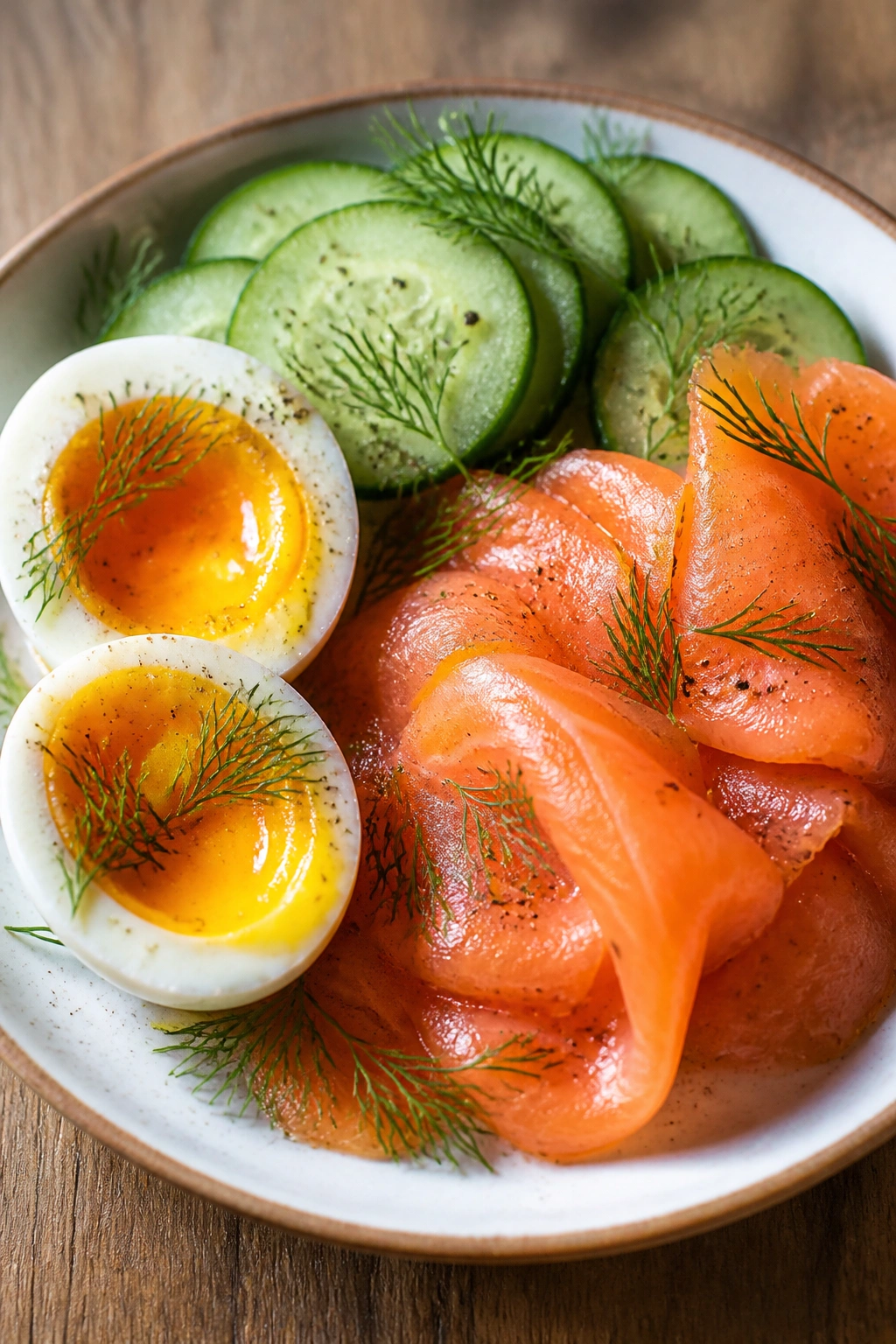
This breakfast feels like brunch, but it takes about eight minutes. That’s the appeal. Smoked salmon, soft-boiled eggs, and a few crunchy vegetables give you a plate that is rich, salty, and steady without a pile of bread or pastries.
Two soft-boiled eggs, cooked for 6 to 7 minutes, give you a jammy yolk that works with the salmon. Add cucumber slices, capers, dill, and a few thin radish rounds if you want the plate to feel fresher. A squeeze of lemon wakes the whole thing up. You can eat it as-is or add one small slice of dense rye if you need more food.
What I like most is the protein load. It keeps the meal grounded. The salmon also brings enough fat that the breakfast does not feel skinny, which is a problem with a lot of “healthy” plates.
If you want it prettier, fine, arrange it neatly. But even tossed together, it tastes like you planned ahead, which is more useful than it sounds on a hectic morning.
9. Tofu Scramble with Peppers and Mushrooms
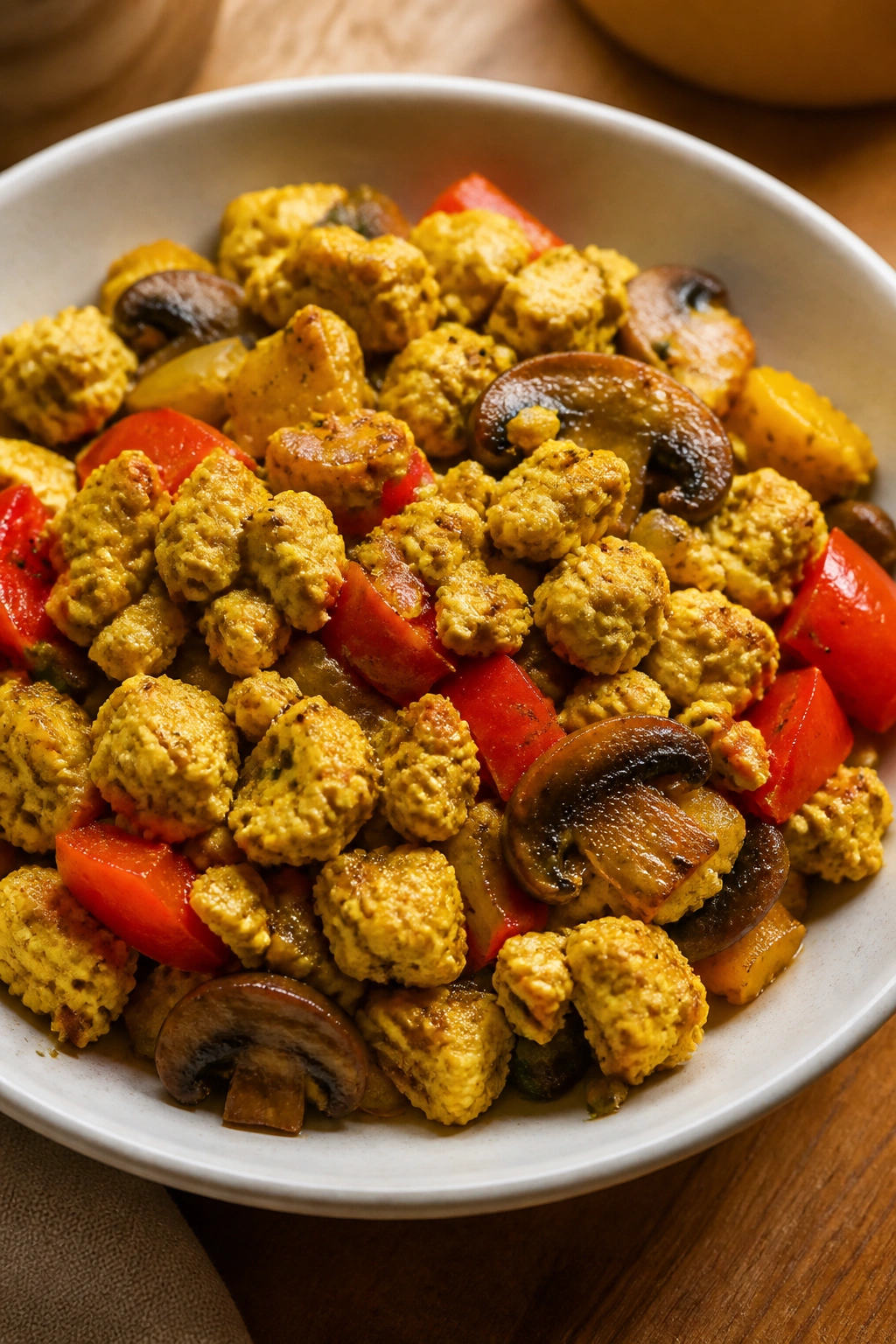
Can tofu actually work for breakfast? Yes — if you treat it like something worth seasoning. Firm tofu, crumbled into a pan with mushrooms, bell peppers, and a little turmeric, turns into a savory scramble that holds together well and eats like a real meal.
How to Make It Taste Like Breakfast
Start with 1 teaspoon olive oil, then cook ½ cup chopped mushrooms and ½ cup diced peppers until they lose some moisture and pick up color. Add 1 block firm tofu, drained and crumbled, plus turmeric, garlic powder, black pepper, and a pinch of salt. Finish with 1 tablespoon nutritional yeast if you want a little cheesy depth.
- 1 teaspoon olive oil
- ½ cup mushrooms, chopped
- ½ cup bell peppers, diced
- 1 block firm tofu, drained and crumbled
- ¼ teaspoon turmeric
- ¼ teaspoon garlic powder
- Salt and black pepper
- 1 tablespoon nutritional yeast
A lot of tofu scrambles fail because the pan stays too wet. Let the vegetables actually brown before you add the tofu. That dry, slightly toasty edge is what makes the scramble taste complete.
Serve it with sliced avocado or a spoon of salsa. Both are good. Both keep the meal from feeling flat.
10. Overnight Oats with Peanut Butter and Flax
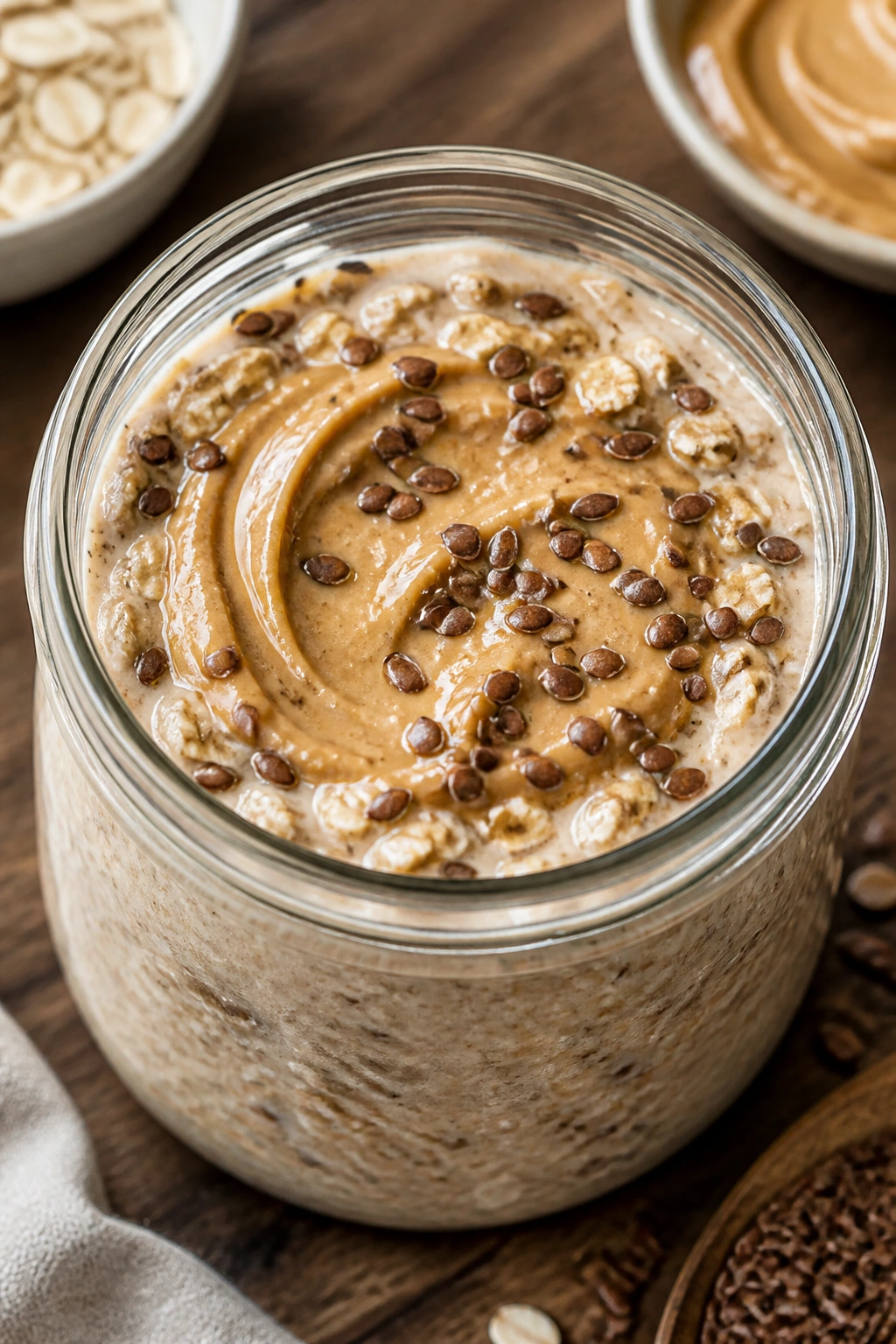
Overnight oats are not one thing. Done badly, they’re cold paste. Done well, they’re creamy, nutty, and easy to eat when you’re half awake. The trick is using enough texture and enough protein-friendly toppings so the bowl doesn’t lean sweet.
Stir ½ cup rolled oats with ¾ cup milk, 1 tablespoon ground flaxseed, 1 tablespoon peanut butter, and a pinch of salt. Let it sit in the fridge overnight. In the morning, add ¼ cup blueberries or sliced strawberries and a spoonful of chopped peanuts if you want more crunch.
This version works because the flax and peanut butter slow the meal down. Rolled oats are fine here; you do not need steel-cut oats for everything. Still, keep an eye on portions. A giant jar of oats with fruit and honey can drift far from the low-glycemic idea pretty fast.
The best part is the texture after a night in the fridge. It softens, but it still has some bite. That’s the difference between breakfast you forget and breakfast you actually look forward to.
11. Buckwheat Porridge with Pear and Pumpkin Seeds
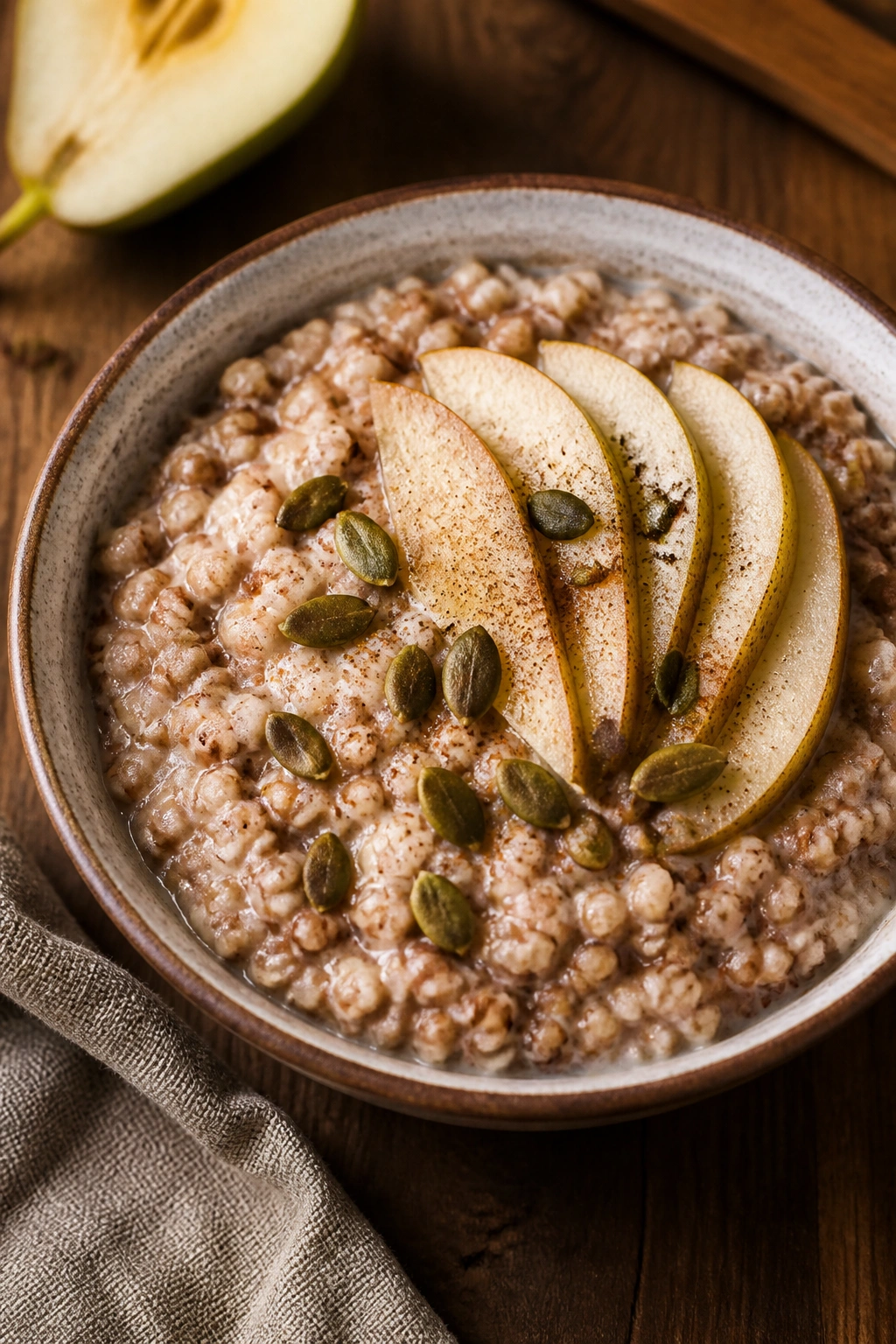
Buckwheat has a deeper, earthier flavor than oats, and that’s exactly why I like it here. It’s not trying to taste like dessert. It tastes nutty, a little rustic, and surprisingly good with fruit that isn’t too sweet.
Cook ½ cup buckwheat groats in 1½ cups water with a pinch of salt for about 15 to 20 minutes, until the grains are tender and some of the water is absorbed. Stir in a splash of milk if you want it creamier. Top with sliced pear, 1 tablespoon pumpkin seeds, and a little nutmeg.
The pear gives you juiciness without turning the bowl cloying. Pumpkin seeds add crunch and a mineral, earthy note that works better than people expect. If you want a richer version, a teaspoon of almond butter melts into the porridge nicely.
One detail matters here: don’t overcook the buckwheat into mush. You want the grains to keep a bit of shape. That slight texture is part of the charm, and it helps the bowl feel more substantial.
12. Almond Flour Pancakes with Berry Compote
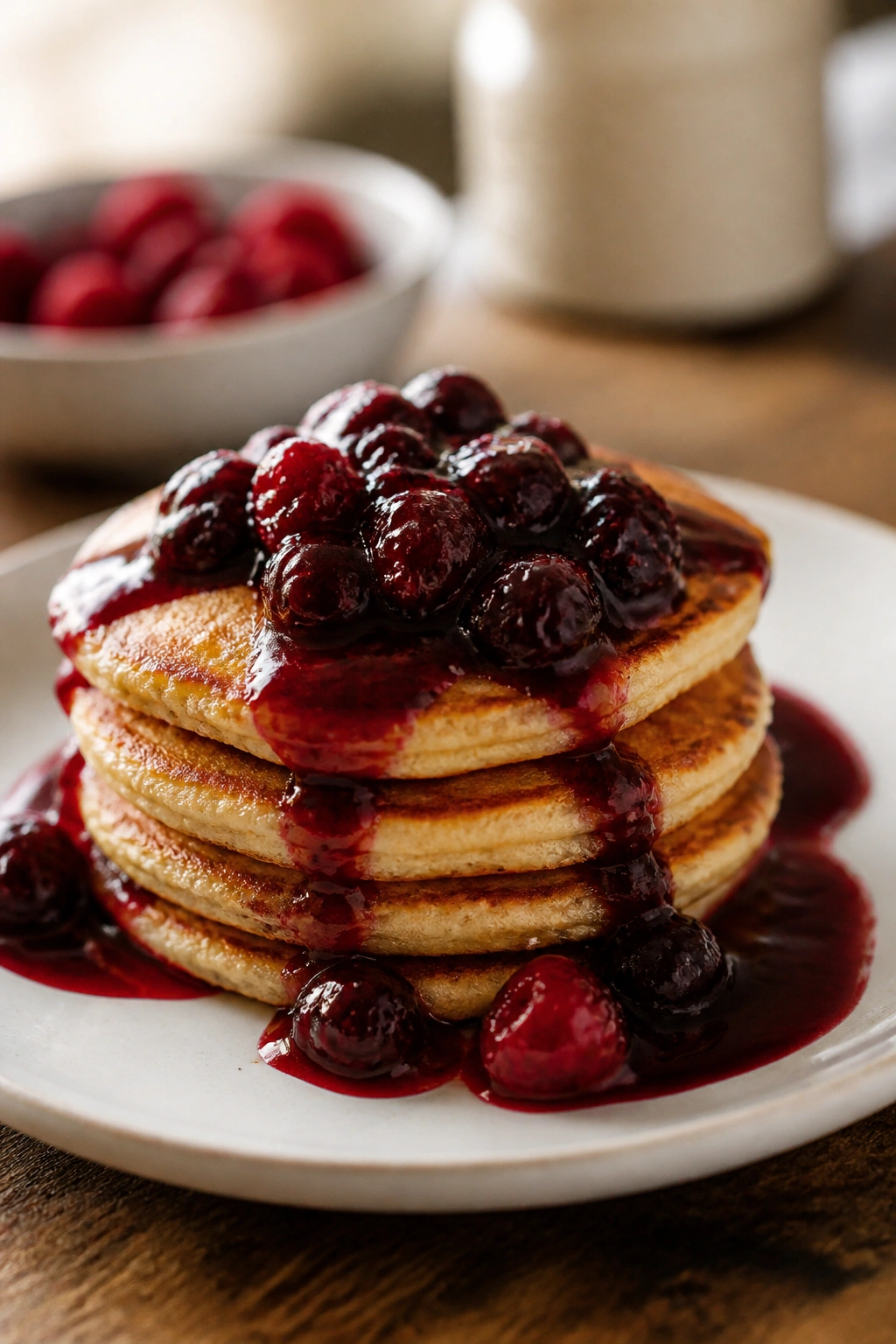
These pancakes are not the same animal as boxed-mix pancakes. They’re smaller, denser, and more protein-heavy, which is exactly why they fit a lower-glycemic breakfast pattern so much better than the usual stack drenched in syrup.
Make a batter with 2 eggs, ½ cup almond flour, 2 tablespoons plain yogurt, 1 tablespoon ground flaxseed, ½ teaspoon baking powder, and a pinch of salt. Cook small pancakes — about 3 to 4 inches wide — in a lightly greased skillet over medium heat for 2 to 3 minutes per side. Almond flour browns faster than wheat flour, so keep the heat steady and don’t wander off.
What Makes Them Different
The smaller size matters. Big pancakes made from almond flour tend to break or cook unevenly. Small ones flip cleanly, and the texture is better — soft in the middle, set around the edges, never gummy.
Top them with a quick berry compote made by simmering 1 cup mixed berries in a small pan for 5 minutes with a squeeze of lemon. No need for much sugar. The berries soften on their own.
These are best for a slower morning. They take more attention than yogurt, but they scratch the pancake itch without the usual crash.
13. Breakfast Salad with Eggs and Chickpeas
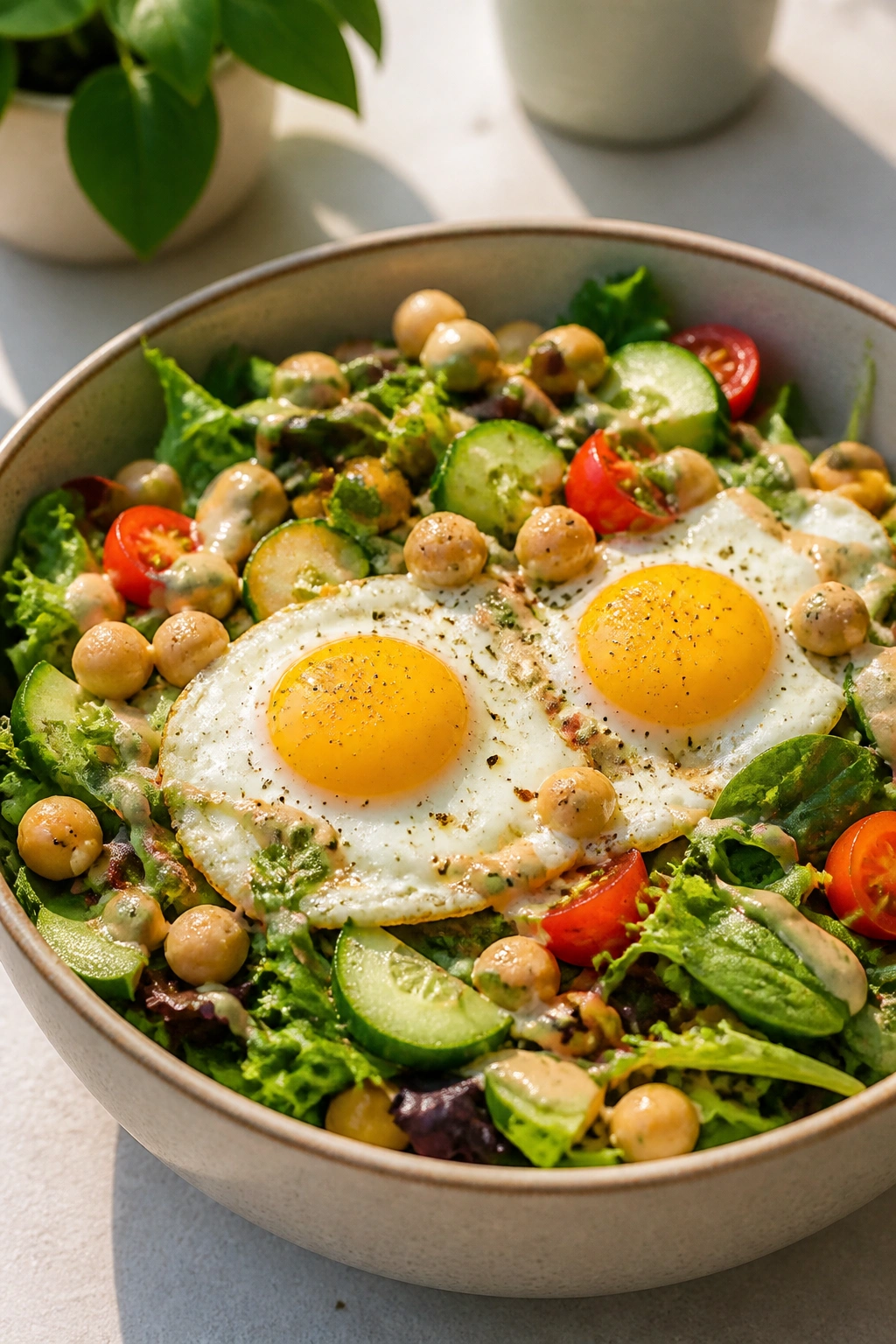
A breakfast salad sounds odd until you eat one on a warm morning, or after a night when you don’t want anything heavy. Crisp greens, two eggs, and a scoop of chickpeas make breakfast feel fresh without being flimsy.
Why It Works
The greens give you volume, the chickpeas bring fiber and a slow carb, and the eggs keep the bowl from feeling like rabbit food. Add cucumber, cherry tomatoes, and a lemon-tahini dressing made from 1 tablespoon tahini, 1 tablespoon lemon juice, and 1 to 2 tablespoons water. That dressing is enough for one generous bowl.
- 2 cups mixed greens
- 2 hard- or soft-boiled eggs
- ½ cup cooked chickpeas, rinsed and drained
- ½ cup cucumber, sliced
- ½ cup cherry tomatoes
- 1 tablespoon tahini
- 1 tablespoon lemon juice
- Water, salt, and pepper
If salad for breakfast feels weird, start with a smaller bowl and a runny egg. The yolk ties everything together and makes the whole thing feel less like lunch leftovers. A few olives or a crumble of feta can help too, but don’t bury the vegetables.
This one is especially nice if you like savory food first thing. Sweet breakfasts are not mandatory.
14. Apple Slices with Nut Butter and Cottage Cheese
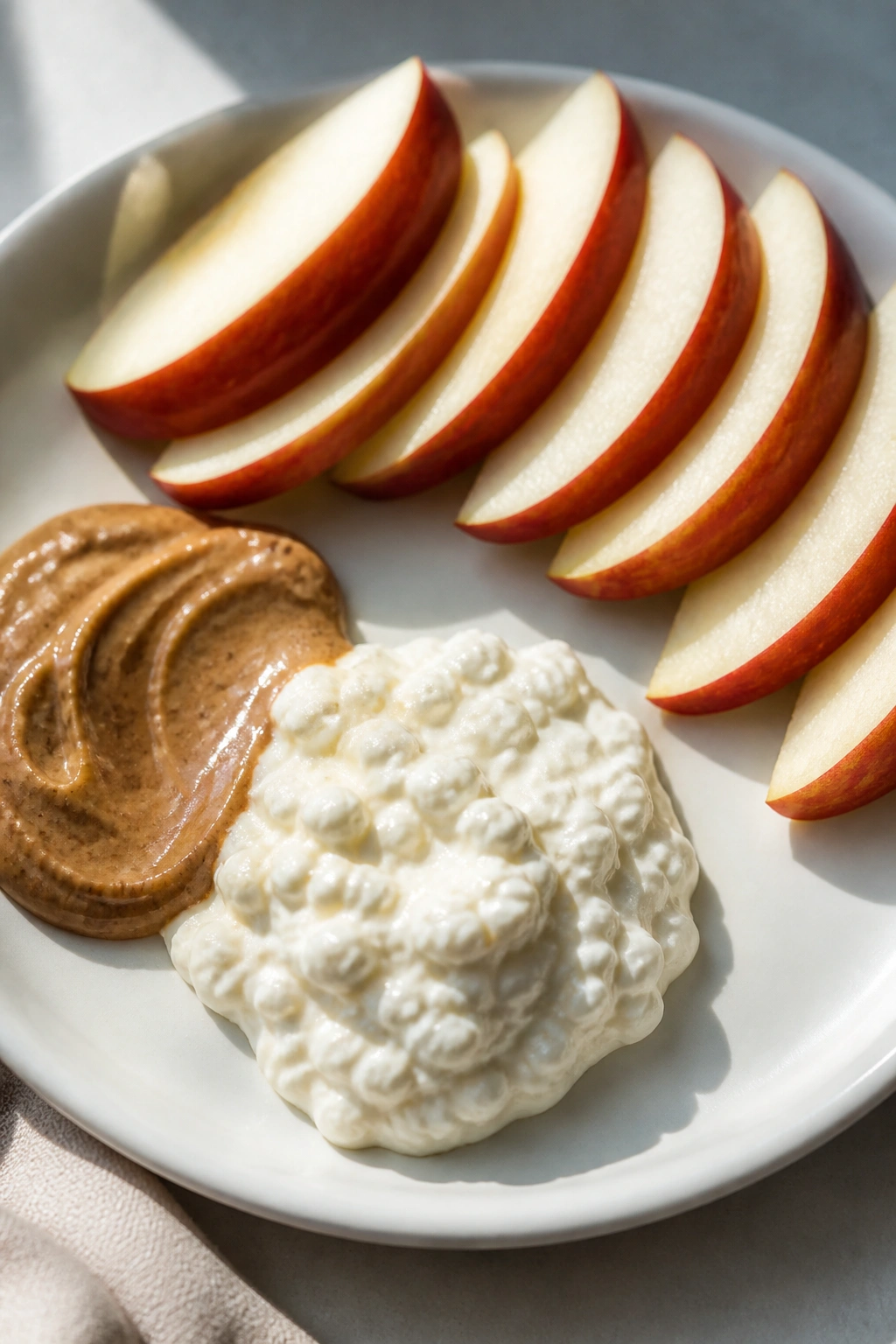
An apple on its own is a snack. Apple slices with nut butter and cottage cheese are breakfast. That distinction matters more than people think, because the protein and fat change how the meal carries you.
Choose a firm apple — Honeycrisp, Pink Lady, or Granny Smith all work well — and slice it thin. Pair it with 2 tablespoons almond butter or peanut butter and ½ to ¾ cup cottage cheese. A little cinnamon on the apple is enough to make the bowl feel finished. If you want crunch, add a teaspoon of hemp seeds.
The apple gives you sweetness and fiber, but the nut butter and cottage cheese keep the meal from burning off too fast. You get a mix of textures too: crisp, creamy, and a little salty. That matters when you’re trying to make a simple breakfast feel like enough.
This is the one I’d hand to a person who says they “don’t have time for breakfast.” It takes about five minutes, maybe less if the apple is already washed.
15. Low-Glycemic Lentil and Greens Breakfast Bowl
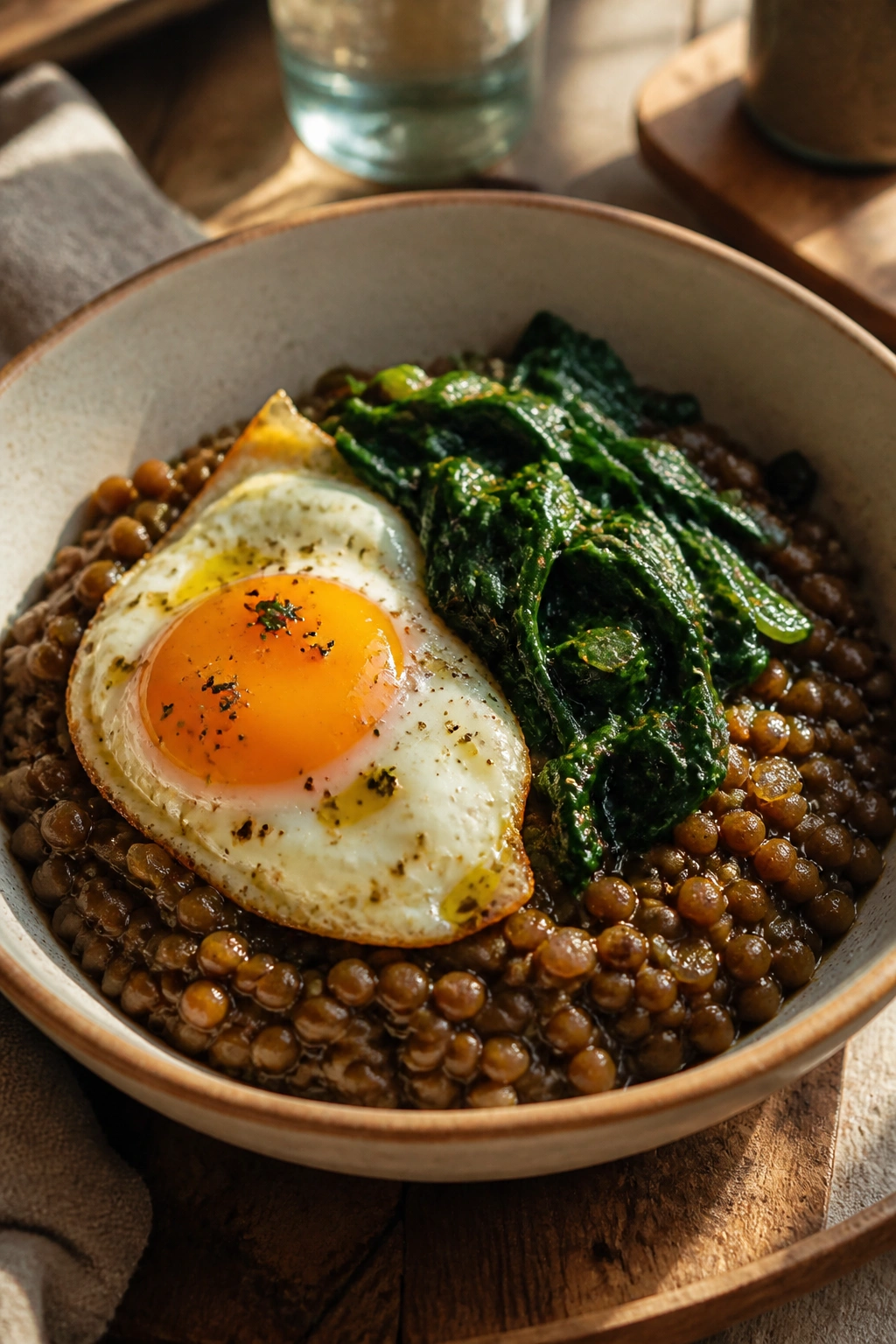
Lentils at breakfast sound unusual, and I’m fine with that. Some of the best steady-energy meals are the ones that don’t look like a café menu. A warm bowl of lentils, greens, and an egg is deeply satisfying in a way sweet cereal never is.
How to Keep It From Feeling Like Lunch
Use ¾ cup cooked lentils as the base, then fold in a handful of wilted spinach or kale. Top it with 1 fried or poached egg, a drizzle of olive oil, and black pepper. A spoonful of salsa verde or a little hot sauce keeps the flavors bright.
Why does this work? Lentils are packed with fiber and keep their shape well, so they don’t behave like a quick-hit starch. The egg adds richness, and the greens make the bowl feel lighter without making it weak.
If you want a little more breakfast character, add smoked paprika, scallions, or a few cherry tomatoes. I’d skip heavy cheese here. The bowl is better when it stays clean and savory.
It’s a good meal-prep breakfast too. Cooked lentils keep well, and the bowl comes together fast once everything is in the fridge.
16. Kefir Smoothie with Berries and Chia
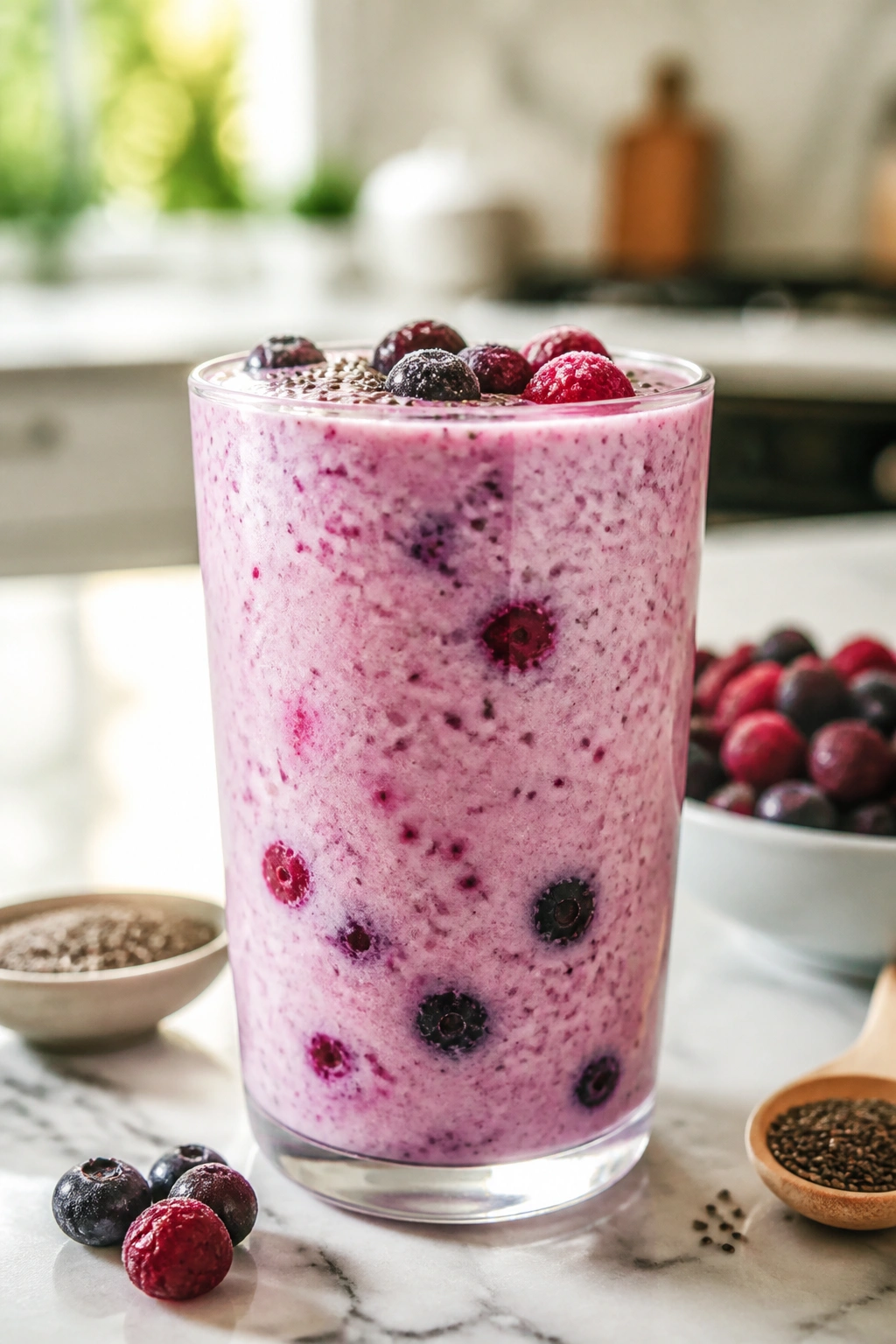
A kefir smoothie is a different kind of breakfast drink — tangier, thinner, and less sugary than the fruit bombs people often blend at home. That tang matters. It keeps the smoothie from tasting like melted candy.
Blend 1 cup plain kefir, 1 cup frozen berries, 1 tablespoon chia seeds, and a handful of spinach if you want extra green without much flavor. If you need more substance, add 1 tablespoon almond butter. Blend briefly, then let it sit for 2 minutes so the chia starts to thicken the drink.
The berry choice matters here. Raspberries and blueberries keep the sweetness in check better than mango or banana-heavy blends. If you do use banana, keep it to half a banana, not a giant one. Otherwise the smoothie stops feeling low-glycemic pretty quickly.
This breakfast works because it’s cold, fast, and not too sweet. That last part is the whole point.
17. Vegetable Frittata Muffins
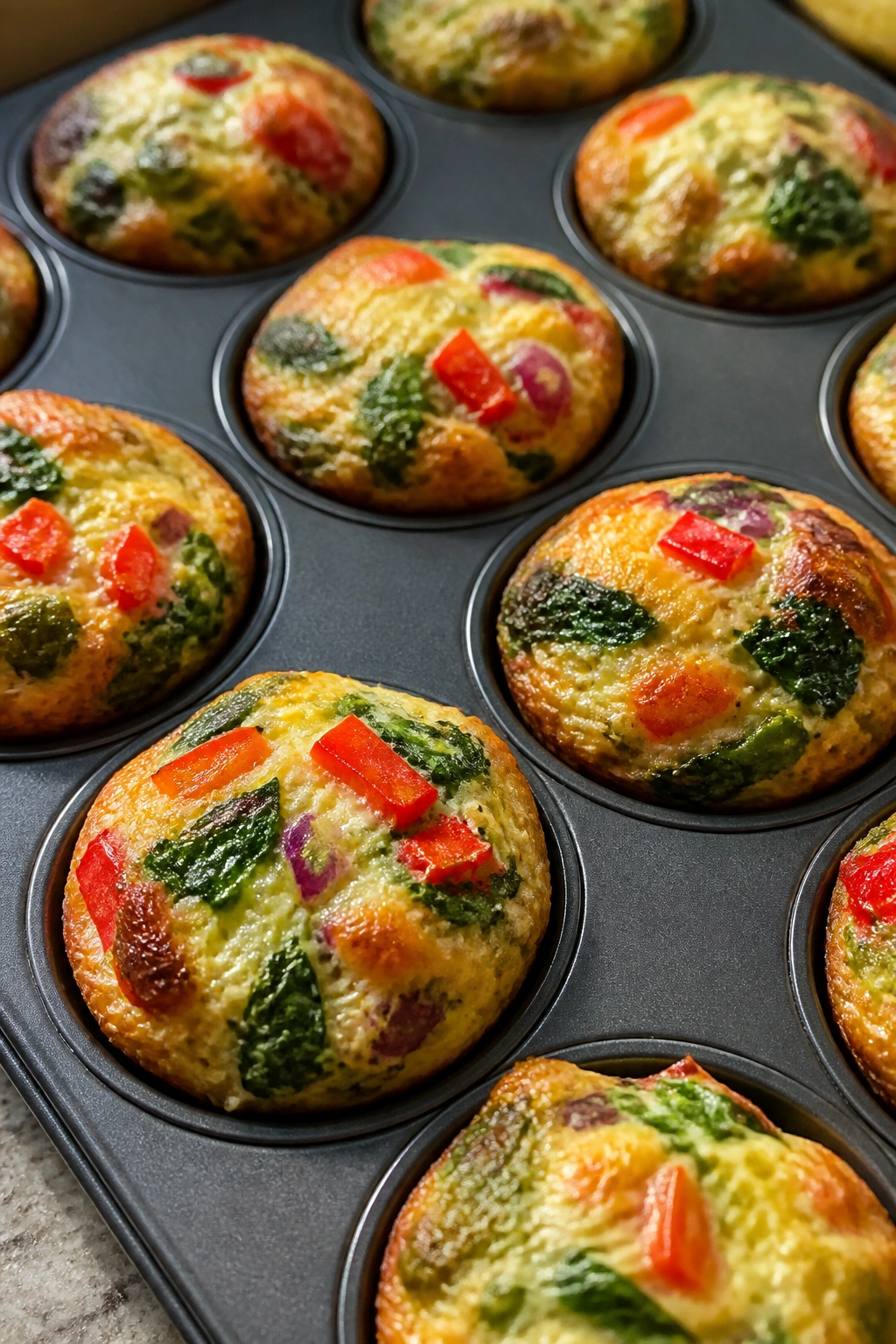
Frittata muffins are what happen when meal prep stops being annoying. Bake them once, and breakfast gets easier for several days. They’re portable, they reheat well, and they don’t fall apart in the car, which matters more than fancy food people like to admit.
Whisk 6 eggs with ¼ cup milk, then stir in 1 cup finely chopped vegetables — spinach, bell pepper, onion, zucchini, or mushrooms all work — plus ¼ cup crumbled feta or shredded cheese if you want it. Pour the mixture into a well-greased muffin tin and bake at 375°F / 190°C for 18 to 22 minutes, until the centers are set and the tops look lightly puffed.
A Few Things That Help
Use vegetables that have been cooked briefly first if they’re watery. Raw zucchini, for instance, can dump liquid into the muffins and make them spongy. Mushrooms need a quick sauté too. That small extra step pays off.
- 6 large eggs
- ¼ cup milk
- 1 cup chopped vegetables, cooked if watery
- ¼ cup cheese, optional
- Salt, pepper, and herbs
- Muffin tin, greased well
These are good hot or cold. If you’re a grab-and-go person, make a dozen and refrigerate them. They also freeze well, though the texture is better when reheated gently rather than blasted dry.
18. Ricotta Bowl with Cocoa, Raspberries, and Walnuts
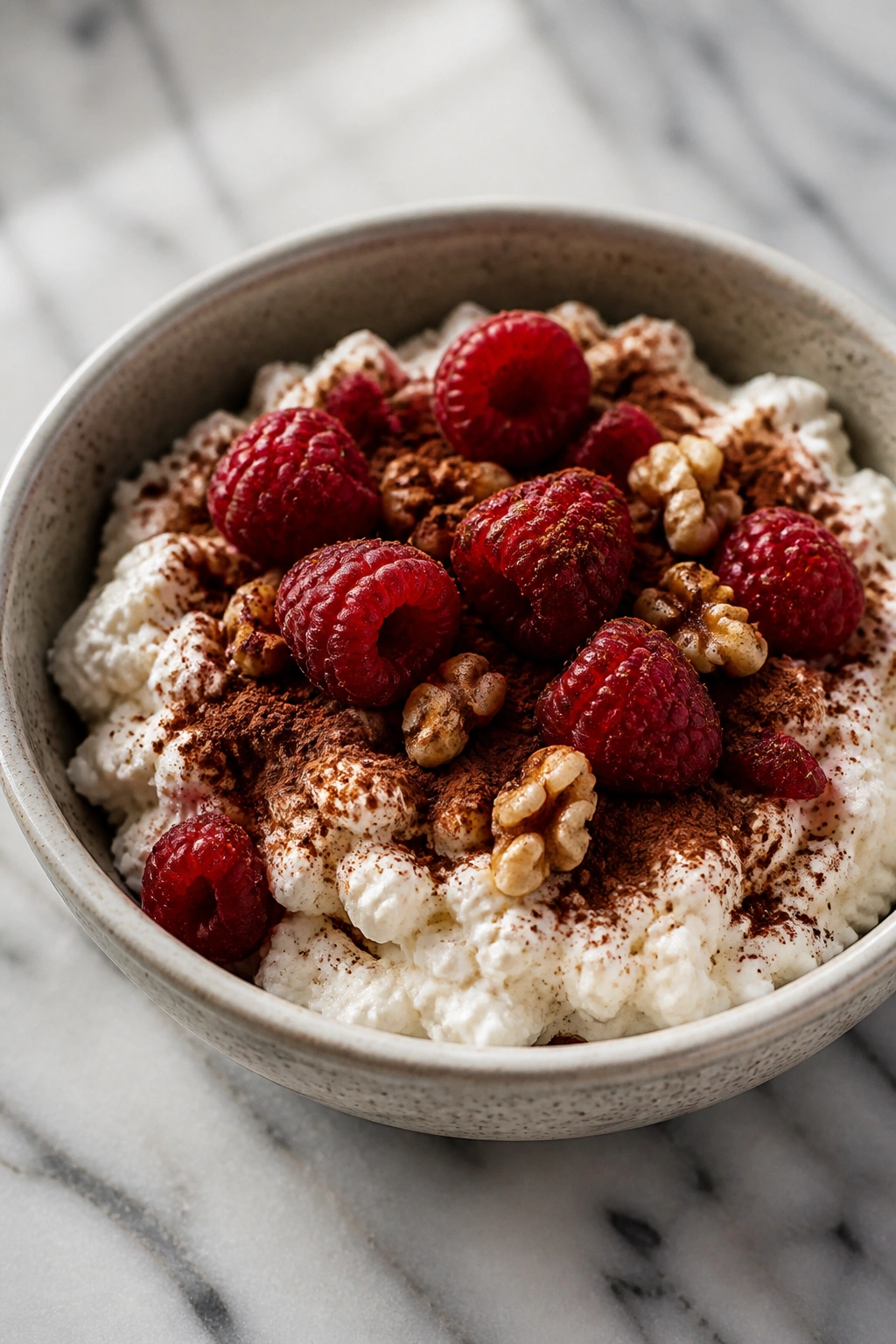
Ricotta is one of those ingredients people forget exists until they need a breakfast that feels a little more special. It’s creamy, mild, and naturally suited to a bowl where the toppings carry the flavor.
Spoon ¾ cup whole-milk ricotta into a bowl, then dust it with 1 teaspoon unsweetened cocoa powder, top it with ½ cup raspberries, and finish with 2 tablespoons chopped walnuts. A tiny pinch of salt and a drop of vanilla make it taste rounder. If you want a sweeter edge, add a few sliced strawberries instead of reaching for syrup.
Unlike sugary cereal, this bowl leans on protein and fat first. The raspberries give you bright acid, the walnuts bring crunch, and the cocoa makes the whole thing feel a little dessert-like without turning it into dessert. That balance is why it works so well on mornings when you want something calm but not plain.
If the ricotta texture feels grainy, whip it with a fork for 15 seconds before adding toppings. That tiny move makes the bowl smoother and more polished.
Final Thoughts

A steady breakfast usually isn’t fancy. It’s protein plus fiber, with carbs kept in a sensible lane. That’s the real pattern behind these low glycemic breakfast ideas, whether you’re eating eggs, yogurt, oats, lentils, or something cold and spoonable.
The best place to start is the one you’ll actually repeat. If you like sweet breakfasts, go with chia pudding or yogurt. If you want savory food first thing, eggs, tofu, cottage cheese, or a frittata muffin will probably fit better. And if you’re trying to keep morning energy even, portion size matters as much as ingredient choice.
One last thing: a lower-glycemic breakfast doesn’t have to be tiny. It just needs to be built with a little care. That’s the difference between eating and coasting.
