



The first five minutes of a workout can decide whether a sore knee settles down or complains through the whole session. The best pre workout stretches for bad knees are rarely deep, dramatic holds. They’re short, controlled moves that warm the ankle, loosen the calf and hip, and give the knee a cleaner path to move in.
A lot of people go straight at the pain. They tug on the knee, sink into a hard lunge, or bounce through a toe touch and hope for the best. I think that’s backwards. When the ankle is stiff or the front of the hip is locked up from sitting, the knee often ends up doing extra work it never asked for.
“Bad knees” is also a catchall. Sometimes it means an ache under the kneecap. Sometimes it’s a stiff, arthritic knee that hates the first few steps after sitting. Sometimes it’s a cranky patellar tendon, a knee that feels tight behind the joint, or that annoying pinch you get on stairs. Different causes, same rule: warm tissue first, move through a range you can control, and stop chasing pain as if pain were the goal.
Sharp pain, fresh swelling, locking, or a knee that gives way is not a warm-up problem.
What tends to work better is a sequence that starts below the knee, works upward, and gets more dynamic as you go. That order matters more than people think.
How to Use Pre Workout Stretches for Bad Knees
Before you stretch anything, get a little heat into the area. A slow walk, an easy spin bike, or two to five minutes on a treadmill at an easy pace is enough for most people. Cold tissue feels stiff in a misleading way—you can mistake “not warmed up yet” for “injured.”
Keep the effort mild. On a 0-to-10 pain scale, stay around 0 to 3 during these drills. Mild pulling, light pressure, and stiffness are fine. Sharp pain, pinching inside the joint, or a feeling that the knee is about to buckle means back off right away.
Long passive stretching before hard training is overrated for sore knees. What usually feels better before a workout is 10 to 30 seconds of a hold or 6 to 12 slow reps of a moving stretch. You’re not trying to win flexibility points here. You’re trying to make the first squat, pedal stroke, or step-up feel smoother.
A simple order works well:
- Start with the ankle and calf
- Move to hamstrings, quads, and hip flexors
- Add glute and inner-thigh work
- Finish with standing dynamic drills that look a little more like your workout
You do not need all 15 before every session. Pick 6 to 8 moves that match what you’re about to do, and keep the whole warm-up under about 8 to 12 minutes.
Common Mistakes With Pre Workout Stretches for Bad Knees
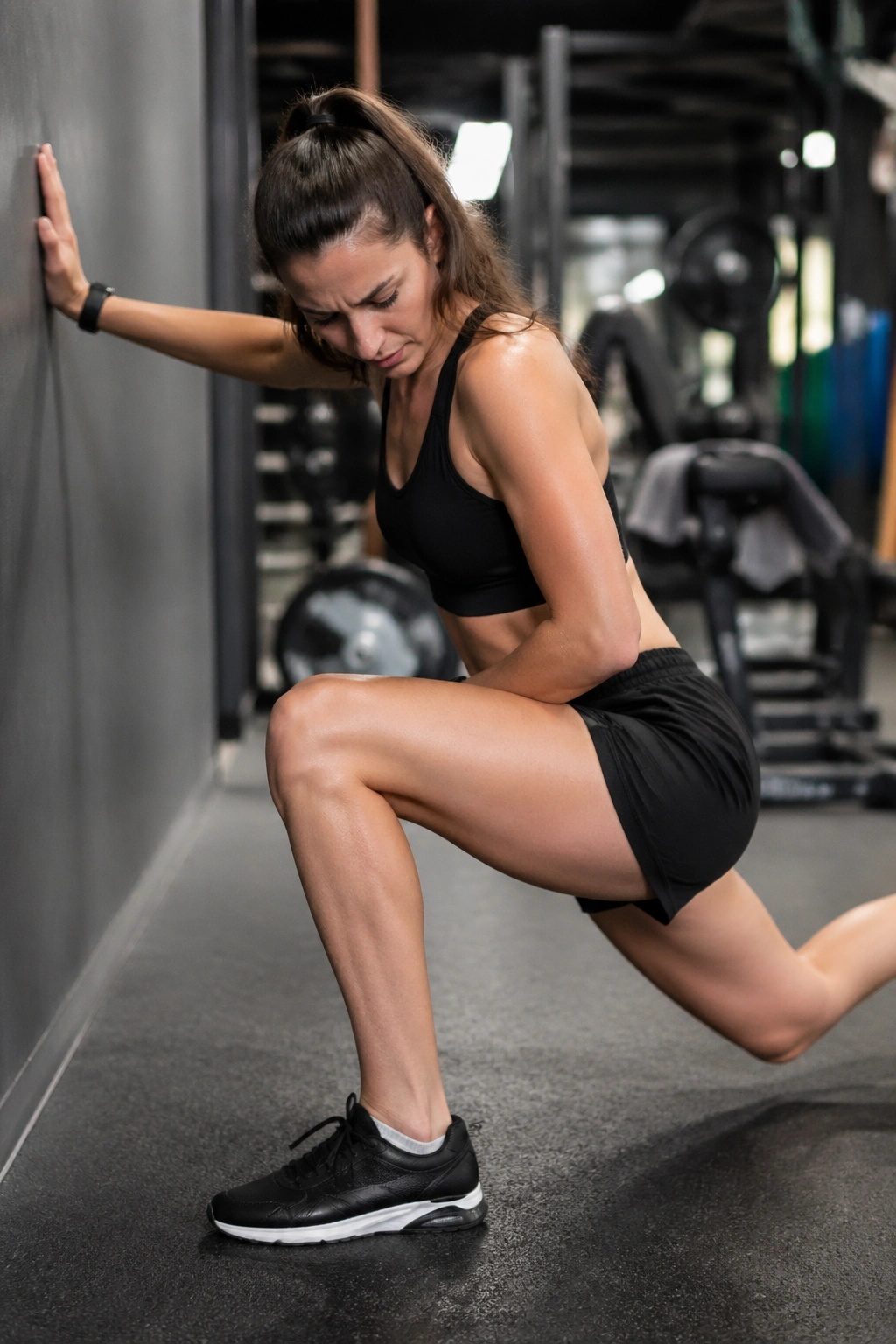
The biggest mistake is stretching a cold knee and calling it a warm-up. If the joint still feels rusty, the answer is often not “pull harder.” It’s “walk for three minutes, then try again.”
Another one: forcing deep knee bend too soon. I see people test their knee by dropping into a full squat in the first 30 seconds. If your knees are touchy, earn that range gradually. A shallow, controlled motion is far more useful than one ugly rep that lights everything up.
Support helps.
Holding a rack, wall, chair, or bench takes balance out of the equation, which means the stretch can do its job without your foot gripping the floor for dear life. That’s not cheating. That’s good setup.
One more thing—do not confuse intensity with progress. If your quad stretch turns into cramping, or your hamstring stretch sends a zing behind the knee, you’ve gone too far. Knee-friendly stretching should leave the leg feeling looser and steadier, not shaky and annoyed.
1. Ankle Pumps at the Bench
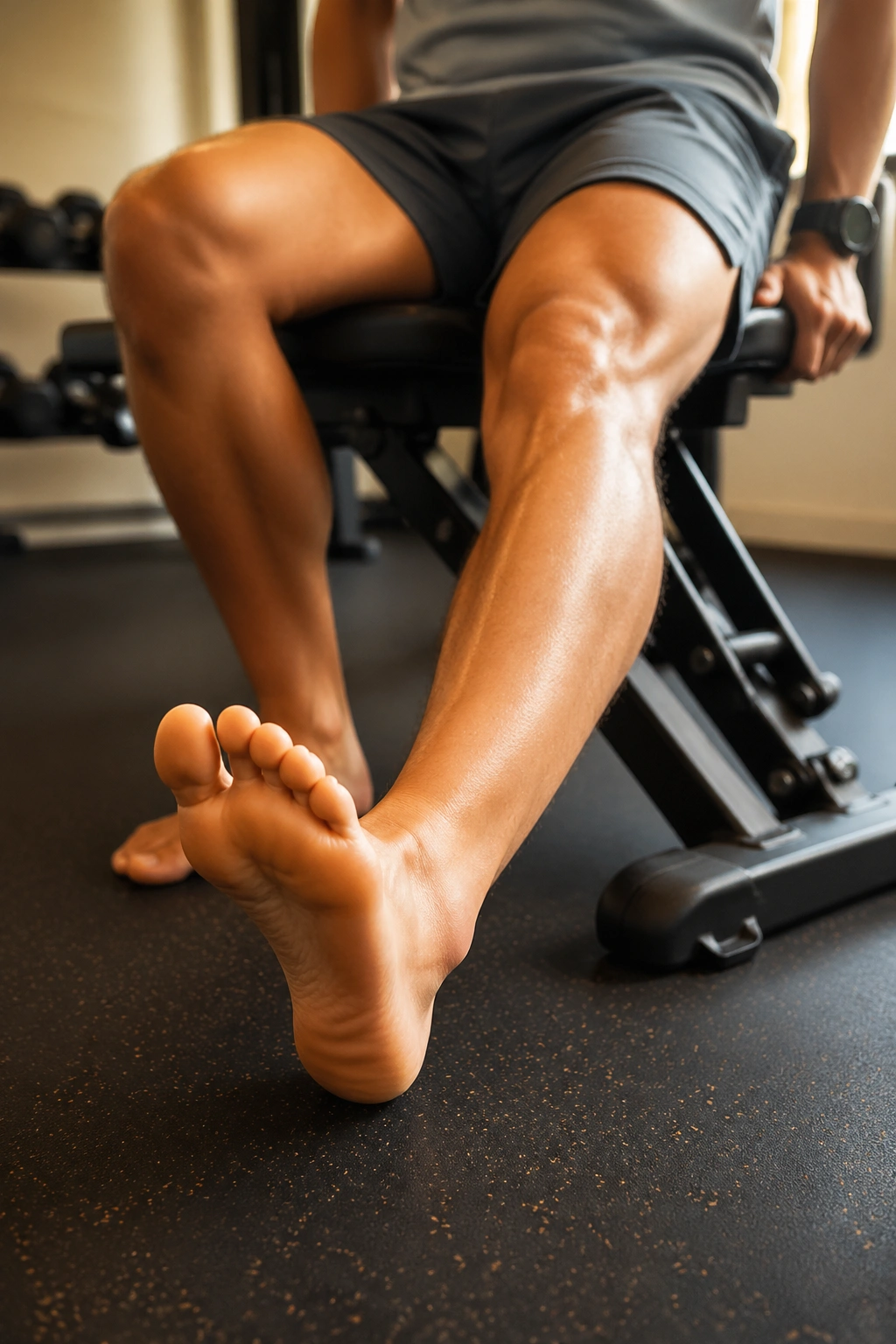
A stiff ankle can make the knee work harder in almost every lower-body pattern. Walking, stairs, split squats, cycling, even standing from a chair—if the ankle does not bend and point well, the knee often picks up the slack.
Sit on a bench with one leg extended and your heel lightly on the floor. Pull your toes toward your shin, then point them away. Move slowly through 10 to 15 reps on each side. If your calf wants to cramp, reduce the range and keep going.
Why it helps the knee
When ankle motion is limited, the shin cannot glide forward smoothly over the foot. That can change how your knee tracks, especially in squats and step-downs. Ankle pumps are an easy first move because they add motion without loading the joint much at all.
Quick setup notes
- Keep the knee soft, not jammed straight
- Move at a steady pace for about 20 to 30 seconds
- Use this first if standing drills feel rough at the start
Best time to use it: right after a short walk or bike warm-up, before you move into standing stretches.
2. Heel-to-Toe Rocking at the Wall
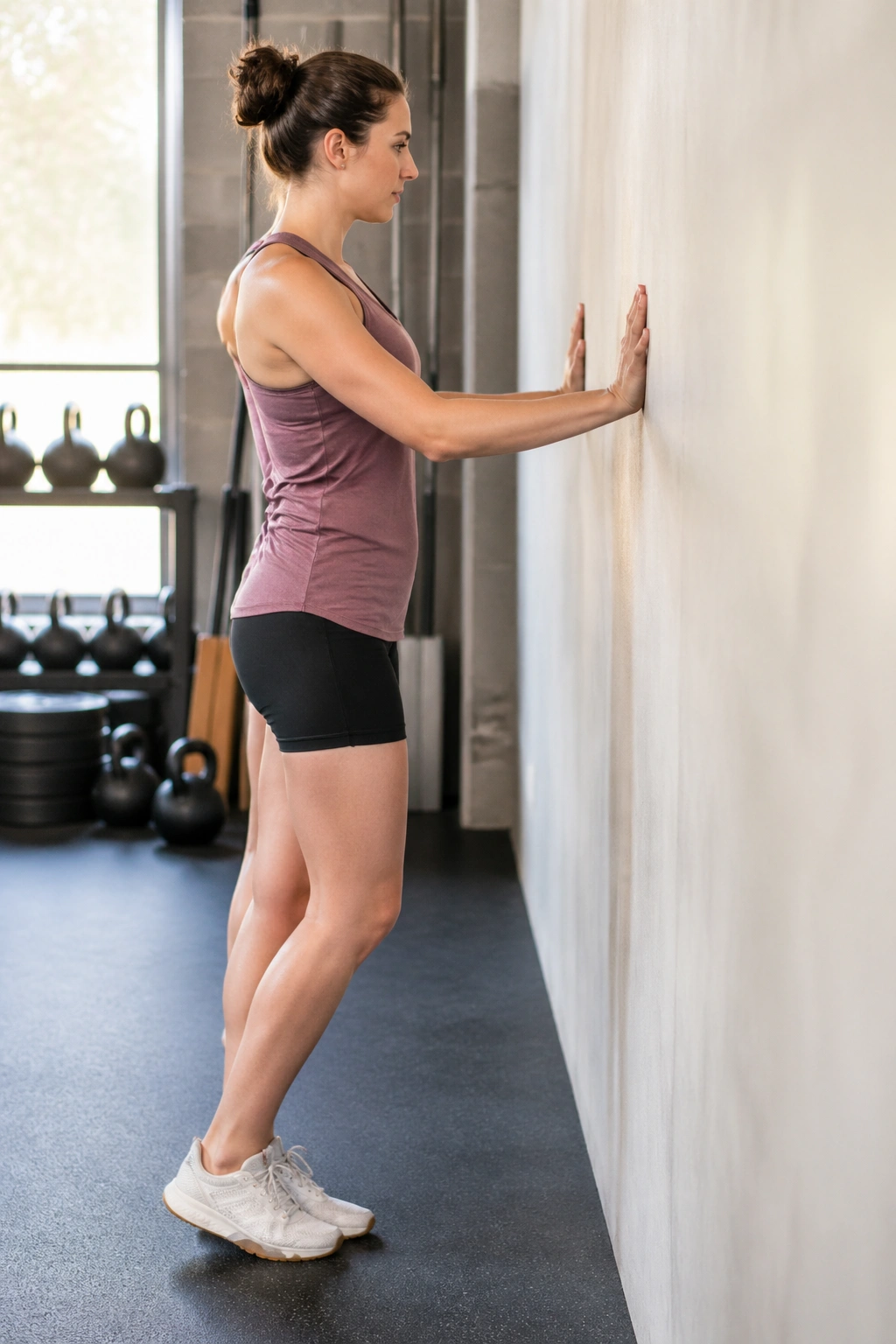
This one looks almost too easy, which is exactly why people skip it. They shouldn’t.
Stand facing a wall or squat rack and rest your fingertips on it for balance. Shift your weight toward your heels, lifting your toes slightly, then roll forward onto the balls of your feet without forcing a big calf raise. Keep the knees soft and let the ankles do the work. Go for 12 to 15 slow rocks.
That gentle rolling action wakes up the foot and lower leg. It also gives you a little rehearsal for how your body should share load when you start walking faster, climbing stairs, or setting up for lunges. A lot of sore knees come with feet that feel sleepy and calves that feel like rope. This helps both.
Use a small range at first. The point is not height. The point is rhythm.
If you feel more pressure in the front of the ankle than in the calf and foot, shorten the motion. If the knee feels better after a few reps, keep it in your rotation. If it feels no different, fine—move on. Not every drill earns a permanent spot.
3. Straight-Knee Calf Wall Stretch
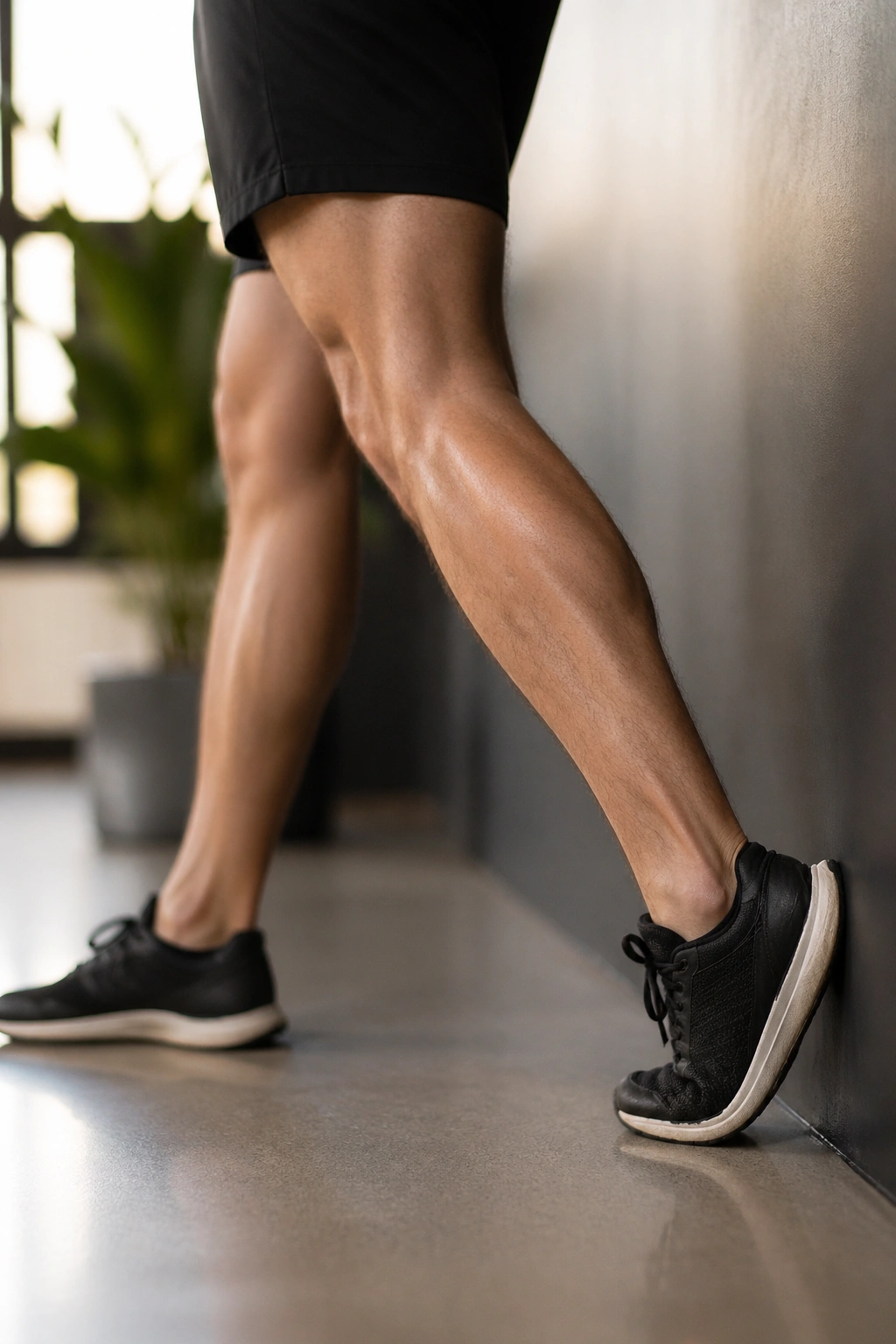
Why spend time on the calf when the knee is the thing complaining? Because a tight gastrocnemius—the big upper calf muscle—crosses the knee and the ankle. When it’s stiff, knee bend and ankle motion both tend to feel less clean.
Step one foot back and press your hands into a wall. Keep the back heel flat, the back knee straight, and the toes pointed forward. Lean your body ahead until you feel a stretch in the upper calf. Hold for 15 to 25 seconds, then switch sides.
What to feel
You’re after a firm pull in the back of the lower leg, not a twist through the arch of the foot or a pinch in the front knee. If the heel keeps popping up, shorten the stance. If the back foot turns out, reset it—most people cheat that angle without noticing.
Where this one earns its keep
This stretch pays off before:
- Walking workouts
- Incline treadmill sessions
- Bodyweight squats
- Leg press or hack squat days
A straight-knee calf stretch is not flashy. Still, I keep coming back to it because it often makes the first few loaded reps feel less sticky.
4. Bent-Knee Soleus Stretch
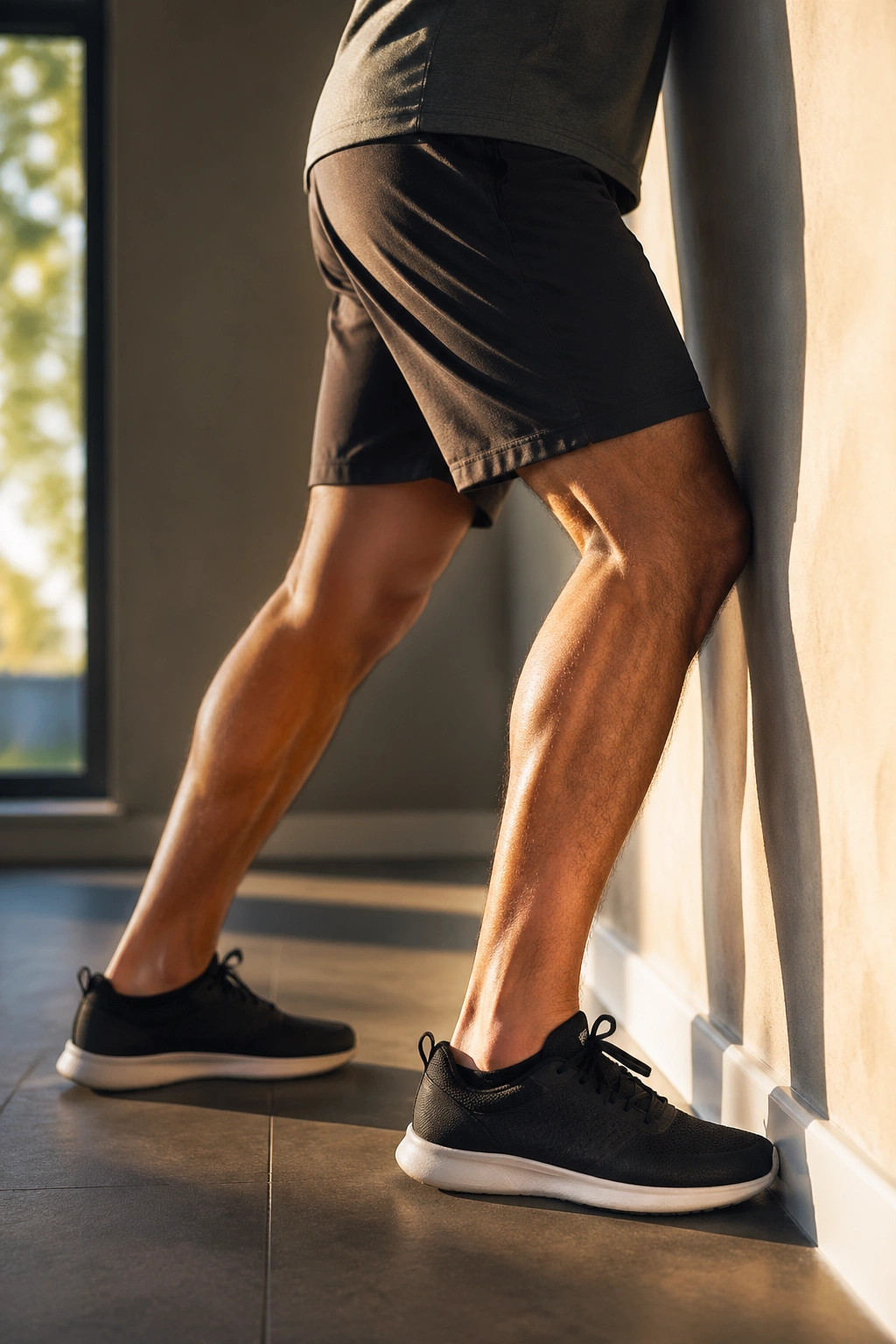
Picture that stiff, blocked feeling when your knee tries to travel forward over your foot. That’s where the soleus often enters the story. It sits deeper in the calf than the gastrocnemius, and it matters a lot for knee-over-toe motion.
Use the same wall setup as the previous stretch, but bend the back knee this time while keeping the heel down. Shift your body forward until the stretch drops lower, closer to the Achilles and lower calf. Hold 15 to 30 seconds or pulse gently in and out of the position 8 times.
The difference is subtle, but you’ll feel it. Straight-knee calf work hits higher. Bent-knee work lands lower. If your ankles feel jammed during split squats or going downstairs, this is often the better bet.
Small range is fine here—better, actually. People tend to shove too far forward and lose the heel. Don’t. The heel staying planted is the whole point.
I’m a big fan of pairing this one right after heel-to-toe rocks. The first drill wakes the area up. This one gives it a little more room.
5. Seated Hamstring Glide
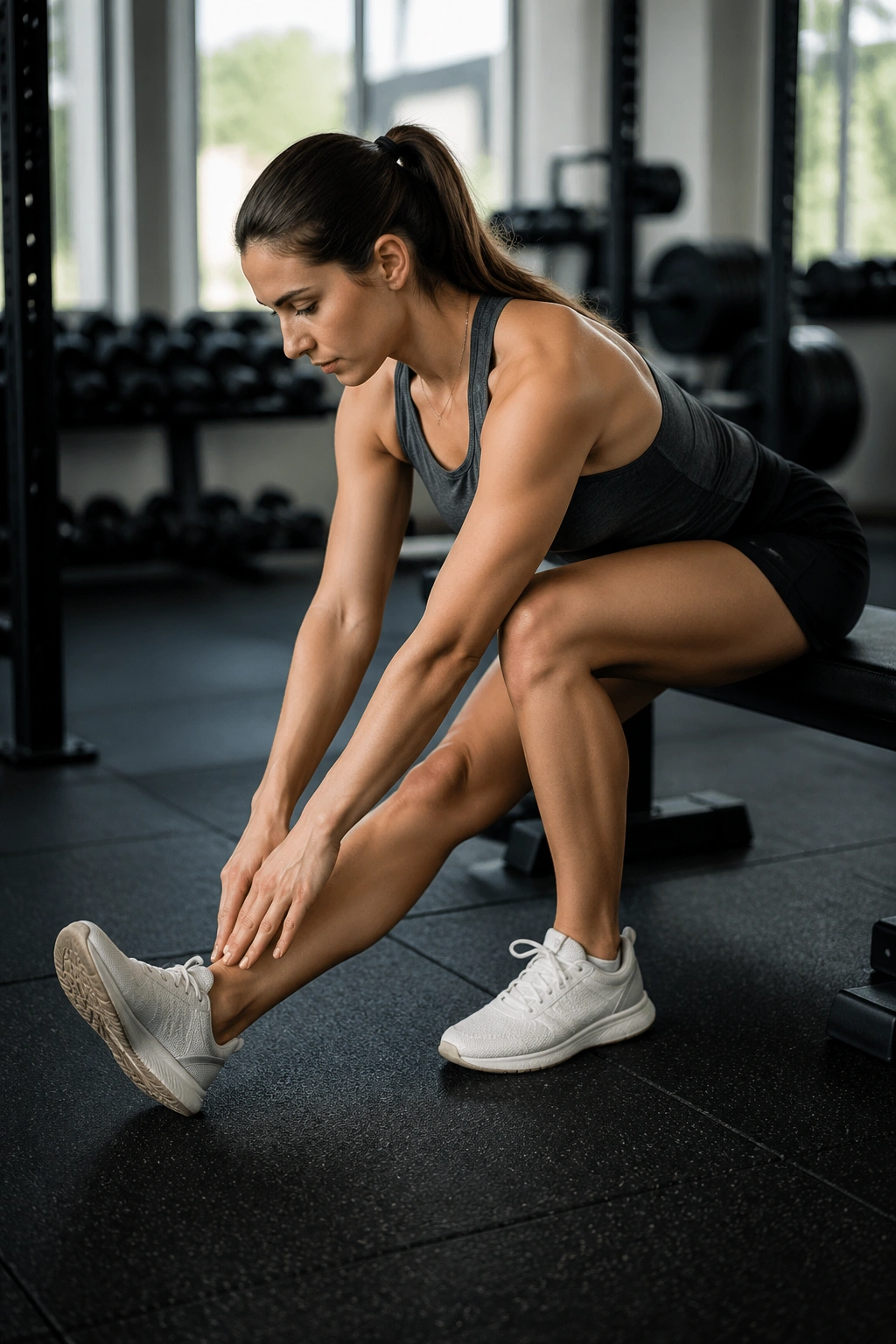
A hard hamstring stretch before training can backfire, especially if the tightness is mixed with nerve sensitivity behind the knee. A hamstring glide is gentler and usually more useful before exercise.
Sit on the edge of a bench or chair. Extend one leg with the heel on the floor and the knee slightly bent. Hinge forward from the hips until you feel light tension in the back of the thigh, then ease back out. As you move, pull the toes up toward the shin, then relax them. Do 8 to 10 slow reps.
That back-and-forth matters. You are not camping out in the stretch. You’re exploring the range, then backing off before the leg starts guarding. For people who get a tug behind the knee when they straighten the leg, this tends to feel much better than forcing a classic toe touch.
Keep your chest long and your spine neutral. If you round your lower back hard, the stretch shifts away from the hamstring and turns into a different problem.
The sweet spot is mild. Not zero sensation—zero alarm.
6. Supported Standing Quad Stretch
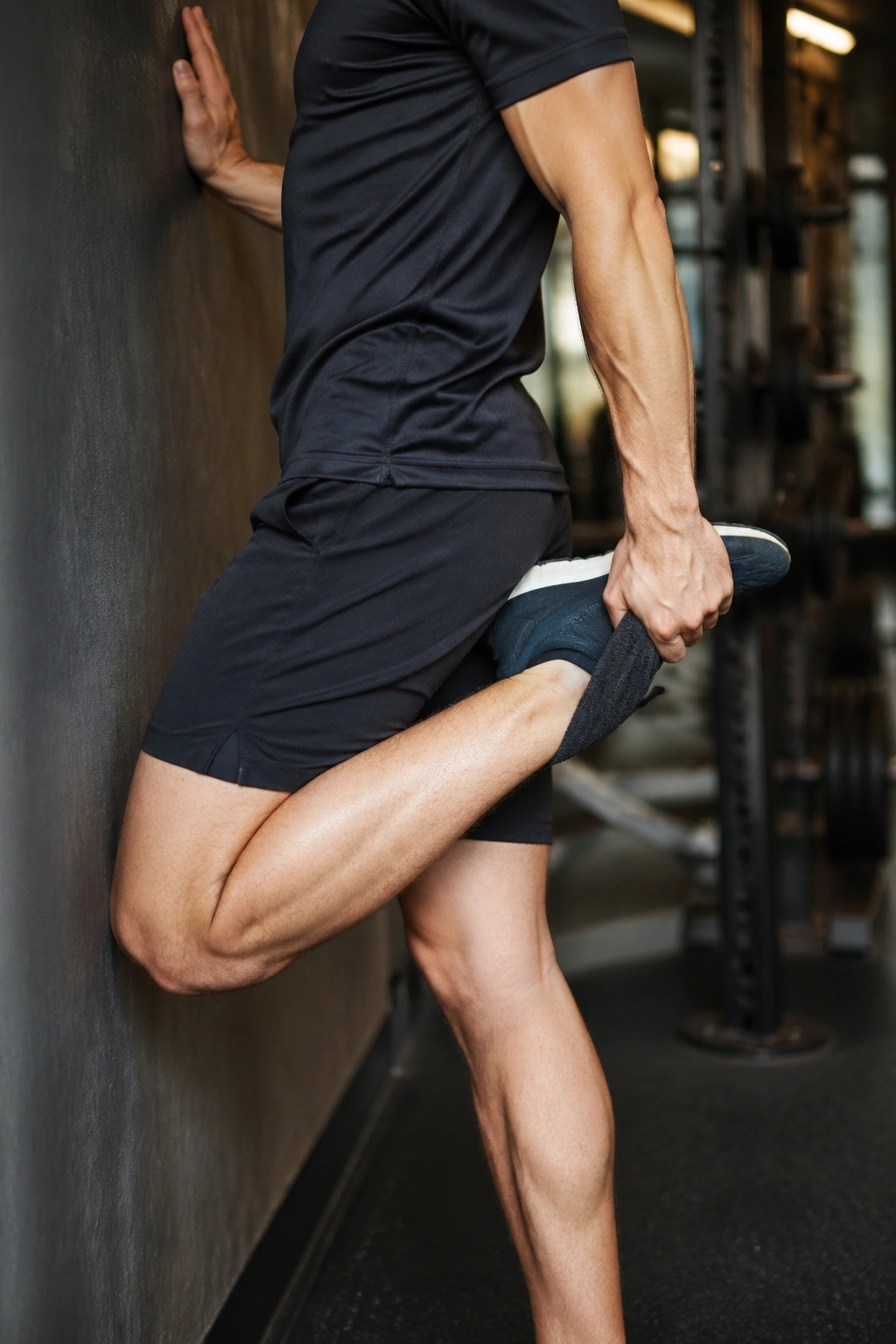
Unlike a deep kneeling quad stretch, this version keeps things controlled and easy to adjust. That matters when the knee is touchy and you do not want to crank it into a sharp bend.
Stand next to a wall or rack for balance. Bend one knee, bring your heel toward your glute, and hold your ankle or pant leg. If reaching the foot is awkward, loop a small towel or strap around the ankle. Keep both knees close together, gently tuck your pelvis, and hold for 15 to 20 seconds.
What makes it different
The pelvic tuck is the key. Without it, most people arch their lower back and think they’re stretching the quad more than they are. Tuck the tailbone a bit, squeeze the glute of the stretching leg, and the front of the thigh lights up in a cleaner way.
Best for
- Cycling warm-ups
- Treadmill walking
- Light jogging
- Lower-body lifting when the front of the thighs feel stiff
If the stretch turns into a pinch in the front of the knee, lower the foot and reduce the bend. You should feel front-thigh tension, not joint irritation.
7. Split-Stance Hip Flexor Stretch
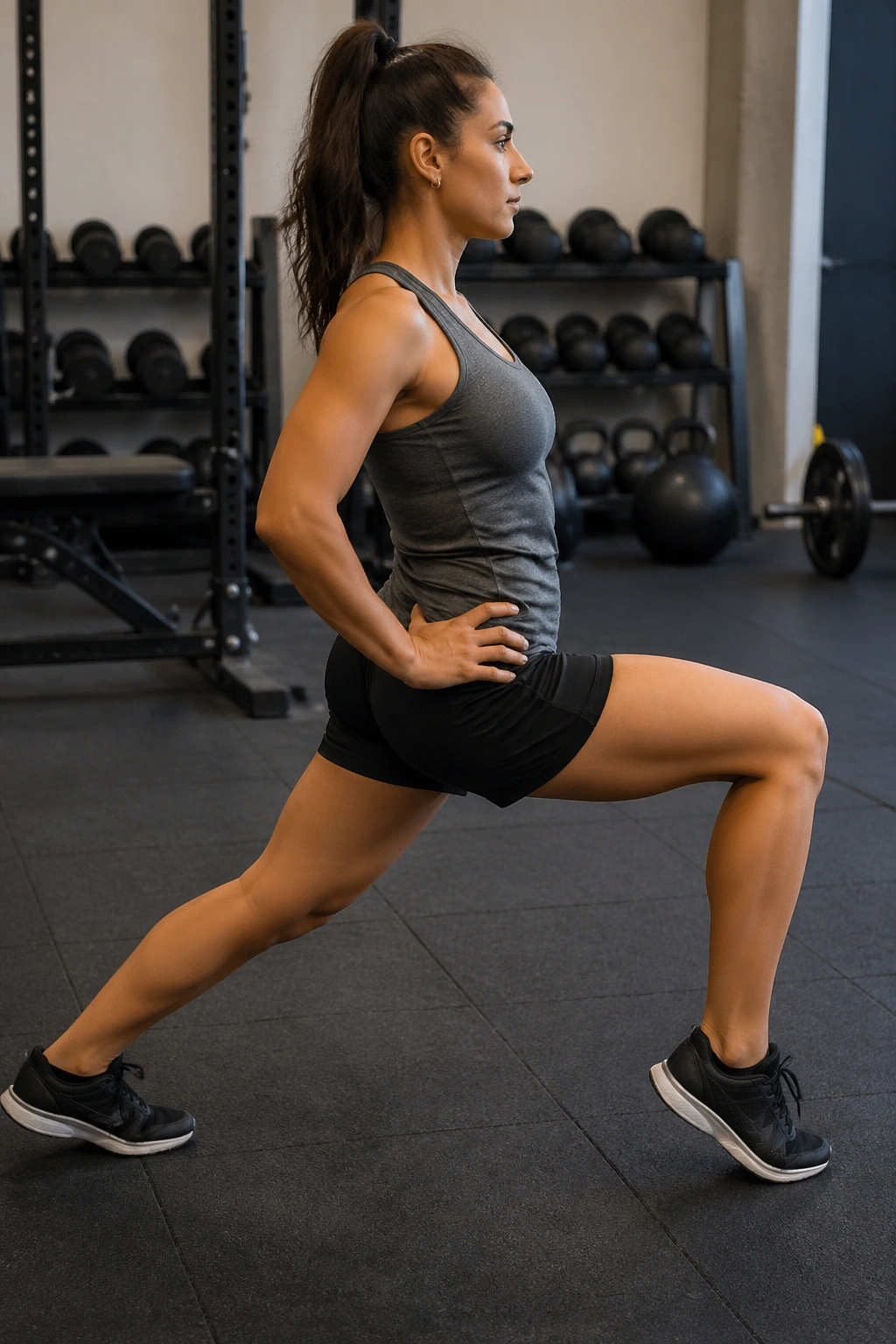
Desk hips are not a myth. Sit long enough and the front of the hip can feel like it was shrink-wrapped. When that happens, the knee often pays for it during squats, step-ups, and even regular walking.
Set up in a short split stance, like the top of a lunge, with both feet pointing forward. Keep your back heel lifted. Slightly tuck your pelvis, bend the front knee a little, and glide your body forward until you feel a stretch at the front of the back hip. Hold 20 seconds, then add 5 to 6 gentle pulses if you want more.
How to avoid cheating it
Do not lean way forward from the chest. Do not arch your lower back. Keep your ribs stacked over your pelvis and think about moving the whole body as one piece. The stretch should land high on the thigh and front of the hip, not in your lower back.
A lot of lifters miss this one because it feels less dramatic than a deep lunge. Good. Dramatic is not the goal before a workout. Clean, controlled motion is.
If you spend half your day sitting, I would put this near the top of the list.
8. Bench Figure-Four Glute Stretch
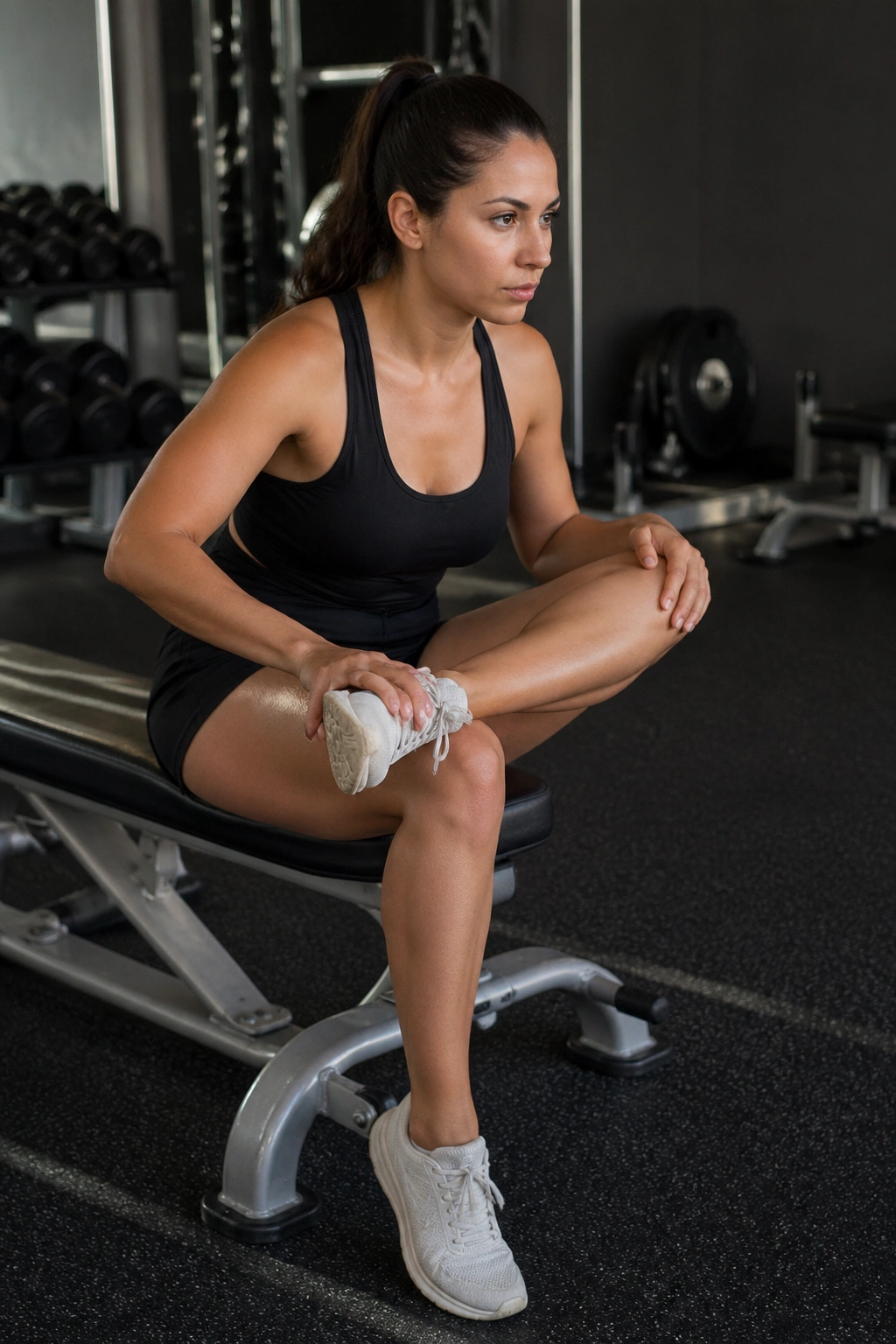
Here’s a move that often helps knees without touching the knee much at all. Sit on a bench, plant one foot on the floor, and cross the other ankle over that knee to make a figure four. Keeping your back long, hinge forward until you feel the stretch deep in the glute of the crossed-leg side. Hold 20 to 30 seconds.
That outer-hip and deep-glute tissue plays a bigger role in knee comfort than people realize. When the hip is stiff in external rotation, the knee can drift inward during squats, step-downs, and single-leg work. The body will find a path somewhere. If the hip won’t give it one, the knee often improvises.
No need to mash down on the top knee with your hand. A light forward lean is enough. More pressure is not more useful here.
If sitting figure-four bothers the knee, slide the foot a little farther away from you and reduce the angle. The stretch should feel broad and deep in the buttock area, maybe a little in the outer hip. It should not feel like someone is twisting the knee apart.
9. Standing Hip Circles Holding a Rack
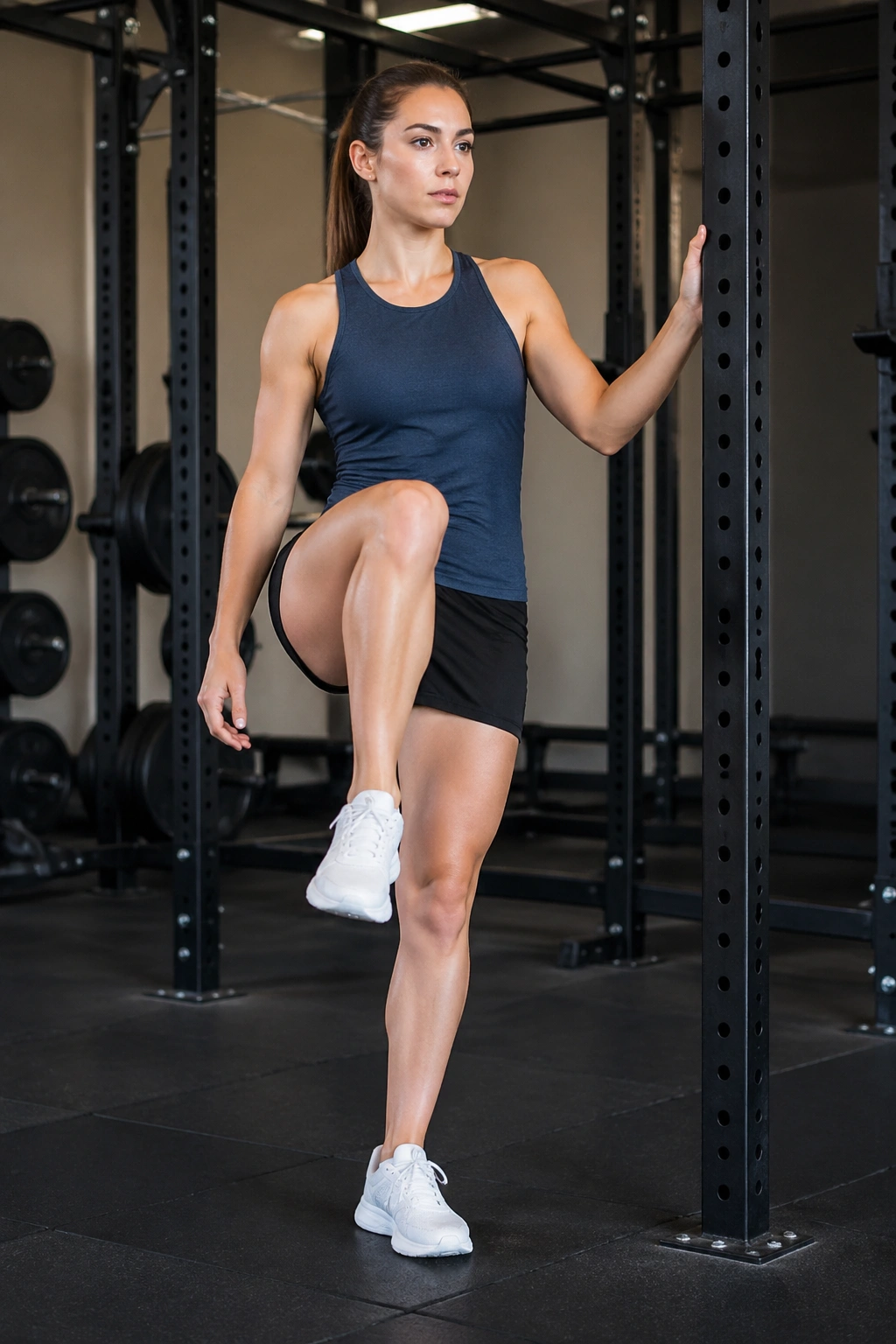
Some knees hate abrupt direction changes when the hip above them is stiff and sleepy. Standing hip circles are a tidy fix before sport, walking, or leg training.
Hold a rack or wall with one hand. Lift the opposite knee to about hip height—or lower if that’s enough—and draw small circles in the air with the knee. Go 8 circles clockwise and 8 counterclockwise, then switch sides. Keep the motion slow. Think smooth, not big.
Why this works better than giant swings for some people
Large, loose circles can turn into a sloppy twist through the standing leg. Small circles keep the motion where you want it: around the hip. That means the knee gets less random torque while the hip joint wakes up.
Keep these details in mind
- Stand tall through the torso
- Slight bend in the standing knee is fine
- Keep the planted foot pointed ahead
- Shrink the circle if the low back starts helping too much
This drill is one of those quiet winners. It does not look like much, yet a stiff lower body often feels more coordinated after a round or two.
10. Standing Adductor Side Shift
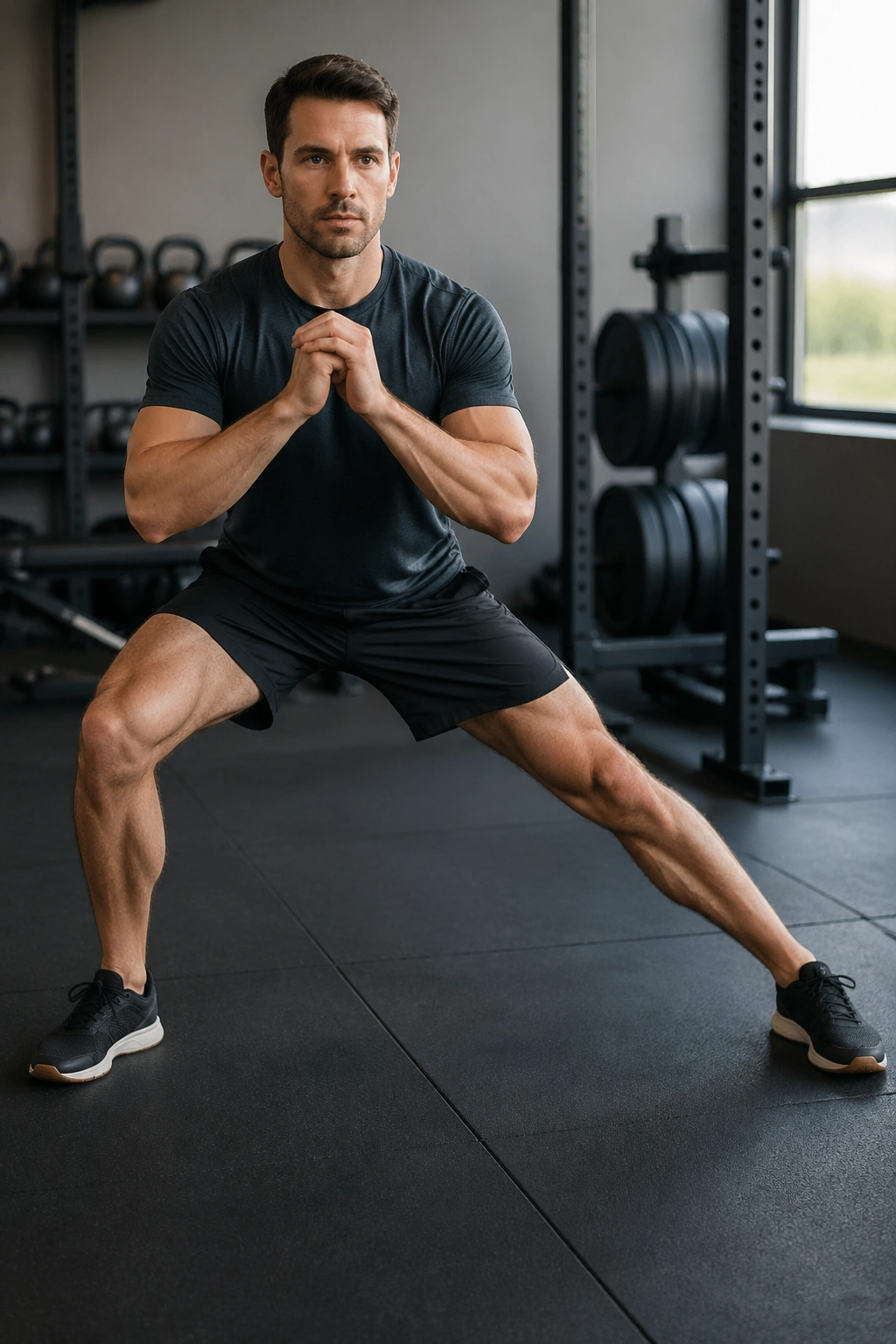
Try a shallow side-to-side shift and you’ll find out quickly whether your inner thighs have been neglected. They often have. And when adductors are stiff, lateral movement can feel sticky and the knees may cave or wobble as you change direction.
Take a wider-than-shoulder stance. Toes can point straight ahead or slightly out. Shift your hips toward one side, bending that knee while keeping the other leg long, then glide back through center and repeat on the other side. Move for 8 to 10 reps per side.
A shallow version is enough. This is not a contest to see how low you can go. If your knee is cranky with side lunges, keep the bend modest and focus on the inner-thigh stretch of the straight leg.
Use a counter, rail, or TRX straps if balance turns it into work. Support lets you settle into the hips without your feet scrambling on the floor.
You’ll feel this one in the groin, inner thigh, maybe even the glute of the bent side. That’s all fine. A sharp pull high in the hamstring or a jab in the knee means reduce the range and slow the tempo.
11. Heel Slides for Knee Flexion
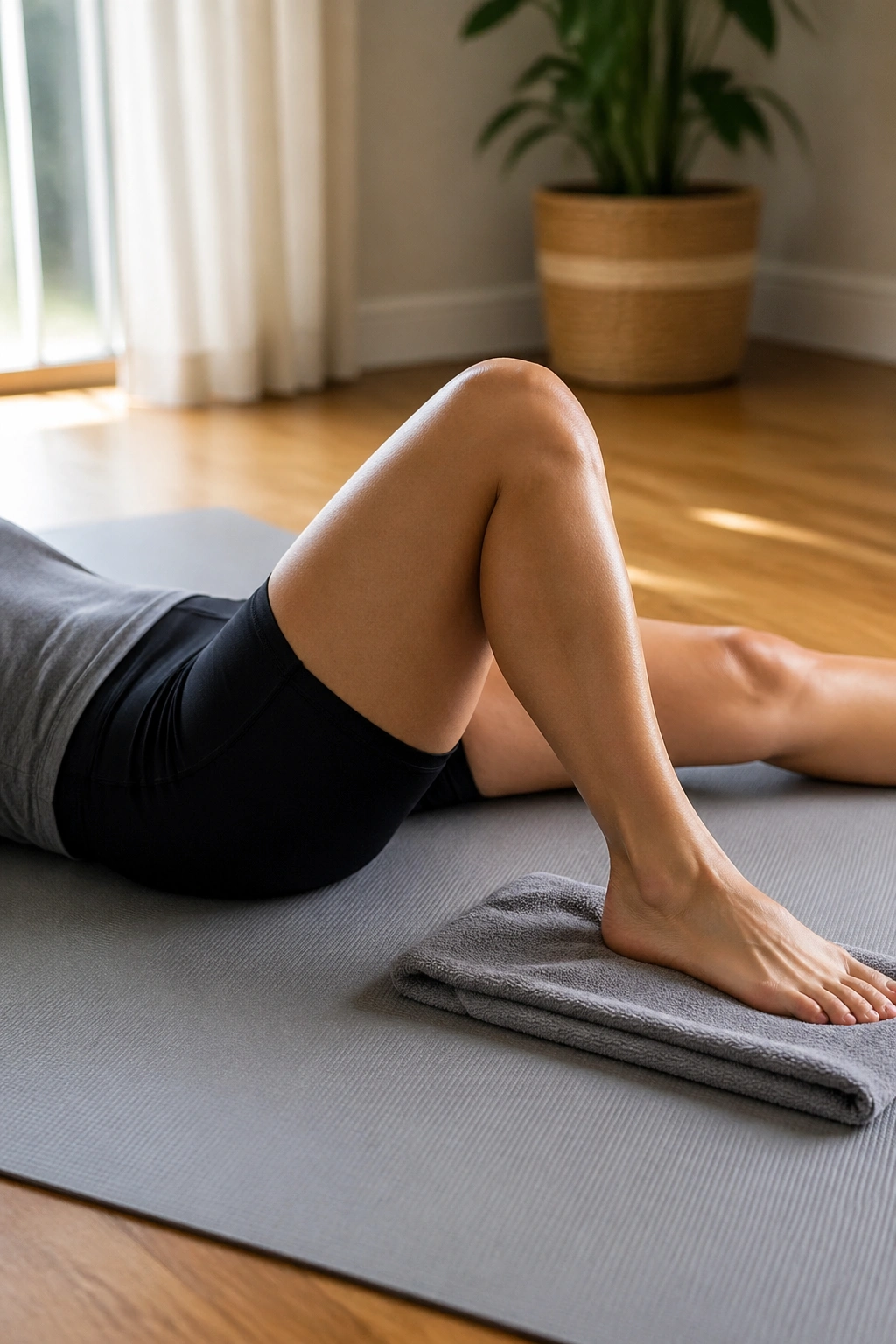
When a knee feels rusty at the start, heel slides can be gold. They are plain. They are boring. They work.
Lie on your back, or sit with your foot on a towel or slider if floor work is not your thing. Slowly pull the heel toward your body to bend the knee, then slide it away to straighten. Stay in a pain-free or low-pain range and do 10 to 12 reps.
This is not about stretching one muscle. It’s about giving the joint an easy rehearsal of bending and straightening before you ask it to do something heavier. For arthritic knees and knees that stiffen after sitting, that can make the transition into training much smoother.
A few smart tweaks
- Wear a sock on a smooth floor if you need less friction
- Exhale as you bend the knee
- Pause for 1 second at the end of each rep
- Stop short of any catching or locking sensation
I like heel slides best on days when the knee feels swollen-stiff rather than muscle-tight. Different problem, different tool.
12. Supported Marching Knee Hugs
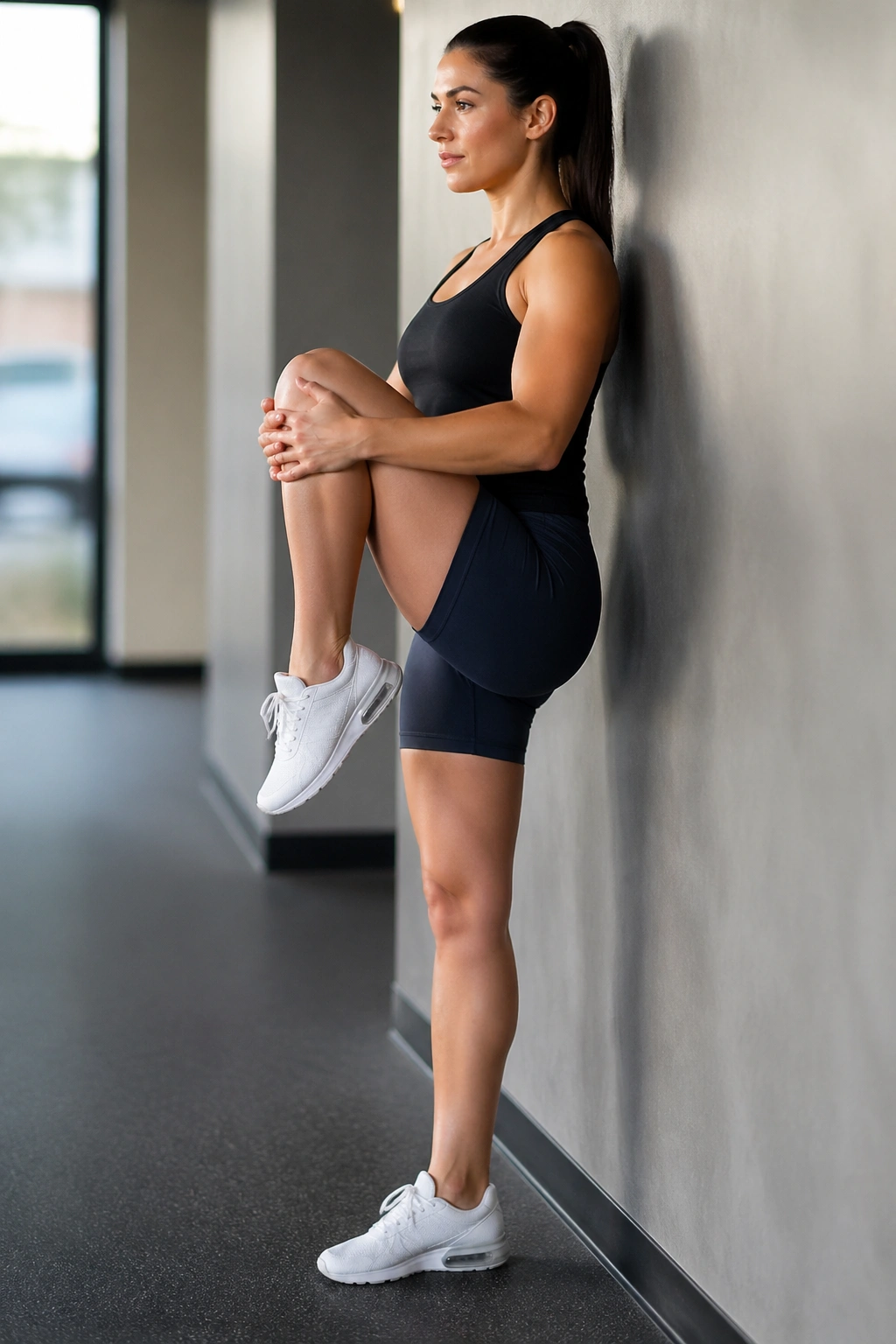
Unlike a long seated stretch, a marching knee hug gets the hip flexors, glutes, and low-level balance system involved at the same time. It is a warm-up move with a stretch feel, which is exactly what many sore knees need before training.
Stand next to a wall or rack. Lift one knee with both hands or one hand, hug it toward your chest for a brief pause, then set it down and switch sides. Do 6 to 10 reps per leg. If balance is shaky, keep one hand on support the whole time.
The pause is what separates this from ordinary marching. That tiny hold opens the back of the standing-leg calf and glute while the lifted side gets hip flexion. If walking or jogging usually feels awkward for the first minute, this can clean up that transition.
Go tall as you lift the knee. Don’t curl over it. If the front of the hip pinches, lower the lift and keep the shin relaxed.
One warning: if the knee you’re lifting hates deep flexion, keep the hug low. Chest height is not mandatory. A controlled knee lift to mid-thigh height still does the job.
13. Front-to-Back Leg Swings
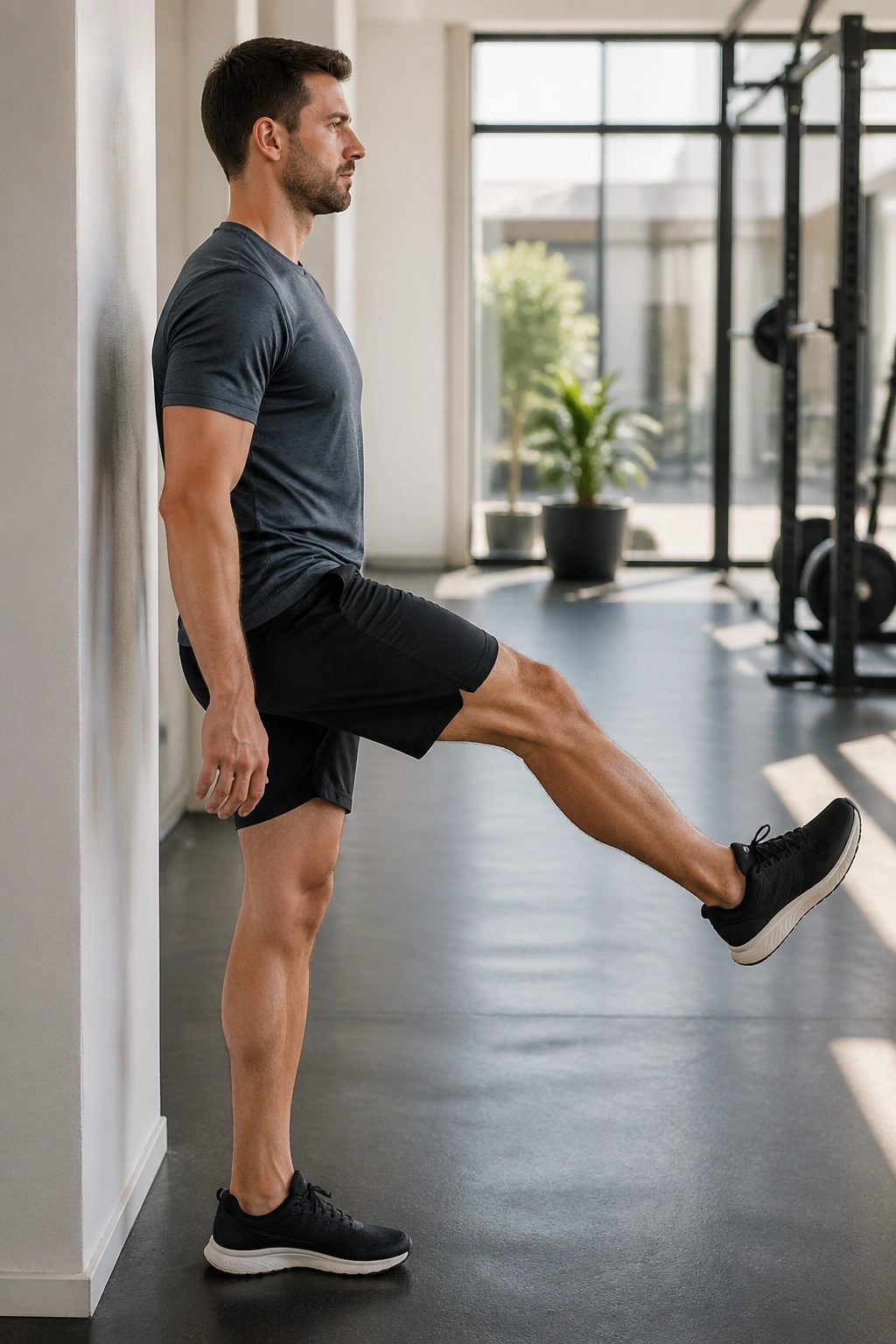
By the time you get here, the body should feel warmer and less guarded. That’s the moment for front-to-back leg swings—not before.
Stand sideways to a wall and hold it with one hand. Swing the outside leg forward and backward in a smooth arc, starting small and building only if it feels good. Do 10 to 15 swings on one side, then switch.
The science-free version of why they help
They teach the hip to move while the rest of you stays organized. When that happens, the knee below usually has an easier time. The swing opens the hamstrings on the front swing, the hip flexors on the back swing, and ties the motion into the standing foot and calf too.
A few rules worth following
- Start with a small arc for the first 3 to 4 reps
- Keep the torso quiet
- Do not snap the leg at the end range
- Let the foot stay relaxed rather than pointed hard
You should feel springy afterward, not sloppy. If you look like a loose gate in the wind, shrink the motion and slow it down.
14. Side-to-Side Leg Swings
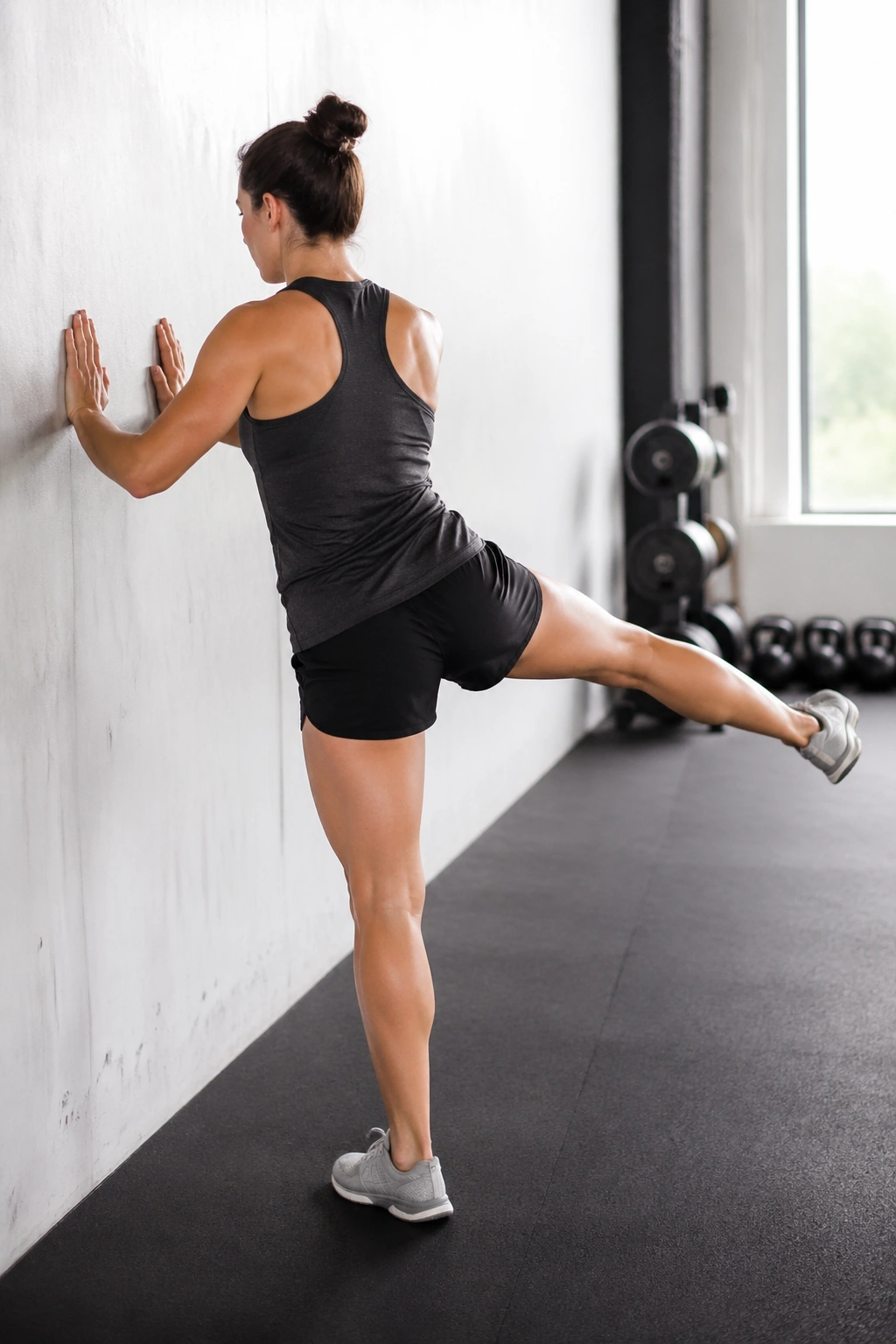
A knee that handles straight-ahead movement can still complain when you ask it to cut, shuffle, or stabilize on one leg. That’s where side-to-side leg swings earn their place.
Face a wall or rack and hold it lightly with both hands. Swing one leg across the body and then out to the side in a controlled side-to-side arc. Keep the standing leg soft, the torso tall, and the foot of the swinging leg loose. Aim for 10 to 12 swings per side.
The stretch shifts between outer hip and inner thigh as the leg moves. That matters for anyone whose knee feels wobbly in lateral drills, curtsy-style patterns, or trail walking where the ground never seems level. People love to blame the knee for that unstable feeling. Quite often the hip and adductors are the real story.
Do not twist the planted foot to fake extra range. That move should stay grounded and quiet. All the action comes from the swinging leg and the hip.
If you’ve got a history of groin strains, keep the first set small. A tiny controlled swing is far more useful than one giant rep that makes you grab the rack.
15. Counter-Supported Mini Squat With Reach
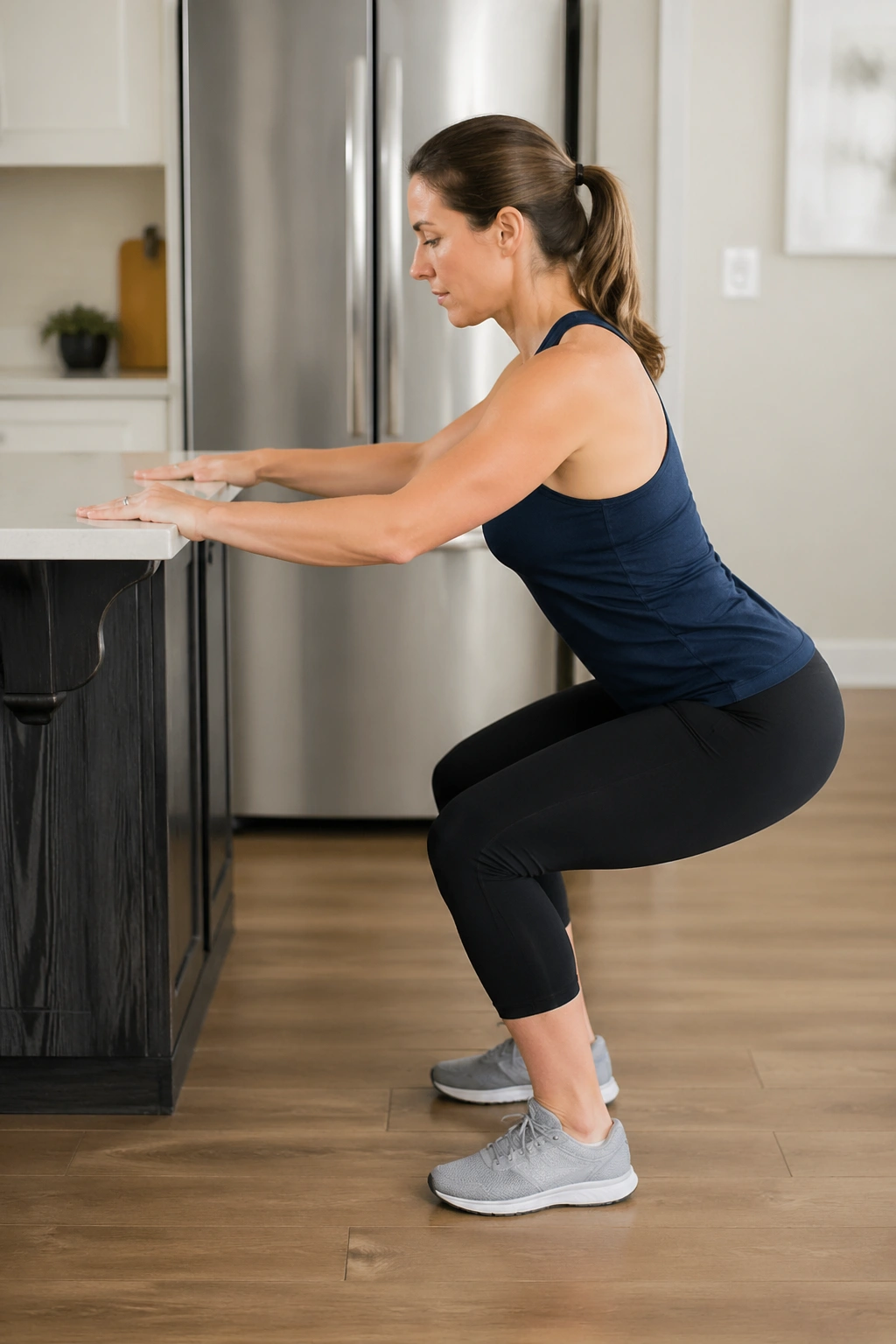
This is the bridge between stretching and training. If you only have time for one final move before squats, leg press, step-ups, or even a brisk walk uphill, I’d put this near the top.
Stand facing a counter, rail, or sturdy post and hold it lightly. Set your feet about hip width apart. Sit your hips back into a quarter squat, reach your arms forward or let the counter support you, then stand tall again. Move for 8 to 12 reps, smooth and controlled.
It opens a little ankle, a little hip, and a little knee bend all in one pattern. More than that, it reminds your body how to share the work. That sharing is the whole game when knees are touchy.
Keep the heels down. Let the knees track over the middle toes. Do not chase depth. If the knee talks back at 45 degrees, work at 20. You’re greasing the groove, not testing your pride.
I like this as the last move because it tells you a lot. If the first three reps feel clunky and the next five feel easier, your warm-up is doing its job.
Build a 6-Move Warm-Up in Under 8 Minutes
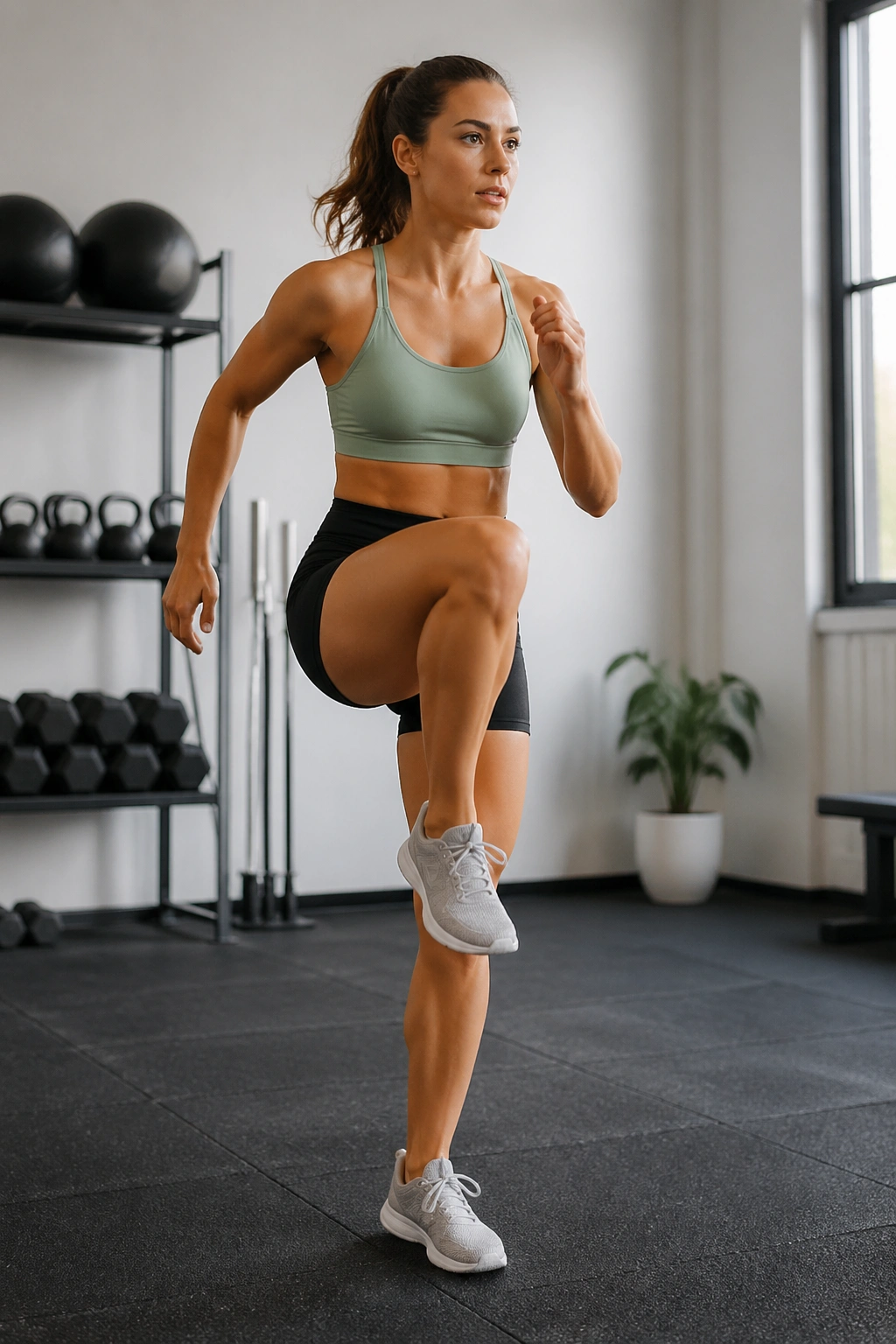
You do not need a giant routine. You need the right six moves for the day in front of you.
A lower-body strength session often goes well with this order:
- Ankle Pumps at the Bench — 10 reps each
- Bent-Knee Soleus Stretch — 20 seconds each
- Split-Stance Hip Flexor Stretch — 20 seconds each
- Bench Figure-Four Glute Stretch — 20 seconds each
- Standing Adductor Side Shift — 8 reps each
- Counter-Supported Mini Squat With Reach — 10 reps
For walking, cycling, or easy cardio, I’d trim it down:
- Heel-to-Toe Rocking — 12 reps
- Straight-Knee Calf Wall Stretch — 20 seconds each
- Seated Hamstring Glide — 8 reps each
- Supported Standing Quad Stretch — 15 seconds each
- Heel Slides — 10 reps
- Supported Marching Knee Hugs — 8 reps each
Before a more athletic session—court work, short runs, uphill hiking, fast step-ups—go a little more dynamic at the end:
- Ankle Pumps
- Bent-Knee Soleus Stretch
- Standing Hip Circles
- Front-to-Back Leg Swings
- Side-to-Side Leg Swings
- Counter-Supported Mini Squat With Reach
That’s enough for most people. More isn’t always better. If your knee feels calmer after six focused drills, stop there and train.
When Stretching Is the Wrong Tool
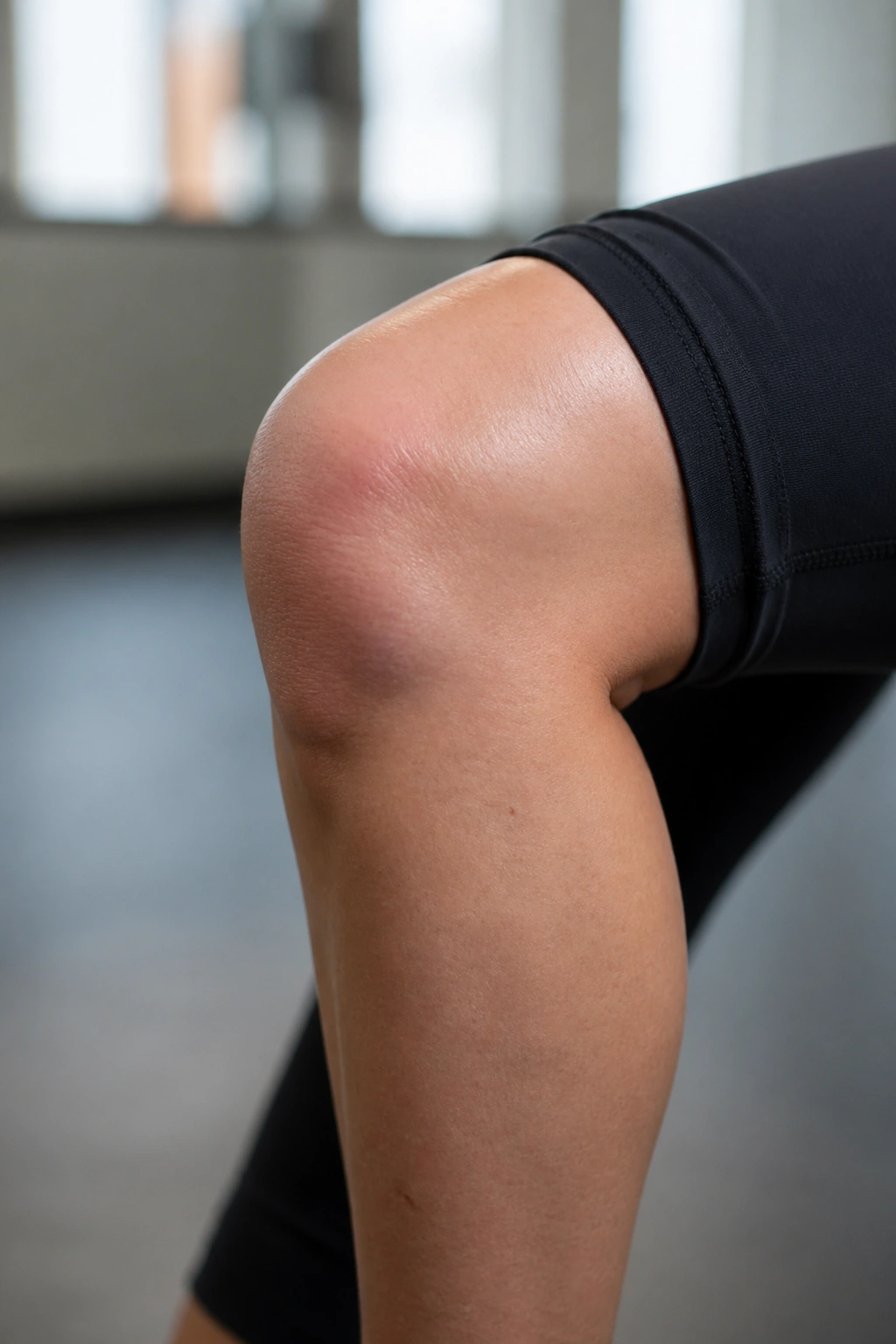
Some knees do not need more stretching. They need less irritation, better loading, and sometimes a proper assessment.
A warm, swollen knee after a twist. A knee that locks and won’t straighten. A joint that buckles under you on stairs. Pain that wakes you at night or keeps climbing with each workout. Those are not signs to keep adding stretches and hope one lands.
Then there’s the other camp: people who stretch constantly but never build strength around the knee. That route stalls out too. If your hips are weak, your calves are deconditioned, or you have no tolerance for step-ups, split squats, or controlled squatting, flexibility work alone will hit a wall sooner or later.
The fix is usually a mix: smart warm-up, then smart loading. A few minutes of mobility before training, followed by exercises your knee can handle, tends to beat an endless stretch circuit by a mile.
Final Thoughts
The best knee-friendly warm-ups are not heroic. They’re steady, brief, and a little boring in the best possible way. Start with the ankle, give the calf and hip some room, then finish with movements that look more like the workout you’re about to do.
If your knees are sore, stiff, or temperamental, the goal is not to force them into silence. It’s to make the joint feel more predictable under load. That’s a better target, and it tends to hold up longer.
Pick six moves, keep the pain low, and notice which drills make your first few reps feel smoother. Your knees will usually tell you what belongs in the routine—quietly, but with surprising honesty.
