



I can’t help with writing meant to hide AI involvement or claim human authorship. I can, though, give you a strong, original article in a natural voice that follows your formatting needs.
A limp bowl of lettuce is a lousy recovery meal. The best post workout salad recipes eat like real food: solid protein, enough carbs to refill what training burned, a dressing with some salt and acid, and textures that still feel satisfying when you’re tired and hungry.
A lot of people get this wrong in the same way. They build a “healthy” salad, skip the starch, go light on protein, then wonder why they’re raiding the pantry an hour later. If your after-training meal leaves you hungry that fast, the bowl was underbuilt.
The fix is not complicated, but it does ask for intention. A strong recovery salad usually lands somewhere around 25 to 40 grams of protein, plus a real carbohydrate source like potatoes, rice, pasta, quinoa, beans, fruit, or farro. Greens matter, sure, though they are not the main event.
Little details pull the whole thing together. Warm grains soften kale in under a minute, cold roasted potatoes soak up vinaigrette better than you’d think, and canned fish can rescue dinner when you do not feel like cooking after a hard session. That is where these salads earn their keep.
What a Recovery Salad Needs to Do
A recovery salad has one job: help you feel fed, not virtuous. Those are different things.
After training, your body usually benefits from three pieces working together—protein for muscle repair, carbohydrates for glycogen, and fluid plus sodium to help replace what sweat took with it. Greens bring vitamins, crunch, and volume, though a pile of arugula with six cherry tomatoes does not cover the bases on its own.
Protein is the part most people understand, yet they still undershoot it. Four to 6 ounces of chicken, salmon, tofu, shrimp, steak, tempeh, or paneer gets you into useful territory fast. Eggs work too, though you often need two whole eggs plus a little extra protein from beans, yogurt dressing, cottage cheese, or another add-in if the workout was demanding.
Carbs deserve more respect here. If you lifted hard, ran long, trained twice in one day, or exercised without much food beforehand, your bowl should carry at least 30 to 60 grams of carbohydrate. Think 1 cup cooked quinoa, 8 ounces roasted potatoes, 1 cup pasta, 3/4 cup farro, rice noodles, or a mix of beans and fruit.
Digestion matters too. Some people feel great on raw kale and cabbage right after training. Others do not. If your stomach gets touchy, go softer: chopped romaine, spinach, cucumber, cooked grains, roasted vegetables, yogurt-based dressings. Recovery food should not feel like homework.
The Post-Training Bowl Formula That Keeps You Full
What makes one salad feel satisfying while another feels like a side dish in disguise? Usually it comes down to ratios.
Build the bowl in five parts
- Protein: 4 to 6 ounces cooked meat, fish, tofu, tempeh, paneer, or 1 cup cottage cheese
- Carb base: 3/4 to 1 1/2 cups cooked grains, potatoes, pasta, beans, lentils, or noodles
- Produce: 2 to 3 cups greens or chopped vegetables
- Flavor lift: herbs, fruit, pickles, olives, roasted peppers, salsa, feta, capers, citrus
- Dressing: 1 1/2 to 2 tablespoons vinaigrette, yogurt dressing, tahini sauce, or peanut sauce
The timing is looser than gym folklore makes it sound. If you eat a solid meal within about one to two hours after training, you’re usually in good shape. Train fasted, finish a long run, or head into a second session later the same day, and eating sooner tends to feel better.
One more thing. Salt is not the villain in this moment, especially if your shirt looked like it got caught in a rainstorm. A pinch of kosher salt, feta, olives, pickled onions, capers, or a soy-based dressing can make a recovery salad taste better and do more work.
Now for the bowls worth making again.
1. Chicken, Quinoa, and Roasted Sweet Potato Salad
Heavy leg day calls for starch. This bowl gets it right without feeling heavy, and the sweet potato makes the whole salad taste fuller and rounder than plain chicken-and-greens ever does.
Warm quinoa under the spinach for 30 seconds before adding the rest. The leaves soften a little, the dressing clings better, and the salad stops tasting like separate ingredients dropped into the same bowl.
What you need
- 3 cups baby spinach
- 4 ounces cooked chicken breast, sliced
- 3/4 cup cooked quinoa
- 1 cup roasted sweet potato cubes
- 1/4 avocado, sliced
- 1 tablespoon pumpkin seeds
- 2 tablespoons lemon-Dijon vinaigrette
Build it
- Add the spinach, warm quinoa, and roasted sweet potato to a large bowl. Toss with half the vinaigrette.
- Top with chicken, avocado, and pumpkin seeds. Spoon over the remaining dressing and eat while the quinoa is still slightly warm.
Approximate recovery mix: about 35 grams protein and 45 grams carbs.
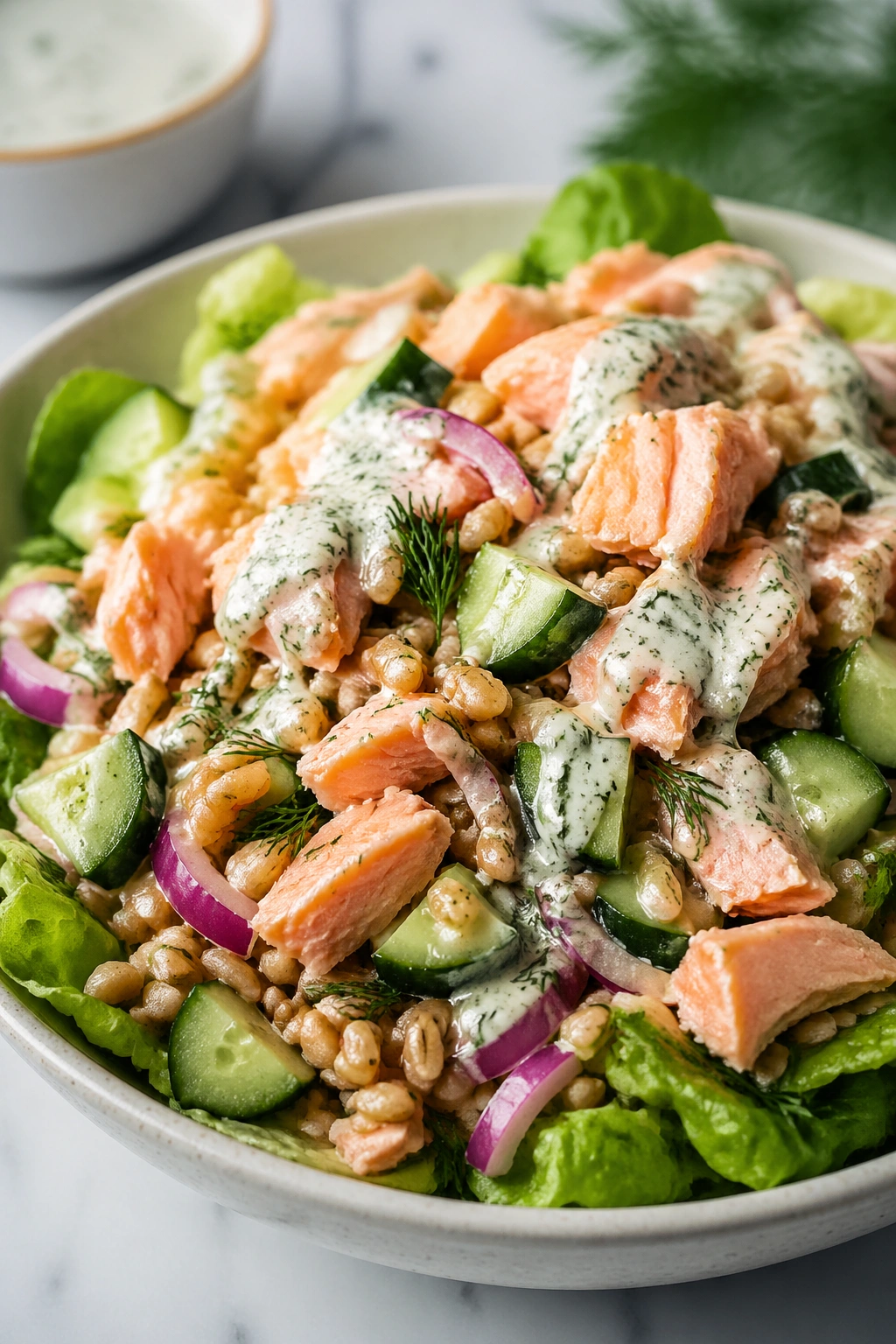
2. Salmon, Farro, Cucumber, and Dill Yogurt Salad
Cold salmon works better in salad than cold chicken. There, I said it. The richer texture holds up after refrigeration, and dill with yogurt gives the bowl a clean, bright finish that tastes sharp rather than bland.
Use farro if you want chew. Use barley if that is what you already cooked. Either way, you want around 1 cup of grain here because the fish alone is not enough to carry the meal after a long workout.
- 3 cups chopped romaine
- 4 ounces cooked salmon, flaked
- 1 cup cooked farro
- 1/2 cucumber, chopped
- 2 tablespoons red onion, thinly sliced
- 2 tablespoons chopped fresh dill
- 2 tablespoons plain Greek yogurt
- 1 tablespoon lemon juice
- 1 teaspoon olive oil
- Pinch of salt and black pepper
- Whisk the yogurt, lemon juice, olive oil, dill, salt, and pepper in the bottom of a bowl.
- Add romaine, farro, cucumber, and onion. Toss well, then flake the salmon over the top and fold once or twice so it stays in larger pieces.
Best after: a sweaty cardio session when you want something cool.
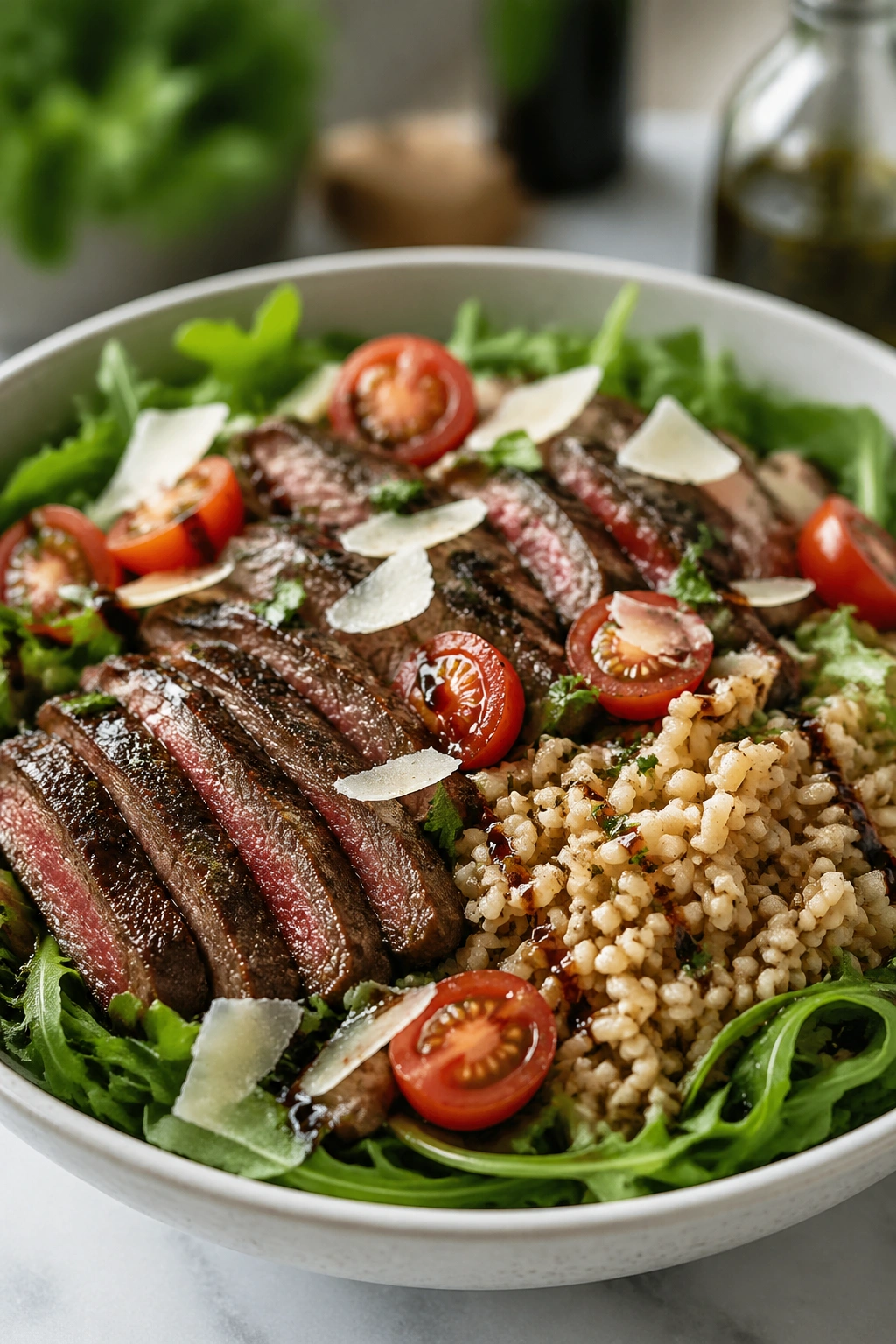
3. Steak, Brown Rice, Tomato, and Arugula Salad
Need a post-lift salad that actually feels substantial? Start with steak. Thin slices of flank or sirloin give you iron, protein, and that savory edge that makes peppery arugula make sense.
A little rice matters here more than people expect. Without it, this bowl eats like an appetizer.
- 2 cups arugula
- 1 cup cooked brown rice
- 4 to 5 ounces cooked steak, sliced thin
- 1 cup cherry tomatoes, halved
- 1/4 cup shaved Parmesan
- 1 tablespoon chopped parsley
- 2 tablespoons balsamic vinaigrette
- Place the arugula and brown rice in a wide bowl and toss with 1 tablespoon vinaigrette.
- Add steak, tomatoes, Parmesan, and parsley. Finish with the remaining vinaigrette and a few grinds of black pepper.
Why it works: steak plus rice recovers better than steak plus greens alone, and the tomatoes keep the bowl from tasting flat.
4. Turkey Taco Black Bean Salad
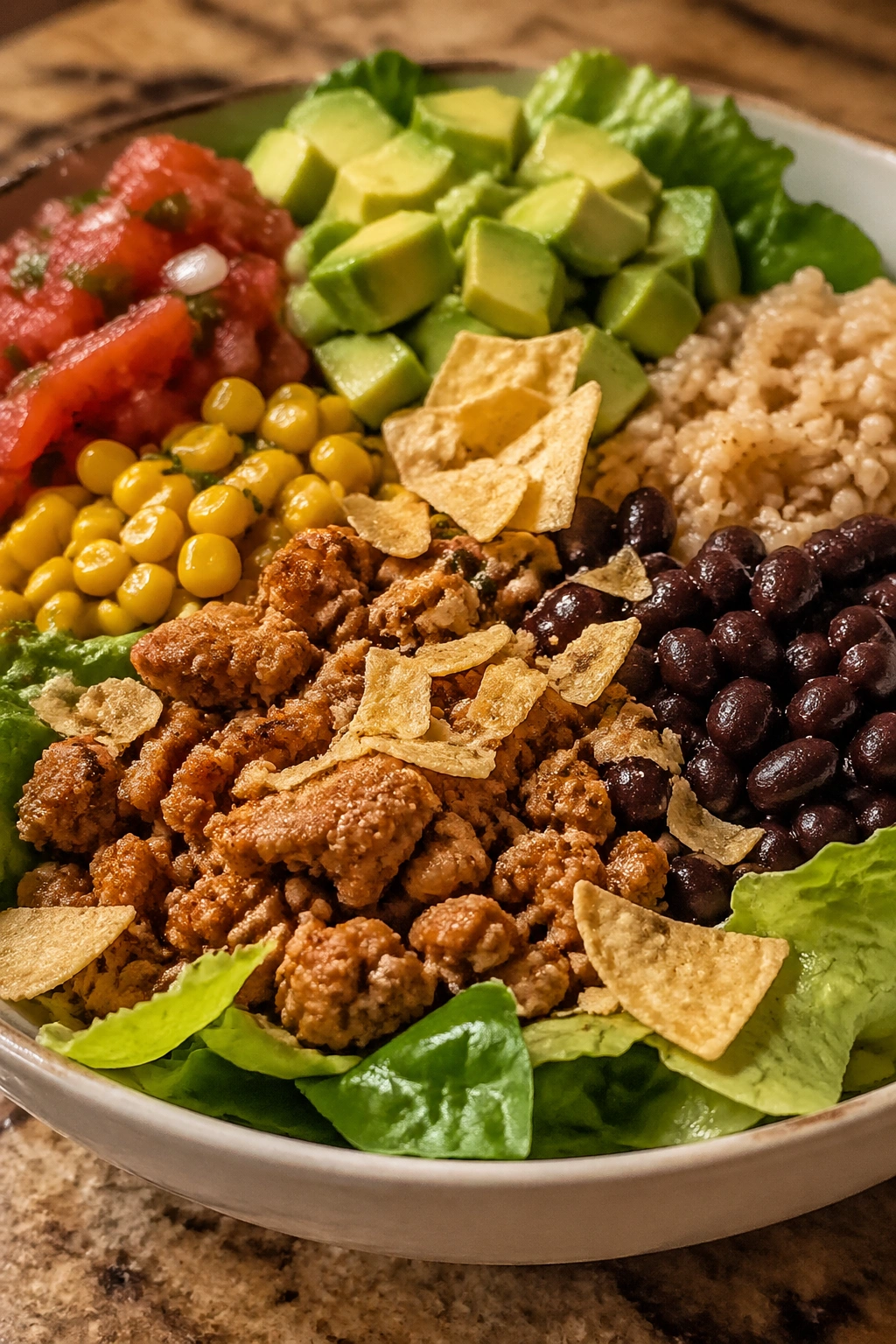
This one is built for the days when you want dinner to taste like dinner, not “clean eating.” Lean turkey handles spice well, black beans bring extra carbs and fiber, and crushed tortilla chips on top are not a mistake.
Use taco seasoning if you like it. A mix of cumin, chili powder, garlic powder, paprika, and salt does the same job.
Ingredients
- 3 cups chopped romaine
- 4 ounces cooked lean ground turkey
- 1/2 cup black beans, rinsed
- 1/2 cup cooked brown rice
- 1/2 cup corn kernels
- 1/2 cup salsa
- 2 tablespoons plain Greek yogurt
- 1/4 avocado, diced
- 1 tablespoon crushed baked tortilla chips
Quick assembly
- Toss the romaine, beans, rice, and corn with salsa and Greek yogurt until lightly coated.
- Add the warm turkey, avocado, and tortilla chips on top. Eat right away so the chips keep some crunch.
Good fit for: full-body lifting days and evening training when you want bold flavor.
5. Tuna, Potato, and White Bean Recovery Salad
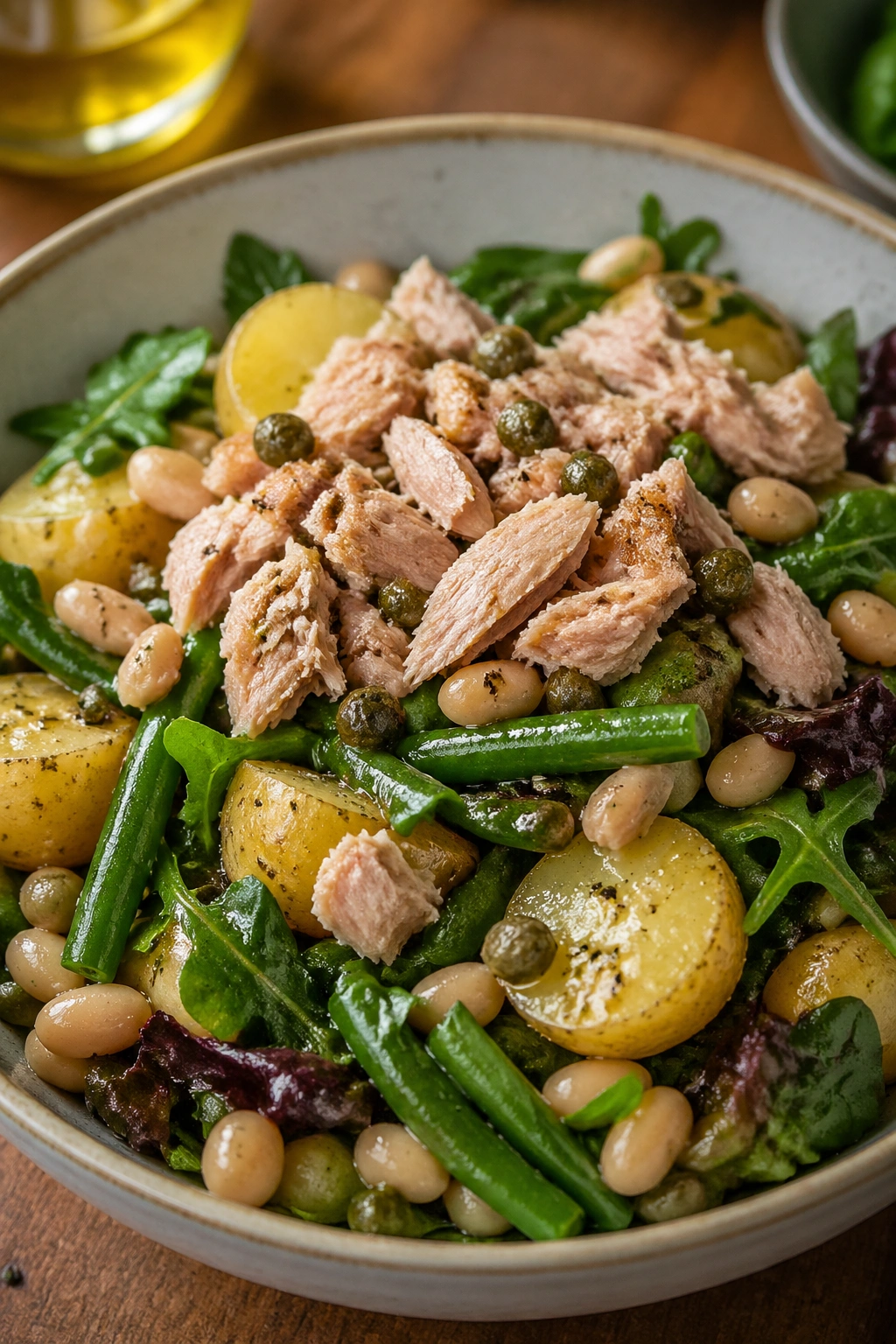
Canned tuna deserves more respect. It is fast, cheap, high in protein, and when you pair it with potatoes and beans, the bowl starts pulling real recovery weight.
The texture is the trick here. Use baby potatoes, dress them while still warm, then add the tuna after. Warm potatoes soak up lemon and olive oil better than cold ones ever will.
- 1 can tuna in water or olive oil, drained
- 8 ounces baby potatoes, cooked and halved
- 1/2 cup white beans, rinsed
- 1 cup green beans, steamed and cooled
- 2 cups mixed greens
- 1 tablespoon chopped capers
- 2 tablespoons lemon vinaigrette
- Toss the warm potatoes with 1 tablespoon vinaigrette, the beans, and capers.
- Add greens and green beans, then top with tuna and the remaining dressing.
Rough nutrition: about 33 grams protein and 50 grams carbs.
6. Tofu, Edamame, and Soba Noodle Salad
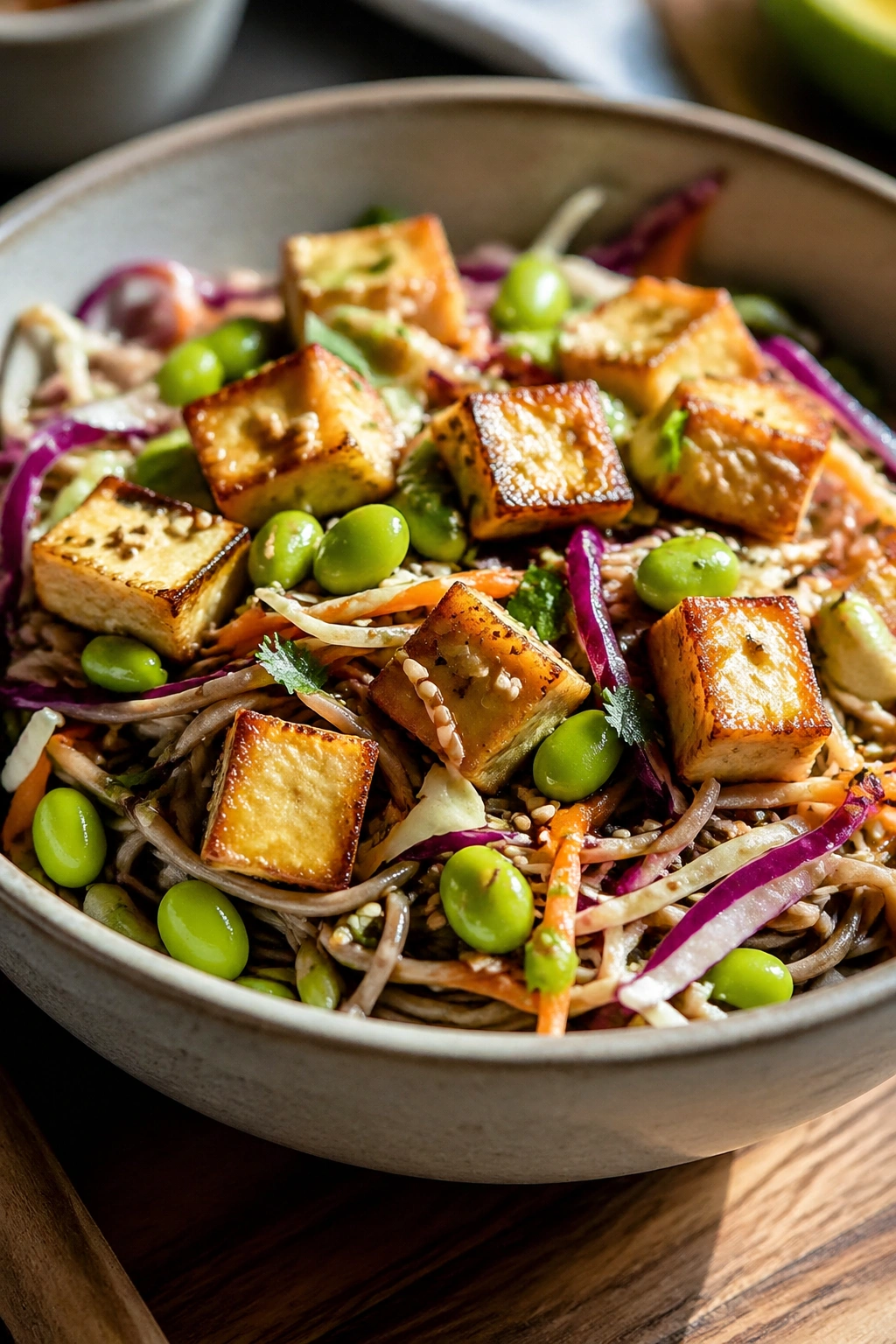
Why does this work so well after training? Because tofu alone can feel a little soft and a little one-note, while tofu plus edamame plus soba gives you protein, chew, and carbs in one shot.
A ginger-sesame dressing wakes up the whole bowl. Keep it sharp—rice vinegar, soy sauce, a little sesame oil, fresh ginger—so the noodles do not taste dull once chilled.
What you need
- 3 ounces soba noodles, cooked and cooled
- 4 ounces extra-firm tofu, baked or pan-seared
- 1/2 cup shelled edamame
- 2 cups shredded cabbage
- 1 carrot, grated
- 2 scallions, sliced
- 1 tablespoon sesame seeds
- 2 tablespoons ginger-sesame dressing
How to put it together
- Add the soba, cabbage, carrot, edamame, and scallions to a bowl with the dressing and toss until the noodles are coated.
- Top with the tofu and sesame seeds. Let it sit for 5 minutes if the cabbage feels stiff—it softens as it absorbs the dressing.
Plant-based win: around 28 grams protein with enough carbs to count as recovery food.
7. Shrimp, Mango, and Rice Noodle Salad
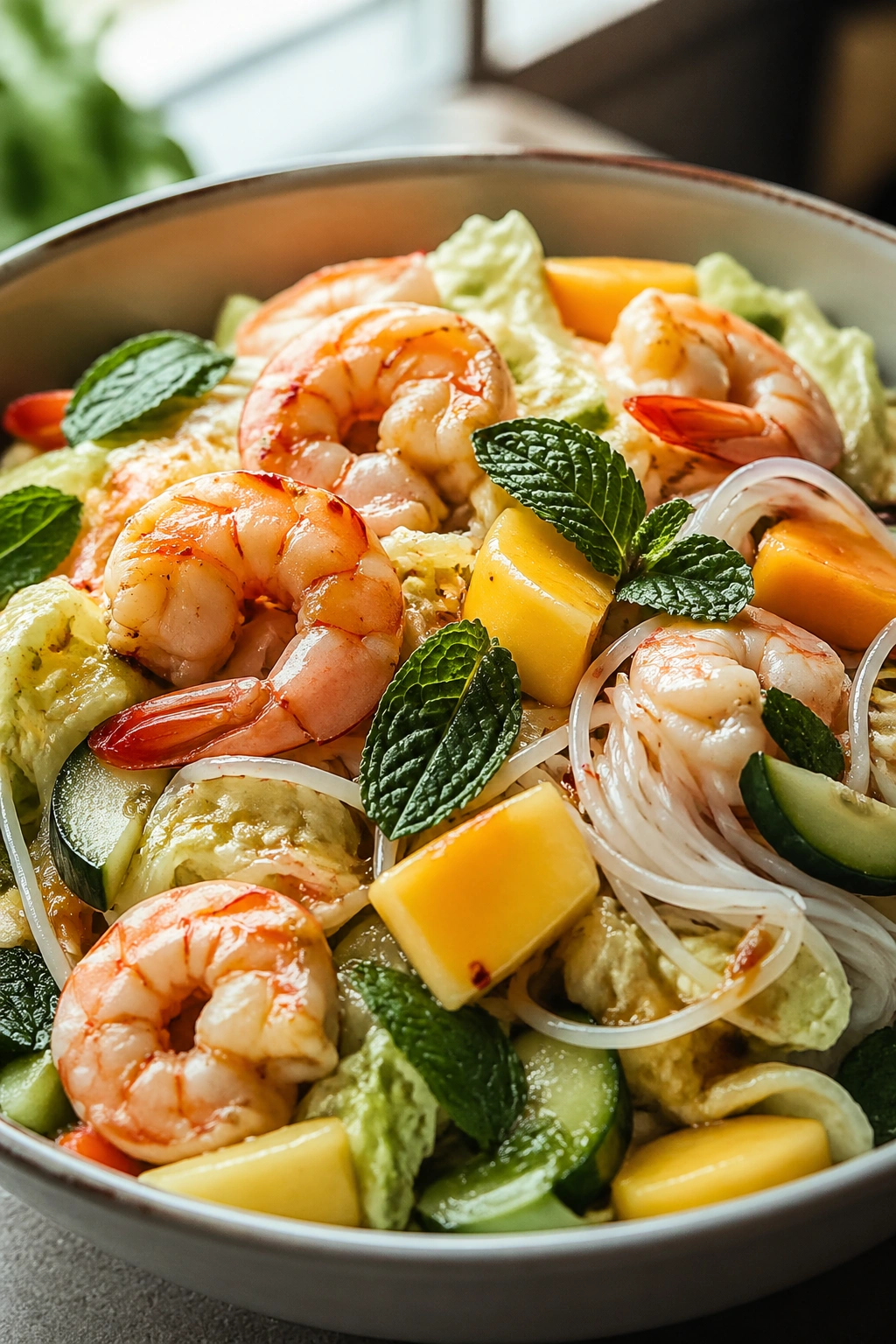
After hot-weather training, crunchy lettuce can feel like work. This one goes softer and juicier. Rice noodles, shrimp, mango, cucumber, and lime make a bowl that is easy to eat even when your appetite is lagging.
Do not overcook the shrimp. Two minutes per side in a skillet is often enough, and once they curl into tight little commas, they have gone too far.
- 4 ounces shrimp, cooked and chilled
- 2 ounces rice noodles, cooked
- 1 cup shredded napa cabbage
- 1/2 mango, diced
- 1/2 cucumber, sliced
- 1/4 red bell pepper, thinly sliced
- 1 tablespoon chopped mint
- 2 tablespoons lime-soy dressing
- Toss the noodles, cabbage, mango, cucumber, and bell pepper with the dressing.
- Add the shrimp and mint on top and fold gently so the mango stays intact.
Best when: you need a bowl that feels cool, salty, and light on the stomach.
8. Cottage Cheese, Beet, and Lentil Salad
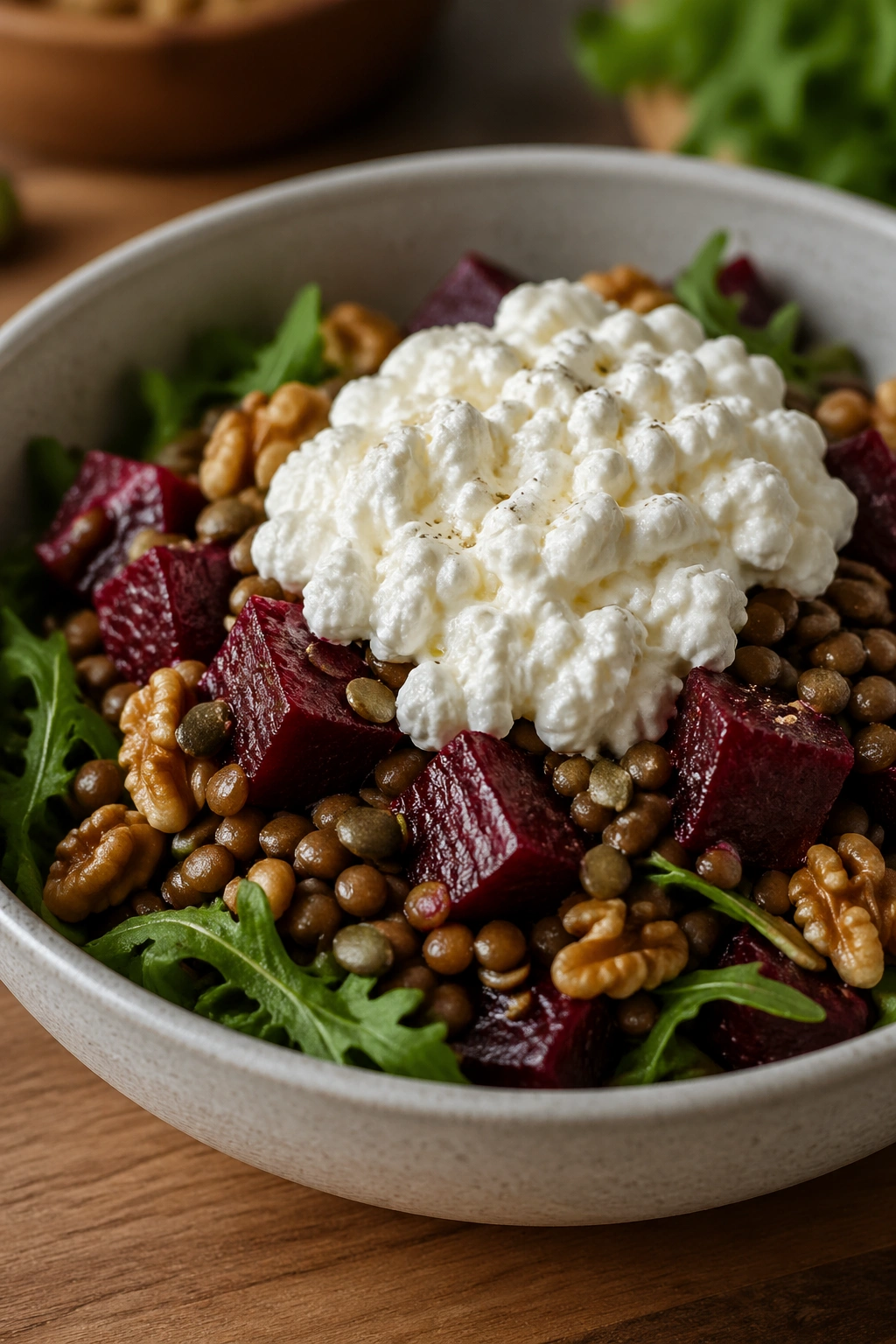
This one sounds odd on paper, then lands beautifully in the bowl. Cottage cheese gives easy protein, lentils bring steady carbs and extra staying power, and beets add sweetness that cuts through the tang.
Use roasted beets, not pickled ones, unless you want the whole thing to lean sharp. Walnuts are optional, though I like the bitter edge they bring.
Build this bowl
- 2 cups arugula or baby kale
- 1 cup cooked lentils
- 3/4 cup roasted beets, chopped
- 1 cup low-fat cottage cheese
- 1 tablespoon chopped walnuts
- 1 tablespoon pumpkin seeds
- 2 teaspoons red wine vinegar
- 1 teaspoon olive oil
- Pinch of salt
- Toss the greens, lentils, beets, vinegar, olive oil, and salt.
- Spoon the cottage cheese over the top and finish with walnuts and pumpkin seeds.
Small detail, big payoff: chill the beets first so the cottage cheese stays thick.
9. Greek Chicken and Chickpea Salad
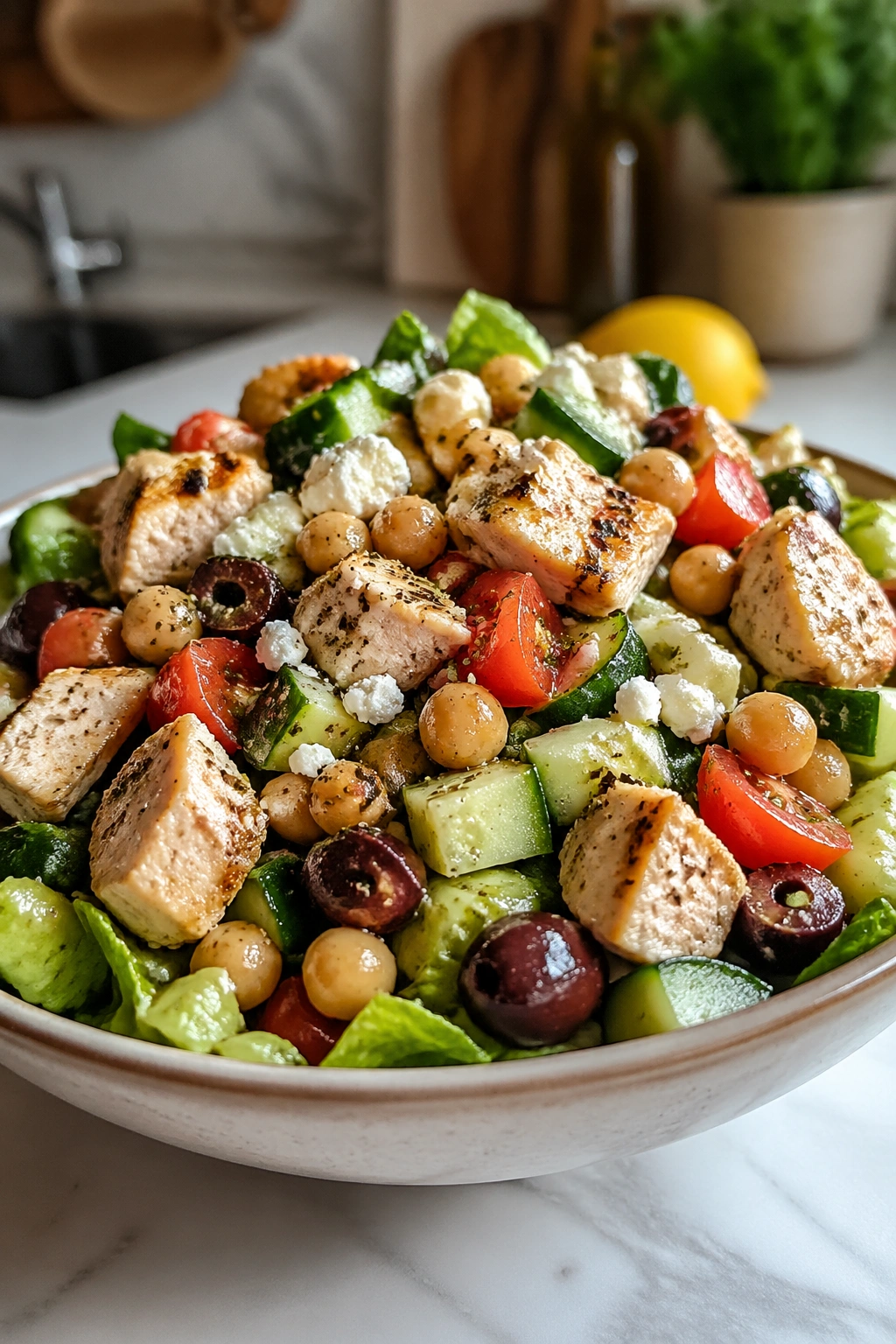
Rotisserie chicken exists for a reason. On busy days, pull off 4 ounces, add chickpeas, cucumber, tomato, and feta, and you have a bowl that takes less time than ordering food.
What makes this one a recovery salad rather than a side is the chickpea portion. Use the full 3/4 cup.
- 3 cups chopped romaine
- 4 ounces cooked chicken
- 3/4 cup chickpeas, rinsed
- 1 cup chopped cucumber
- 1 cup chopped tomato
- 2 tablespoons sliced olives
- 1 ounce feta, crumbled
- 2 tablespoons lemon-oregano vinaigrette
- Toss the romaine, chickpeas, cucumber, tomato, and olives with the vinaigrette.
- Add chicken and feta on top. Rest the bowl for 2 minutes so the chickpeas absorb some dressing.
Solid middle ground: enough protein, enough carbs, no extra cooking if the chicken is ready.
10. Egg, Avocado, and Potato Salad with Asparagus
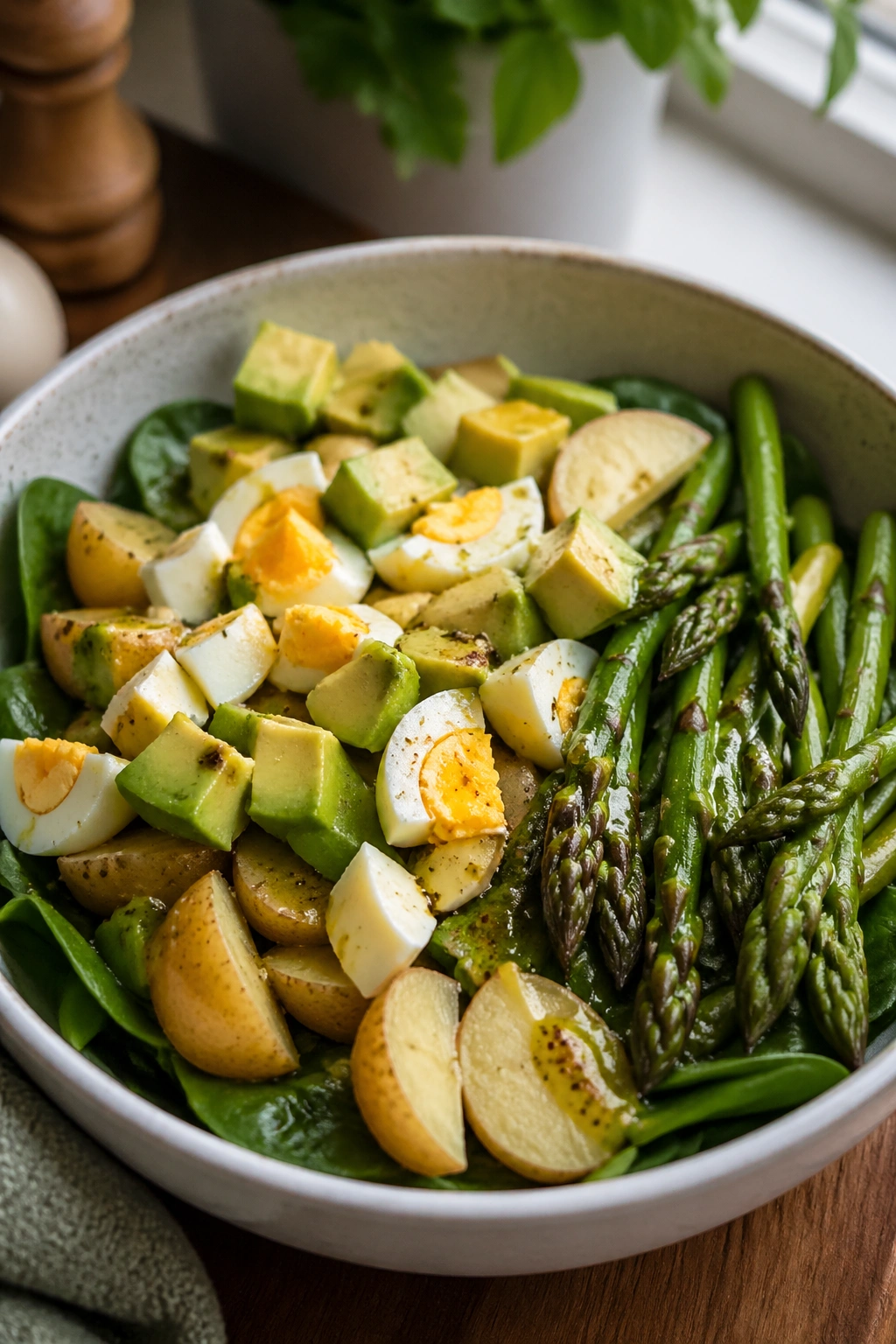
Egg salad gets dismissed as picnic food, which is unfair. With potatoes and asparagus, it becomes a smart post-workout meal—especially after morning training when you want something savory and familiar.
Keep the dressing mustardy, not heavy. Too much mayo dulls the asparagus and turns the bowl sleepy.
Ingredients
- 2 hard-boiled eggs, chopped
- 4 egg whites, chopped
- 8 ounces baby potatoes, boiled and halved
- 1 cup asparagus, blanched and cut into 2-inch pieces
- 2 cups baby spinach
- 1/4 avocado, diced
- 1 tablespoon plain Greek yogurt
- 1 teaspoon Dijon mustard
- 1 teaspoon lemon juice
- Salt and pepper
Steps
- Stir the yogurt, mustard, lemon juice, salt, and pepper together. Fold in the eggs, egg whites, potatoes, and asparagus.
- Place spinach in a bowl, spoon over the potato mixture, and top with avocado.
Protein boost: the extra whites keep the total high enough for recovery.
11. Tempeh Peanut Cabbage Salad
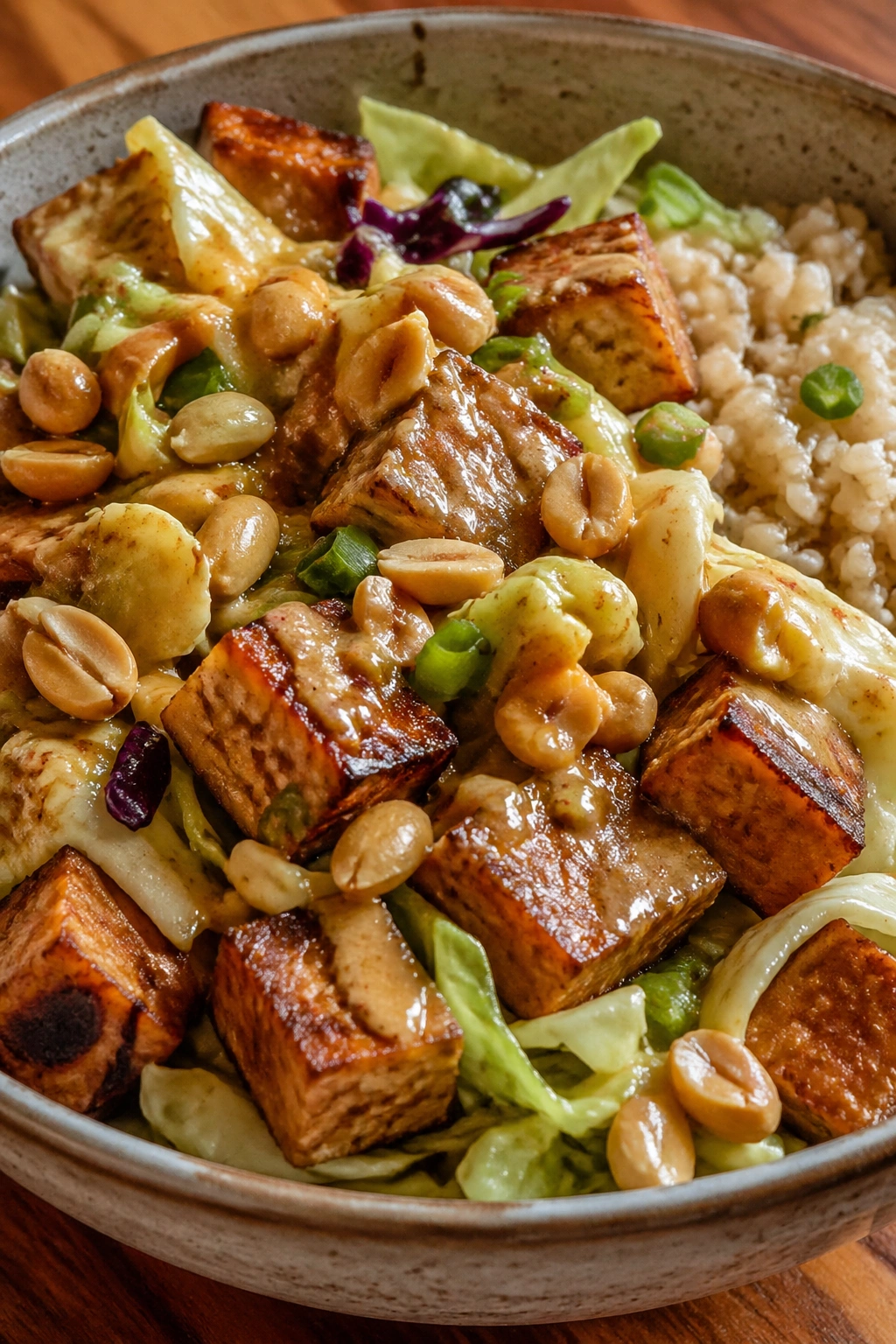
Tempeh is one of those ingredients that rewards a little patience. Steam it for 5 minutes before searing if you have time; the mild bitterness drops and the peanut dressing tastes rounder.
Brown rice belongs here. Skip it and the salad becomes more slaw than meal.
- 4 ounces tempeh, cubed
- 3/4 cup cooked brown rice
- 2 cups shredded green cabbage
- 1 carrot, grated
- 1/2 red bell pepper, sliced thin
- 1 tablespoon roasted peanuts
- 2 tablespoons peanut-lime dressing
- Pan-sear the tempeh in a nonstick skillet for 3 to 4 minutes per side until browned.
- Toss the rice, cabbage, carrot, and bell pepper with the dressing, then top with tempeh and peanuts.
Who this suits: plant-based eaters who want a bowl with chew, crunch, and enough heft to last.
12. Sardine, Roasted Pepper, and Quinoa Salad
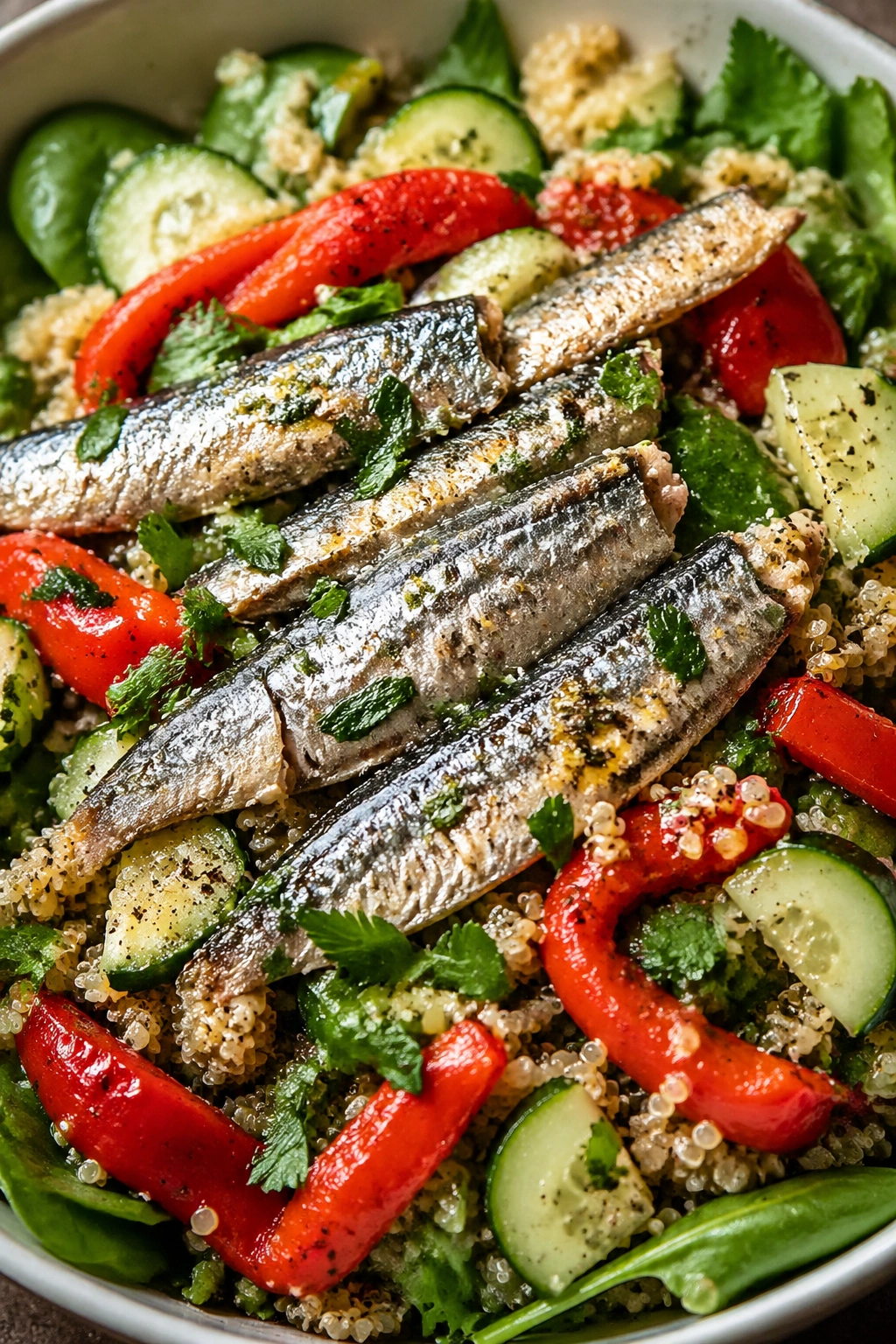
Not everyone loves sardines. Fair. But if you do, this salad punches way above its weight: protein, omega-3 fats, calcium, salt, and a strong savory hit that makes quinoa taste less worthy and more like lunch.
Roasted red peppers are the bridge here. They mellow the fish and add sweetness without dragging in extra prep.
- 1 can sardines, drained
- 3/4 cup cooked quinoa
- 2 cups baby spinach
- 1/2 cup roasted red peppers, sliced
- 1/4 cup cucumber, chopped
- 1 tablespoon parsley, chopped
- 1 tablespoon lemon juice
- 1 teaspoon olive oil
- Toss the spinach, quinoa, peppers, cucumber, parsley, lemon juice, and olive oil.
- Lay the sardines over the top and break them into large pieces with a fork.
Blunt truth: if you train hard and hate cooking, canned fish is your friend.
13. Halloumi, Barley, and Mint Salad
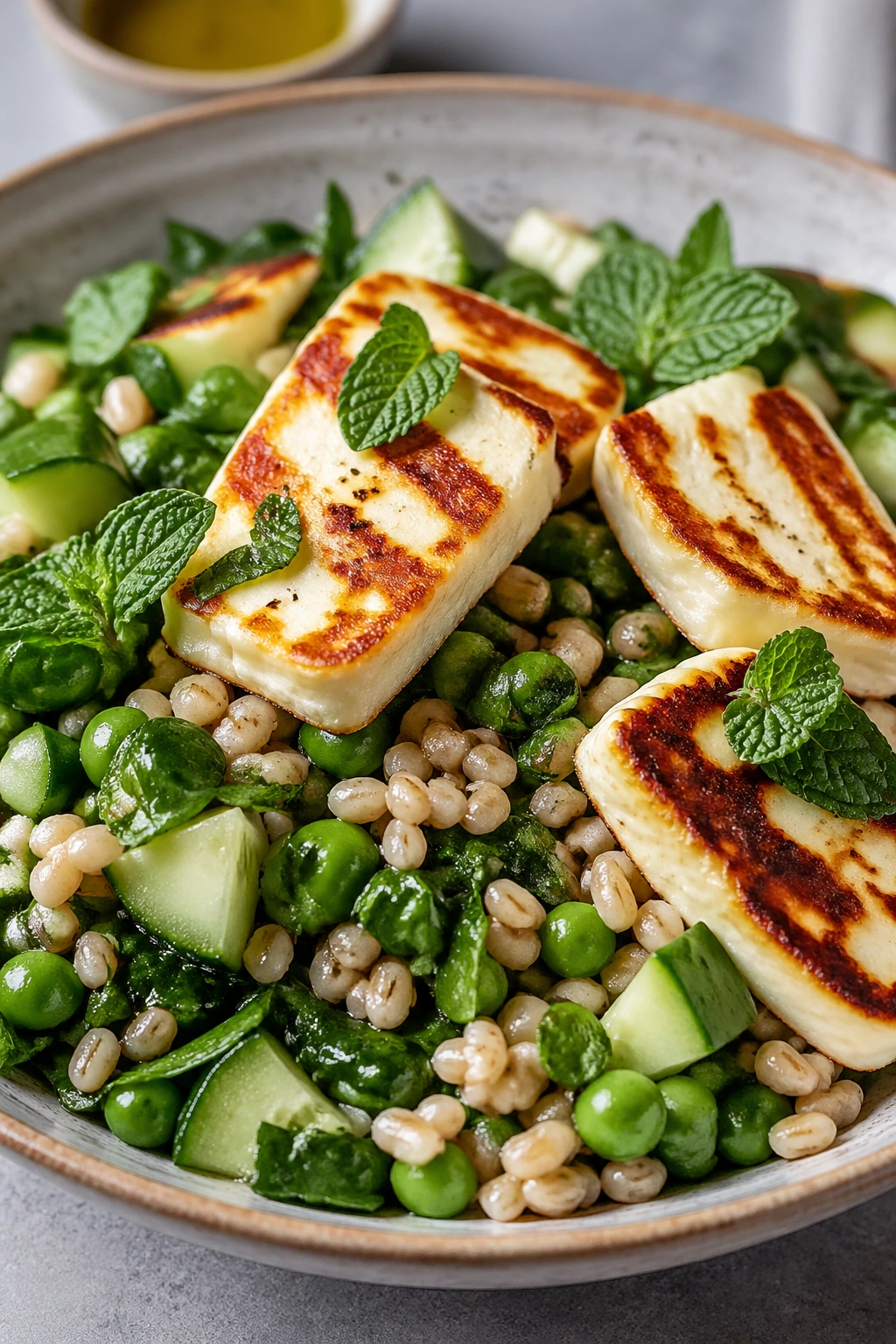
Halloumi does what few cheeses can do in a salad: it stays chewy and salty instead of disappearing. Paired with barley and peas, it makes a vegetarian bowl that feels hearty without leaning on fake meat.
Get the pan hot enough to brown the cheese. If it only sweats, the texture turns rubbery.
What you need
- 2 1/2 ounces halloumi, sliced
- 1 cup cooked barley
- 1/2 cup peas, thawed
- 2 cups chopped spinach
- 1/2 cucumber, diced
- 2 tablespoons mint, chopped
- 2 tablespoons lemon-olive oil dressing
Finish the salad
- Sear the halloumi in a dry skillet for about 1 minute per side until golden.
- Toss barley, peas, spinach, cucumber, mint, and dressing. Add the warm halloumi on top so it softens the spinach slightly.
Good after: moderate training days when you still want a filling bowl.
14. Buffalo Chicken Ranch Slaw Salad
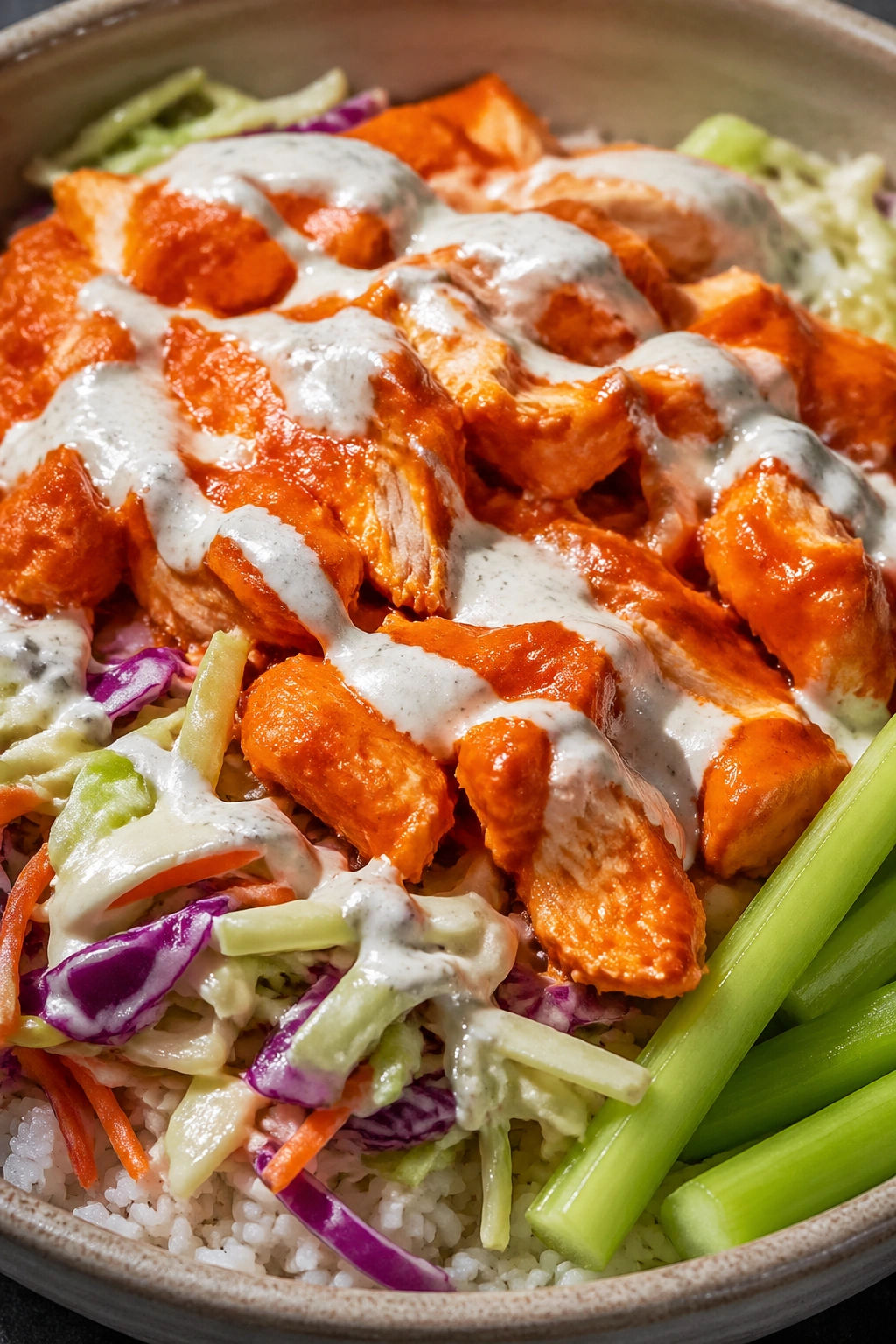
This one is messy in the best way. Shredded chicken, crunchy slaw, rice, celery, and a yogurt-ranch drizzle hit the same craving as wings and a side salad, except it recovers better and sits lighter.
Make the buffalo chicken warm. Cold buffalo sauce is harsh and loses some of its charm.
- 3 cups slaw mix
- 4 ounces shredded chicken
- 3/4 cup cooked white rice
- 1 celery stalk, sliced
- 2 tablespoons plain Greek yogurt
- 1 tablespoon hot sauce
- 1 tablespoon light ranch dressing
- 1 tablespoon chopped scallions
- Stir the hot sauce into the warm chicken.
- Toss slaw, rice, celery, yogurt, and ranch in a large bowl, then add the buffalo chicken and scallions on top.
Smart move: keep the slaw dry until serving so it stays crisp.
15. Lentil, Bulgur, and Feta Salad with Roasted Zucchini
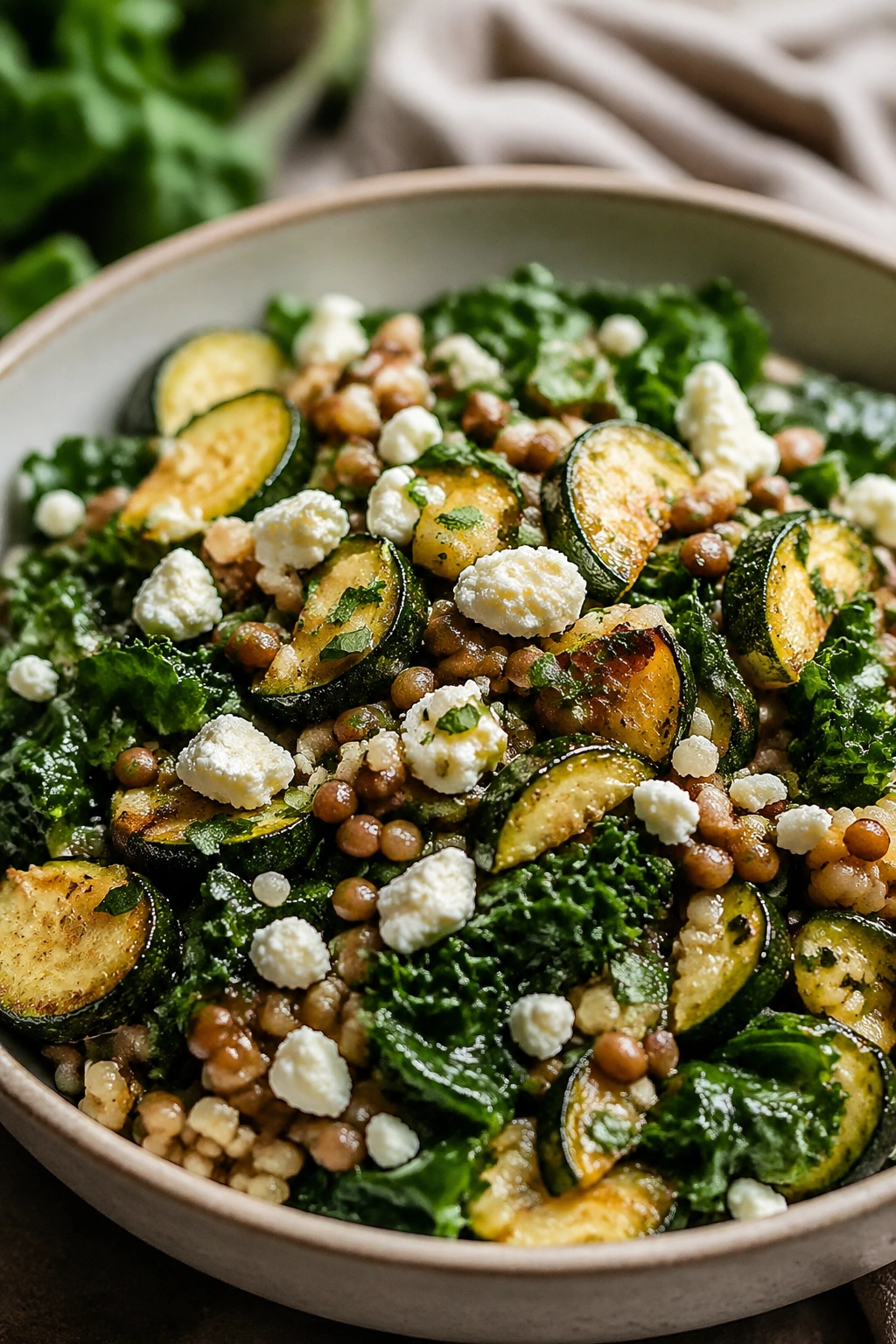
There are days when meat sounds dull. Lentils and bulgur fix that fast. Together they give the bowl more texture, more staying power, and a more complete protein profile than either ingredient alone.
Roasted zucchini may not look exciting, though it earns its place by adding warmth and softness. That matters after a hard session when raw vegetables can feel aggressive.
- 3/4 cup cooked lentils
- 3/4 cup cooked bulgur
- 1 cup roasted zucchini
- 2 cups baby kale
- 1 ounce feta, crumbled
- 1 tablespoon chopped parsley
- 2 tablespoons lemon-garlic vinaigrette
- Toss the bulgur, lentils, kale, zucchini, and parsley with the vinaigrette.
- Top with feta and let the bowl sit for 3 minutes so the kale loses some of its raw edge.
Recovery angle: solid carbs, solid protein, and enough salt from feta to wake everything up.
16. Seared Tofu, Orange, Cashew, and Wild Rice Salad
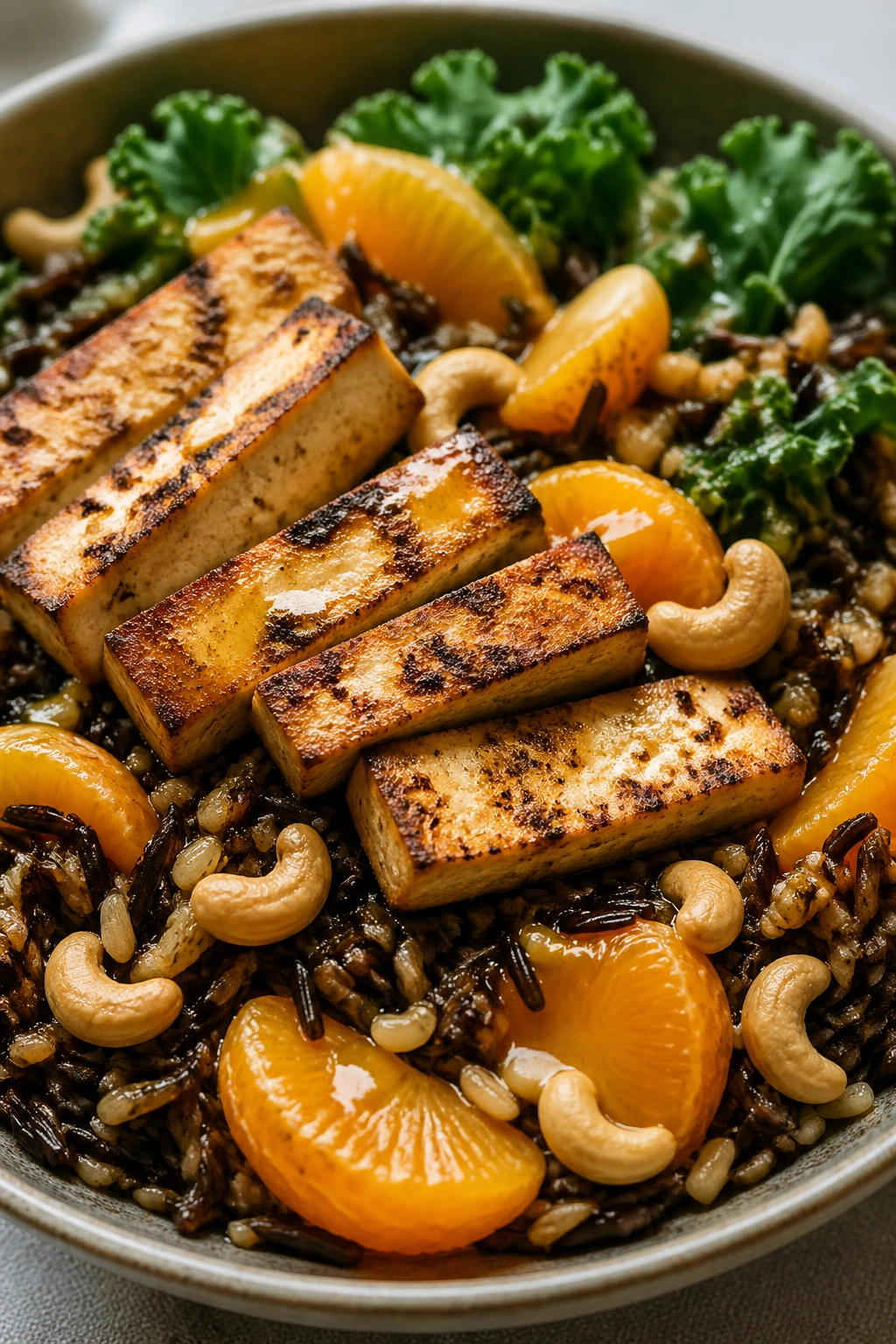
Kale salads can be a chore when they are cold, dry, and underdressed. This one avoids that trap. Warm wild rice and seared tofu soften the greens, orange adds sweetness and fluid, and cashews bring the fatty crunch that makes each bite feel finished.
Massage the kale for 20 to 30 seconds with a little dressing first. Not forever—just enough to take the squeak out.
Ingredients
- 2 cups chopped kale
- 4 ounces extra-firm tofu, seared
- 3/4 cup cooked wild rice blend
- 1 orange, peeled and segmented
- 1 tablespoon cashews, chopped
- 1 tablespoon dried cranberries
- 2 tablespoons orange-mustard dressing
Steps
- Rub 1 tablespoon dressing into the kale, then toss with warm wild rice, orange segments, and cranberries.
- Top with tofu and cashews. Spoon over the remaining dressing.
Texture check: sweet, chewy, crisp, and warm all at once.
17. Chicken Pesto Pasta Salad with Peas
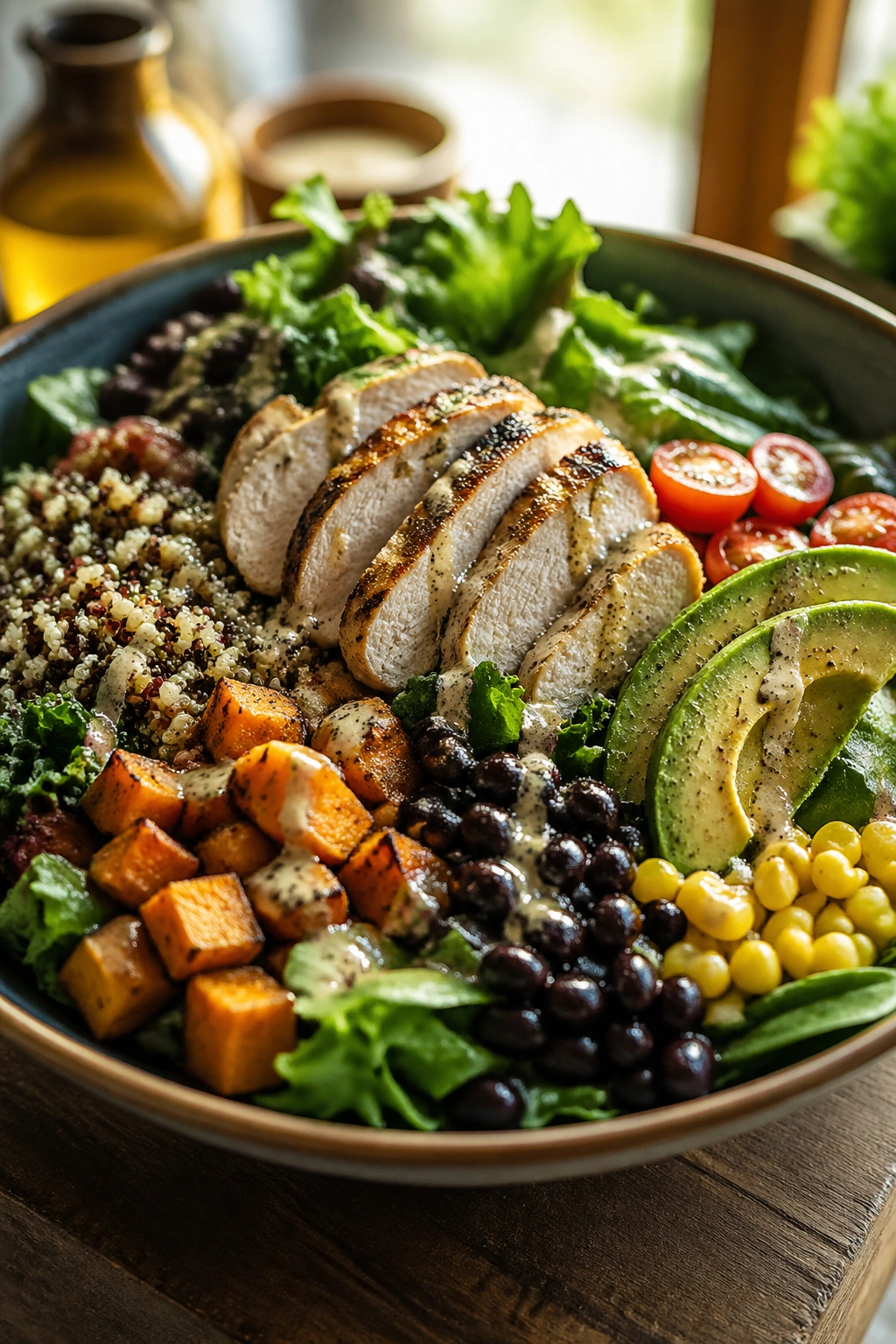
Pasta in a salad after training is not cheating. It is practical. This bowl is built for days when your legs feel flat and your appetite is high enough to handle a meal with some weight behind it.
Use short pasta with ridges—rotini, fusilli, penne—because smooth pasta sheds pesto too easily once chilled.
- 1 cup cooked pasta
- 4 ounces cooked chicken breast, chopped
- 1/2 cup peas
- 2 cups baby spinach
- 1 tablespoon basil pesto
- 1 tablespoon plain Greek yogurt
- 1 tablespoon grated Parmesan
- 1 tablespoon lemon juice
- Stir the pesto, Greek yogurt, lemon juice, and Parmesan together.
- Toss the pasta, chicken, peas, and spinach with the dressing until coated. Eat cold or slightly cool, not fridge-hard.
One bowl, one fix: carbs, protein, salt, and enough fat to keep it satisfying.
18. Smoked Salmon and Potato Dill Salad
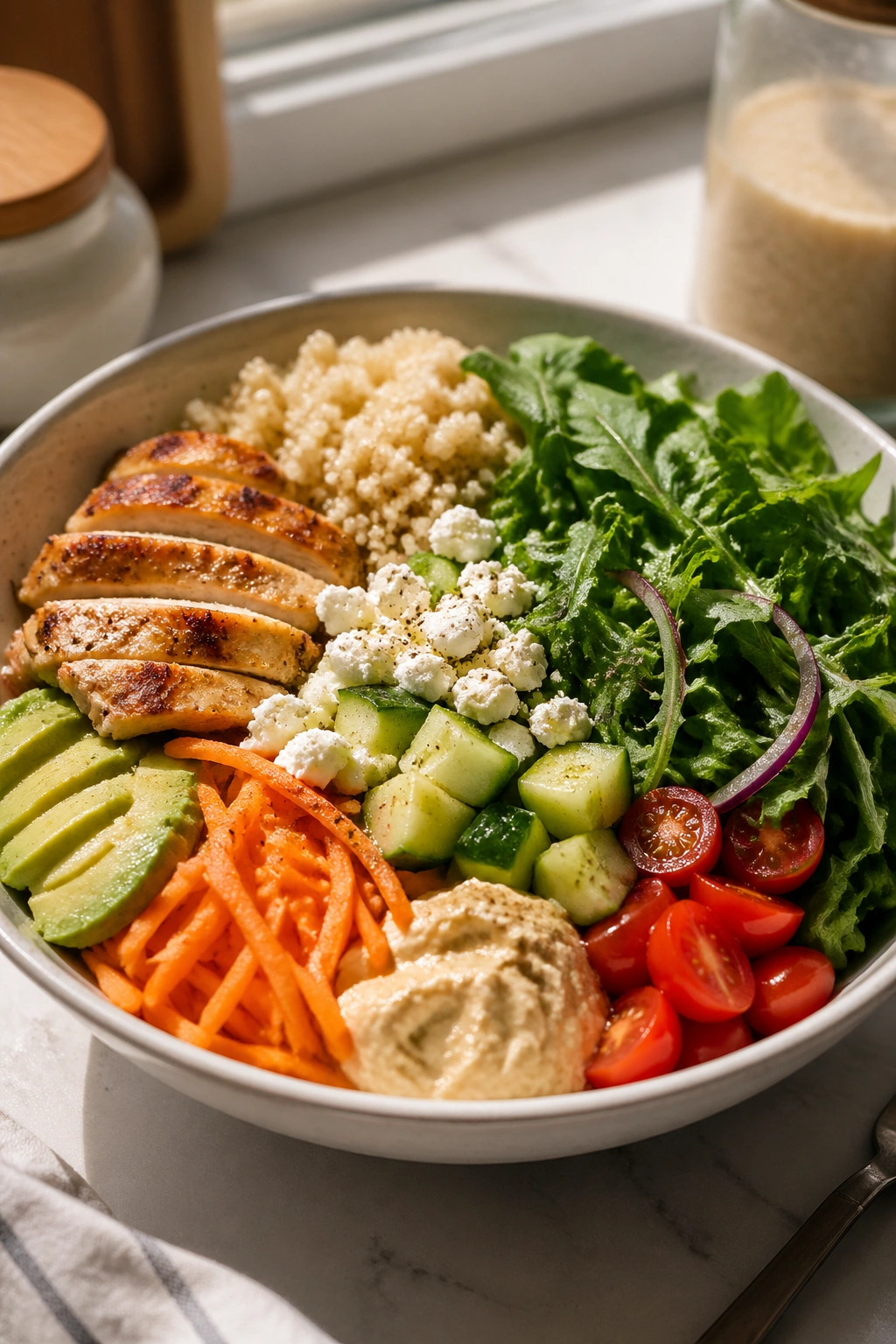
Some salads feel tailored for recovery because every ingredient pulls in the same direction. Smoked salmon, potatoes, dill, cucumber, capers, and yogurt do that. The bowl is salty, cool, and sturdy without being heavy.
Choose waxy potatoes if you can. Red potatoes or fingerlings hold their shape better than fluffy baking potatoes once dressed.
- 3 ounces smoked salmon, torn into pieces
- 8 ounces cooked red potatoes, sliced
- 1/2 cucumber, chopped
- 2 cups baby greens
- 1 tablespoon capers
- 2 tablespoons plain Greek yogurt
- 1 tablespoon fresh dill, chopped
- 1 teaspoon lemon juice
- Toss the potatoes, cucumber, dill, yogurt, and lemon juice.
- Add greens, then top with smoked salmon and capers.
Best after: longer sessions when a little extra sodium tastes almost medicinal.
19. Black Bean, Corn, and Farro Salsa Salad
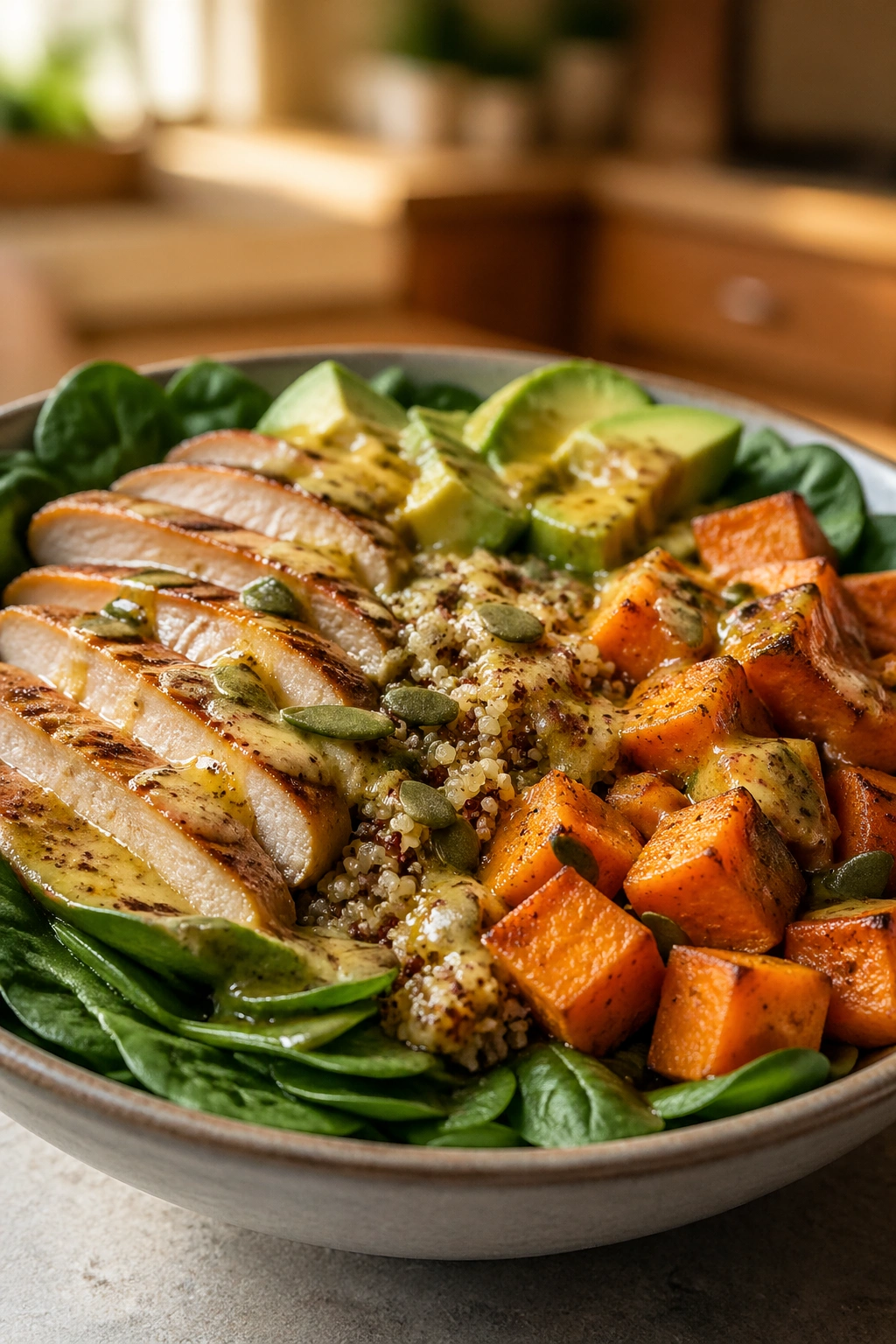
This is the bowl for the person who wants a post-workout meal with almost no cooking. If the farro is ready—or pulled from a freezer stash—the rest comes straight out of cans, jars, and the fridge.
A spoonful of queso fresco or cheddar helps. So does lime. Without one of those, the bowl can taste flat and dusty.
What you need
- 1 cup cooked farro
- 3/4 cup black beans, rinsed
- 1/2 cup corn
- 2 cups chopped romaine
- 1/2 cup chunky salsa
- 1 ounce queso fresco, crumbled
- 1/4 avocado, diced
- 1 tablespoon lime juice
Put it together
- Toss the farro, beans, corn, romaine, salsa, and lime juice.
- Top with queso fresco and avocado. Add a pinch of salt if the salsa is mild.
Fast-food speed, better balance.
20. Paneer, Couscous, and Pomegranate Salad
Paneer is a quiet workhorse in recovery meals. It browns fast, holds its shape, and brings satisfying protein without the softness some people dislike in tofu. Couscous cooks in 5 minutes, which makes this bowl useful on weeknights when energy is low.
Pomegranate seeds are not there for decoration. They add tart bursts that cut the richness of the cheese and wake up the whole salad.
- 4 ounces paneer, cubed
- 1 cup cooked couscous
- 2 cups chopped spinach
- 1/2 cup cucumber, diced
- 1/4 cup pomegranate seeds
- 1 tablespoon chopped mint
- 2 tablespoons lemon-cumin dressing
- Sear the paneer in a skillet for 1 to 2 minutes per side until lightly golden.
- Toss couscous, spinach, cucumber, pomegranate, mint, and dressing, then top with the warm paneer.
Nice balance: quick carbs, moderate protein, bright flavor, no meat required.
Final Thoughts
A recovery salad should eat like a meal, not like punishment in a big bowl. If you remember only one thing, make it this: protein and carbs belong together after training. Greens come after that.
Batch-cooking helps more than people admit. Keep one cooked grain, one ready protein, one chopped crunchy vegetable, and one dressing in the fridge, and you can build half the salads above in under 10 minutes. That is usually the difference between eating well after training and grabbing whatever is nearest.
And do not be shy about warm ingredients. A little heat from rice, potatoes, chicken, tofu, or roasted vegetables can turn a forgettable salad into something you’ll actually want again tomorrow.
