



Tight hips usually show up at the worst possible moment. The first squat feels sticky, the first lunge feels shorter than it should, and your lower back starts trying to do work your hips are supposed to handle. That is why pre workout stretches for tight hips work best when they’re active, quick, and a little bit sneaky — they wake up the joint instead of trying to relax it into the floor.
I’ve always preferred hip prep that moves in more than one direction. Flexion matters. Extension matters. Side-to-side motion matters too. Rotation gets ignored all the time, which is odd, because a hip that can’t rotate cleanly usually feels like a hip that “won’t open,” even when the real issue is stiffness somewhere else.
A lot of people reach for long, passive holds before training and wonder why they feel flat afterward. That’s the trap. Before a workout, you usually want movement with control, not a long nap for your hamstrings. If a stretch feels like a sharp pinch in the front of the hip, that’s a warning sign, not a challenge.
The fifteen moves below are the ones I keep coming back to because they’re simple, cheap, and honest. No fancy setup. No weird gear. Just a better way to get your hips ready so the rest of your session feels smoother.
1. Hip Circles in a Half-Squat for Tight Hips
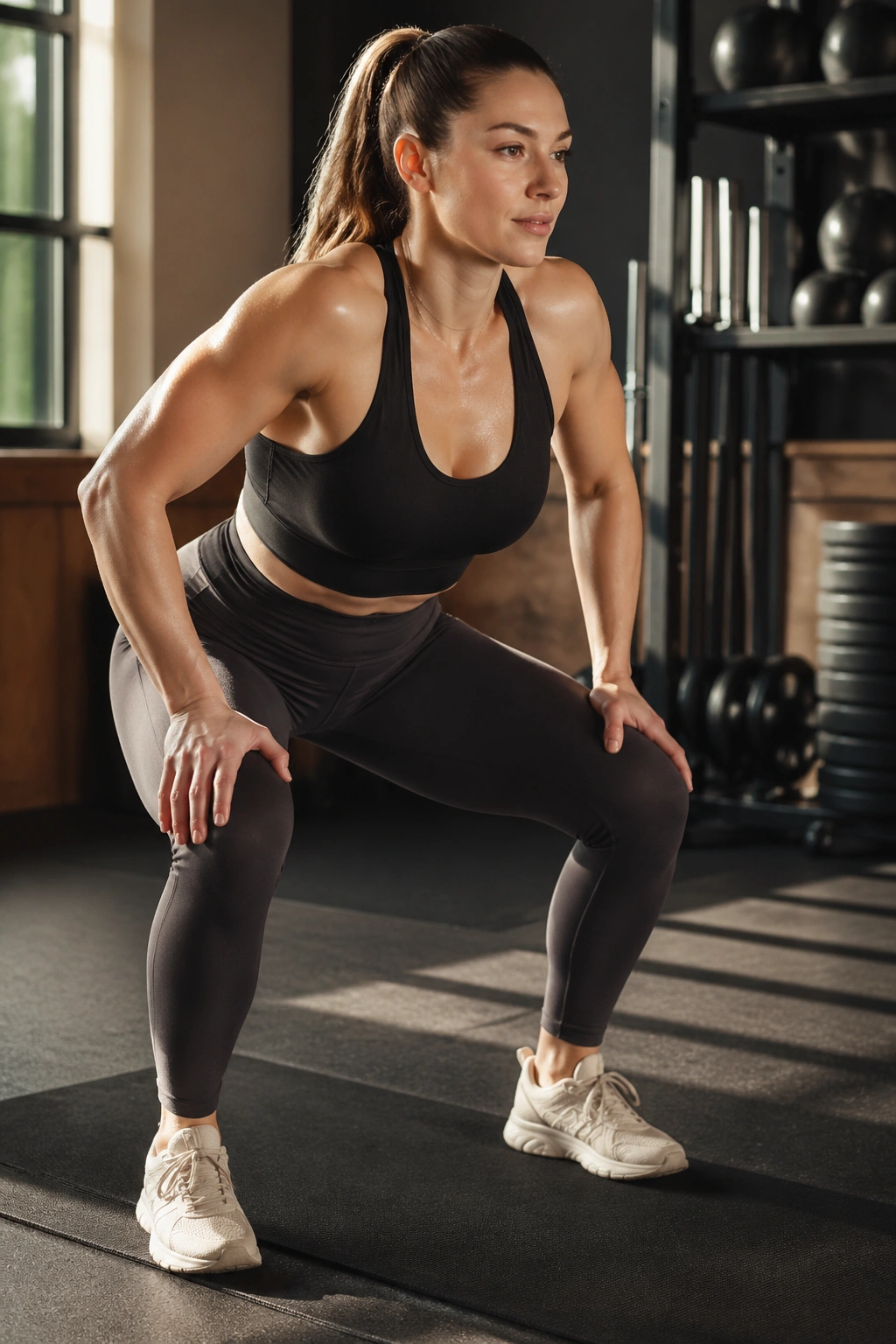
Hip circles look almost too easy, which is probably why people skip them. That’s a mistake. A small, controlled circle in a half-squat lights up the hips, knees, and ankles at the same time, and it tells your body that you’re about to ask for real movement, not just a token toe touch.
Drop into a shallow squat with your feet about hip-width apart. Put your hands on your knees and make slow circles, first clockwise and then counterclockwise. Keep your heels planted and let the movement come from the hips rather than turning it into a weird knee swirl. Five circles each direction is enough for most warm-ups. Two rounds is even better if you’ve been sitting a lot.
Why It Feels Better Than It Looks
The circle opens the hip joint through several angles in one go. You get a little flexion, a little external rotation, a little adductor work, and a little ankle check all at once. That’s useful before squats, deadlifts, lunges, and even hard runs.
- Keep your chest tall.
- Press the knees outward gently, not aggressively.
- Move slowly enough that you can feel the hips, not just the knees.
- Stop short of any pinching in the front of the hip.
Small circles beat sloppy circles. If your knees cave inward or your heels pop up, shorten the range and clean it up.
2. Front-to-Back Leg Swings
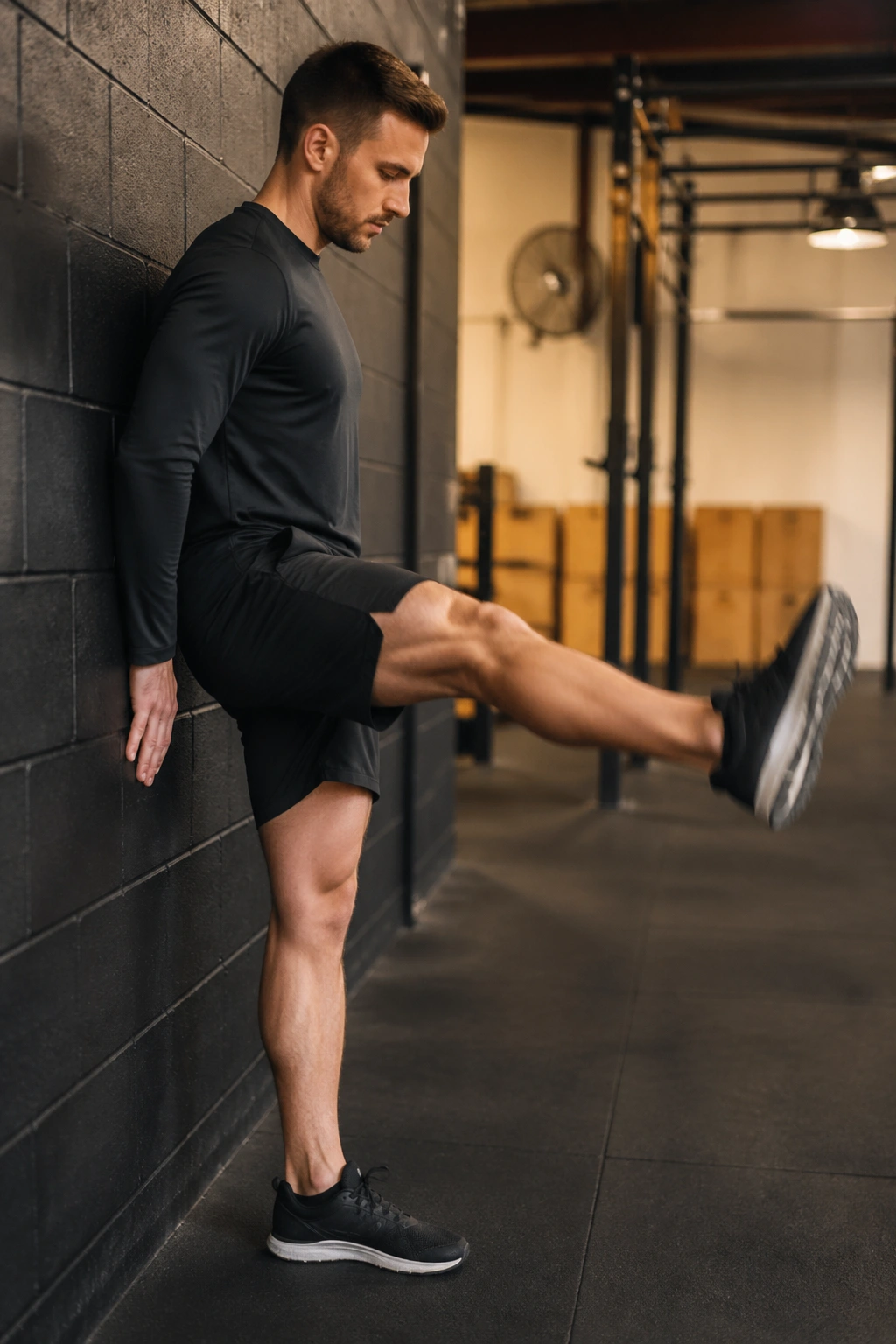
Can a 10-second drill change how your hips feel under a barbell? Sometimes, yes. Front-to-back leg swings are one of those plain-looking moves that pay off fast because they ask the hip flexors and hamstrings to move without making you hold a long stretch.
Hold onto a wall, rig, or rack for balance. Swing one leg forward and back like a pendulum, keeping the motion smooth and controlled. The swing should come from the hip, not from arching your lower back or flinging your torso around. Start with 10 to 12 swings per leg, then repeat if the first few reps felt stiff.
The trick is to keep the movement honest. A lot of people turn leg swings into a full-body wobble, which misses the point. Your standing leg should feel stable, your shoulders should stay quiet, and your moving leg should pass through a clean line without crashing into the end range.
If the hamstring feels glued, don’t force a huge kick. Use a smaller arc for the first few reps. That usually loosens things faster than trying to brute-force the range.
3. Cross-Body Leg Swings
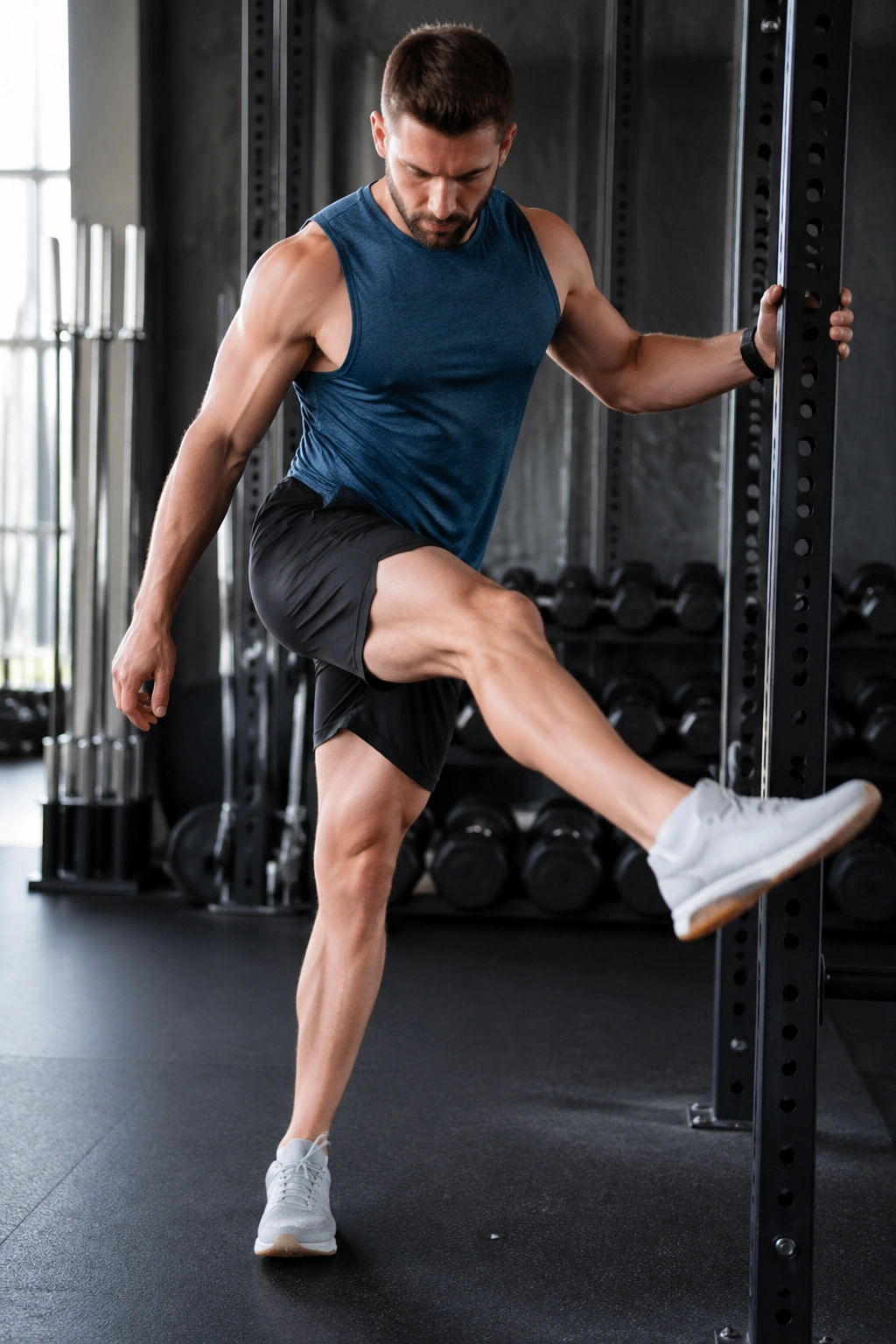
The side-to-side swing is where people start cheating. It looks simple, but if you let your torso twist and your foot drift all over the place, you’re no longer opening the hip — you’re just throwing your leg around.
Stand tall beside a support and swing one leg across the front of your body, then out to the side. The moving leg should stay loose, while your trunk stays mostly square. You’re looking for a smooth arc that wakes up the inner thigh, outer hip, and glute medius without snapping at the end. Eight to ten swings per side is a good starting point.
What You Should Feel
The inside of the thigh usually talks first. Then the outer hip wakes up. That’s normal. If the movement feels clunky, narrow the swing and keep the foot lower to the ground.
- Torso stays tall.
- Standing foot stays planted.
- Move from the hip, not the low back.
- Use a smaller swing if the groin feels cranky.
This one is especially handy before side lunges, squats, court sports, or any workout where you need to move laterally without feeling jammed up.
4. World’s Greatest Stretch with Reach
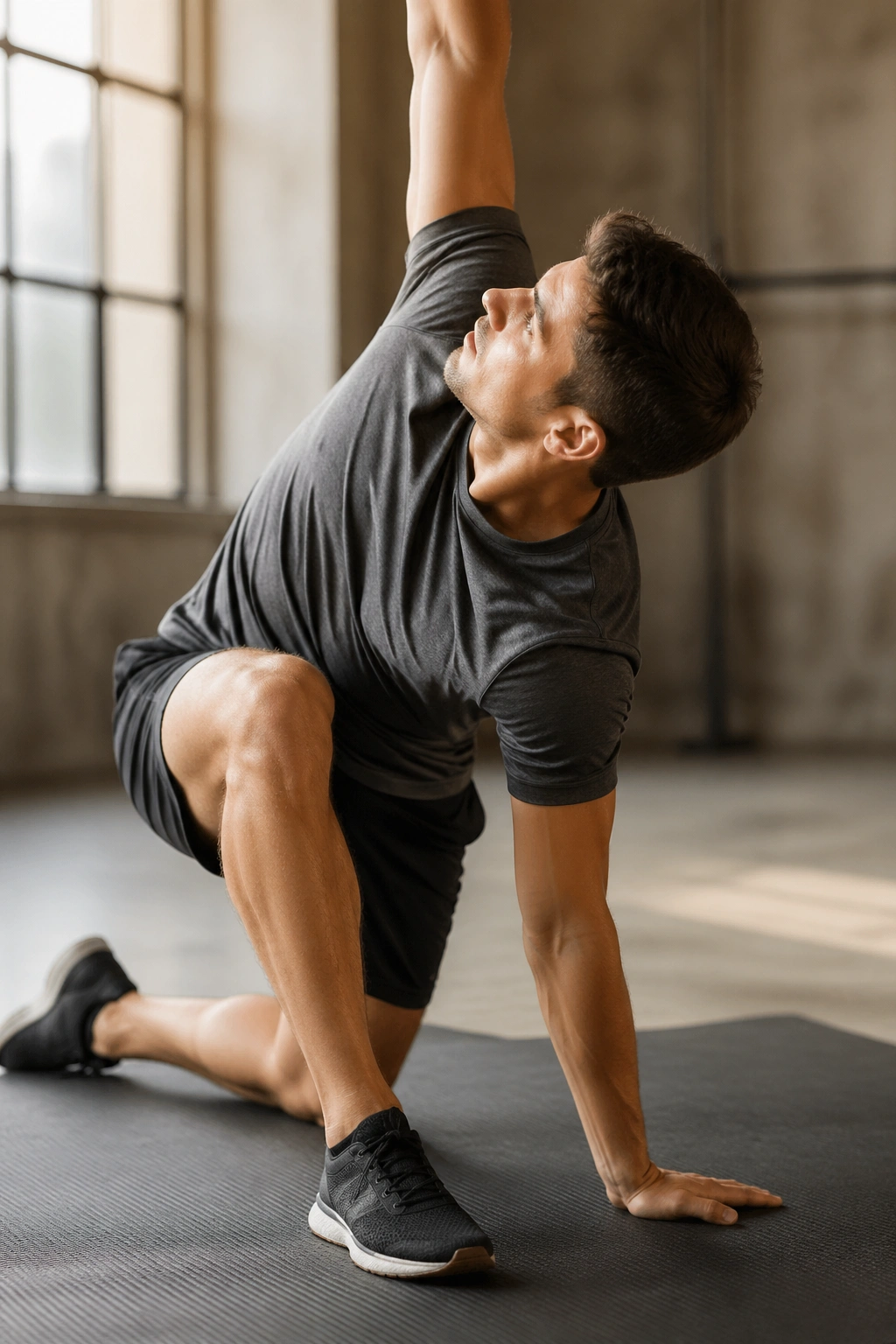
This stretch earns its dramatic name through sheer usefulness. It works the hip flexor, adductor, thoracic spine, and hamstrings in one flow, which is exactly why it shows up in so many warm-ups. Done well, it feels like the body finally remembers how to move in pieces instead of as one stiff block.
Step into a long lunge with both hands on the floor inside your front foot. Lower the back knee if needed. From there, drop the elbow on the same side as the front leg toward the instep, then rotate the chest open and reach the arm toward the ceiling. Come back to center and repeat. Three to five reps per side is plenty when you’re using it as part of a warm-up.
Setup Matters More Than Depth
A too-short stance turns this into a knee jam. A too-long stance makes it hard to control. Find the middle ground where the back leg can stay long and the front heel stays planted.
What Not to Do
- Don’t collapse the front knee inward.
- Don’t yank the rotation from the lower back.
- Don’t drop so deep that your pelvis tucks under hard.
- Don’t rush the reach.
A slow exhale during the rotation helps more than people expect. It softens the ribs, which makes the hip work feel less forced.
5. Half-Kneeling Hip Flexor Rocks for Tight Hips
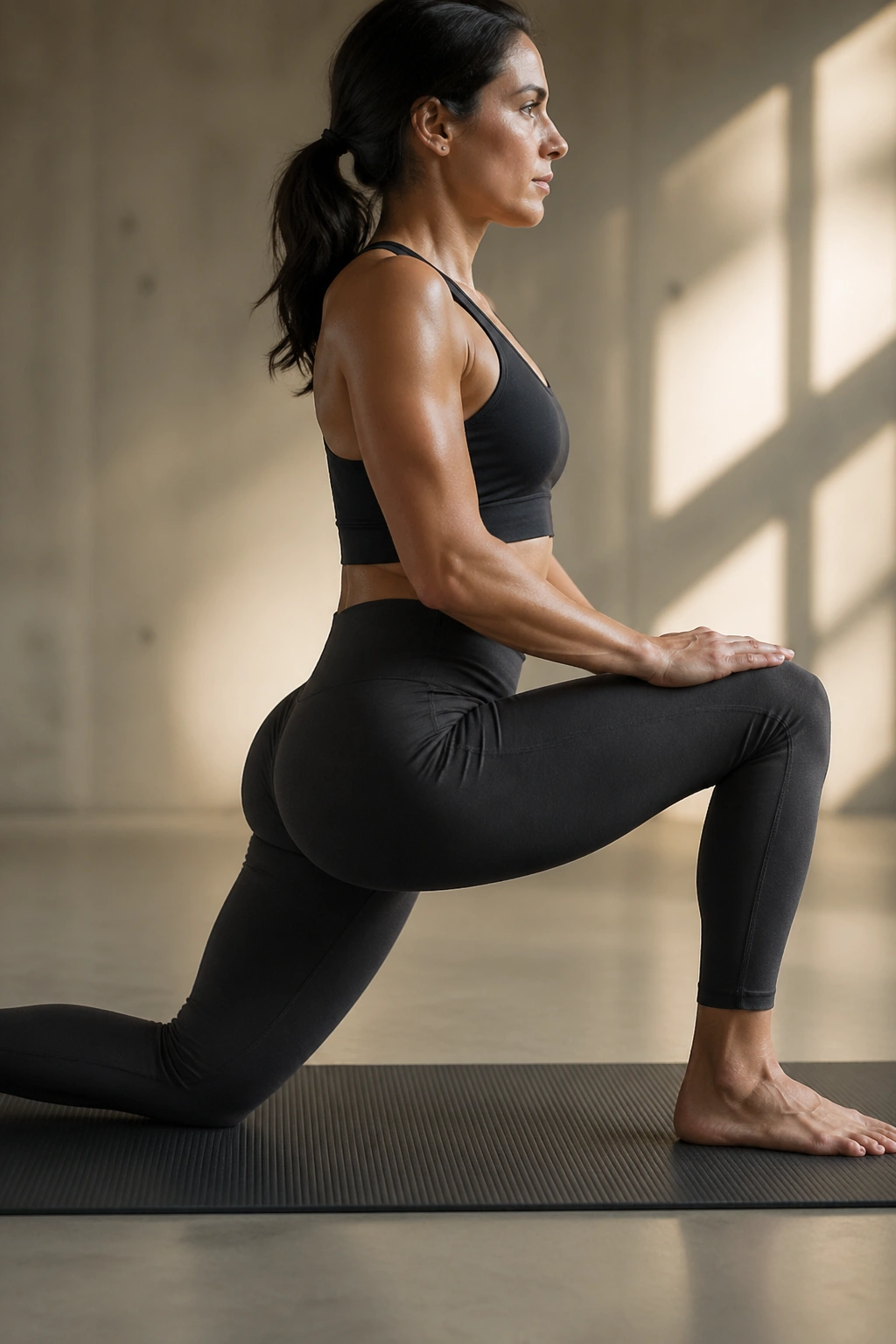
If you sit for long stretches, this one matters. The front of the hip gets cranky, the glute forgets to help, and the whole area starts feeling shorter than it really is. Half-kneeling hip flexor rocks give you a cleaner way to address that feeling without turning it into a backbend contest.
Set up in a half-kneeling position with one knee down and the other foot in front. Squeeze the back-side glute and gently tuck the pelvis under. From there, rock forward a few inches and back again. The movement is tiny on purpose. Six to eight rocks per side is enough to start. If it feels good, add a light reach overhead on the same side as the kneeling leg.
The sensation should show up in the front of the hip and upper thigh of the trailing leg. It should not spike in the lower back. That distinction matters. A lot.
This is one of those moves that gets better when you slow it down. A clean tuck, a small rock, a short pause, and then back out. That’s the whole game.
6. 90/90 Hip Switches
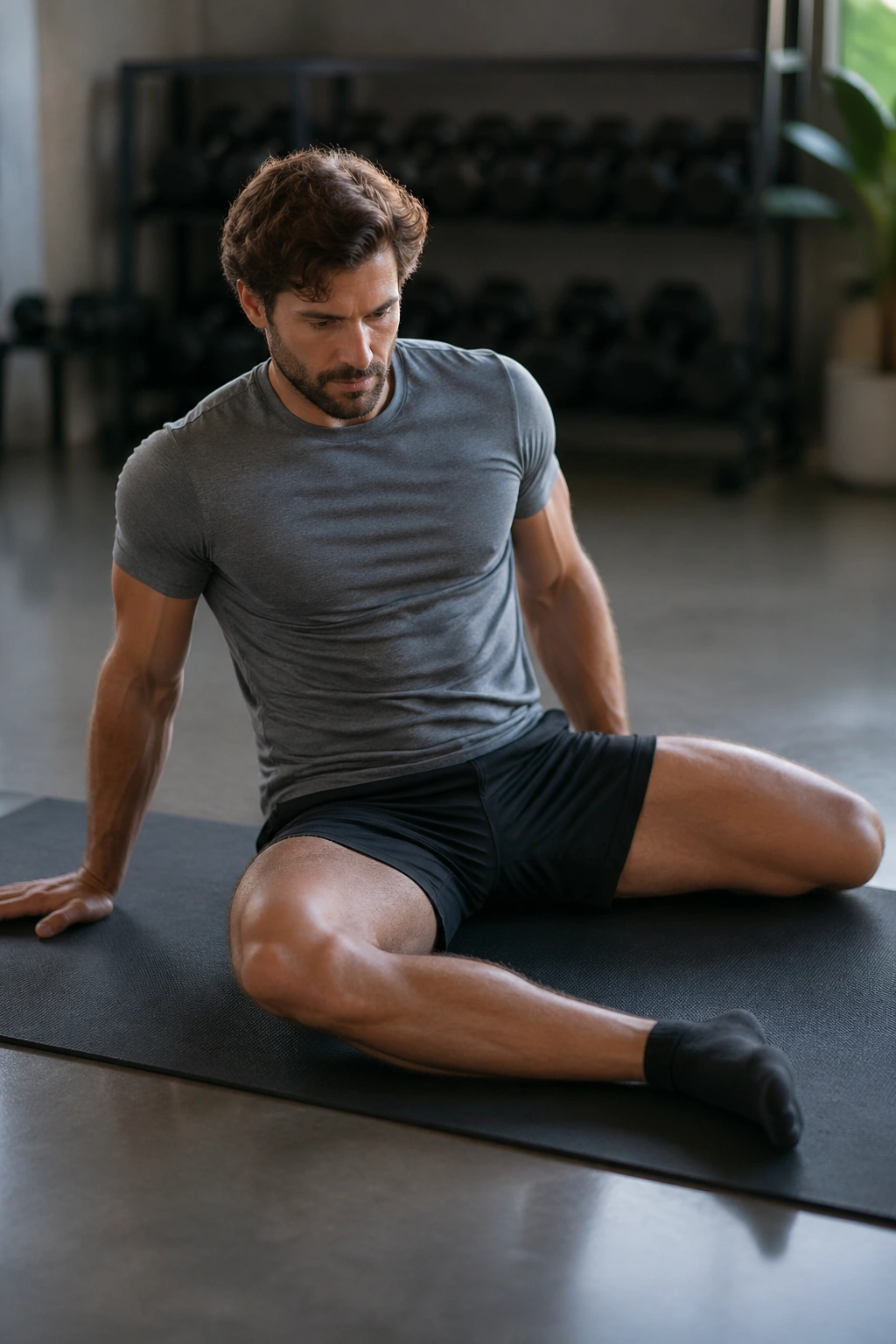
Can one drill teach internal and external rotation at the same time? Pretty much. That’s why 90/90 switches are such a good fit for tight hips before training. They look simple from a distance. Up close, they ask the hips to do something many people haven’t asked them to do in a while.
Sit on the floor with one leg in front of you at roughly a 90-degree angle and the other leg behind you at the same angle. Without using your hands to throw the legs around, rotate the knees and hips to switch sides. Keep the chest as tall as you can. If the floor feels far away, lean back on your hands for support. Six to ten switches is a useful range.
What Makes It Tricky
The movement is slow. That’s the point. If you rush it, the hips never own the transition and you end up flopping from one side to the other.
Easier Version
- Keep both hands behind you.
- Reduce the knee angle slightly.
- Sit on a folded towel or small pad if the floor position is too stiff.
Harder Version
- Pause for one breath on each side.
- Try not to use the hands at all.
- Keep the spine a little taller.
This drill is excellent before lower-body work because it reminds the hips they can rotate without drama.
7. Adductor Rock-Backs
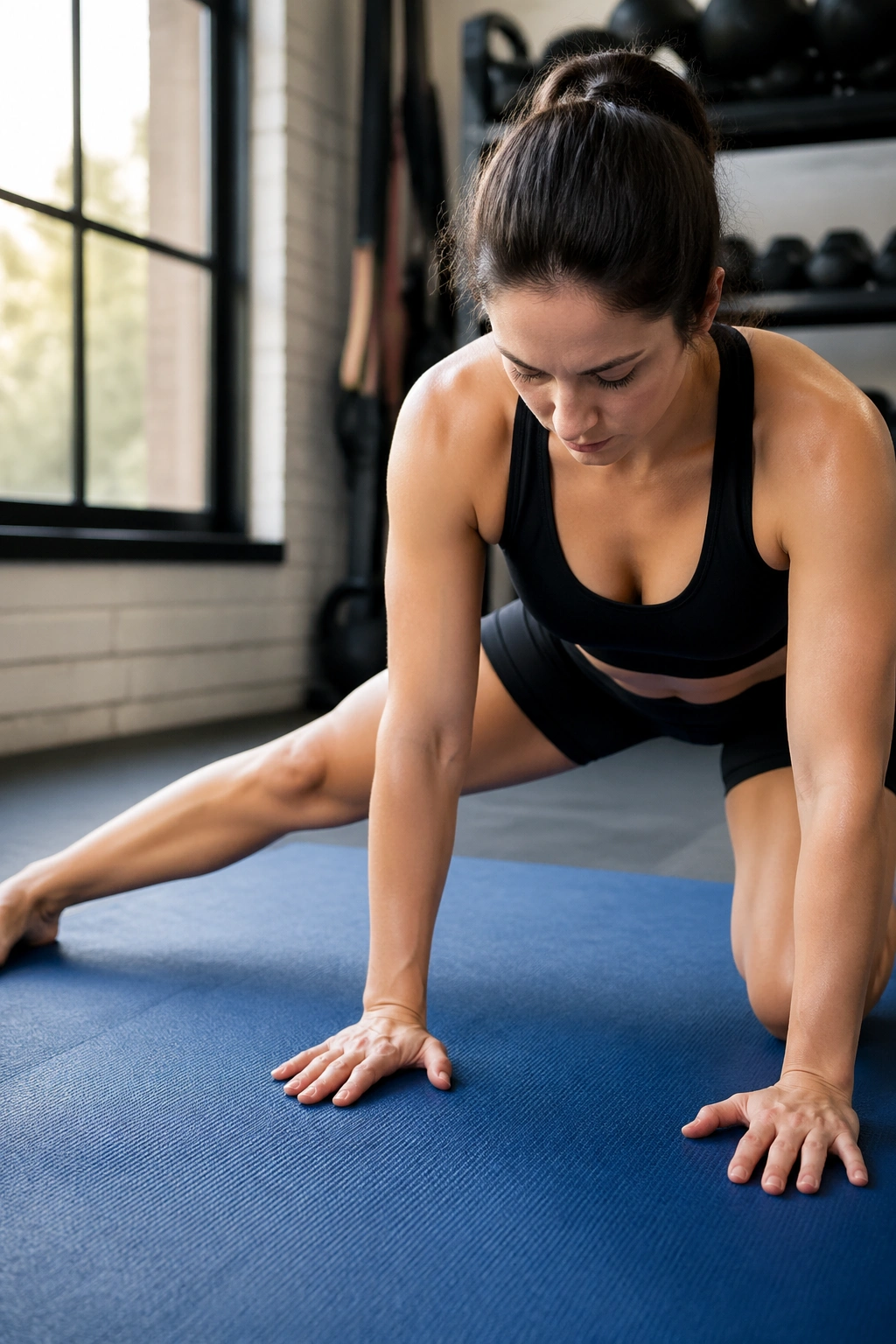
Sometimes the problem is not the front of the hip. Sometimes it’s the inner thigh pulling on everything around it. Adductor rock-backs are one of the cleanest ways to address that, and they’re gentle enough to use before almost any workout.
Start on all fours. Extend one leg out to the side with the foot flat or toes up, depending on what feels better. Keep the other knee under the hip. Rock your hips back toward your heel, then return forward. You should feel the stretch along the inner thigh of the extended leg. Eight to ten rocks per side is a solid warm-up dose.
If the groin feels sharp or pinchy, don’t push the leg farther out. That usually makes the move worse, not better. A slightly narrower stance with a slower rock often opens the area more comfortably.
This stretch tends to pair well with squat days because the adductors help stabilize the pelvis when you descend. People forget that. Then their knees cave, their hips feel stuck, and they blame the wrong thing.
A good rock-back feels like pressure and release. Not a tug of war.
8. Frog Rock-Backs
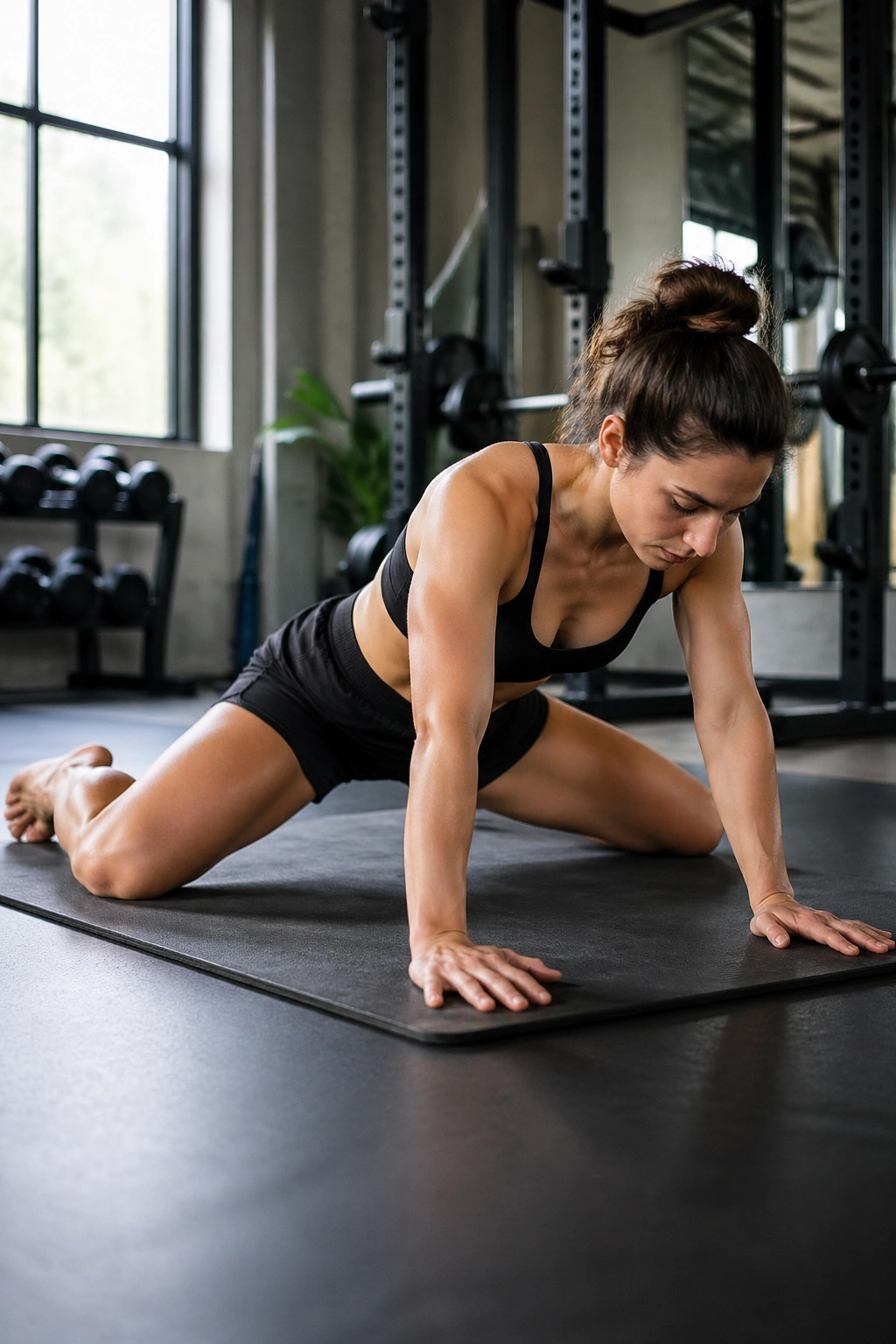
The inside of the thighs will tell on you fast here. Frog rock-backs can feel a little intense, but they’re one of the quickest ways to address stubborn inner-thigh tightness and open the hips from a wide stance.
Get on hands and knees, then slide your knees out wider than hip-width with your lower legs angled out and your feet flexed or turned slightly out. Keep your spine long. From there, rock your hips back toward your heels and return forward. Don’t force the range. Six to eight slow rocks is enough to start.
Use Less Range Than You Think
People often blow past the range that actually helps. They open the knees too wide, round the back, and then wonder why the stretch feels more like strain than release. A narrower setup with a clean spine works better for most bodies.
A folded mat or towel under the knees can make this much easier on hard floors. That small detail matters more than people admit. If the knees are unhappy, the whole stretch gets tense.
This one is useful before squats, grappling work, jumps, and any session where you want the hips to feel less blocked from the inside out.
9. Deep Squat Pry
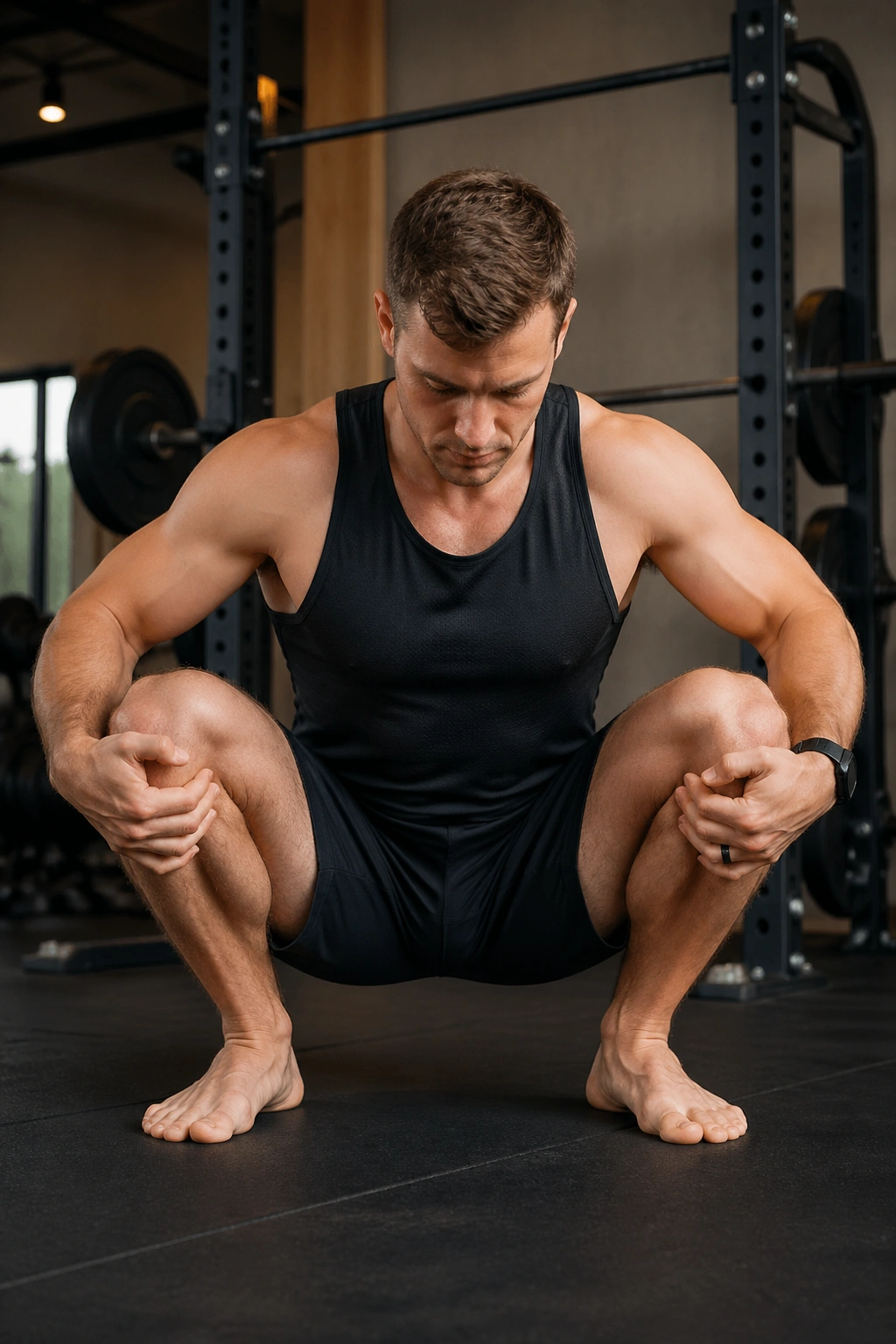
This one looks like standing around, but it isn’t. A deep squat pry teaches the hips, ankles, and adductors to share the load instead of letting one area hog the whole job. It’s one of my favorite pre-workout drills because it feels like a reset button for the lower body.
Sink into a deep squat with your feet flat if you can manage it. If your heels lift, narrow the stance a bit or place your hands on a sturdy object for support. Once you’re down, use your elbows to gently press your knees apart and shift your hips side to side. You can also hold onto a rack and let the body sink a little more freely. Stay there for five to eight breaths.
When the Ankle Is the Real Problem
If you can’t keep the heels down, the hips may not be the only issue. Stiff ankles can make a deep squat feel fake and forced. In that case, a slightly raised heel or a shorter hold is fine.
What to Feel
- Pressure along the inner thighs.
- A stretch through the ankles.
- The hips settling lower over a few breaths.
- Less fight in the bottom position.
Don’t bounce. That turns a useful mobility drill into a random wrestling match with the floor.
10. Glute Bridge Marches
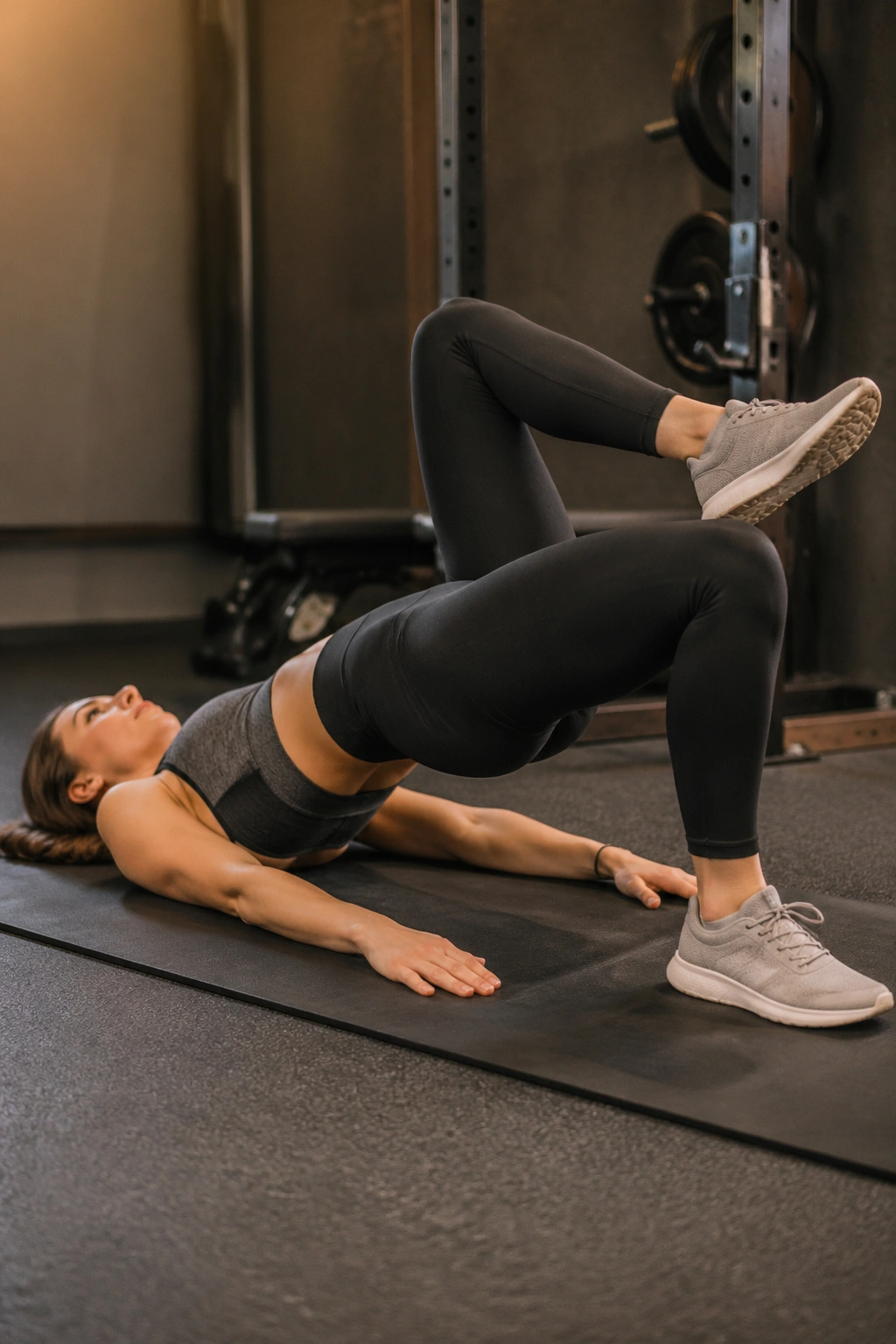
Not every good hip prep move is a classic stretch. Sometimes the smartest thing you can do is wake up the muscles that should be helping the hips move well in the first place. Glute bridge marches are a perfect example.
Lie on your back with your knees bent and feet flat. Lift into a bridge by squeezing the glutes, then march one knee up a few inches without letting your hips drop. Set it back down and switch sides. Keep the pelvis level. Eight to ten marches per side is a clean starting point.
The point here is not speed. It’s control. If the hamstrings start cramping, move your feet a little farther away from your hips. If the low back is doing all the work, lower the bridge and squeeze less aggressively.
This move earns its place before leg day because tight hips often come with sleepy glutes. That’s not a moral failing. It’s just what a lot of seated days do to the body. A few solid bridge marches make the hip extension piece feel much less rusty.
11. Cossack Squat Shifts
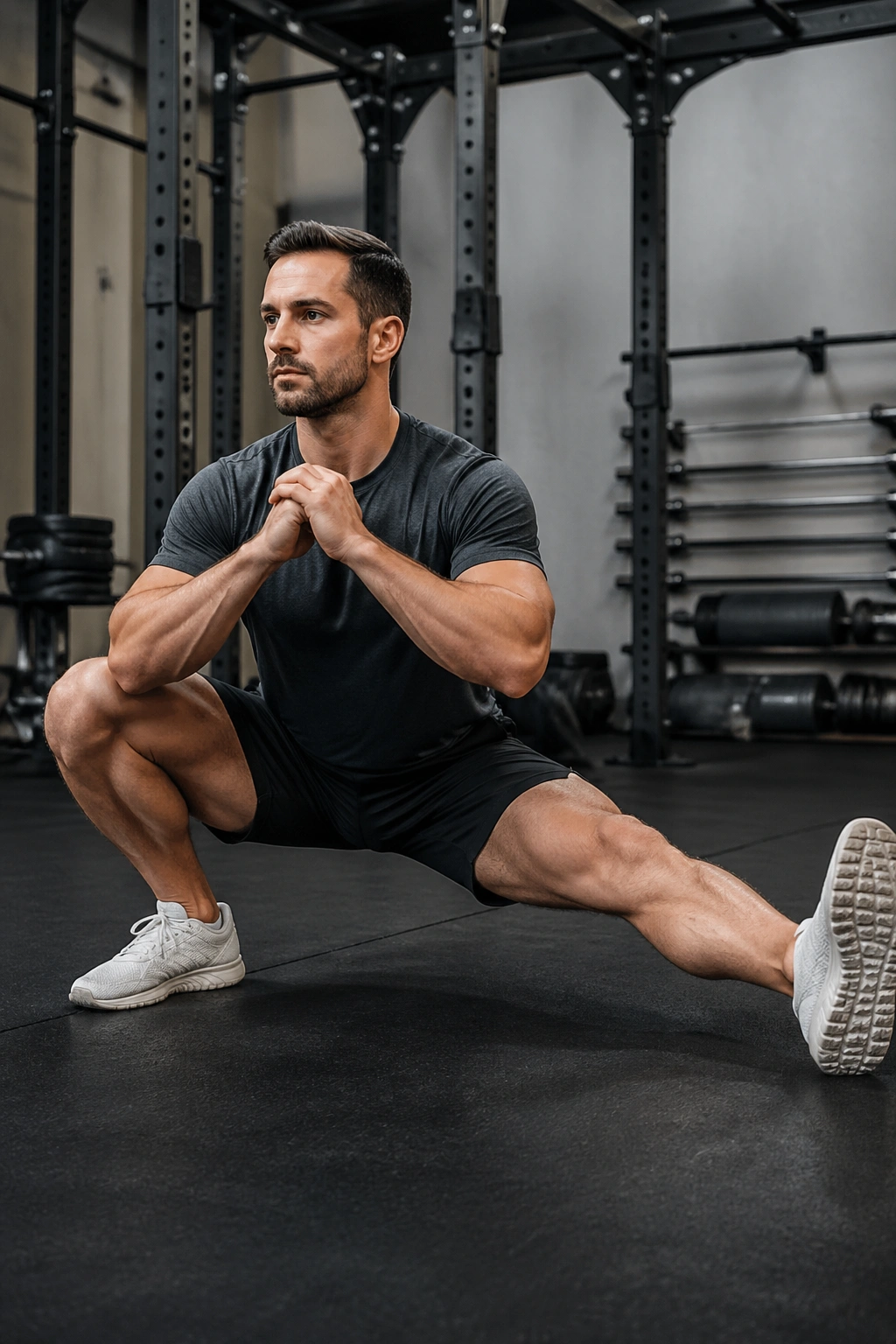
The Cossack shift is where the hips and inner thighs finally get asked to do something real. It’s a side-to-side squat pattern with one leg bending and the other staying long, and it’s a favorite of mine before lower-body sessions that need width, depth, and control.
Step out wide, turn one foot slightly up, and sink toward that bent leg while keeping the other leg straight. Shift your hips side to side without crashing into the bottom. Use your hands on your thighs or hold onto a rack if balance is shaky. Five to six shifts per side is plenty.
The standing foot should stay flat. The bent knee should track over the toes. And the torso should stay as tall as possible without pretending you’re made of wood.
A lot of people rush this and fold forward. That turns the drill into a loose hamstring stretch with a side angle. Better to stay upright and own the side loading. That’s what makes it useful before squats, sled work, and field sports.
12. Fire Hydrants with a Pause
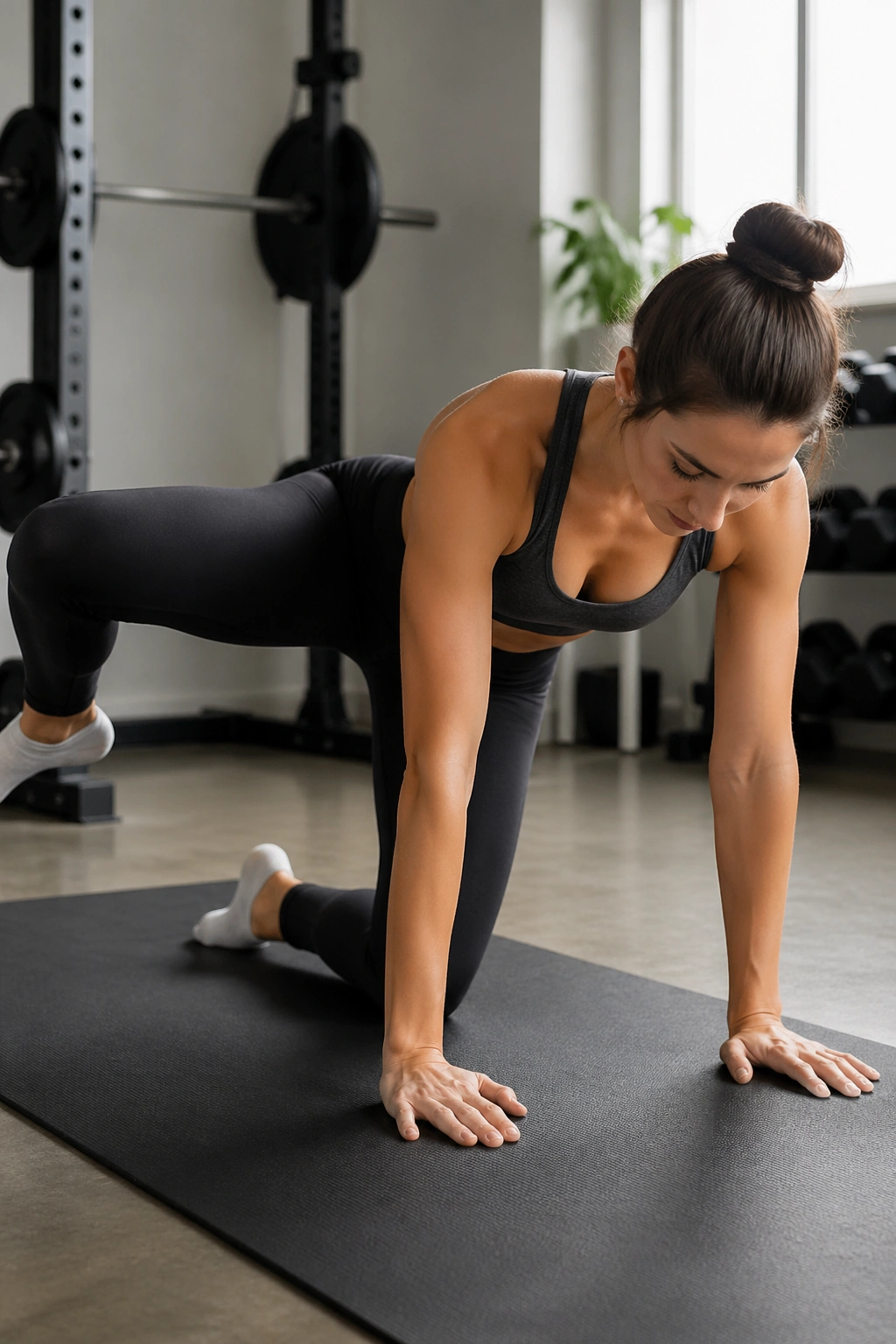
Fire hydrants are tiny. That’s the appeal. They open the side of the hip, wake up the glute medius, and give you a little bit of controlled rotation without needing much space or time.
Start on hands and knees. Keeping the knee bent, lift one leg out to the side until the thigh is roughly level with the hip, or lower if that feels cleaner. Pause for a second at the top, then return with control. Don’t let the torso twist open. Eight reps per side is a good warm-up dose.
What to Watch For
- The pelvis should stay mostly still.
- The movement should come from the hip, not the lower back.
- The lift should stay small and controlled.
- If the neck or wrists are unhappy, adjust your hand position before you mess with the leg.
This is less about stretching long and more about teaching the hip to move in a way that feels tidy. If your outer hip feels sleepy or your knees cave on squats, this little drill can clean things up fast.
13. Quadruped Hip CARs
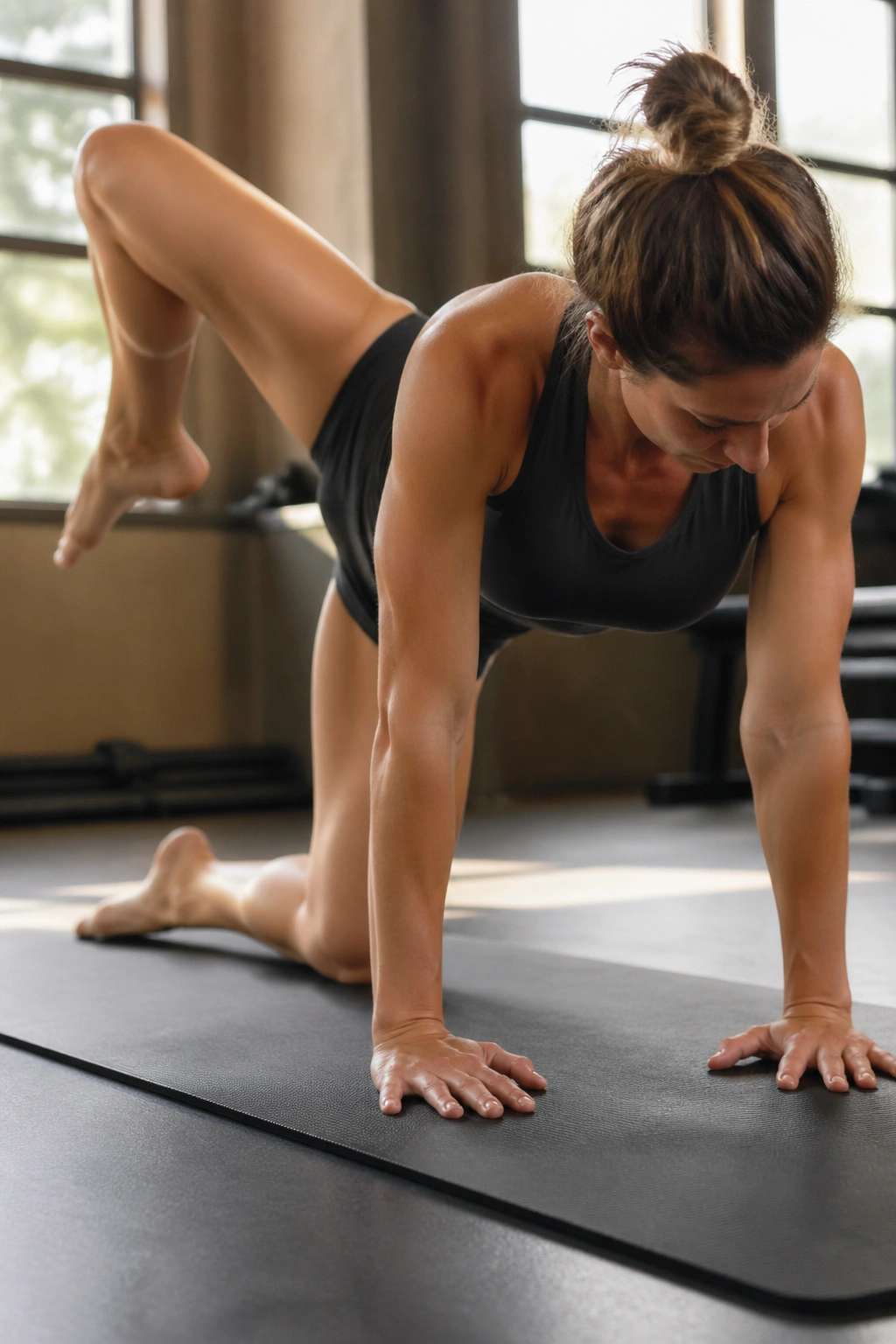
Slow circles beat sloppy circles every time. Quadruped hip CARs — controlled articular rotations, if you like the long name — are one of the best ways to move a hip through its full range without dumping the effort into the spine.
Get on hands and knees. Lift one knee out to the side, rotate it back, open it, and then bring it through the circle to the starting point. Keep the ribcage steady and the motion deliberate. The circle should be as large as you can control without twisting your whole body. Three slow circles each direction is enough to start.
Why This Feels Different From Leg Swings
Leg swings are faster and more elastic. CARs are slower and more exact. That’s why they’re useful when a hip feels awkward rather than merely tight.
Keep It Honest
- Do not rush the circle.
- Keep the spine quiet.
- Make the shape smaller if you lose control.
- Move with intent, not momentum.
If one side feels like a rusty hinge and the other side feels smooth, that’s useful information. Don’t ignore it.
14. Standing Quad Pull with Reach
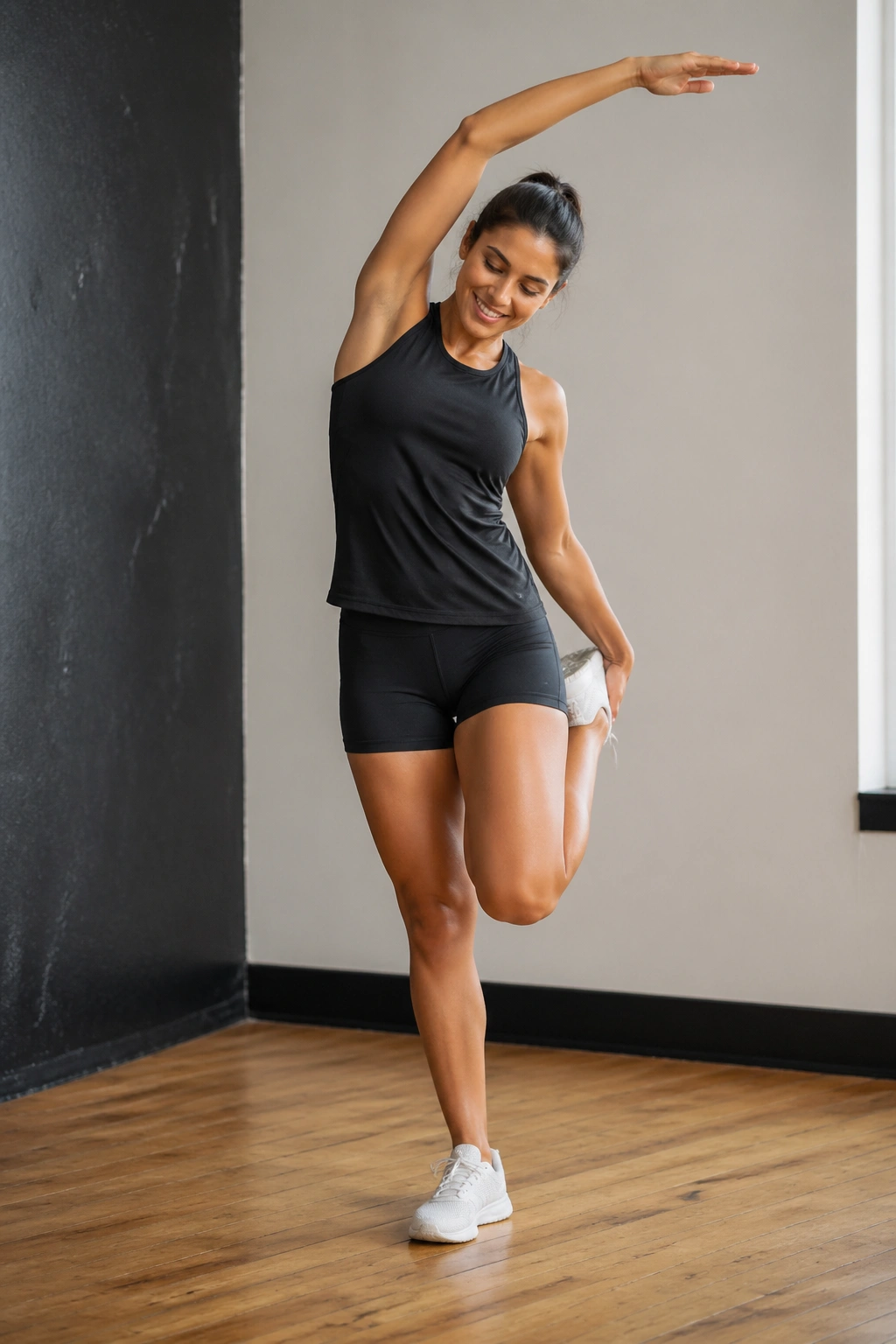
The standing quad pull is underrated because people treat it like a basic balance drill. Done with a little care, it opens the front of the thigh and hip flexor while also giving the body a chance to stack upright before training.
Stand tall and hold onto a wall if needed. Grab one ankle behind you and gently draw the heel toward the glute. Keep the knees close together and squeeze the glute on the standing side. If the balance feels steady, reach the free arm overhead and give a slight side bend away from the pulled leg. Hold for 15 to 20 seconds per side or move through two short holds.
The biggest mistake is arching the lower back to fake more stretch. That just shifts the stress somewhere else. A small pelvic tuck and a glute squeeze usually create a cleaner line through the front of the hip.
This one is especially useful if your quads feel tight after lots of running, cycling, or front-loaded training. It opens the whole front line without taking much time.
15. Knee Hug to Reverse Lunge Flow for Tight Hips
This is a nice way to finish because it links hip flexion to hip extension in one smooth pattern. One side feels compressed for a moment, then long and open on the step back. That contrast tends to wake the hips up better than holding a single position for too long.
Stand tall. Hug one knee toward your chest for a breath or two, then step that leg back into a reverse lunge. Keep the front foot flat, the torso upright, and the back leg long enough to feel the front of the hip wake up. Return to standing and switch sides. Five smooth cycles per side is enough before a workout.
If the knees are sensitive, shorten the step back and keep the lunge shallow. If balance is shaky, keep one hand near a wall or rack. The goal is not a dramatic stretch photo. It’s a clean transition that gets the hips moving without stiffening them up.
This one works well at the end of a warm-up because it ties together the front of the hip, the glutes, and the balance system. If you only have a few minutes, I’d reach for the half-kneeling hip flexor rocks, 90/90 switches, and this flow first. Those three alone cover a lot of ground, and they leave you feeling ready rather than overly loose.
